Silkies For Sale

Rain, Chickens and Muddy Runs

20181008_100026-1A rainy day can mean time spent inside the coop or it can be an opportunity to scrounge around for bugs and worms. It all depends on what your chicken prefers.  It also depends on whether we are talking about a light, misty shower or a rain forest downpour.

Chickens do have water repellent feathers that can keep them dry for awhile.  The tighter the feathers, the more the rain will bead off them.  Rhode Island Reds have very tight feathers and can do well in the rain. Breeds such as silkies or polish can suffer in the rain as their feathering is very loose.

Birds that get soaked through to the skin can be at risk for hypothermia.  Symptoms of hypothermia in chickens are shaking, low body core temperature, pale or blue comb, pale sinus tissue, and slow labored breathing.  If you add a wind to that rain to create a wind chill, a bird can become ill very quickly.

If a thunderstorm hits, experienced chickens will run for cover either back to the coop or they will find a bush to hide under.  Young birds in their first year do not usually have the understanding of what is happening to them and will stand around getting wet. They will not look at the sky with their mouths open and drown as folk lore states.  But, they may need some help getting back to the coop.  Some birds get caught in the rain because hens higher in the pecking order will stand in doorways and not let them back in.  As a storm rolls in and the wind starts to pick up, the chickens will start heading for the coop. Then , when the storm is over, they will venture out again, looking for worms or other goodies brought by the wet weather.

If chickens are repeatedly being exposed to rain without the opportunity to dry off, they can develop respiratory issues and fungal infections at the base of their feathers. A warm bath with a blow dry afterwards can be very helpful. A dog blower is a great way to dry off a chicken quickly.

It is helpful to give them some kind of shelter from the wind and rain besides going back in the coop.  Give your run a cover using metal corrugated sheeting   .  If you have any leaks in your coop, use tarps to keep the rain from coming inside.

No one wants to deal with a muddy run. Mud is not healthy for chickens. It can promote internal parasites and increase issues with bumble foot. Muddy runs look awful, are smelly, makes the chickens look unkempt  and attracts a ton of flies in warm weather.

There are a few things that you can do to prevent a muddy run in the first place. Make sure that when you are choosing a site for your coop and run, place it on high ground. Don’t put it in low lying areas.  If you have no choice, put down gravel to try and build up the area before you build your coop.  Make sure that you build up your run footings higher than you think  you will need.  Add retaining boards at the foot of the run fence.  Natural drainage works best, but you might need a tiller to stir the ground up and make it drain better.

While it is still the dry season, place down patio pavers above a layer of level gravel by doors that get a lot of traffic such as pop doors or human entrances. A slanted roof will keep your chickens dry and help with the snow later in the winter.  Put gutters and down spouts on all roofs.  Make sure that the down spouts lead the water well away and down hill.

Dig a ditch to intercept water coming from higher ground and lead it elsewhere. If you look at the bottom picture, we have a coop at the bottom of a hill.  We dug a small trench and placed landscape blocks to redirect the water to a lower area.

20181022_162356

Many people have a grass or dirt run for their chickens. This can quickly turn into mud. We use a combination of pea rock and gravel for the floor of our runs. You can have gravel and pea rock delivered to your home from landscaping companies. They will dump it in your drive way and you can wheel barrow it where it needs to go.  If you have a very small run, you can also buy pea rock in bags.

Wait until it is the dry season for laying down sand and gravel. The wet mud will make your rock sink down too much.  Pea rock will need to be dug up about every three years in order to provide better drainage to your run. When it gets mixed with chicken poo, shavings and other things that can break down and decompose, it can lead to a sloppy mess. By digging it up and replacing it, you will be in better shape when flooding rains hit.

If it has rained hard and you are looking for a temporary fix, you will want something to lift the birds out of the mud and absorb the moisture.  Coarse bark or wood chips are good and can last a long time.  Medium size wood chippings are ok.  Straw, hay or wood shavings are the least useful but are better than nothing. They tend to break down quickly.  Keep an eye on things and refresh whenever needed.

If your coop floods, change out the bedding and use fans to dry it out.  If the water continues to be deep, put down pallets so your bird can stay above water.  Turn off the breaker in your house that serves your chicken coop. Standing water and electricity are not a good combination.

For tips and tricks for raising outstanding silkies check out our Chicken Learning Center at VJPPoultry.com .  VJP Poultry is an NPIP and state inspected hatchery located 30 miles north of St. Paul.  We hatch out silkies all year long so we always have stock available.  Like us on Facebook to get weekly updates on what we currently have for sale.

Victoria J. Peterson


20181008_100016-1


Can Chickens Eat Pumpkin?

new bPumpkin is a healthy treat for your flock as well as a great source of amusement and exercise.  Many people seem wary of feeding whole pumpkins to their birds but you will find that chickens love pumpkin pulp and pumpkin seeds.

Pumpkin contains many different vitamins such as Vitamin A, Vitamin B and Vitamin C as well as Zinc. It also contains the antioxidants Lutein and beta carotene . The seeds contain vitamin E.  When hens eat pumpkin their yolks turn a dark orange because of the carotenoids  in the pumpkin.  Pumpkin seed snacks can also be given to the birds. When pumpkin season is over you can still get pumpkin seed chicken treats.

Pumpkins are plentiful in the fall and are reasonably priced.  After Halloween they are cheap or free if it was a good pumpkin year. Try growing pumpkins in your garden as a treat for your flock.  Pumpkins can be stored for up to three months in a cool spot.

Chickens can eat the entire pumpkin. You may want to make a starter hole for them in the side as the skin can be thick. You could use a chicken cookie cutter to form a picture of a chicken in the side of the pumpkin. Chickens can eat left over Jack-O-Lanterns as long as they are not moldy or rotted. Cut out any bad parts before letting them have it

Chickens have a natural desire to peck at things and pumpkins are a great way for them to release this urge.  They will peck at it until nothing is left but the skin. This is why it is best to break up the pumpkin before giving it to them.  When carving pumpkins, save the guts, seeds and pieces.  They will eat all of it.  Make sure that they have access to grit when giving them the pumpkin seeds so that you don’t end up developing any crop issues.

Pumpkin pecking is great entertainment for them and is a boredom buster on days when they can’t free range. It is a source of exercise to run and chase each other to get the best pieces of pumpkin.  Remember to pick up the pumpkin pieces that were not eaten at night. Leaving food out overnight will attract rodents or scavengers.  Make sure that you check the pumpkin for signs of spoilage, such as mold or soggyness. Dispose of bad pumpkins.

Some people believe that pumpkin (especially the seeds) is a natural dewormer.  The seeds should be cracked or ground if you are thinking of using it for this.  Seeds in pumpkin and other squashes are rich in the amino acid – cucubitacin.  This amino acid is a paralytic agent to various worms such as tape worms and round worms.  The worms are paralyzed and then passed in the droppings.  Cucubitacin is found in cucumbers and cantalope as well.

The study that was done on Cucubitacin and worms was done in a test tube. There have been no studies using chickens  No one knows how many seeds a chicken would need to ingest to paralyze a worm.  Do not rely on pumpkin seeds as a way to deworm your bird.  It may be used as a preventative for worms, but if you see a worm infestation you will need to use another product to treat it.

If you suspect that your bird has worms you can perform a fecal float test to determine if there is an infestation.  Wazine is a dewormer made for poultry. You add it to their water. There is an egg withdrawal period of around 2 weeks where you are not to eat the eggs.  Safe Guard and Ivermectin Pour on Dewormer are both effective on a wide range of worms. If you are looking for something more natural there are dewormer pellets that contain pumpkin seeds and Diatomaceous Earth that you feed your chickens.  Diatomaceous Earth supplements also claim to be a natural wormer.

Remember that pumpkins are a treat. They should not substitute for a well balanced nutritional feed. Any chicken that free ranges and forages for food will have a small load of worms.  If your chickens eat a lot of mice or dead animals they may have a higher worm load.  Even earthworms can pass parasites to your flock.


For tips and tricks for raising outstanding silkies check out our Chicken Learning Center at VJPPoultry.com .  VJP Poultry is an NPIP and state inspected hatchery located 30 miles north of St. Paul.  We hatch out silkies all year long so we always have stock available.  Like us on Facebook to get weekly updates on what we currently have for sale.

Victoria J. Peterson

20181008_170834-1


.


The Expert Way to Cook and Peel a Hard Boiled Egg

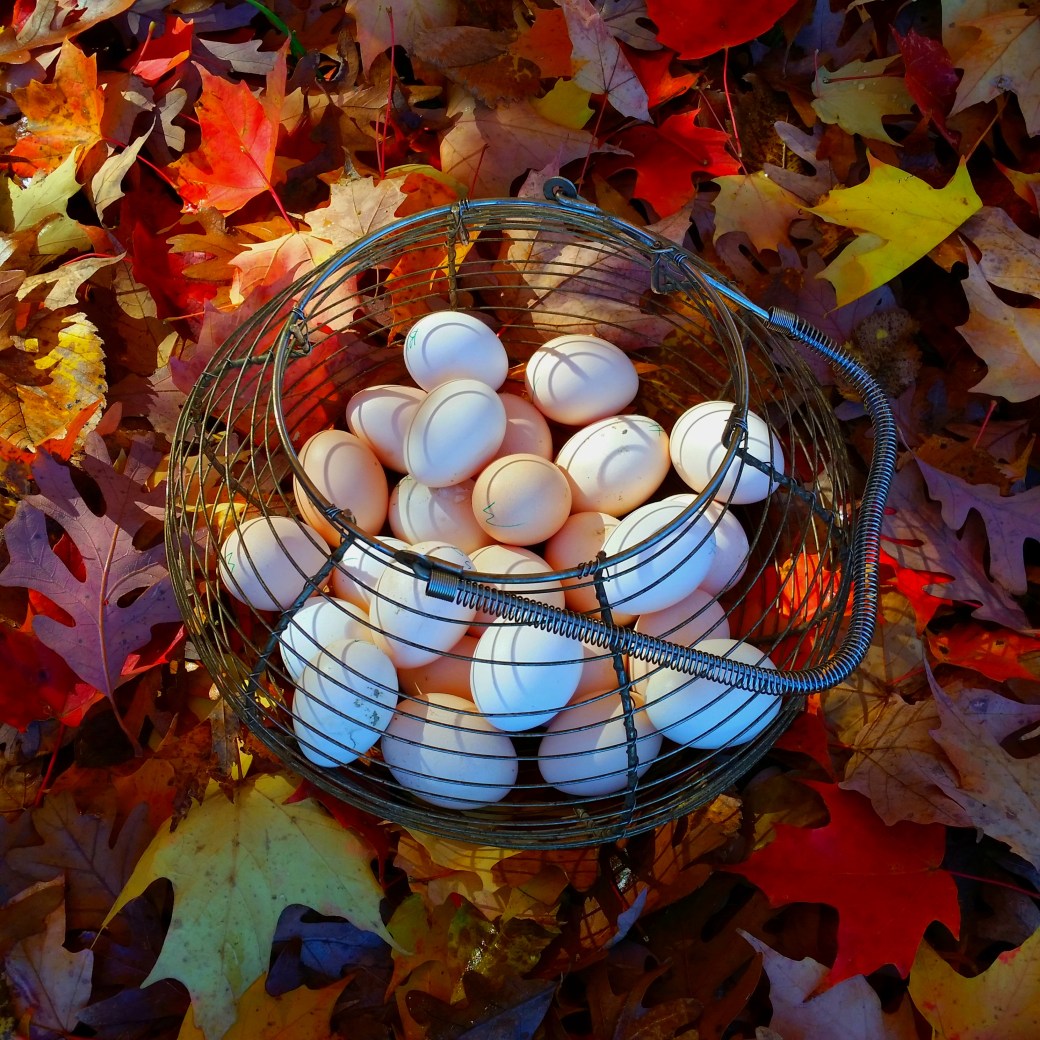
perfect bird 4Fresh, free range  boiled eggs are notoriously difficult to peel. We are left with chunks of egg white sticking to shell pieces. There are divots left all over the  surface of your egg. This is not something that you want to use to make fancy deviled eggs with.
We know that fresh, hen- laid in your backyard eggs are the best tasting eggs there can be. They also tend to have harder, thicker shells than grocery store eggs which makes peeling more difficult.  Your own chicken eggs may not be washed either. This means that the “bloom” is still on the egg which also makes peeling harder.

The fresher the egg, the more difficult it is to peel cleanly. Just laid eggs contain an amount of dissolved Carbon Dioxide.  The Carbon Dioxide is what makes very fresh, raw egg whites appear cloudy when you first crack them open.  The Albumen or egg white tends to stick to the inner shell membrane due to the Carbon Dioxide making a less acidic environment. The less Carbon Dioxide, the less the egg white will stick.

The hen applies a protective coating to the shell of each egg laid. This coating is called “the bloom.”  The bloom slows the rate of Carbon Dioxide loss and also prevents contamination from micro organisms that are trying to reach the egg.

If you don’t wash your eggs, that means that the bloom is still there and it will slow down the Carbon Dioxide loss. You need to wait an average of 10 days for the PH to be ideal for peeling.  Grocery store eggs have usually been washed and the bloom has been removed.  This is one reason why store eggs peel easier.  Store eggs have usually been in storage longer and are not as fresh as we may think. This all allows for more Carbon Dioxide to be released from these eggs.

You may have hear of the float test.  If an egg is placed in water and it floats, it means that it is an old egg and you should not eat it.  It floats because with the loss of Carbon Dioxide, air enters through the shell and is trapped between the shell and the membrane. The air is lighter than the water causing the egg to float.

Now that we know that older eggs are easier to peel we can discuss cooking methods. You can boil eggs on the stove top. Boil the water first, then carefully add the eggs. I would recommend using a spoon to slowly lower the eggs into the water.  Some people like to add a little baking soda into the water. Boil for 13 minutes and then place the eggs in ice water for 5 minutes.  The ice causes the egg inside to contract, pulling it away from the membrane.

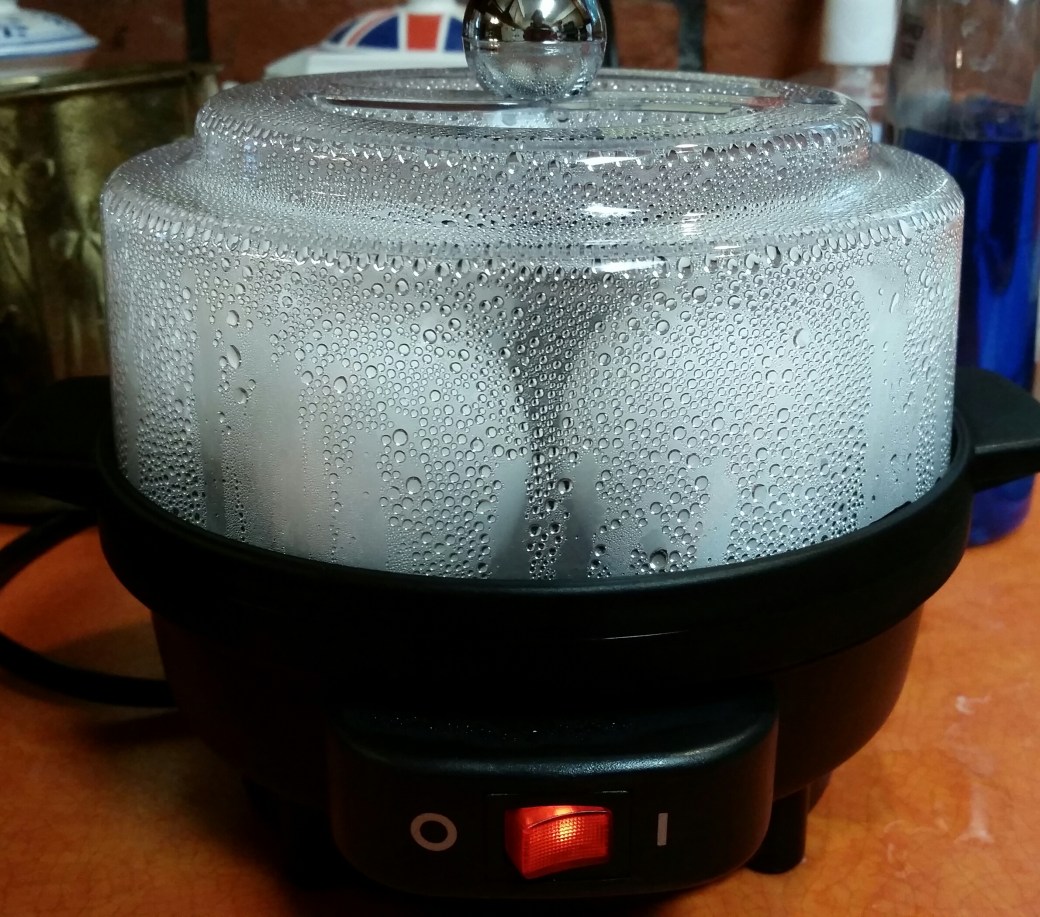
Steaming is a very popular way to hard boil your eggs. It is very simple. Using a steamer, you place water under the eggs.  The eggs do not sit in the water. There is a timer that lets you know when they are finished. I use a Hamilton Beach egg cooker.  It also poaches eggs as well. Steaming cooks evenly and there is less risk of cracking the shell than dropping the egg into a pan. When you are done steaming, place the eggs in an ice water bath.  Chilling eggs immediately after boiling ensures that they come out perfectly shaped with no air space indentations on their fat end.

Other good steamers are DASH egg cooker that has an auto shut off to prevent over cooking and Elite Cuisine Maxi Matic.   If you like to use an Instapot you can pressure cook an egg in 5 minutes using a cup of water.

One fun gadget is a Hard Boiled Egg Peeler. You place the egg and water inside of the devise  and then shake it up and down. The shaking causes the egg to crack and lets water get between the egg and the shell. This makes peeling very easy.

One last tip is about peeling the shell off of the egg. Peel it under running water from the sink. This works on the same principle as the gadget above. The water is finding its way under the egg shell making peeling much easier.


For tips and tricks for raising outstanding silkies check out our Chicken Learning Center at VJPPoultry.com .  VJP Poultry is an NPIP and state inspected hatchery located 30 miles north of St. Paul.  We hatch out silkies all year long so we always have stock available.  Like us on Facebook to get weekly updates on what we currently have for sale.

Victoria J. Peterson

20181001_111049-1

Why do Hens Stop Laying?

20171020_121913-1Hens normally lay one egg a day, but we all know that this isn’t always the case. In fact, we may often wonder why they seem to take breaks or even stop laying for long periods of time. You can’t force a hen to lay an egg. There are many factors and variables that go in to whether or not your hen will grace  you with an egg on any given day.
Your bird might be either too old or too young. Pullets typically start laying eggs at 18-20 weeks. Not all breeds start at the same time. A late maturing breed such as silkies may not start laying until 7-9 months. The first season of laying will be their best season. After that, they will gradually lay less and less with a large drop off after 4 years. A pullet that “comes of age” during the winter may not start laying until spring. You can tell by looking at their vent as to whether they are still laying. If the vent is soft and pliable, they are laying eggs.  If the vent is stiff and not flexible, she may have stopped laying because she is too old.

Certain breeds do not lay as many eggs as other breeds. Good layers such as Rhode Island Reds or Buff Orpingtons can lay 200 eggs per year.  Ameraucanes or silkies lay less than 100 per year.  Chickens has a set number of eggs that they lay in their lifetime. Some go through that number very quickly and then become “spent hens.”  Other birds that take breaks in their laying can lay eggs for a number of years beyond others.

If your bird is experiencing any illness, this will cause her to stop laying. Respiratory issues are a common problem in a flock.  Becoming egg-bound would be another reason for egg production to stop. An egg could be stuck inside of the hen’s body.  Gently feel around her abdomen area and you may feel the stuck egg.  Add electrolytes and calcium to their diet.  Apply a lubricant to her rear and give her a quiet, private place to lay her egg.

Nesting boxes are an important part of your hen’s egg production. Not having enough nesting boxes can be an issue. Hens need a private place to lay their eggs. You should have one box for every 4 hens.  Boxes should be 18 inches off of the ground. Make sure that the boxes are not harboring parasites that can bite at hens while they are laying. Use poultry dust in the bottom of the boxes.

You may have a hen that doesn’t want to leave the nesting box. Broodiness is when a hen decides that she is going to hatch out some eggs and start a family.  Even if you remove the eggs, the hen can still continue to be broody.  While she sits and waits, she will not lay any eggs.  Broody hens sometimes will stay on a nest for three or more weeks patiently waiting for chicks.  When she is finally done sitting she will begin to act normal again and start laying as usual.

Seasonal changes can make hens slow down.  As daylight decreases the amount of eggs laid will decrease as well.  Temperature and sunlight will have a big influence on egg laying.  Hens know that winter is not a good time to be raising a family and egg production will drop off or stop.  Peak laying for hens is around June 21.  They need between 14-16 hours of sunlight a day for egg production.  You can use artificial light to fool hens into thinking that they should be laying.  All you need is a small light fixture and an LED bulb set on a timer.   Set it to go on early in the morning and add extra hours of daylight. Having a warmer temperature in the coop using heat lamps and bulbs will also increase egg production.

Molting occurs in the fall. This is when your hens start to lose their old feathers and grow new ones. Many hens take a break during molting because they are using all of their energy and protein into creating new feathers. They don’t have any protein left over to put into egg production.  Poultry conditioner can help increase the amount of protein in your bird’s diet during the time of molt.  After her new feathers have grown in she will begin to lay again. This can take anywhere from 3 to 16 weeks depending on the bird.

If your chicken’s dietary requirements aren’t being met, they will not be laying eggs for you. Your hen needs around 20 grams of protein to lay an egg. They also need calcium, phosphorus, vitamin D, fat and water. If your hen is of egg laying age, you could be feeding them Layer Feed which has the correct amount of nutrients needed for egg production.  If you are feeding them something besides layer feed then you will need to offer Oyster Shell so that they are getting enough calcium to create egg shells. A couple of good treats to help with protein would be Scratch and Peck feeds as well as mealworms.

Even a few hours without water can cause hens to stop laying for a few weeks. Chickens drink 3 times as much water by weight as they eat. Make sure that their water does not become frozen in the winter by using heated bases and galvanized waterers .

Stress can also be a factor as to why your hen isn’t laying. A scare from a predator or a family pet can stop laying for several days. Trauma or injury to the bird will stop them from laying.  Moving birds to a different pen or adding new flock members which disturbs their pecking order will also decrease laying as this causes stress.  Hens do not like change of any kind. Change in the type of food you are feeding will cause stress. Going without food or water is stressful to birds.  Overcrowding in your coop because of poor coop design will cause problems and delay laying.  Weather that is extremely hot or extremely cold can throw them off of their lay schedule.

Lastly, remember if you let your birds free range they may be hiding eggs in places where you can’t find them. Hens can be sneaky that way as they try to find a private spot.

For tips and tricks for raising outstanding silkies check out our Chicken Learning Center at VJPPoultry.com .  VJP Poultry is an NPIP and state inspected hatchery located 30 miles north of St. Paul.  We hatch out silkies all year long so we always have stock available.  Like us on Facebook to get weekly updates on what we currently have for sale.

Victoria J. Peterson

20161018_132530

How to Help Chickens Through Molting Season

20180922_165444-1Molting occurs in the late summer and early fall.  Your run and coop will look as though a feather pillow has exploded and you may worry about what is happening to your chickens.  Molting is perfectly normal.  During this time of year your chickens will shed old, worn out feathers and replace them with new ones. It is also a time when hens take a break from laying and rest and rejuvenate.  By winter they will have a new set of feathers to keep them warm and protect them from the outside elements.
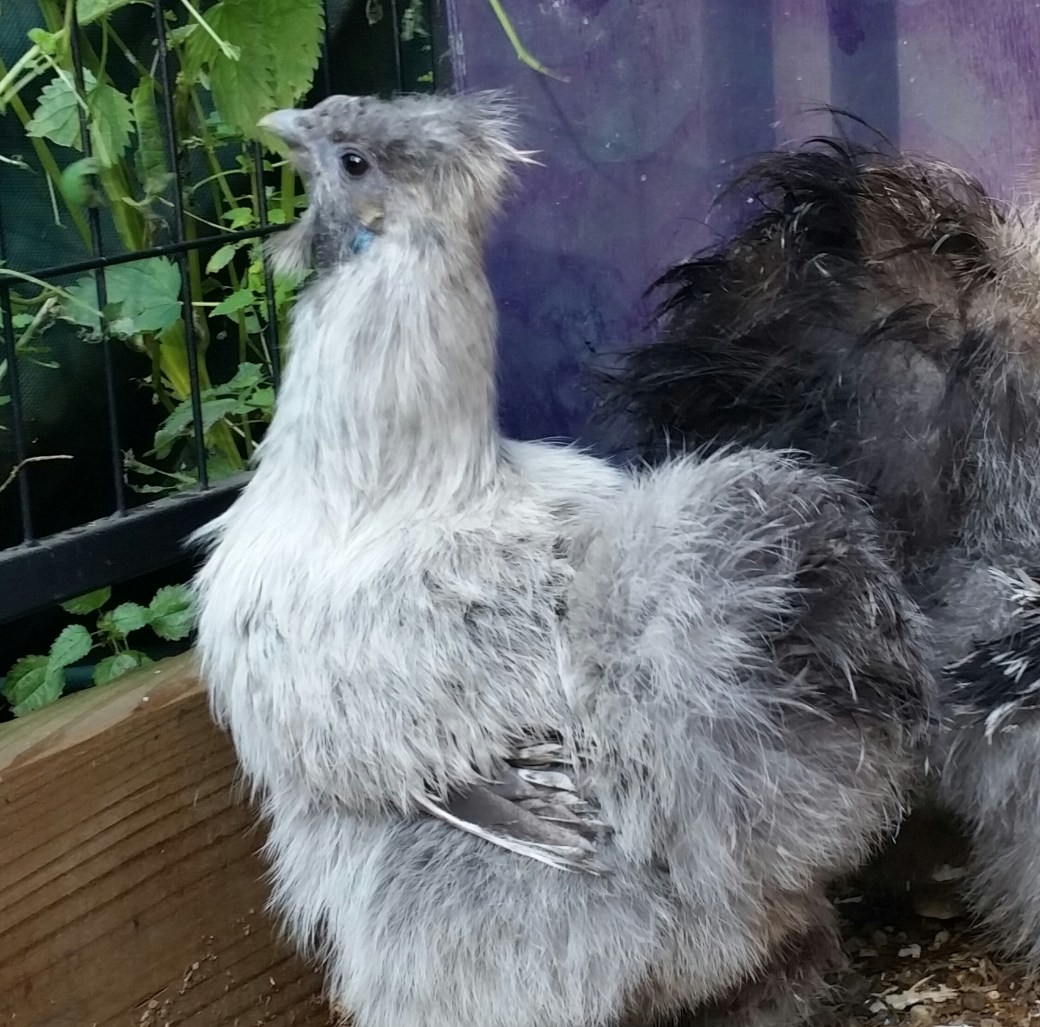
We call the losing of  feathers and the regrowing of new ones, molting.  It occurs every year as the days get shorter and there is less daylight.  During the molt, chickens typically stop laying eggs and use their down time to build up their nutrient reserves.  It isn’t just lack of daylight that can trigger a molt. Molting can occur during times of stress, lack of access to food or water, or even after a bird has been broody.

Young chicks go through four cycles of molt. The first occurs between 1-6 weeks. They lose their down and begin to grow hard feathers.  The second molt comes between 7-9 weeks.  The third is between 12-13 weeks and the last is 20-22 weeks. That is why there are always loose feathers flying around the brooder and why there is so much dander dust settling on everything.  After that, adult birds that are over 18 months will molt once a year usually during the fall. Both hens and roosters will molt.

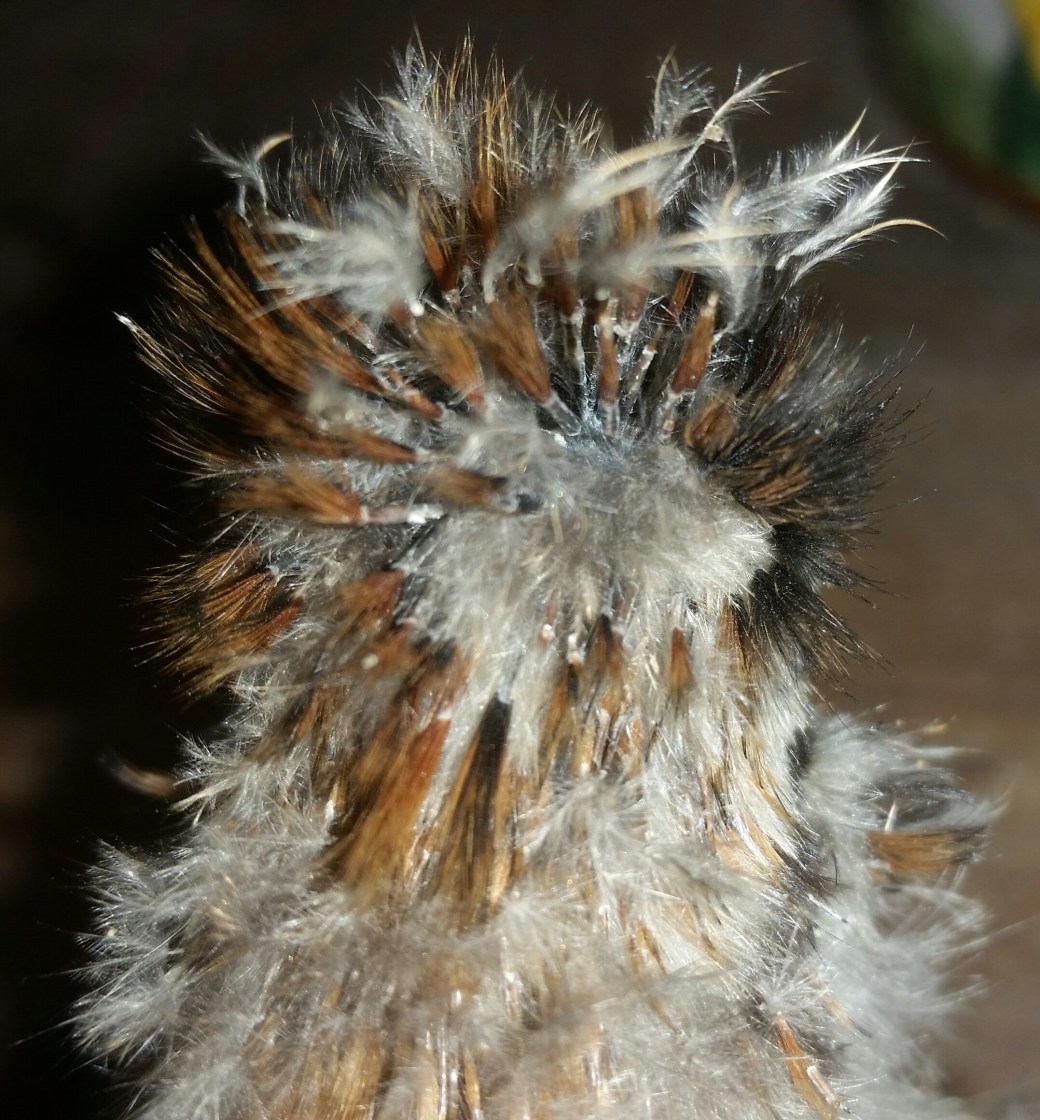
Chickens will lose feathers in a sequence starting with the head and neck. It then moves down the back and across the chest and legs. The last set will be the tail feathers.  The new feathers that emerge are called pin feathers. They are encased in a sheath that feels like plastic and has a porcupine look to it. The sheath either falls off or is removed by the preening of the bird.  The new pin feathers will grow in following the same sequence as they were lost.

Molting will cause your bird to look different. Molting can cause some chickens to look unhealthy and lose weight. The chicken is putting all of its energy into feather production and its immune system is often at a low point. Chickens need to be well cared for during this time. Vitamins in the water can be helpful. You may see bald spots and a dull comb. Your bird will be moody and short tempered. There will be reduced, or a pause in egg production. Your bird will have an increased appetite for protein.

Different chickens molt at different rates. some will lose only a few feathers and grow them back in 3-4 weeks. Other chickens lose a lot of feathers and it may take 12-16 weeks to grow feathers back. Your chicken should never actually be completely bald when molting.  The new feathers emerging are pushing out the old feathers.  If your bird has bald spots near the vent it could be from mites.  Another cause of bald spots is from feather picking.  Use Blue Kote on any wound that can develop.

Your flock will not molt in unison. Different birds will be in different stages and molt at different rates.  A “hard molt” is when the chicken loses most of its feathers in a short period of time. A “soft molt” is a slow process where they lose their feathers gradually. It could take as long as 4-5 months to complete a soft molt.

Changes to your bird’s diet during the molting process can help them through it easier. Feathers are made of 80-85% protein. Producing those feathers uses almost all the protein consumed by the chicken. This causes the hens to stop, reduce size or reduce quantity of eggs laid.  Increasing the right forms of protein can help.  Mealworms, cooked eggs, pumpkin seeds, Japanese Millet, fish, Grubblies,  tuna and sardines,  are all good forms of protein for chickens. Feather fixer is a higher protein feed to be used during molting season. Any high protein feed such as Gamebird Conditioner will be helpful.

Chickens should act normal during a molt even if they don’t look normal. If they are acting sick, then something else is wrong.  Avoid handling your chickens during a molt. The newly growing feathers are very sensitive. They emerge through a shaft and can bleed heavily if damaged. It can be painful to your bird if you handle them too much.  If the shaft breaks and bleeding occurs, use vetericyn wound and infection spray.

Remember that your chicken needs to be resting during this time. If you use a lamp in your coop to extend daylight hours, you may want to leave it off for six weeks in the fall to help your birds completely finish a molt. That way they can start laying again in top condition.  Be careful with your light timing so that you won’t leave your birds without protection and have them end up going through a hard molt in the winter. Avoid introducing stress during a molt such as introducing new flock members or keeping them in too crowded of an area.  Give them plenty of space and time and they will come through it with beautiful new glamorous feathers.


For tips and tricks for raising outstanding silkies check out our Chicken Learning Center at VJPPoultry.com .  VJP Poultry is an NPIP and state inspected hatchery located 30 miles north of St. Paul.  We hatch out silkies all year long so we always have stock available.  Like us on Facebook to get weekly updates on what we currently have for sale.

Victoria J. Peterson

20180922_170505-1