Egg Storage and Washing – Counter Top vs Refrigerator

91fQB-ak8NL._SL1500_When it comes to egg storage there are two schools of thought.  There are those who store their eggs in the refrigerator at 40 degrees F and there are those who store their eggs on their kitchen counter at room temperature. There is also controversy about whether you should wash eggs or not before using them. Lets explore these ideas and see what the experts say.

Eggs don’t need to be refrigerated but one day on the counter at room temperature is equivalent to one week in the fridge. Eggs will keep seven times longer in the refrigerator than on the counter. In fact, the average egg in the grocery store can be up to 8 weeks old by the time you purchase it. After an egg is refrigerated, it must continue to be kept at that temperature.  A cold egg left out at room temperature can sweat, which helps the growth of bacteria that could contaminate the eggs.  Many baking recipes call for eggs to be at room temperature, but refrigerated eggs should not be left out more than two hours. You can bring eggs to room temp by placing them in clean, warm water for several minutes.

British and European supermarkets don’t refrigerate eggs.  You will find eggs on the shelves next to canned goods and cake mixes. In America you will find them in the dairy case next to the milk and butter.

The USDA requires that graded eggs sold to supermarkets are washed and sprayed with a chemical sanitizer before they are sold to the public to reduce the risk of salmonella infection.  Salmonella can infect eggs in two different ways. In the first, bacteria can be passed on from an infected hen to the inside of the egg as it is developing. The second way is that it can get onto the outside of the shell after the egg is laid by coming into contact with chicken poo.

If an egg is infected with salmonella, the bacteria will multiply more quickly if the eggs are stored at room temperature.  Storing eggs below 40 degrees F halts the growth of salmonella and cooking eggs to at least 160 degrees F kills any bacteria that is present.

In the UK, Grade A hen eggs may not be washed because the process is thought to aid the transfer of harmful bacteria like salmonella from the outside to the inside of the eggs. Basically, that is opposite thought from the US. But, British hens are also more likely to be vaccinated against salmonella than US hens.

As eggs leave the hen, they are given a protective bloom on their surface. This bloom keeps air and bacteria out.  Once eggs are washed the protective bloom will be gone.  Unwashed eggs will last up to two weeks on the counter top and three months or more in the refrigerator.  Washed eggs will last at least 2 months in the fridge but won’t taste as fresh as unwashed eggs of the same age.  If you wash your eggs, you need to cook them immediately or put them in the fridge. Do not leave washed eggs on the counter top. Once washed, bacteria begins to grow.

Keep the eggs from your backyard hens as clean as possible.  Change your nesting box bedding often.  A roll away nesting box will also help to keep your eggs clean by gently removing them away from the nesting box bedding. Fine sand paper can be used to scrape off any dried poo from the egg.

If you are interested in washing your eggs use warm water. The water should always be warmer than the egg itself or the inside will contract pulling bacteria into the egg.  You can use an egg cleanser with an egg brush to remove dirt. Scrubbing pads work like sandpaper to gently remove dried chicken poo.   Some states require that eggs be washed before they can be sold, so check your state’s status.

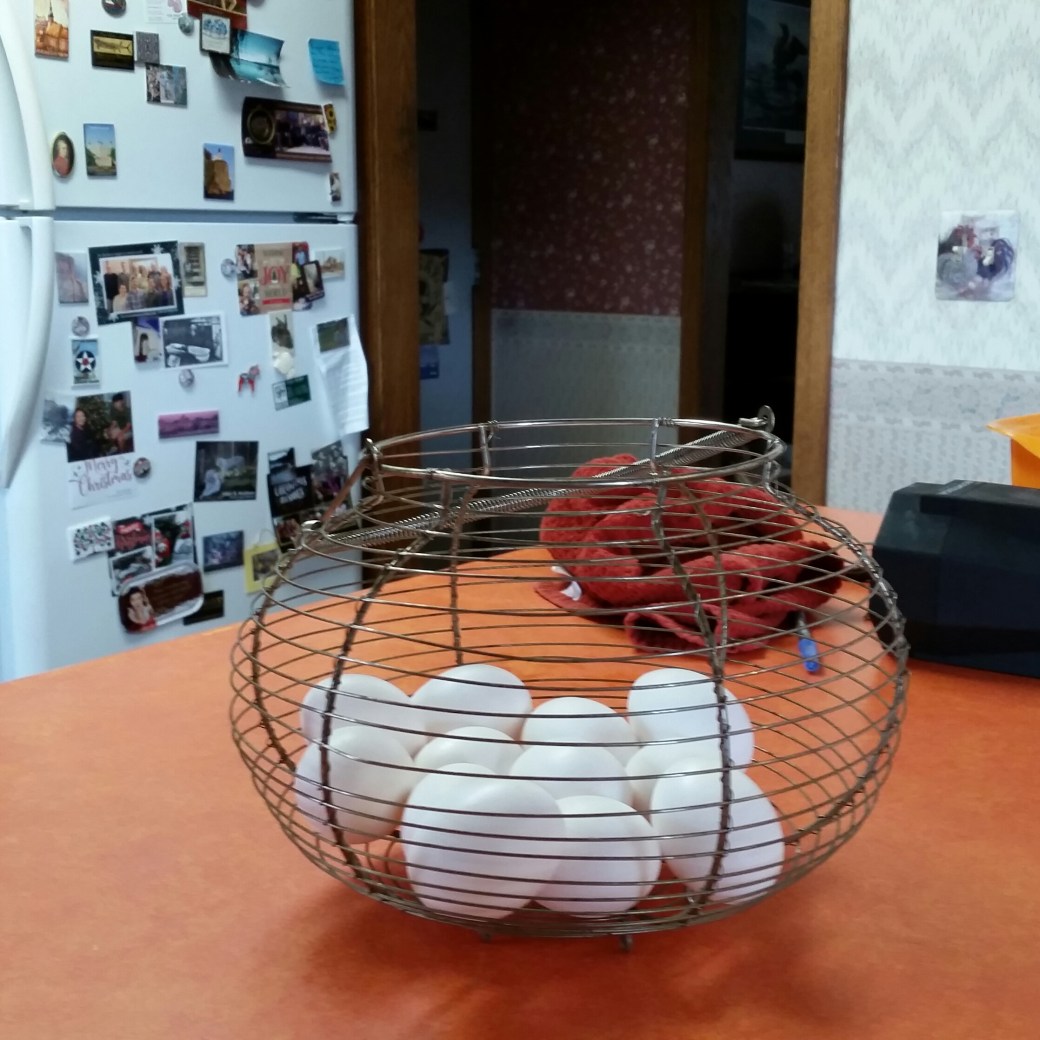
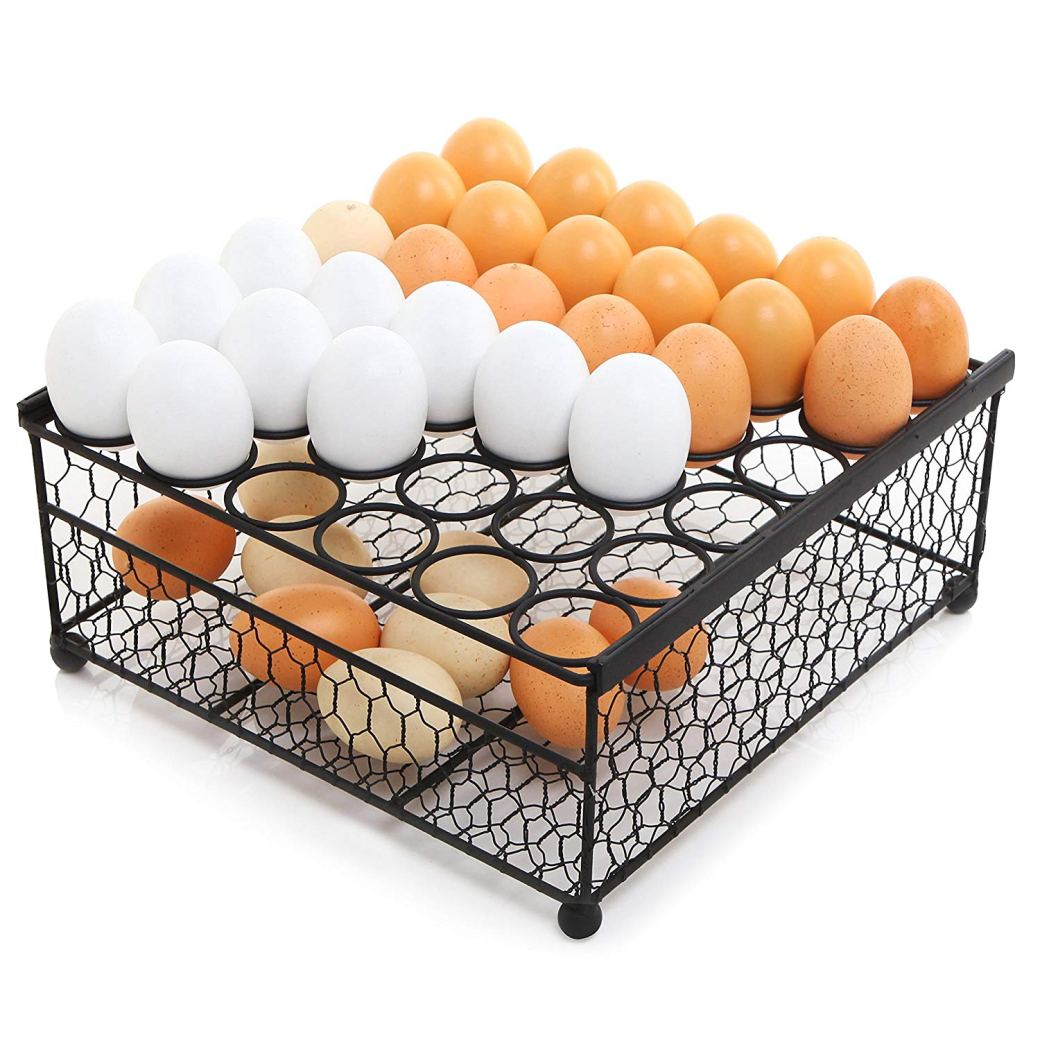
It is up to you whether you keep your eggs on the counter in a cute spiral holder or a two dozen fridge egg storage unit in the refrigerator.  Once cold, the eggs need to stay cold. Don’t take them out and leave them on the counter for more than 2 hours.  If you choose to wash your eggs, you must then refrigerate them.

For tips and tricks for raising outstanding silkies check out our Chicken Learning Center at VJPPoultry.com .  VJP Poultry is an NPIP and state inspected hatchery located 30 miles north of St. Paul.  We hatch out silkies all year long so we always have stock available.  Like us on Facebook to get weekly updates on what we currently have for sale.

Victoria J. Peterson
20190118_122308-1

How to Stop Egg Eating Chickens

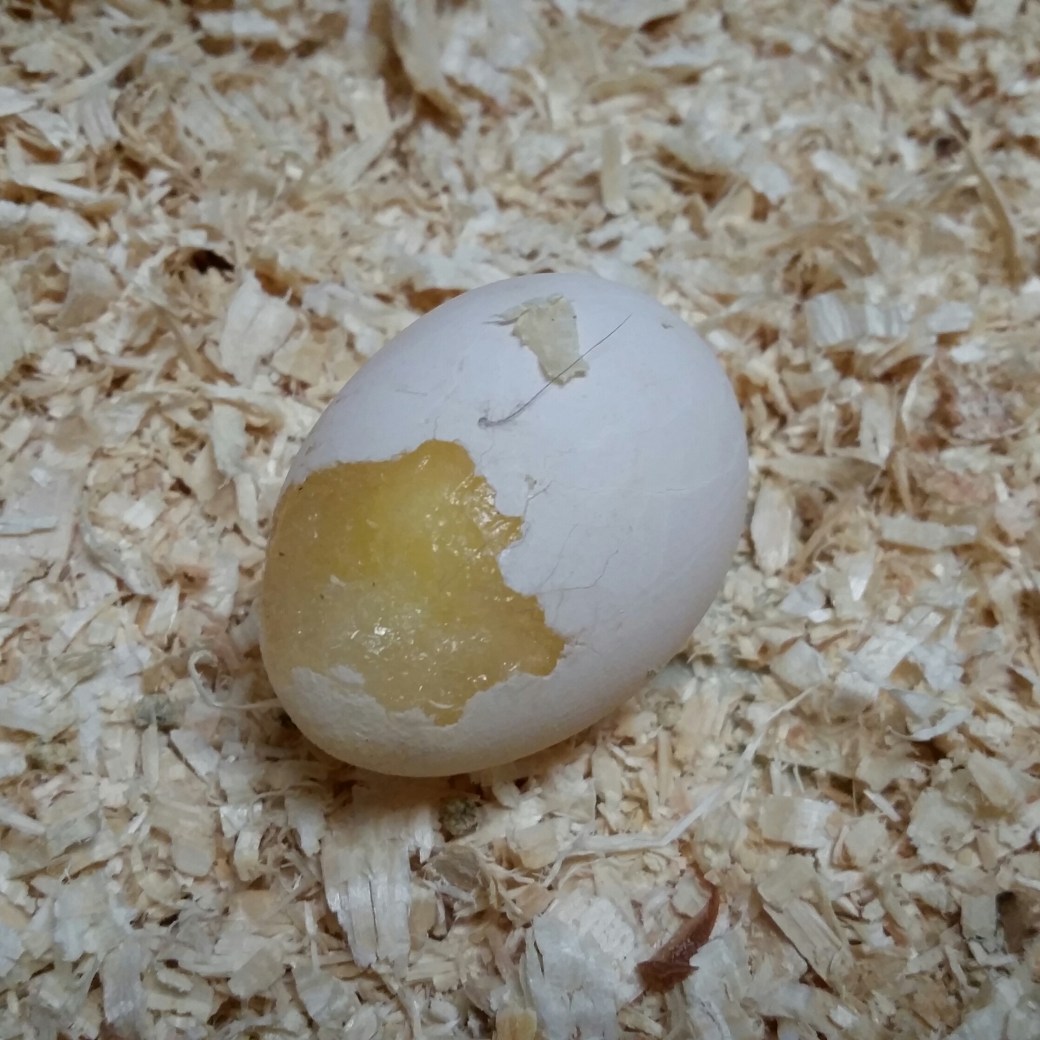
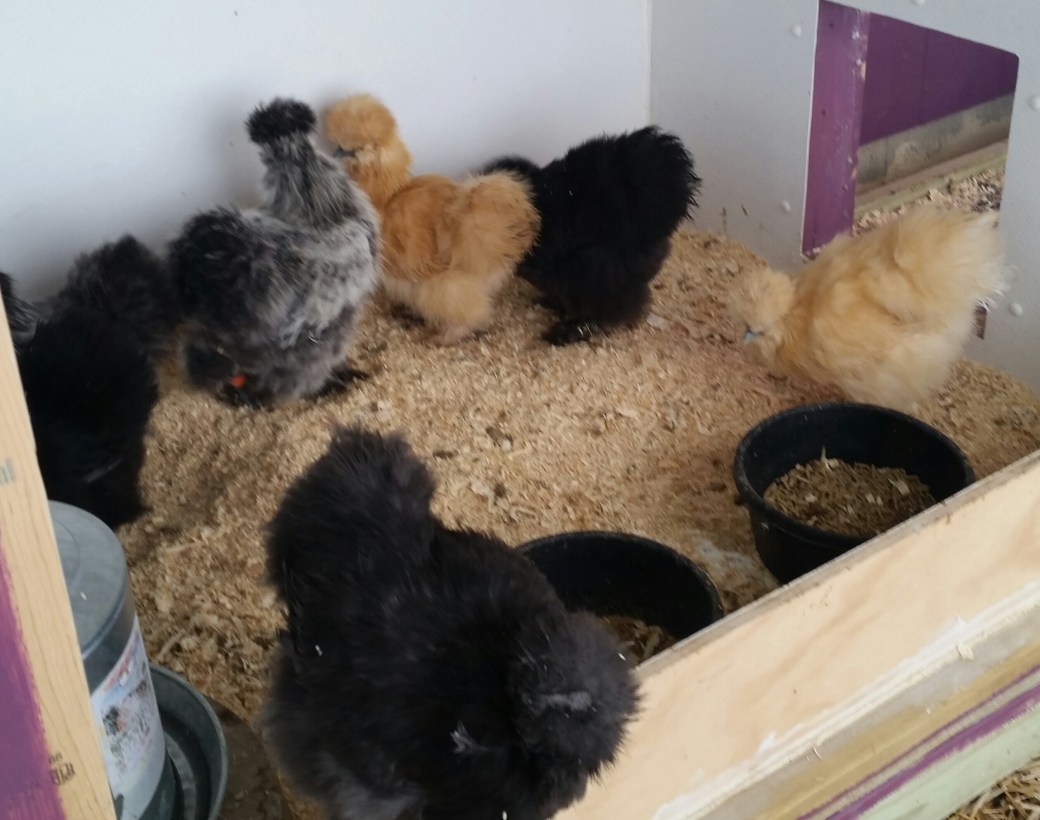
20161019_111736Every once in a while you may find broken eggs in your coop, nesting box or run. Predators that like eggs may be the culprit. These predators include weasels, rats, skunks and snakes. If that is the case then you need to take steps to keep them from entering your coop and run.  More than likely, though, you probably have an egg eating chicken.  It is important to stop this behavior before it is taught to your entire flock. Hens will copy each other and suddenly everyone is eating your family’s eggs.

If this habit is not broken immediately, it will be harder to break them of the habit later.   You can usually figure out who the culprit is by the tell tale yellow yolk on its beak.  Carefully check each chickens beak and you should be able to find the one or ones who have been doing it.  Isolating the chicken from the rest of the flock for a few days can help them to forget about how much they like to eat eggs and while they are isolated they won’t have access to other hen’s eggs.  A dog  kennel works well placed in the coop. They can see others but not get too close to the eggs. But, preventing in the first place is easier than trying to stop it.

The first thing to prevent egg eating is by reducing egg breakage in the first place. A broken egg is an open invitation for a quick, tasty meal for a chicken.  Most hens use nesting boxes when laying eggs. However, not all, especially young pullets who will begin by just laying their eggs anywhere on the floor of the coop.

Provide at least one 12 inch square nest box for every 4 to 5 hens in the flock. The boxes should be at least 2 feet off the ground and 4 feet from roosts. Keep at least 2 inches of clean dry nesting material in the box at all times.  Nesting pads at the bottom are soft and prevent egg breakage. They can also let you know if you have an egg eater in that box as the pads will be stained with yellow yolk.

If there is a lot of congestion in your nesting boxes, you may want to remove any broody hens that are taking up valuable space and place them somewhere else. Hens like privacy when laying eggs.  If you have an egg eater eating right from the nesting box you may want to invest in a roll away nesting box.  These are designed to gently roll away the egg after it is laid so that other birds can not get at the egg and you can pick them up when it is convenient for you.

Eggs that have a hard shell will be more difficult to peck open than thin shelled ones. Make sure that you are offering oyster shell as a calcium supplement in a bowl by itself. If you feed back egg shells to your hens, make sure that they are smashed up so that the hens won’t associate them with other eggs.

Make sure that your hens are eating enough protein. Layer feed should be 16% or higher.   Gamebird feed is good.  Your chickens may be missing something nutritionally which is causing them to look for it in raw eggs.  You may want to serve them some cooked or scrambled eggs to up their protein. You should not give them raw eggs as they could learn to view this as a good food source.

Collect eggs early and often.  Most eggs are laid before 10 am. Collecting them early doesn’t give other chickens the chance to get bored and start pecking at them.  Giving them other things to peck at such as Flock Blocks or treat toys can relieve boredom.

Over crowding can lead to stress in a flock, which can lead to egg eating.  Make sure that there is enough space in your coop for all of your hens.  Always have food and fresh water available and set up a second feeding station if you have a bully hen guarding the first station.  Give your hens the opportunity to be outdoors in some kind of run or free range situation.

Try not to startle your hens. Gently remove eggs from under them. Sudden movements can lead to egg breakage.  Keep the nesting box area darkened with curtains and low lighting.  Bright lights lead to stressful birds and other hens will be able to see the eggs in the nesting boxes and might try to break the eggs open.

Placing ceramic eggs or wooden eggs in nesting boxes or around the coop can also be a deterrent to egg eating. Pecking a ceramic egg and not receiving a snack can re-train a hen into thinking that eggs may not result in a meal. Golf balls will also work.

I would not get rid of a hen just because she was caught eating eggs. I find that these eggs are almost always thin shelled to begin with.  Provide them with a healthy diet and adequate space and egg eating should diminish.

For tips and tricks for raising outstanding silkies check out our Chicken Learning Center at VJPPoultry.com .  VJP Poultry is an NPIP and state inspected hatchery located 30 miles north of St. Paul.  We hatch out silkies all year long so we always have stock available.  Like us on Facebook to get weekly updates on what we currently have for sale.

Victoria J. Peterson
20190109_095624-1


Frozen Chicken Eggs – Use and Prevention

whites outsideCold winter temperatures can effect your chicken’s laying patterns.  Chickens lay less eggs in cold weather because they know that now is not the time to be starting a family. Less daylight during the winter is also a clue that they should rest and reserve their energy for springtime.  Each egg that is laid in the winter is like a gift to your family and you want to protect it in every way that you can. Nothing is more disappointing than picking up an egg and seeing the open, gaping cracks.
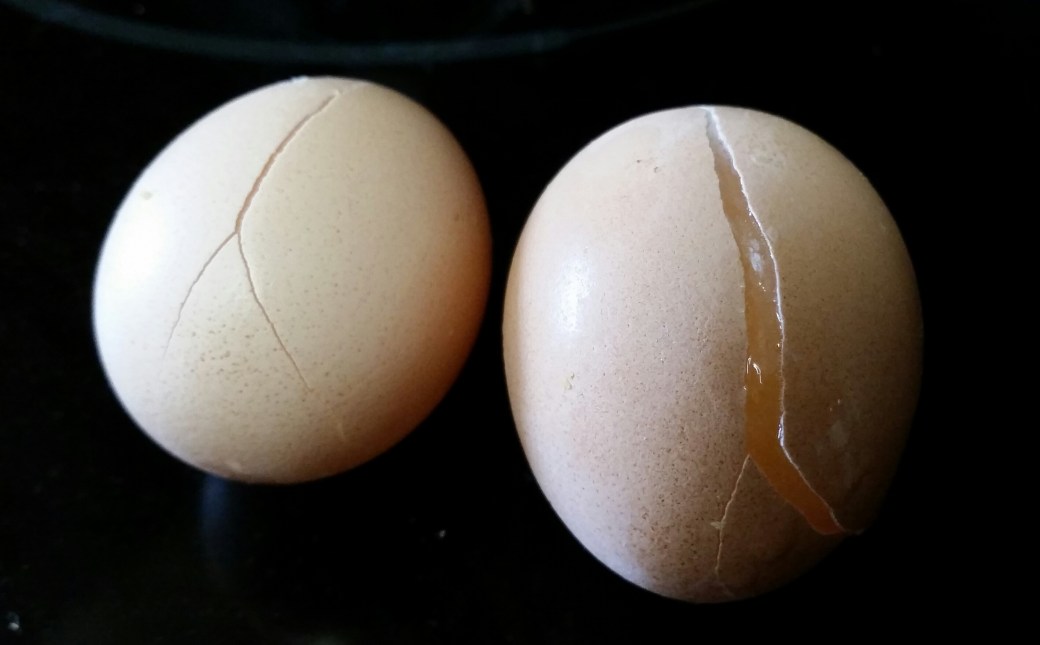
Eggs become frozen and crack due to the fact that the moisture inside of the egg expands as it becomes a frozen solid. This expanding mass has nowhere to go but out and the shell cracks under the pressure.  Eggs will freeze within 36 minutes of temperatures below 32 degrees F. However, if they are protected they can last longer.

Many people ask whether or not you can eat eggs that have become frozen out in the coop. There are different degrees of frozen when it comes to eggs.  Sometimes an egg seems frozen, but it has not cracked.  You can go ahead and refrigerate it and use it after it has defrosted.  These eggs are best hard boiled. Frozen eggs do not work well in baking. The rise is never very good.  Freezing causes  the yolk to become thick and syrupy.  The yolk will not blend well with the white. Do not keep them for more than a few days after thawing.

If the egg is cracked, but the membrane does not seem to be split, you can still use it but do so right away and cook it completely.  If the egg shell is dirty, I would not use it. You never know if somehow bacteria could have entered. Sometimes the crack is just a hairline and hard to see.

If the egg is cracked and the membrane is broken, the white will be oozing out once it is thawed. These eggs should not be used for human consumption.  Bacteria will have entered through the broken membrane and shell.  You could cook the eggs and feed them back to your dog or your chickens. This is what I do.  Their digestive tracts are better equipped to handle bacteria than ours are.

Unwashed eggs can be left out of the counter for many weeks without being refrigerated because they are surrounded by a protective bloom which is deposited by the hen as she lays the egg. Washing removes this bloom. If an egg is outside in cold conditions and then is brought inside into a warm environment, condensation can occur on the outside of the egg. This condensation will make the egg wet and remove the protective bloom.  Make sure that you refrigerate these eggs and do not leave them out.  Rain and snow can do the same thing.

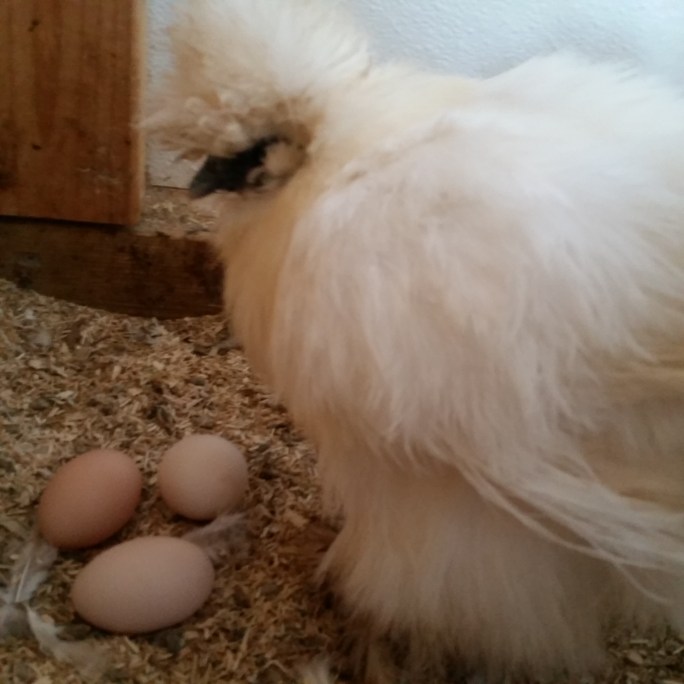
There are many ways to prevent having frozen eggs.  The best way is to collect your eggs as often as possible. Most eggs are laid in the morning.  If you work during the day you could ask family members or neighbors to help you out.  My silkie hens like to sit on the eggs whether they are broody or not. They will keep your eggs nice and toasty until you can retrieve them.

Hanging curtains around your nesting boxes will help to retrain heat inside. As the hens sit inside to lay their eggs, they will give off body heat. Use as heavy a material as possible for curtains which will be good insulators.

Use a thick nest of bedding in the bottom of your boxes.  Straw is a wonderful insulator as air is trapped in it’s shaft.  Pine Shavings also work well. I like to kick the shavings with my boot in order to loosen it up and create a soft, insulated area.  My silkies do not use nesting boxes and just pick a corner of the floor.  It is important to keep these corners clean and fluffy.

You may want to heat your coop with panels.  These can be placed near nesting boxes in order to raise the nearby temperature.  Heated dog mats can be placed in areas where eggs are laid.  Even seedling mats can raise the temperature where the egg is sitting and prevent cracking.  Survival blankets or hand warmers can also be used in the egg laying area.

Consider insulating the top, bottom and outer walls of your nesting boxes or packing straw around the outside for winter. Position your nesting boxes so that they face east or south blocking cold wind. Make sure that there are no ground level drafts in your coop. I find that eggs can be laid anywhere.  Most frozen eggs that I find are laid near the pop door or in the run. Hang clear plastic tarps up in your run to use as a wind barrier on the north and west sides.

When I collect eggs during cold weather, I place them in cardboard egg cartons. This helps to insulate and keep the eggs somewhat warmer. It also keeps them from knocking into each other as I carry them. Eggs often crack after they have been taken out of the nesting box and are jostled around in the cold.

It is also ok to just not let chickens out into the run in very cold weather. They will be fine in the coop and their heat can help keep the eggs warmer. In the wintertime, each egg is precious.

For tips and tricks for raising outstanding silkies check out our Chicken Learning Center at VJPPoultry.com .  VJP Poultry is an NPIP and state inspected hatchery located 30 miles north of St. Paul.  We hatch out silkies all year long so we always have stock available.  Like us on Facebook to get weekly updates on what we currently have for sale.

Victoria J. Peterson

20190102_100012-1


Chicken First Aid Kit – Be Prepared

20181218_152413-1Chickens are like all other animals. They can become injured or sick and require immediate care in order to recover.  A fight can occur between birds causing injury or your bird could be attacked by a predator. An unexpected illness can leave you scratching your head on how to care for your patient. I recommend that you prepare for these situations by having a stocked first aid kit handy and ready to use.
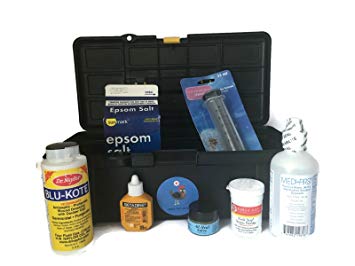
If your bird has been attacked and has an open, bleeding wound you will need to first clean the area. Hydrogen Peroxide or chlorhexidine solution is good for this.  After the wound is cleaned apply Vetericyn, neosporin or triple antibiotic ointment to help the wound heal. Vetrap bandaging or non stick guaze pads are nice because they don’t stick to feathers when removed.  After the wound has healed apply Blu Kote which will dye the area blue making it less attractive to other birds.  If pain relief is needed use 5 aspirin  (325 mg) to one gallon of water and use in waterer.

If your bird is not feeling well it is important to have on hand a variety medicines to help, once you diagnose the problem.  Epsom salts are great for soaking hen’s bottoms who are egg bound. Preparation H can help with prolapsed vents.  Vetrx is great for relieving congestion and stress. Place it near nostrils. Eye Wash is great for cleaning out eyes that become gunky. It is a good idea to have a wormeron hand if you discover worms in your bird’s chicken poo.A Mite and Lice treatment is handy to have at a moment’s notice. Having Corid ready to go for coccidiosis can be a life saver.  Nutri Drench or Save a chick can help with fast vitamins to the system.  Vaseline is handy for frostbite or scaly leg mites.  Tylan is used when you need to give a dose of antibiotics to your bird.

Things of a general nature to include in your chicken first aid kit would include: Q-tips, Pet nail trimmer cornstarch (stop bleeding) , Feeding syringe or dropper. latex gloves should be used so that germs are not transferred between you and the patient. A small scissors and tweezers are also handy to have nearby.

Create a sick bay area area for your bird to rest and recover in, away from the rest of the flock. Animal crates or Kennels are wonderful for this. Use soft comfortable bedding or puppy pads inside.  Food and water cups can hang on the wire sides of the kennel. Watch to make sure that your bird is eating and drinking. You may have to hand feed if they are not. Exact Hand Feeding is a product made for birds to use when they can’t eat on their own.  When it is time to reintroduce your bird back to the flock, remember that she will be a stranger to them and the pecking order will need to be established again.

Store all of your chicken first aid equipment together in some kind of tool box.  That way, you won’t be searching all over the house for items during times of emergency.  Have the phone number of a vet who knows something about treating chickens. It is easier to do this ahead of time rather than trying to locate someone later. Having a stocked first aid kit can give you a sense that you will be able to handle any emergency that occurs.

For tips and tricks for raising outstanding silkies check out our Chicken Learning Center at VJPPoultry.com .  VJP Poultry is an NPIP and state inspected hatchery located 30 miles north of St. Paul.  We hatch out silkies all year long so we always have stock available.  Like us on Facebook to get weekly updates on what we currently have for sale.

Victoria J. Peterson

71cmxx9ixal._sx355_


How to Treat a Chicken That Has Been Attacked

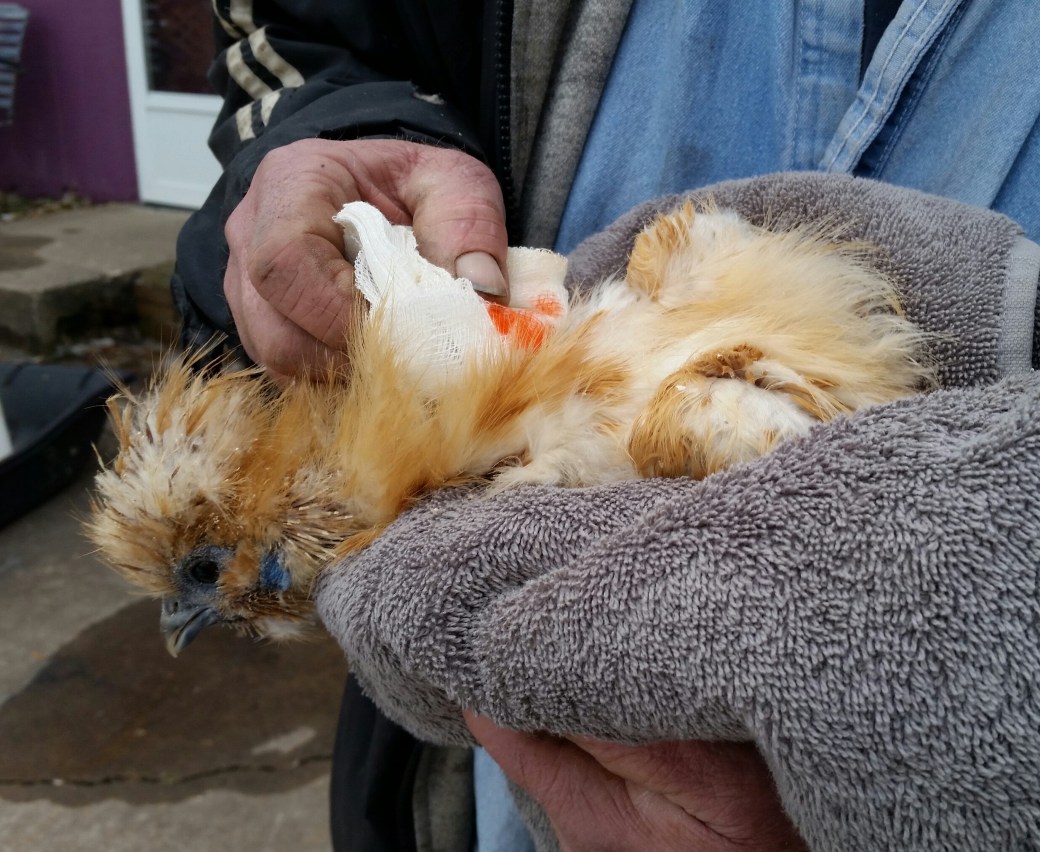
20181218_152126-1There is nothing more devastating than finding one of your flock on the ground bleeding from an open wound. How you handle the situation will go far in determining a positive outcome for your bird.

Chickens are attacked in one of two ways. Males fight each other using spurs, feet or beaks and females will peck at another bird repeatedly, ultimately drawing blood. Predators will leave terrible wounds using teeth, claws, beaks and talons.

Wounds can either be on the surface or the worst could be puncture wounds that go into internal organs. Wounds close to the skins surface can be doctored at home but a deep wound will need the attention of a veterinarian.

If you find a bleeding chicken with a cut under the skin, it is important to act quickly.  Wrap it up in a towel and remove it from the rest of the flock. Bleeding, red wounds are attractive to other chickens who will want to peck at it. If the puncture wounds are deep, keep the chicken quiet to prevent shock.

For shallow wounds,  clean the wound with hydrogen peroxide.  You can use styptic powder to help stop the bleeding or apply pressure with your hand.  Wounds can also be cleaned with Betadine, Chlorhexadine 2% solution spray or Vetericyn wound care spray.   Dakin’s solution is good for deep or dirty wounds.  Dankin’s solution is made by adding one tablespoon of bleach plus one teaspoon of baking soda to one gallon of water.  This needs to be made fresh daily.

After the wound has been cleaned out, you will want to use a a product like neosporin (don’t use the kind that contains pain relief) or triple antibiotic ointment to prevent infection.  If infection does set in, clean the wound 2-3 times daily. Contact a vet for antibiotics. Redness, pus or heat  indicates infection.  If it is warm out, apply awound dressing to prevent flies from laying eggs in the wound.

Keep your patient separated from the rest of the flock in a dog crate or dog kennel for better observation.  Cage cups can be hung from the side for food and water.  Always make sure that your bird is eating and drinking.   Offer water on a spoon or dropper if they can’t drink on their own. Add electrolytes and vitamins to the drinking water to help with shock and recovery.  Hand feed if necessary with spoon or dropper. Add water to food to make a mash or try a bird formula if needed.

Chickens do feel pain but will go to great lengths to not show it. If you feel that pain relief is needed an aspirin drinking solution can be offered.  Add 5 aspirin (325 mg X 5) tablets to one gallon of water for up to 3 days. Only use if there are not internal injuries.

When scabs have healed over, you can consider returning her to the flock. Remember that any redness will cause other hens to peck at the wound so make sure that she is fully healed. Because she has been gone for more than a few days, you will need to reintroduce her back to the flock as if she is a stranger to them.  How To Integrate New Chickens Into Your Flock  is a good refresher.

For tips and tricks for raising outstanding silkies check out our Chicken Learning Center at VJPPoultry.com .  VJP Poultry is an NPIP and state inspected hatchery located 30 miles north of St. Paul.  We hatch out silkies all year long so we always have stock available.  Like us on Facebook to get weekly updates on what we currently have for sale.

Victoria J. Peterson

20181218_152413-1