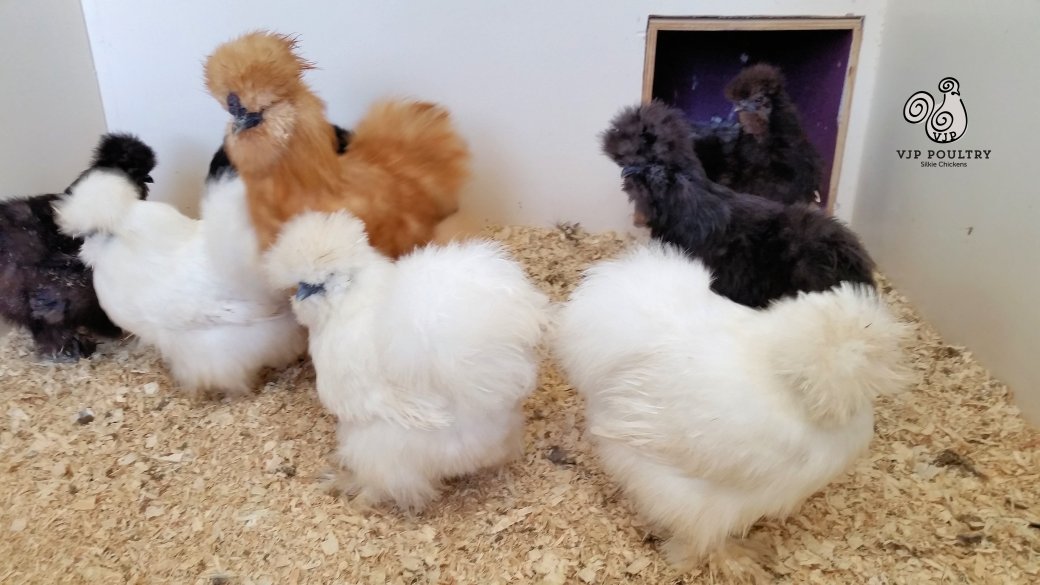
 Attending a Poultry Show is an educational experience. Whether you are showing yourself or are there just to see what everyone else brought, you will come away with a better understanding of what silkies and other breeds are all about.
I’d like to get people thinking about the two Minnesota Poultry shows that happen in the fall. These are the shows where most people showing silkies will be at in this area. The first is the Minnesota State Poultry Association Show, otherwise known as the Hutchinson Show. The show is located on the McLeod County Fairgrounds. Here is a link to their site http://www.mnstatepoultry.com/
The second fall show is the Brown County Pigeon and Poultry Association’s New Ulm Fall Classic. Information can be found here.
Entry forms can be found on both sites. Silkies are classified as Bantams. If you bought them from VJP Poultry, they are bearded. The breed is silkie but the variety is the standard color – white, black, blue, buff, splash, grey , partridge and self blue (lavendar). These are all things you will need to know when filling out your entry form.
All birds entered must originate from a hatchery or breeding flock that is classified U.S. Pollorum – Typhoid clean under the National Poultry Improvement Plan (NPIP) or be negative to a Pollorum – Typhoid test within 90 days prior to the opening date of exhibition. You will need a form showing your test results when you send in your entry form for the show.
If you bought chicks from VJP Poultry you can get a Statement Of Origin form. This form shows that we are NPIP and we are Pollorum – Typhoid clean. You will not need to have your chicks tested unless they are older than 12 months of age as long as you have this Statement Of Origin form. After they have turned one year old, they will need to have the testing done again in order to be shown.
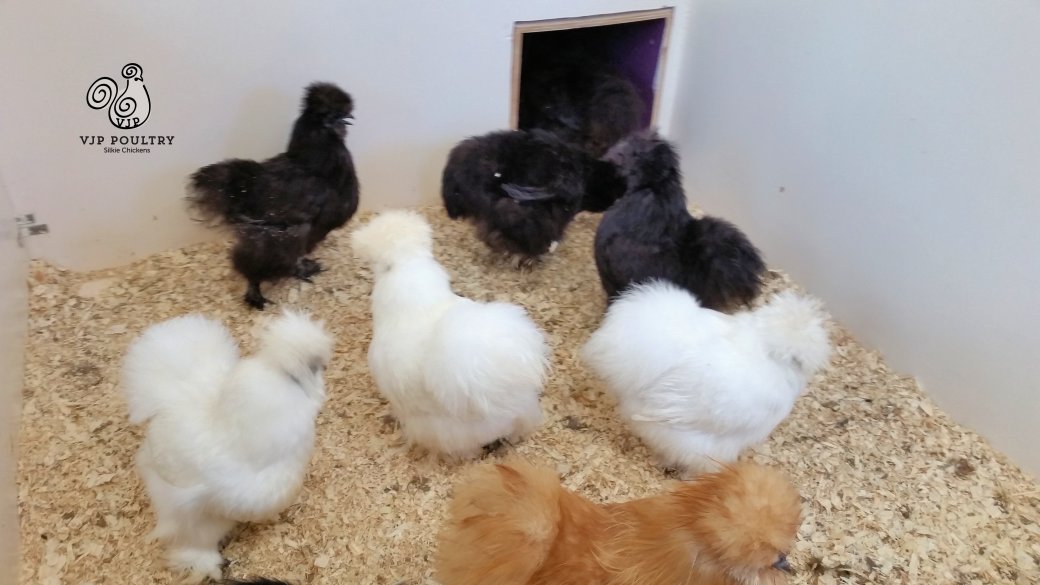
The first step you would take if you are considering showing is to separate out your best birds into a conditioning area. Males and Females should be separated as well. During the months leading up to the show you will want to be be conditioning your birds to have them be at their best. The silkies in the pictures on this page are birds I am considering for this fall’s shows.
It is important to know what the Standard of Perfection for a silkie is. Here is alink to the silkie standard. Understanding what the silkie standard says will help you in choosing which birds you want to put in this conditioning pen.
Silkies you are considering should be kept indoors. The sun can discolor feathers and grass will leave green marks on them. The birds should also be on a bedding that will protect the foot feathers, such as pine shavings. Rocks or hard bedding will break those feathers. Feed them a good diet, high in protein such as a game bird conditioner feed. Calf Manna pellets can be fed as a supplement as well as additional vitamins.
Don’t forget that you will need show cage waterers and cage cups for food. You want them to be as small as possible because the show cages are small to begin with. You do not want your silkie getting wet before judging starts.
You don’t need to jump into showing immediately. Attend some shows this fall to get an idea of what you need to work with next year. Some much can be learned by talking with others who are showing your same breed of bird. Observing winners and taking pictures helps you to remember what makes a Show Quality Silkie.
For tips and tricks for raising outstanding silkies check out our Chicken Learning Center at VJPPoultry.com . VJP Poultry is an NPIP and state inspected hatchery located 30 miles north of St. Paul. We hatch out silkies all year long so we always have stock available. Like us on Facebook to get weekly updates on what we currently have for sale.
Victoria J. Peterson
 We know that silkies are extra fluffy, but that extra fluffiness can be the perfect spot to harbor mites. Poultry mites are very tiny insects that will from time to time try and set up camp on your silkie. It is a very common and natural occurrence that can happen no matter how clean you keep your coop. If your bird is outside at all, it is being exposed to mites. Many people believe that mites are carried by wild birds. Bird feeders should not be placed near your coop.
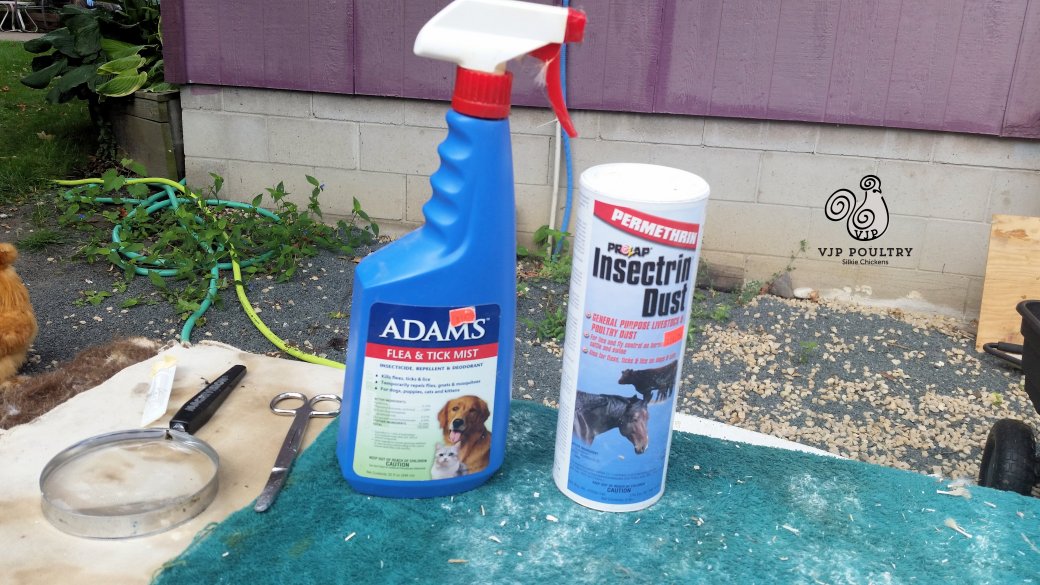 The first thing we do at VJP Poultry in a check up is to set up our work area. We use an ironing board. Mite checking is easier if two people do it together. One is holding the bird and the other is spreading the feathers. Tools you might need are:
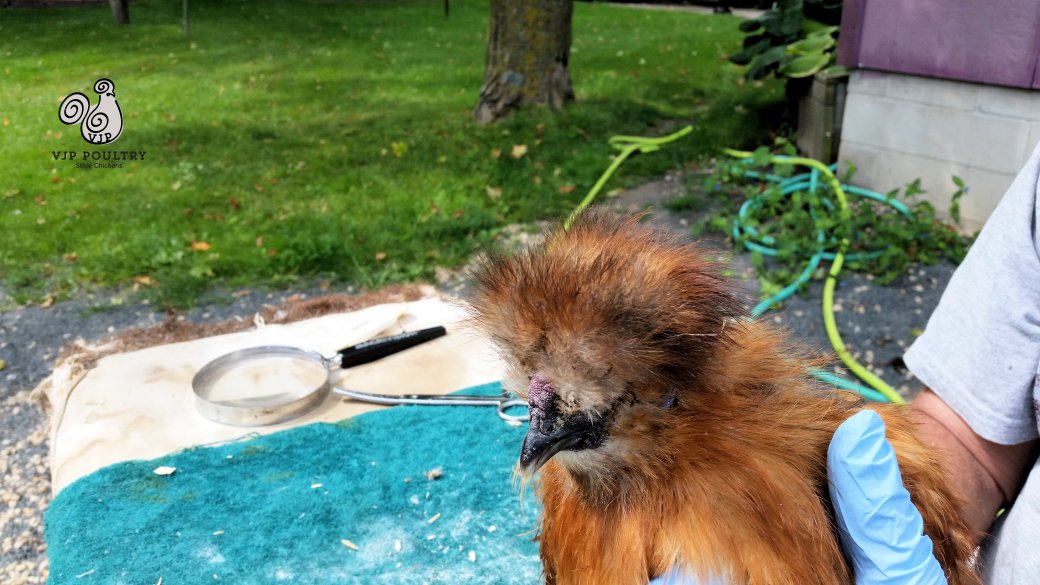
 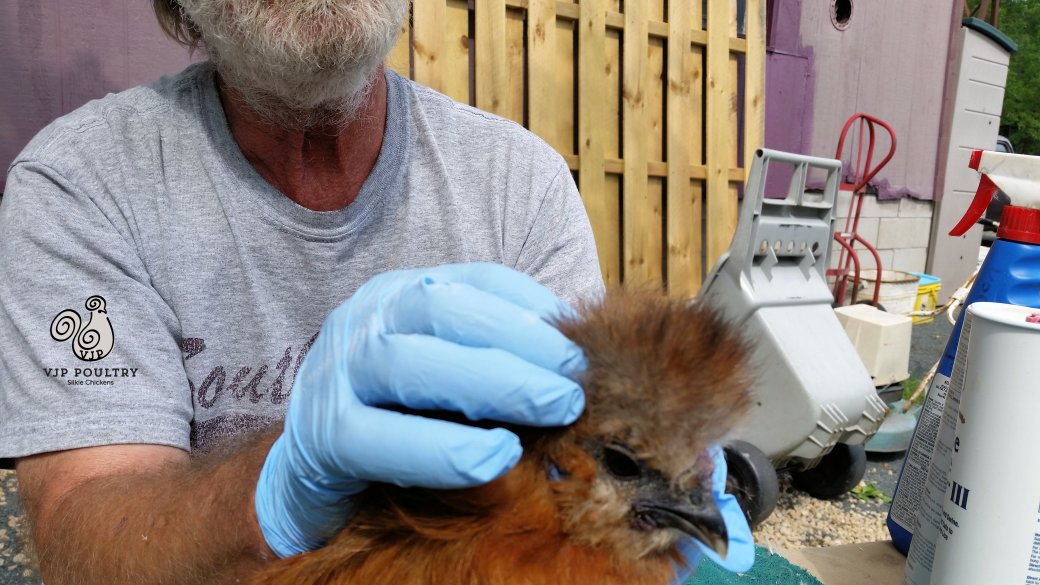 Capt’N Billy was our model for our pictures. He is a young partridge rooster. The first area we check over is the crest. Use your fingers to spread open the feathers so that you can see the base of the feathers against the chicken’s skin. With silkies it is easiest to look at the feathers. Since the skin is black the dark mites do not show up easily. You are looking for clumps of mites that are moving. Movement is key. The bugs are so tiny that it is easy to confuse it with dirt. If it is moving, its mites. Check in several different places in the crest as they could be anywhere in there.
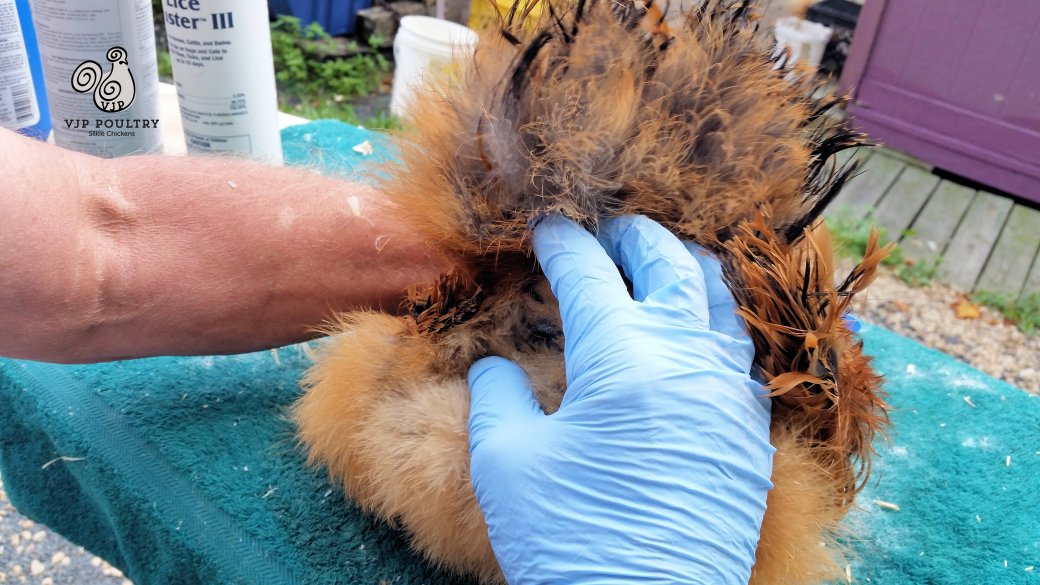 We also look at the base of the tail and under the wings. Turn the bird around and check out the vent. You may see little bite marks around the vent. Those bite marks are letting you know that mites have been there. Dust or spray carefully around the vent area. You don’t want any chemicals to enter through the vent.

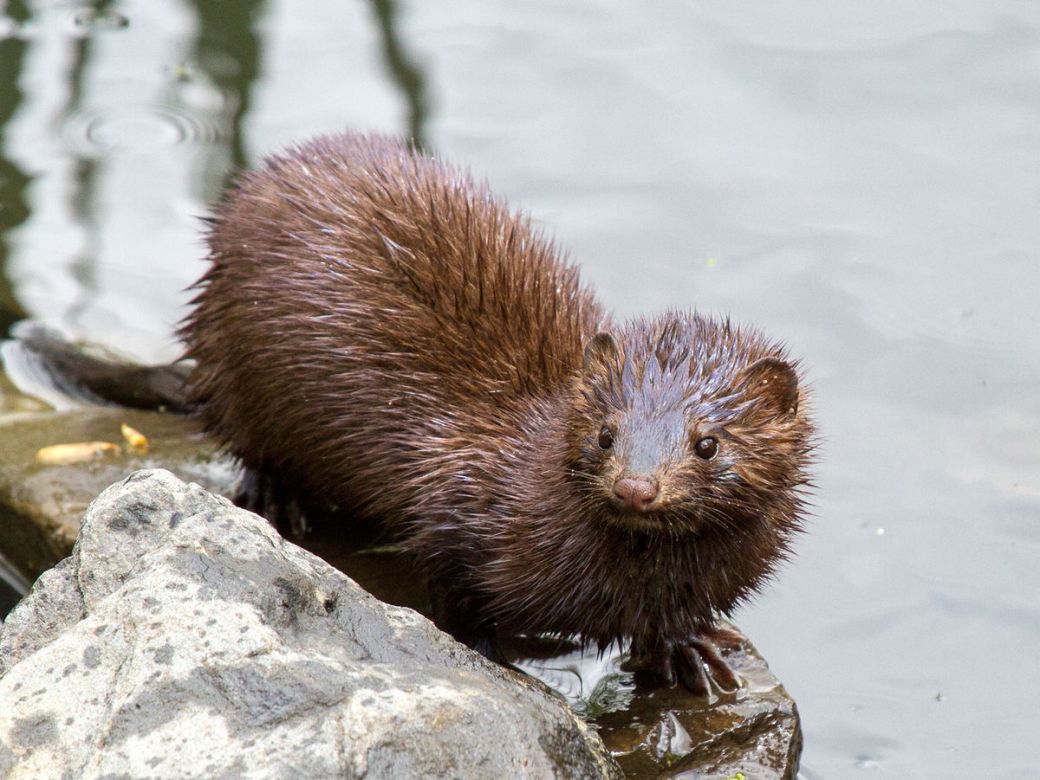
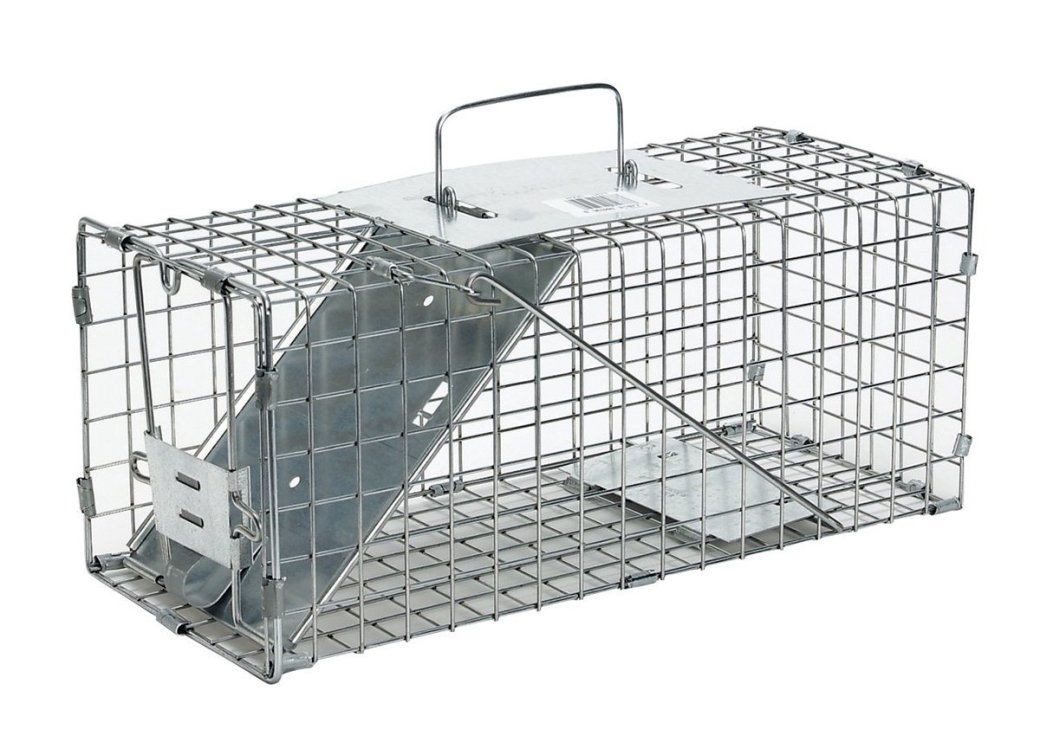 Keep your coop secure with no gaps that they could squeeze through. Mink can crawl through holes as small as one inch diameter. They are also excellent diggers and chewers and can come into your coop from underneath. Concrete floors in the coop are good or use paving slabs to slow them down. You may want to bury some hardware cloth along the bottom of the fence.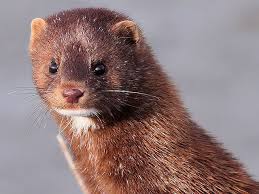
 VJP Poultry