Tag: chicken blog
Silkies for Sale – 7/9/17
How to Quiet the Crow of a Silkie Rooster


Some people find the crowing of a rooster charming and a part of country life. Others disagree and end up putting notes in your mail box. Rooster crow in the morning with the rising of the sun but also throughout the day. Here are some ideas for calming your bird and creating happy neighbors.
Roosters crow as a way of showing who is in charge. They also use it as a way to alert the flock to warn the of an incoming predator. They will crow if something like a fox is attacking the chicken coop.
We have great neighbors and have never had a complaint about rooster vocalization. Many cities have ordinances against having roosters because of the noise issue. Always check to see what are the laws concerning chickens in your town before considering a rooster. Silkies do crow. Some people think that there crow is less loud than other breeds. I am not sure if this is true or not. I think that some individual roosters are just louder than others.
One very popular solution is a rooster collar. You can buy one online or try and make one yourself using velcro. Fasten it around their neck under their hackle feathers. It will muffle the crow, but not eliminate it. It does not shock or punish the rooster, but it makes the crow quieter. You could also try a child’s tube sock or a baby sock with the foot part cut out.
Limiting the number of roosters you have can cut down on the amount of crowing. Roosters crow back and forth as a way to show dominance. One rooster crowing will cause the others to begin a crowing contest.
Giving a rooster more hens to organize gives him less time to crow. He is busy with his job as flock master and he does not become bored. Boredom can lead to crowing.
Keeping a rooster well fed will also cut down on crowing. If he is busy eating and presenting the hens with food, he doesn’t have the extra time for crowing.
We keep our flock in the coop until the neighbors are up for the day. I usually don’t open the doors to the run until after 8 am. They will crow inside the coop as soon as the sun is up but the sound is very muffled. There are ways to sound proof the coop but you must always be aware of ventilation. Some people will even bring their roosters inside their homes at night and put them in dark crates to keep their neighbors happy.
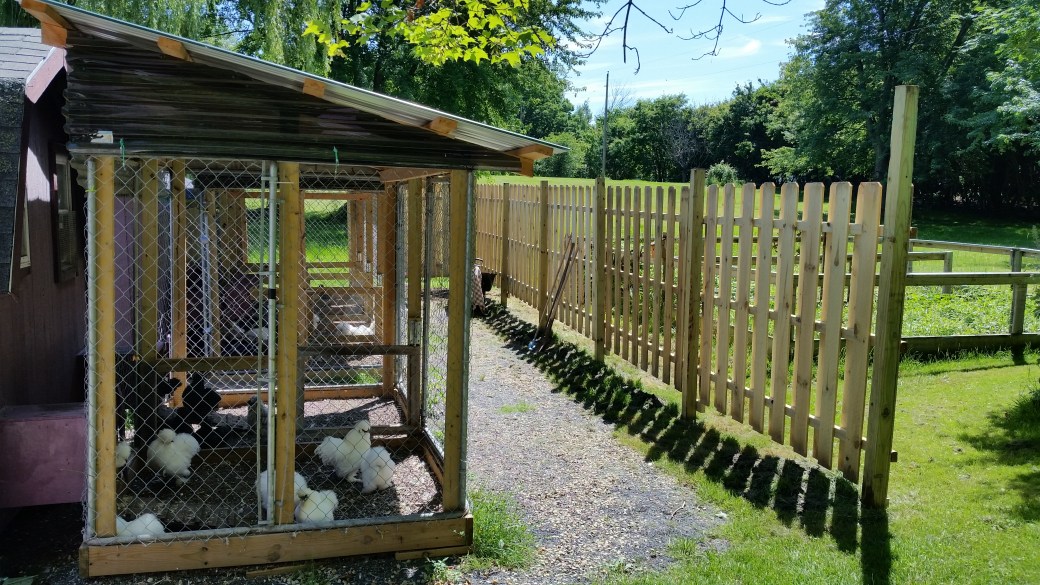
This summer we decided to put up a rooster baffle fence. The fence is between the coop and the rest of the neighborhood. The sound of the crowing is deflected up and back instead of going out into the housing development.
In closing I would just like to add that anything you can do to remove stress in your chicken’s life will cut down on the noise they make. Bringing people over to see the chickens will always create stress for the birds which leads to crowing. New animals in the yard will also create a noisy hubbub. Keep the environment calm and your flock will be calm.
For tips and tricks for raising outstanding silkies check out our Chicken Learning Center at VJPPoultry.com . VJP Poultry is an NPIP and state inspected hatchery located 30 miles north of St. Paul. We hatch out silkies all year long so we always have stock available. Like us on Facebook to get weekly updates on what we currently have for sale.
Victoria J. Peterson
Silkies For Sale – 7/1/17
When Something is Wrong With My Silkie
 Every morning as I open the pens and start the day with my silkies I look at each and every bird to make sure it looks happy and healthy. The best way to observe this is to make sure that each bird is moving and doing normal chicken things. If a chicken is not moving but is hunched in one spot, you should stop and take the time to diagnose what is the problem. Chickens should be moving unless they are sleeping , laying an egg, or are broody. Broodies will always be in the same corner and their bodies will be flattened over a nest. Sick birds are often in an unexpected spot. They may stay outside in the run when the other chickens have gone in to bed.
Chickens are very good at hiding signs that something may be wrong. This is because they do not want to attract the attention of a predator who will prey on the weakest member. The chicken pecking order also can cause a weaker member to be unmercifully pecked. No chicken wants to appear weak. This is why people often are confused as to why their bird is suddenly sick when they may have been hiding symptoms for some time.
It is important to spend time with your chickens in order to have a good idea of what is normal , typical behavior. I can tell in a quick glance which bird is sticking out of a group and not showing healthy behavior. Chickens have a faster metabolism than humans do so when illness hits, it progresses very quickly. Many times by the time the bird is showing symptoms it is too late. You will pick up a bird and find that it is extremely light in weight. This means it has probably not been eating for quite some time. Feel her crop to see if it is squishy or hard. Check her vent to see if it is clean. Check her crest for mites. How do her eyes look? Are they clear and bright? Is she making strange sounds? What does her poo look like? All of these questions will help you to make a diagnosis.
If you do suspect something is wrong, you should separate your bird . Keep it warm and give it some electrolytes, probiotics and apple cider vinegar in their water. Minced garlic or oregano is a natural type of antibiotic which you also can put in their water. Give it treats such as scrambled eggs to encourage it to eat. If you have a chicken that is hunched over, inactive, weak, coughing and sneezing you may want to see a vet. The vet will give them an shot of antibiotics . You could also get some Tylan from your feed store and give the shot yourself.
There are some first aid items that you should always have at home, just in case. Hopefully, you will not need to ever use them, but it is always a good idea to have them handy. Blue-Kote is an antibacterial/antifungal spray for wounds. Nutri-Drench are liquid vitamins and other nutrients to boost energy. I always have Corid on hand for coccidiosis . There are other products out there that are helpful. Check your local feed store and ask what they sell a lot of.
Vet bills are expensive so you need to be knowledgeable of what are typical ailments of chickens and what you can treat yourself. A great source to check out is Backyardchickens.com. They can help you diagnose what the problem is and give you ideas on how to treat it. There are many other web sites that deal with chicken ailments. I own The Chicken Health Handbook by Gail Damerow. Its a great book which I regularly consult.
Some typical problems include, Resiratory issues (sneezing , coughing) , eye problems (I use Visine in the eye) Sour or impacted crop, Egg bound hen, vent Prolapse, coccidiosis (treat with Corid), Salmonella, worms, and external parasites such as mites and lice.
Chickens are living beings and get sick like any other animal. It is important to be observant and treat what is treatable. Left untreated a chicken can die very quickly. Extra attention and love are an important part of the recovery.
For tips and tricks for raising outstanding silkies check out our Chicken Learning Center at VJPPoultry.com . VJP Poultry is an NPIP and state inspected hatchery located 30 miles north of St. Paul. We hatch out silkies all year long so we always have stock available. Like us on Facebook to get weekly updates on what we currently have for sale.
Victoria J. Peterson

 VJP Poultry