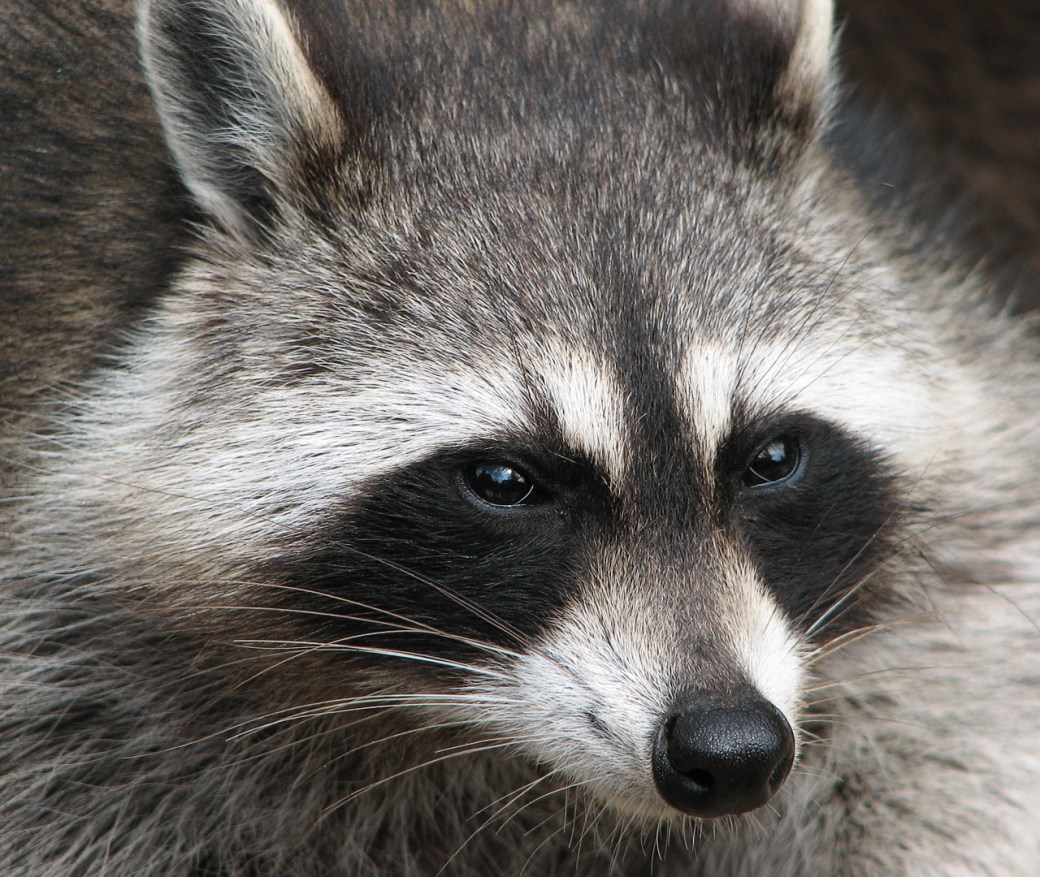
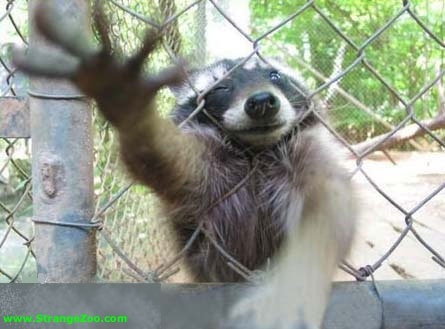
 Raccoons are one of silkie chicken’s biggest predators. Raccoons can climb walls and over fencing. They can reach their hands through wire mesh that their bodies can’t get through to grab their prey. In the United States, raccoons are the most common predators of chickens. They are intelligent foes. They will remember your chicken coop and come again and again to prey upon your chickens. But, if you have a raccoon proof coop they will go elsewhere to find easier food.
Raccoons are mainly nocturnal. Make sure to always lock up your birds at night. If you see a raccoon during the daytime it may be sick or even have rabies. Stay clear of any raccoon you see in the daylight.
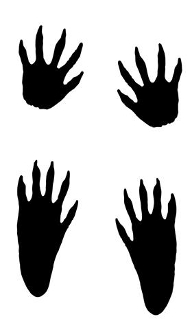
The first sign of a raccoon in your area is if you see foot prints in the mud around your coop. Raccoon tracks are very distinctive with five toes on both the front and back paws. You might also notice its scat or poo nearby.
A single raccoon can devastate your flock of chickens in a short period of time. He will both kill your birds and eat their eggs. A raccoon typically attacks birds by biting the head or upper neck area. The heads of adult birds are bitten off and then left some distance from the body. The crop and breast may be torn and chewed and entrails eaten.
Raccoons have been known to mutilate poultry in cages by pulling their heads off. Raccoons like to put their fingers through holes and pull the chicken through or pull out parts of the bird that they can reach. Several kills will be made in one night. Dead birds may be found at the site or dragged off. Young chickens that still sleep on the ground at night are a prime target for raccoons. Silkies are at a disadvantage because they can’t fly up into the rafters to escape. They sleep on the ground and are easy prey.
It is important to make sure that your coop and run are predator proof. Raccoons can both climb and dig. Placing paving slabs or burying wire mesh around the perimeter of the run will help to deter them. Use hardware cloth that is 1/4 or 1/2 inch. Hardware cloth should be fitted over coop windows. Use large washers and screws to fit hardware cloth to window frames as raccoons can rip staples out. They will bend or pry any screen mesh in order to make a hole to get through. Keep your chickens inside the coop at night. Do not allow them to run loose after dark.
Raccoons have great manual dexterity and can open complex latches. Make sure that your closures have at least two steps or use padlocks. Make sure that your coop and run have a roof on them and check for any little holes that would allow for entry. They will pry or dig in order to make the hole larger.
Don’t attract raccoons to your yard or coop. Don’t leave pet food out or bird seed under your feeders. Both are favorites of raccoons. In periods of dry weather, raccoons will also be attracted by any sources of water in your yard. That includes waterers in your run. Keep all food out of your run and coops at night. The smell will attract the raccoons. Keep animal proof lids on your trash cans. Pick up any fruit that has fallen from fruit trees. Raccoons love fruit and will make your yard a nightly stop when they start to fall. Raccoons remember where they found food before and will keep coming back until it is gone.
There are many products out there that can help to deter raccoons. Nite guard solar lights can help to protect a chicken coop. Mount at eye level, about 10-15 inches from the ground. Mount four lights, one on each side of the coop. The flashing lights will spook the raccoons into thinking that they are eyes of other animals.
Motion activated sprinklers such as Orbit or Hoont can repel predators by surprising them with a water spray. Use at night in an area where it will protect your coop.
Raccoons hate strong odors. Set out shallow dishes containing sponges soaked in ammonia. Sprinkle the lawn with cayenne pepper or use dog or cat repellents around the perimeter of your yard. Taste or odor repellents such as Ropel can turn away raccoons.
Raccoons do not like loud noises. animal Bird X repellent uses ultrasonic sound with a motion sensor. Vigilant chicken owners often install baby monitors or even security cameras in their chicken coops. If you hear a clamor, run to the chicken coop as fast as you can making loud noises to scare the raccoons away.
You may want to use a live trap to remove your raccoon. Bait the trap with canned cat food, sweet corn or raccoon bait. Place the bait as far back into the trap as possible as raccoons seem to know how to take the bait without springing the trap. If you plan on relocating the raccoon make sure that you travel at least 10 miles away or they will find their way back to your coop. Check your states laws. Some states do not allow relocation of trapped raccoons. Use heavy gloves when letting the raccoon out of the trap. Be extremely careful as you are opening the door. They have a nasty bite.
Raccoons will live in any enclosed area such as a tree hole, a garage or attic or even culverts. They have become urban dwellers as they have access to both food and shelter where man resides. Chicken is one of their favorite prey which is why backyard flock owners must be ever vigilant.
For tips and tricks for raising outstanding silkies check out our Chicken Learning Center at VJPPoultry.com . VJP Poultry is an NPIP and state inspected hatchery located 30 miles north of St. Paul. We hatch out silkies all year long so we always have stock available. Like us on Facebook to get weekly updates on what we currently have for sale.
Victoria J. Peterson

 VJP Poultry