Category: New Silkies
Can Dogs and Silkie Chickens Coexist?

Dogs and chickens have not always had the most loving of relationships. Dogs tend to see chickens as prey. The prey drive is an instinctual behavior that all carnivores have. It is stronger in some breeds of dogs than others. Silkies, due to their subdued nature, are not very good at protecting themselves or knowing how to react when danger, in the form of a dog, is near.
Canines tend to stalk, chase and capture their prey. Man has used this prey drive to his advantage to create breeds of dogs that can do work for him. Herding dogs are great stalkers. They round up animals and keep them from escaping. Hounds are good at chasing and can follow the scent of prey for many miles. Terriers are experts at capturing and killing.
Observe your dog or another’s around chickens. Does it stare intensely at them while ignoring you or their owner? Does it refuse to move, its body tense and motionless? Are they lunging at the birds, using rigid movements or crouching? Are their lips twitching and pupils dilated? These are all signs of a dog with a high prey drive. Remember that prey drive is not the same thing as aggression in dogs.
High prey drive is best managed with plenty of exercise. The more time you can spend with your dog engaging in dog sports or walks, the more they can burn off the excess energy. You can not extinguish prey drive all together, but you can manage it and teach your dog what is acceptable and what isn’t.
First of all, your dog must look to you as pack leader and respect you. Training is important. It would be wonderful if you could start with a puppy and train it properly, but the reality is that most people have adult dogs or rescue dogs that possibly were never worked with when young. If the dog does not have general obedience training or general manners, this will be a big problem when you introduce them to chickens.
If you are thinking about getting chickens, contact a professional obedience trainer for your family dog. Clicker training is one of the most successful methods of training. Use a 6 foot leash to work with the dog on the commands of sit-stay and down-stay.
Choke chain type of collars or prong collars work well in obedience training. They are used so that the dog can not slip out for corrections or for getting the dog’s attention. Muzzles are used for introducing dogs to animals or people when prey drive or aggression is an issue.
Use treat bags for easy access to treats. Always chose a high quality treat that your dog is seriously interested in performing for.
Begin your training near the chickens. Start around ten feet away. Work on commands such as “leave it” and “Focus”. Then slowly begin to train closer. If he is distracted by the chickens, then move farther away and begin again.
Introduce him to a chicken using the leash and muzzle. Enter the chicken pen and practice obedience commands. If your dog attempts to harm your bird, start back and training near the chickens from outside of the pen.
Allow off leash if he has been successful with the leash and muzzle. Practices commands. If he ignores you, then leash him up again and continue training. If you are not seeing results with training and exercise, try an E-collar. This can often be used for breaking bad habits.
Unfortunately, some dogs will never be able to be trusted with chickens. Some breeds are harder to be around chickens successfully than others. Greyhounds, Weimaraner , Jack Russell terrier and Siberian Huskies have very high prey drives.
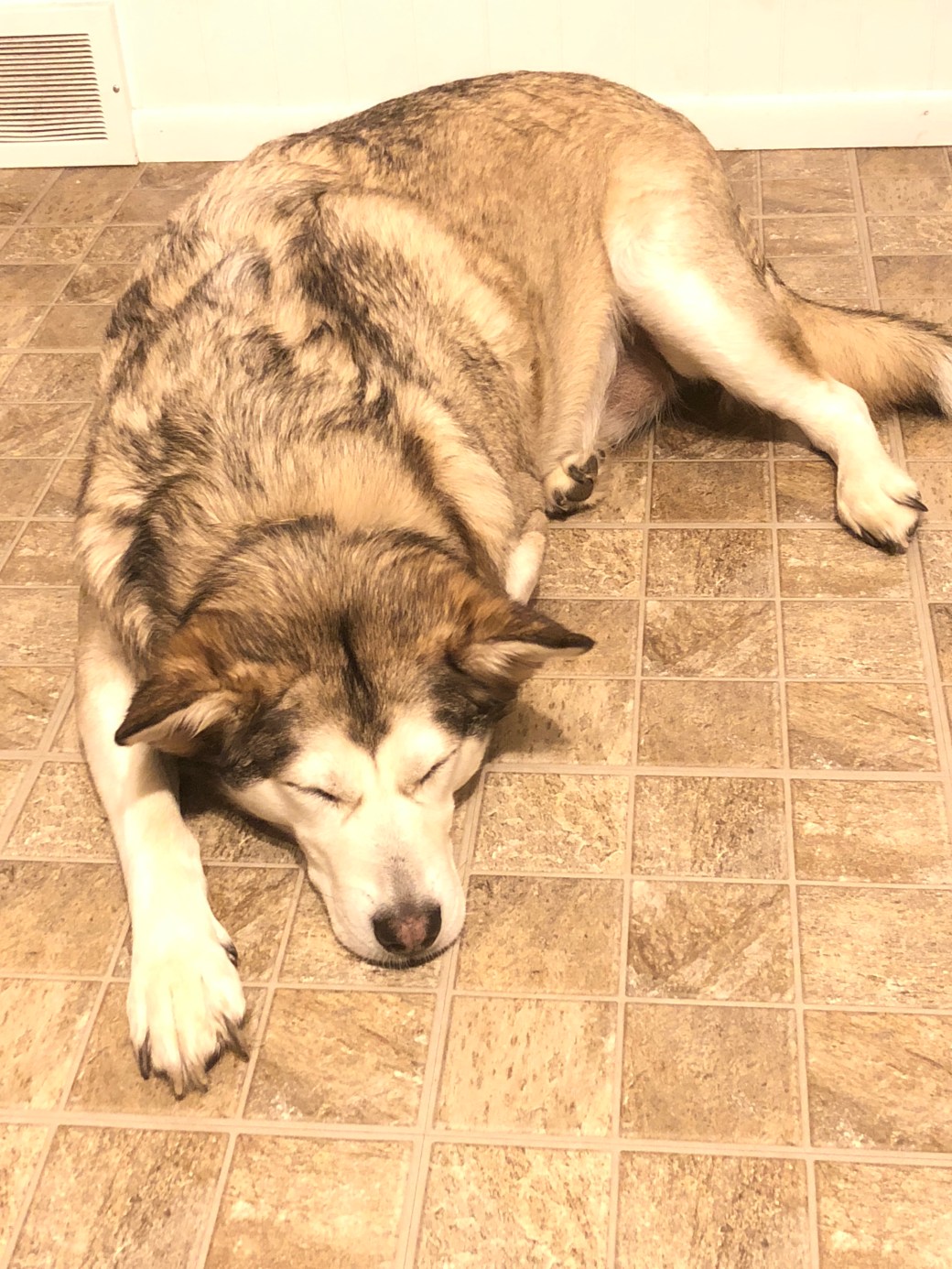
Our son came home after college and brought his Siberian Husky to live at our house. We built what we thought was a strong, sturdy dog house and dog run. The first time he saw my silkies out free ranging, he chewed and tore through the fencing and killed 3 birds before we were able to catch and stop him. Now the dog is on a cable lead inside of the reinforced run. He is always attached to a lead or a leash whenever he is outside. I also worked on increasing the strength of the doors on the coop and making sure that my birds weren’t free ranging when the dog was out of the run.
Chickens are pretty much uniform in how they react to predators. The rooster gives the alarm cry and tries to protect the hens as they scurry for cover. Silkies have the disadvantage of having large crests which can block their eyesight. Keep their feathers above and below their eyes trimmed. They also are unable to fly and cannot go up into trees to escape. You may only want to allow them to free range when you are there to watch over them
There are some good dog breeds for guarding chickens. The Pyrenean Mountain dog or the Pyrenean Mastiff are good for this. The Akbash and the Komondor are also good with guarding chickens. Any herding dog is a good choice.
Remember, even an overly playful dog can inflect a fatal wound to a chicken. Do not leave them alone together until you are sure that the dog can be trusted.
Dogs and chickens should have separate feeding and watering stations to reduce the spread of germs from one animal to another. One of the top concerns of bird to dog transfer is salmonella. This can be transmitted to the dog through chicken feces.
Coccidiosis is present in both animals but it is species specific. That means that it cannot be passed back and forth between the two animals. It is a separate disease.
Neighborhood dogs can cause accidents to happen. A dog can slip its collar and suddenly it is in your yard. Don’t take any chances. Make your coop as secure as possible. It should be like Fort Knox to keep all predators out. For more information on chicken predators check out How to protect your chickens from Predators.
For tips and tricks for raising outstanding silkies check out our Chicken Learning Center at VJPPoultry.com . VJP Poultry is an NPIP and state inspected hatchery located 30 miles north of St. Paul. We hatch out silkies all year long so we always have stock available. Like us on Facebook to get weekly updates on what we currently have for sale.
Victoria J. Peterson
Silkies For Sale – 6/12/18
Silkies For Sale – 6/9/18
Building a Coop for Silkie Chickens
 Silkie chickens have slightly different requirements when it comes to housing. Silkies are different from other breeds of chickens in several ways and these differences can be reflected in the type of coop you end up designing or purchasing. The only chickens we have at VJP Poultry are silkies so we are always thinking of ways to improve housing with their uniqueness in mind.
The first coop we had was a refurbished ice house. This worked perfect for our needs. It was built very sturdy and was well insulated for winter. We added electricity out to it, put in nest boxes and roosting poles and had a ramp going down to a chain link fence enclosed run. We had a variety of breeds of chickens to start out with but I really fell in love with the silkies. I found that the silkies did not “fly” up to the roost pole with the others but would sleep on the floor directly under them. The next morning they would be covered in poo from the roosting birds above them. They also did not use the nesting boxes, but preferred to find a corner on the floor in which to lay their eggs. Silkies go broody often but can’t fly up to nesting boxes that are very far off of the ground.
In a few years we found a second ice house to refurbish as we continued to expand our chicken habit. By now we only had silkies in our coops. We did not bother putting in a roosting pole or nesting boxes. We made sure that the ramp to the ground was a long gradual incline. Silkies do not like high ramps, especially with their eyesight often being blocked by feathers. I find it best to trim above and below the eyes so that they can find food and water.
The third coop we built ourselves. We overbuilt it, but I was glad that we did. It is very sturdy and tall. There is a long walkway inside with four sections of divided pens. Everything is easily stored inside of the coop, such as food, bedding, brooms and assorted tools. It has electricity. The pen walls and floor are painted with industrial enamel which is super easy to keep clean. The other coops had plastic sheeting on the floor and sides. I scrubbed them weekly but they eventually started to come away from the walls. The enamel paint is much easier. A silkie pen needs to be kept neat and tidy. You want them to be looking at their best and poo stains are not attractive.
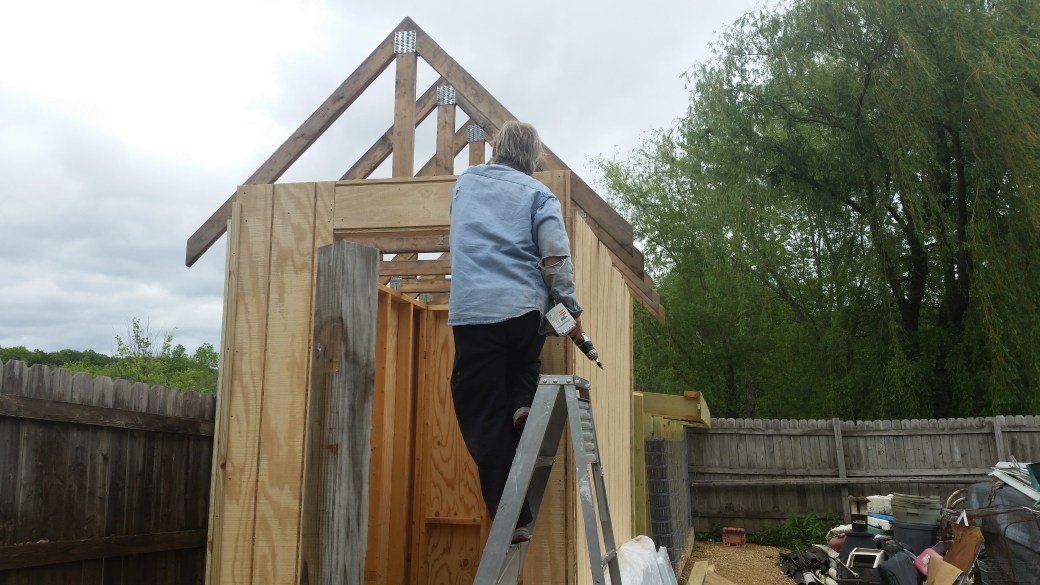
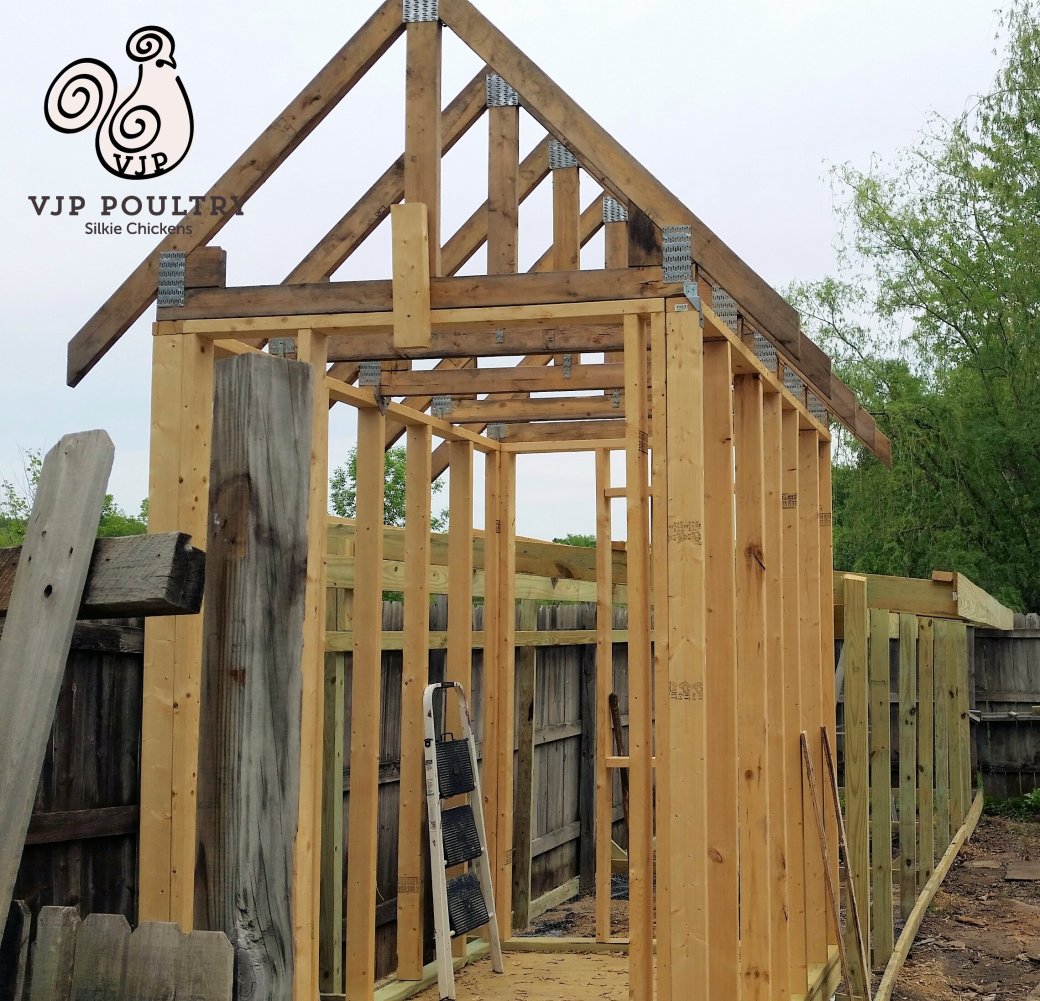
Now we are building our fourth coop and using all of the information gained from the other coops, we are able to have the best silkie coop possible. We started by making the floor of the coop. You want to make it up off of the ground but at the same time as low as possible for silkies. They have a hard time with steep inclines, so the ramps need to be long and low. Next the walls were built and the roof rafters put on. We put on a metal roof with a steep slant. We want the snow sliding easily off. The roof has long overhangs. In the future we will put on gutters. Silkies do not do well in the rain. Their fluffy feathers do not let water bead off of them. When they get wet, they look drenched.
We installed windows up high, so that there is plenty of air movement. Silkies do not do well with drafts so you want that air moving up above them. Ventilation is very important to the health of your birds. I keep windows open at all times. Use hardware cloth stapled over the window screens to keep predators from making their way inside.
When making the run, you will want to lay down hardware cloth on the inside and as a skirt around the outside to keep digging predators from making their way in. We piled gravel on top of the the hardware cloth and placed pea rock on top of that. Silkies have beautiful feathered feet. You want to protect those feathers by having soft bedding or even using dirt or sand in the coop or run. Large rocks can often break off foot feathers, so use as small of rock as you can.
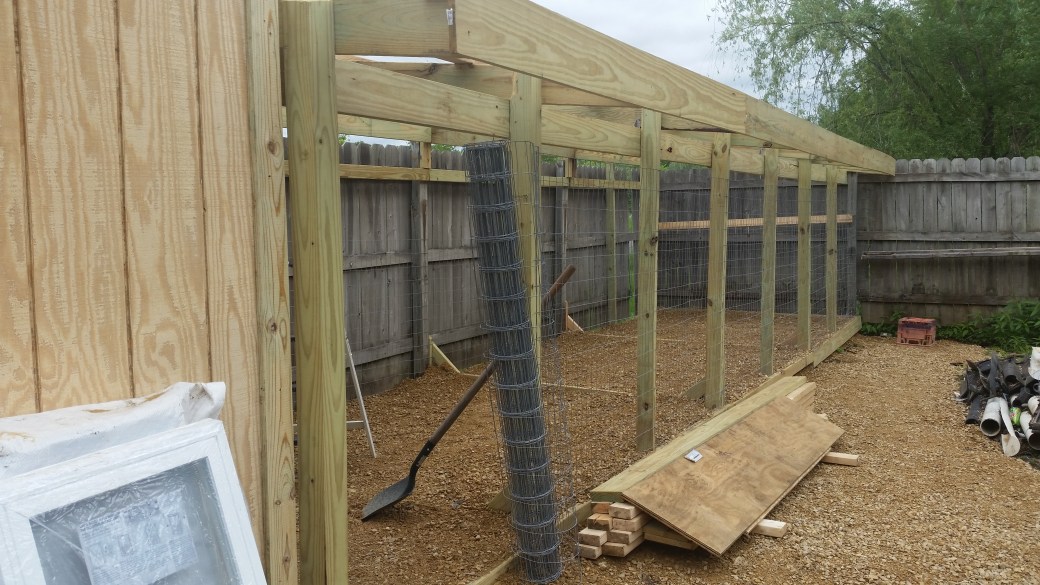
We covered the run with a metal sloping roof. Hawks can be a big problem for silkies. They are small enough to be lifted and taken away. Their crests are large and impedes their ability to look up. Even their coloration can make them a standout when free ranging. Try to limit their free ranging to when you can be there to watch out for them. Otherwise a covered run is their best protection from flying predators.
Know the silkie predators in your area and design your coop with them in mind. If your predators are diggers like fox, make sure that you have buried hardware cloth around your run. If you have trouble with weasels or mink, make sure that all small holes are plugged up and windows are secure with hardware cloth. Larger animals such as bear will need electric wire around the outside.
If you don’t want to build a coop yourself, there are a few coops that are available for sale that are good for silkies. Look for something that is all one level such as this. The smaller the ramp the better. Coops that are described as rabbit hutches are often on one level . Look for sturdiness in these pre-made coops that can withstand the elements and predators. If you live somewhere with a cold climate, you will need to insulate and possibly have heat lamps.
For tips and tricks for raising outstanding silkies check out our Chicken Learning Center at VJPPoultry.com . VJP Poultry is an NPIP and state inspected hatchery located 30 miles north of St. Paul. We hatch out silkies all year long so we always have stock available. Like us on Facebook to get weekly updates on what we currently have for sale.
Victoria J. Peterson