 You may not think that you have a rodent problem until Autumn comes around. Suddenly, you are seeing mice droppings where you didn’t see any before. Fall is the time of year that mice come in out of the cold and look for a warm place to spend the winter. Your coop is the perfect place. It has soft bedding, food , water and it is safe from predators. Food is scarce in the outside world but both field mice and rats will set up shop in your hen house for the winter.
Chickens will sometimes catch and eat mice. They are omnivores who enjoy a good meal of mouse meat, but mice are a big nuisance most of the time and can be dangerous to chickens. If your birds tend to eat a lot of mice it is a good idea to worm them every fall. A good product is Wazine or safe guard.
Mice will eat chicken feed and contaminate it with their droppings. They carry fleas, ticks, mites and lice. Rats will kill baby chicks, eat eggs and chew through wire and wood. Chickens are sound sleepers and mice will chew on their feathers and pull out feathers to use as their bedding.
Rodents in the coop stress out the hens which can lead to a drop in egg production. Rats will steal eggs. Check the corners of the coop and nesting boxes for evidence. You will see small black droppings and little nests where they sleep.
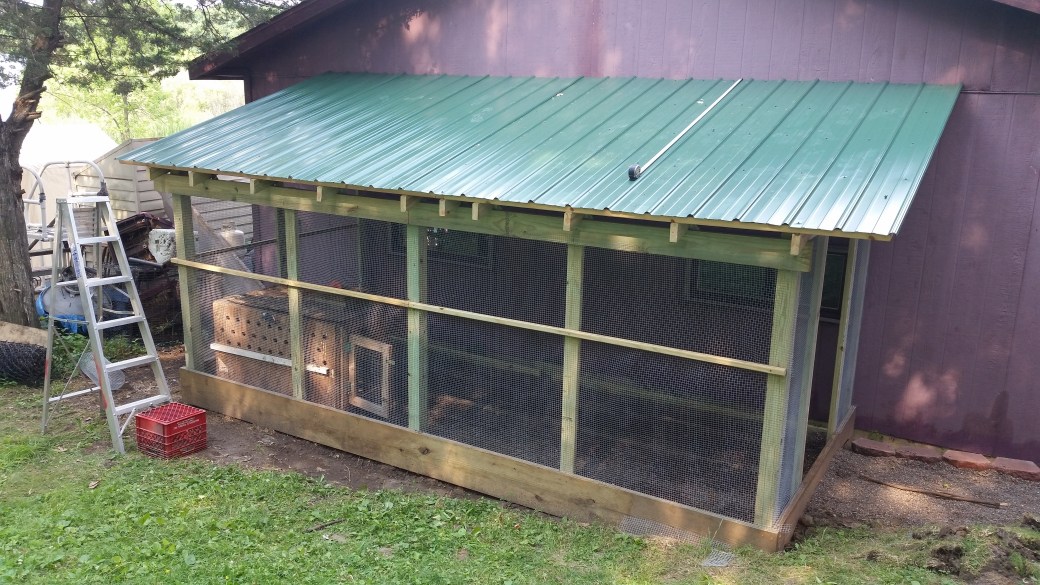
One way to keep mice and rats out is make sure that there are no holes through which they can enter at night. Holes and openings should be no larger than 1/2 inch. Mice, snakes, weasels and mink can get through openings as small as one inch. Staple 1/4 inch hardware cloth over windows and vents and make sure that all holes are plugged.
Mint is known to be a natural rodent repellent. Put fresh or dried leaves in nesting boxes as a coop freshener. Rodent Sheriff is made with peppermint oil. It is safe for kids and pets but rodents hate the smell. Spray it around where you don’t want mice to be. Mice also do not like the smell of pine, which makes pine shavings an excellent choice for bedding.
One of the main reasons cities give for not allowing chickens is that people think mice are attracted to backyard coops. Keep your run and coop as clean as possible. Do not throw food onto the ground for the birds to eat. The extra food will attract mice. Change the bedding often in your coop to destroy any mice nesting areas. Keep the grass clipped short around the coop and clean up any junkie areas where mice might live and hide.
Manage your compost pile. Rats and mice love to pick through compost from your kitchen table leftovers. Use an enclosed compost tumbler to keep mice and rats away from your compost area.
When food is left available, rats and mice will come. Store all chicken feed in a secure container. The smell of food alone will attract them. They can chew or gnaw through most things. Feed bags are easily chewed through. Rats can chew through plastic containers. Putting food up high won’t help as mice and rats are excellent climbers. Use a galvanized metal bin with a locking lid to keep all animals out.
Use a feeder that mice and rats cannot access. Grandpa’s Automatic feeder uses a treadle. The mouse would not be heavy enough to push the treadle down in order to get food. Don’t leave your feeder in the coop at night. It will attract mice to the coop. Chickens can’t see well in the dark and do not eat during the night anyway.
Rats and mice do not like light. They prefer darkness. Install sensor lights that will turn on if there is movement in the run. Use solar powered if your run is in a sunny spot or electric if you have access to electricity in your run.
There are many different types of traps for both mice and rats. Electric rat traps run on batteries and zap the rat dead, leaving no blood or gore. Snap traps work but just make sure to keep them away from the chickens which could set them off. Rodents like to travel along walls, so set up traps closest to a wall. Traditional bait is peanut butter. Rats are wary of new objects in their territory. Wait a few weeks before baiting traps so that they can become used to seeing them around.
Poisons are a last resort and should be used with extreme caution. They are deadly to other animals especially your chickens. If you have a huge infestation of rats or mice it is sometimes best to call a professional. If you see one mouse, most likely there are many more living there.
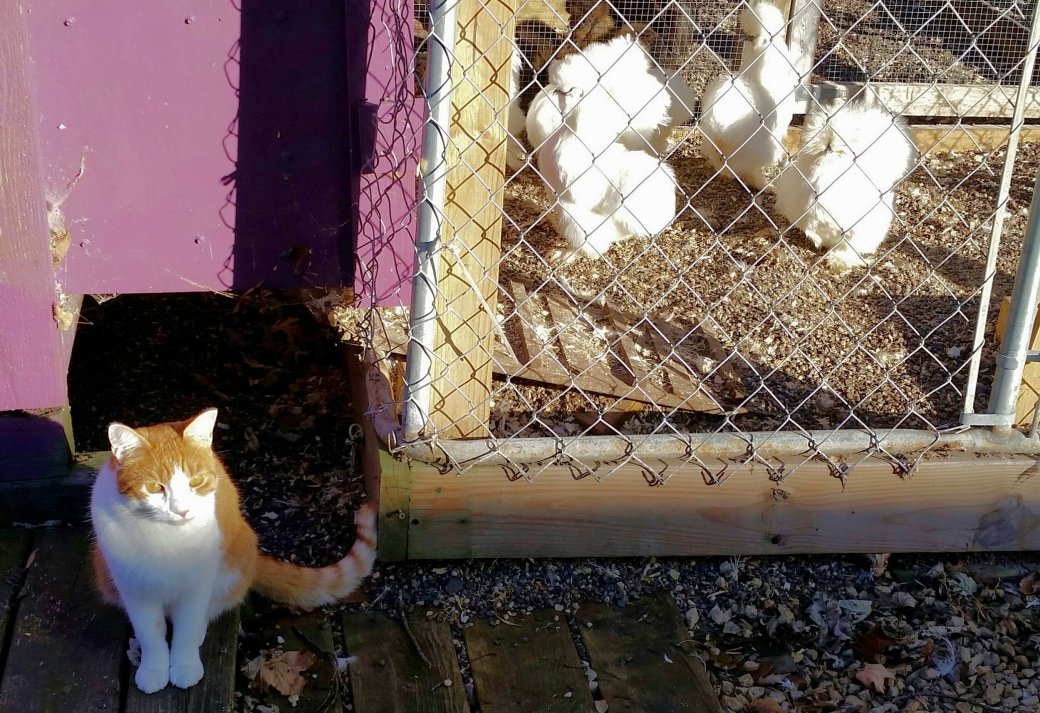
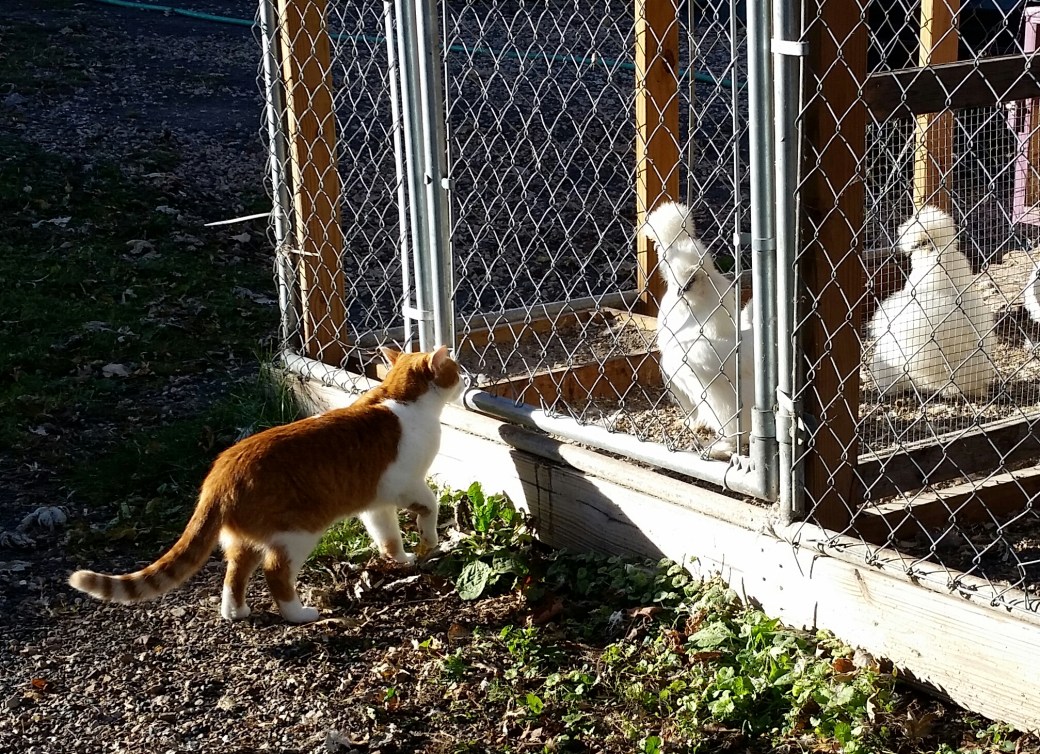
A cat can be a great mouser and handy to have around the chicken coop. Our family cat loves the chickens and enjoys spending time with them. Cats are naturally curious and are attracted to the movements of the chickens. Are cats predatory towards chickens? It depends on the cat. Family cats that have been taught that the chickens are an important part of your family’s routine will more than likely not try and kill your chickens. Chickens are larger than most cat’s prey. Baby chicks can be a target. I always keep a screen over my brooder. Our cat is fascinated by the babies but has always left them alone. He likes to go into the chicken coop and eat the chicken’s food. They, in turn , like to eat out of the cat’s dish.
When introducing cats to chickens for the first time make sure that there is fencing between the two. The next step is face to face introduction. With a bit of training you will be able to keep both successfully in your backyard.
Cats that can be a problem are neighbor’s cats that have not been shown the value that the family places on the chickens. There are stories of neighbor’s cats attacking and killing chickens and chicks. Feral cats in particular that are hungry, may try and kill a chicken. If you have issues with feral cats, you may want to try and trap and remove them from your area.
For tips and tricks for raising outstanding silkies check out our Chicken Learning Center at VJPPoultry.com . VJP Poultry is an NPIP and state inspected hatchery located 30 miles north of St. Paul. We hatch out silkies all year long so we always have stock available. Like us on Facebook to get weekly updates on what we currently have for sale.
Victoria J. Peterson
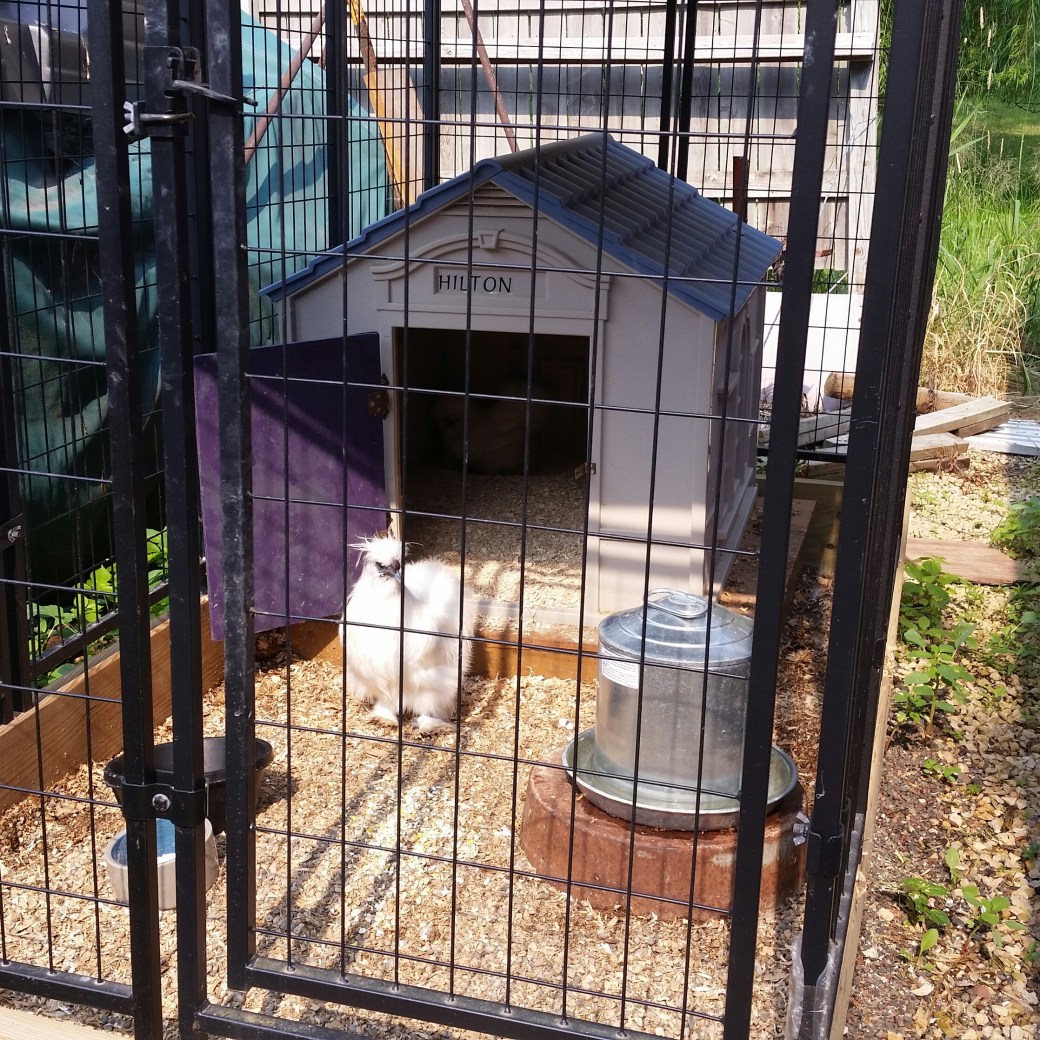
 What can you do with your extra roosters? Almost every flock owner that keeps roosters is faced with this dilemma. There are rooster rescues, craigslist ads or even the stew pot, but not all of these solutions work for all people. Maybe a rooster bachelor pad or Roo frat house is a solution for you.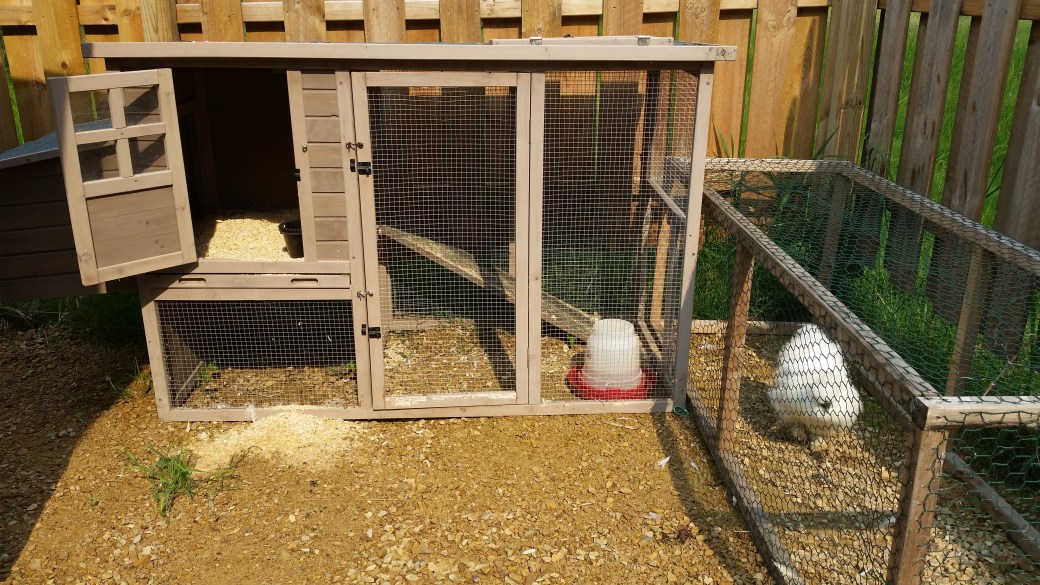
 VJP Poultry