Lack of daylight can effect your silkies in two major ways. The first is a drop in egg production. Silkies were never known as big egg producers, but they do generally lay an egg a day the same as other chickens. This can change as we head into fall. The other major effect of decreasing daylight is the fall molt. As they days get shorter, you will begin to notice a great deal of feathers in your run. The birds begin to look very scruffy and you realize that the molt has begun.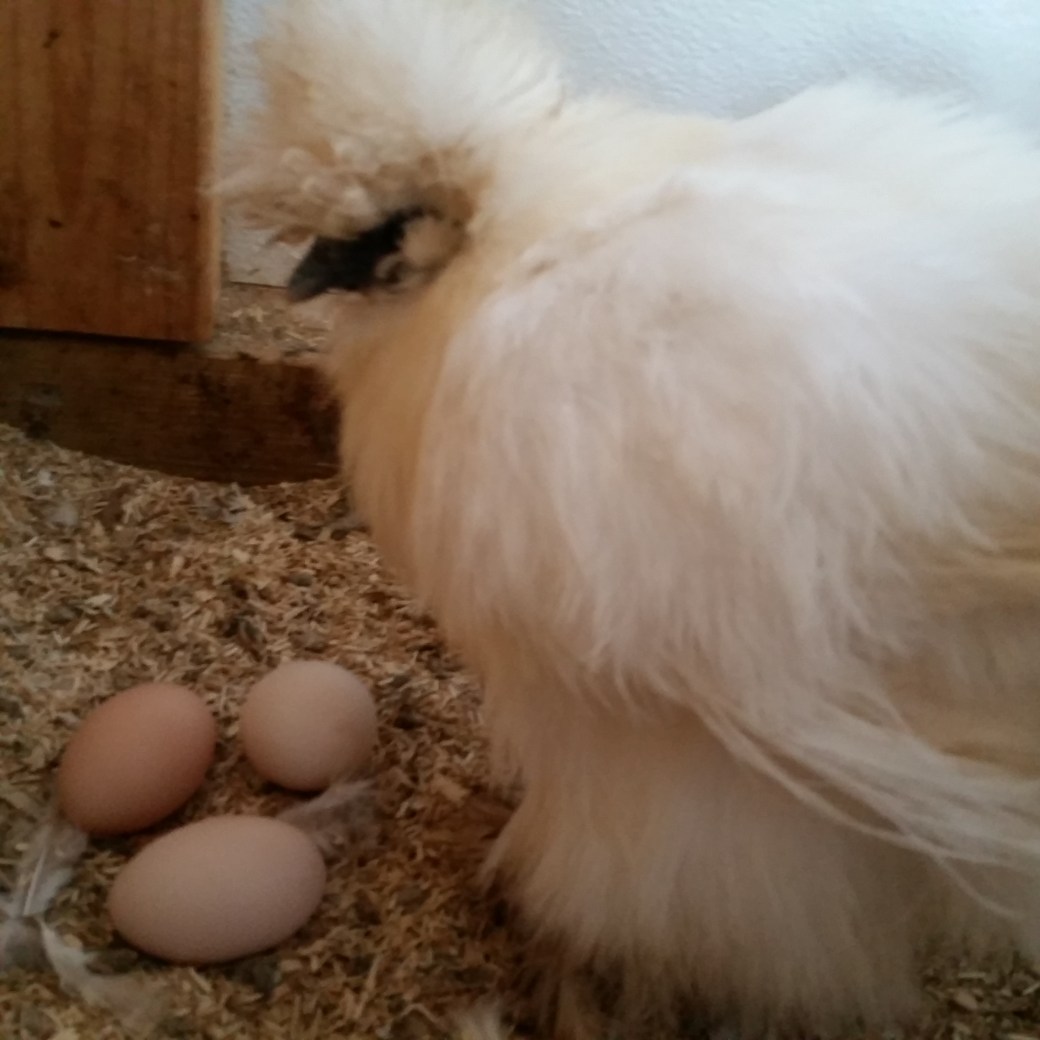
Lets start with egg production. Hens need a certain amount of daylight in order to maintain peak egg laying. Even a hour or two less of daylight changes egg laying patterns. Once less than twelve hours of daylight is available, egg production slows down considerably if not stopping completely.
You might think that it is the arrival ofcolder weather that causes it but that is not always the case. Even in warm climates, chickens produce fewer eggs once the daylight hours decline. The hen’s pineal gland, part of the its endocrine system, sits above the mid brain, right behind the eyes. This gland produces melatonin, which helps regulate sleep. As the days lengthen the pineal gland responds by sending a hormone to the ovary to start producing eggs. As the days shorten, the pineal gland stops sending this hormone. Since the gland is sensitive to light, you can fool it by increasing the amount of light available to the hen during the fall and winter.
A 40 watt bulb for each 100 square feet should satisfy to keep hens laying year round. Use incandescent bulbs rather than florescent lights. The wave length of incandescent bulbs are closer to those of natural sunlight. Put the bulb on a timer so it goes on in the dark hours of the morning rather than at night time. 40 watt Led bulbs work nicely. It can be hard if the light goes off and they are not in their sleeping spots at the time. The light does not have to be very bright. It does not need to be 40 watts. A night light bulb is fine.
The hen’s body needs to rest and recover for the next year, so at VJP Poultry we do not put extra lights on in the winter. I only turn on the light if I need to see to do chores.
For hens, it is natural to lay many eggs in the spring and summer and decrease out put once autumn arrives. Some hens, especially young ones, produce eggs throughout the winter. Each hen can produce only so many eggs in her lifetime. Then she becomes a “spent hen.” The amount of eggs varies by breed and individual chicken.
I believe that extremely cold temps can likewise cause laying to decline. The hens end up using a lot of their energy to stay warm and can’t put it into egg production. Below zero temps can cause them to stop all together. Eggs will freeze and crack unless a broody is sitting on them at this point.
Fall is also a time when hens will generally molt. Losing feathers and regrowing them is called molting. They usually stop laying altogether during the molt, although some will continue to lay during the beginning part of the molt. This can last for weeks or even months. Make sure you are feeding a high protein diet at this time.
Chickens will lose feather in a sequence starting with the head and neck and then down the back, across the breast and thighs and finally their tail feathers. The new feathers that emerge are called pinfeathers. They will grow in in the same order as they were lost.
The most common trigger for molting is decrease of daylight hours and the end of an egg laying cycle. This typically coincides with the late summer or early fall. Other triggers are physical stress, lack of water, malnutrition , extreme heat or unusual conditions in the coop.
The short days of winter are a time for hens to rest and prepare their bodies for egg production next spring. They are getting ready to be mothers and to grow into bigger and more beautiful silkies.
For tips and tricks for raising outstanding silkies check out our Chicken Learning Center at VJPPoultry.com . VJP Poultry is an NPIP and state inspected hatchery located 30 miles north of St. Paul. We hatch out silkies all year long so we always have stock available. Like us on Facebook to get weekly updates on what we currently have for sale.
Victoria J. Peterson


VJP Poultry


 VJP Poultry