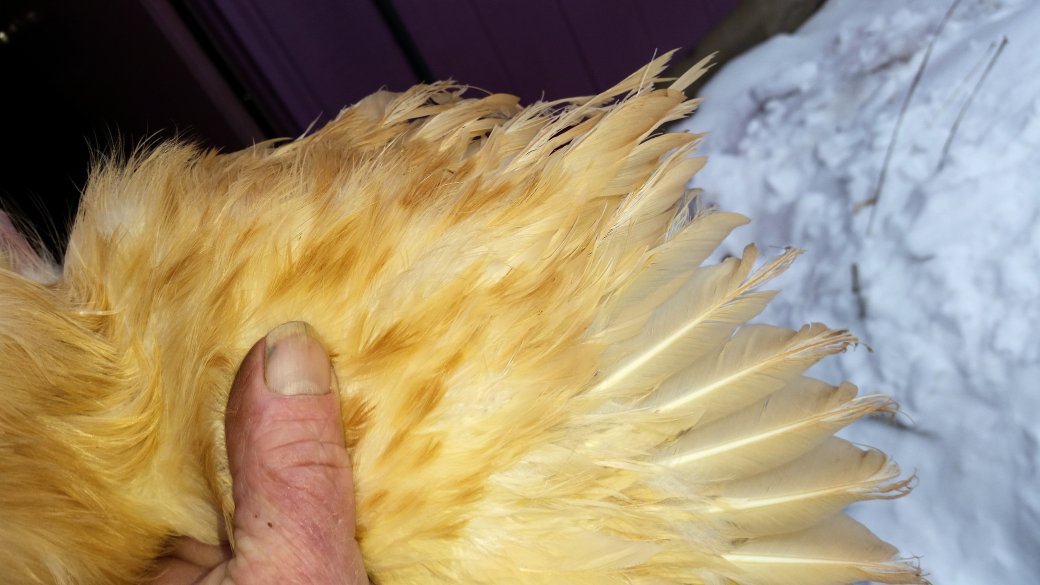
 There has been lots of discussion about the difference between a show quality silkie and a pet quality silkie. Some of that has to do with their wings. I am going to talk about a few different problems that the silkie breed is known to have difficulties with as far as wings are concerned.
First of all, what is a perfect wing on a chicken? The wings should be well formed when the wing is opened out. You may see judges at a poultry show opening and shutting a bird’s wing. You need to open the wing and stretch it out so you can see from one end to the other and look at every individual feather. The formation should be perfect and easy to fan out. There should be no gaps showing and the feathers should form an arc. When there is an open space between the primaries and the secondaries when the wing is opened, the defect is called a split wing.
There are ten primary feathers and ten secondary feathers. There should be no gap between them. There is also a small axle feather between the primaries and the secondaries.
The wing muscle should also be sufficiently strong enough to fold the wing back correctly and firmly. The primary feathers should tuck under the secondary feathers and be held tightly to the body and into the cushion. They should be held horizontally and not droop. The wing should be flat against the body and not stick out.
The entire body of the silkie should be covered in abundant fluff and the wings should be ragged, almost shredded or tattered looking. Ideally, they should be shredded one third up the primary feathers. No hard looking feathers should be visible.
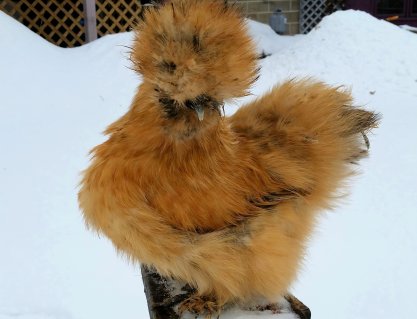
There are three main faults that can be seen in silkie wings. Split wing is where the feathers have a gap between the primary and secondary feathers or at the top of the wing between the primaries. You will always know when a wing is split as the wing feels weak and has a lot of give when handling it. Both sets of feathers should be level. With split wing on set of feathers will be longer than the other.
Slipped wing is when the wing does not return to its natural folded position when opened. The primary feathers may overlap in reverse order or there is a tendency for the primary feathers to be held outside the secondaries when the wing is closed. The primaries should tuck under the secondaries but instead the reverse happens. The primary feathers show from the outside and may even be twisted. Angel wing is slang for slipped wing in chickens. Actual Angel wing is found in water fowl.
Twisted feather is when a feather is in the slipped wing position but is turned upside down so that you are seeing the bottom side of the feather.
All three of these conditions are considered disqualifications in the show ring. When assessing for faults in your bird make sure that you are not looking at it if it is heading into its annual molt. The best age to be checking is the thirty week mark. By this point the bird will be mature enough and is not usually going through a molt. You can begin to look at wings earlier at three to four months as most birds have fully feathered out by then to start getting an idea of what you want to save for poultry showing.
An APA standard is a valuable book to own. It gives you complete descriptions of what is correct for all breeds of chickens when you are showing. It also will let you know what is a disqualification or a fault. There is also the Bantam Standard which is also quite good. Silkies are classified as bantams.
You should try and breed your best to your best. These wing defects are a recessive trait and can be passed down. Choose wisely and create breeding pens with your best hens and rooster. A separate pen from the rest of your birds allows you plenty of room for your breeding program. This article on “Selective Silkie Breeding” will give you some ideas on how to set a program up.
For tips and tricks for raising outstanding silkies check out our Chicken Learning Center at VJPPoultry.com . VJP Poultry is an NPIP and state inspected hatchery located 30 miles north of St. Paul. We hatch out silkies all year long so we always have stock available. Like us on Facebook to get weekly updates on what we currently have for sale.
Victoria J. Peterson


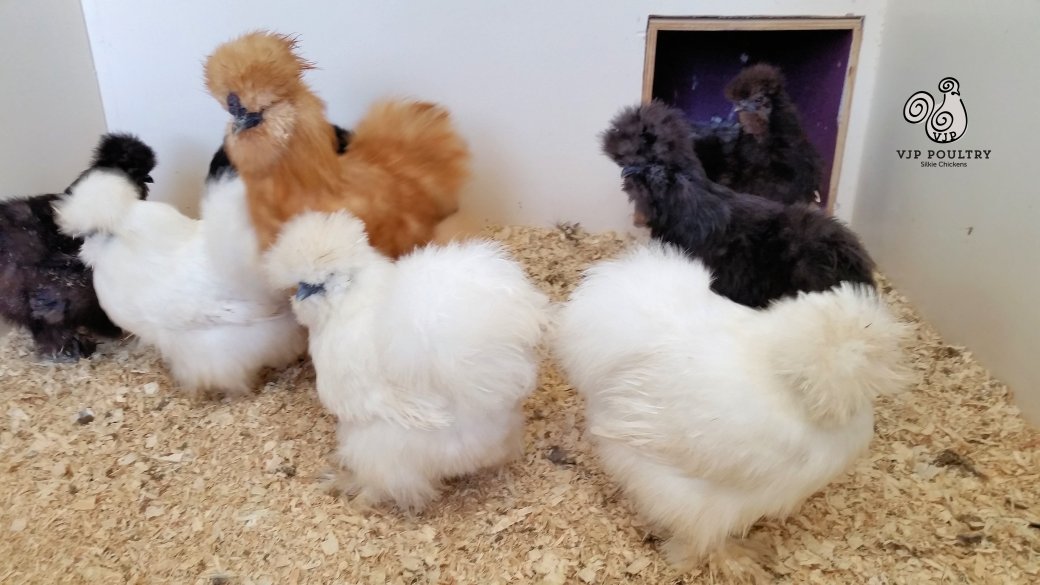 Attending a Poultry Show is an educational experience. Whether you are showing yourself or are there just to see what everyone else brought, you will come away with a better understanding of what silkies and other breeds are all about.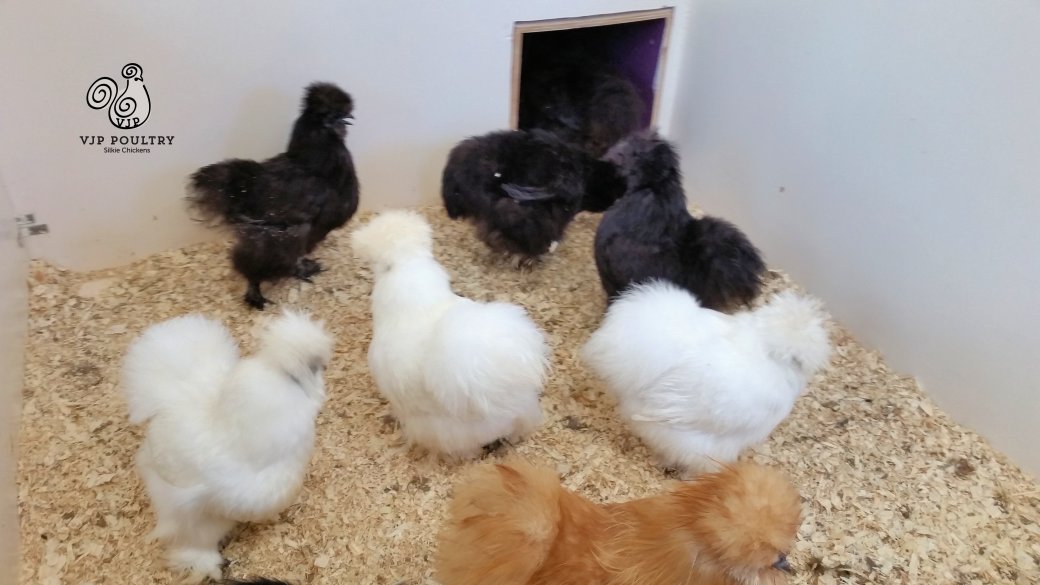
 VJP Poultry