The Secrets of Silkie Vaults at VJP Poultry- 3/21/17

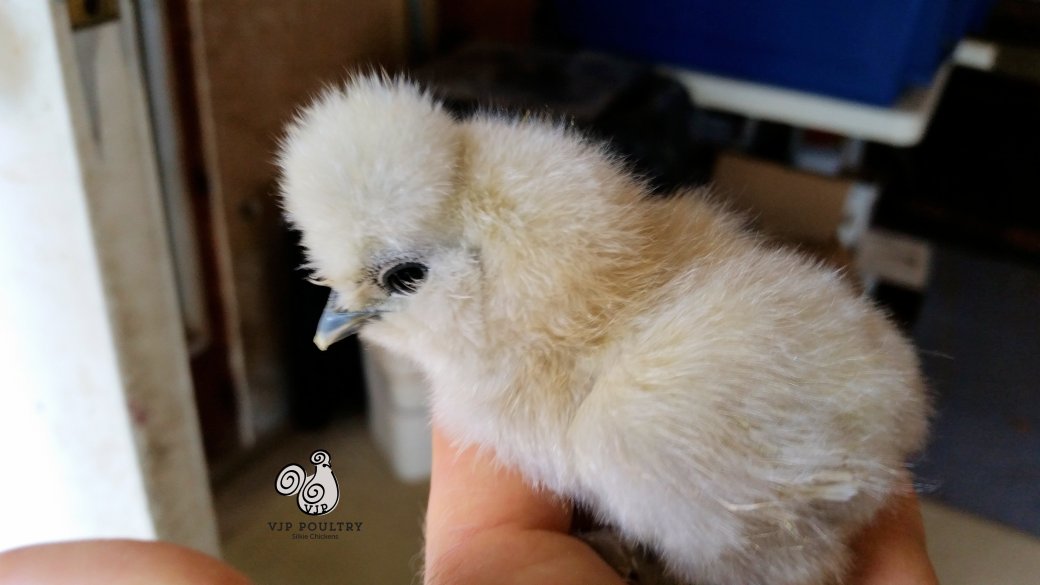
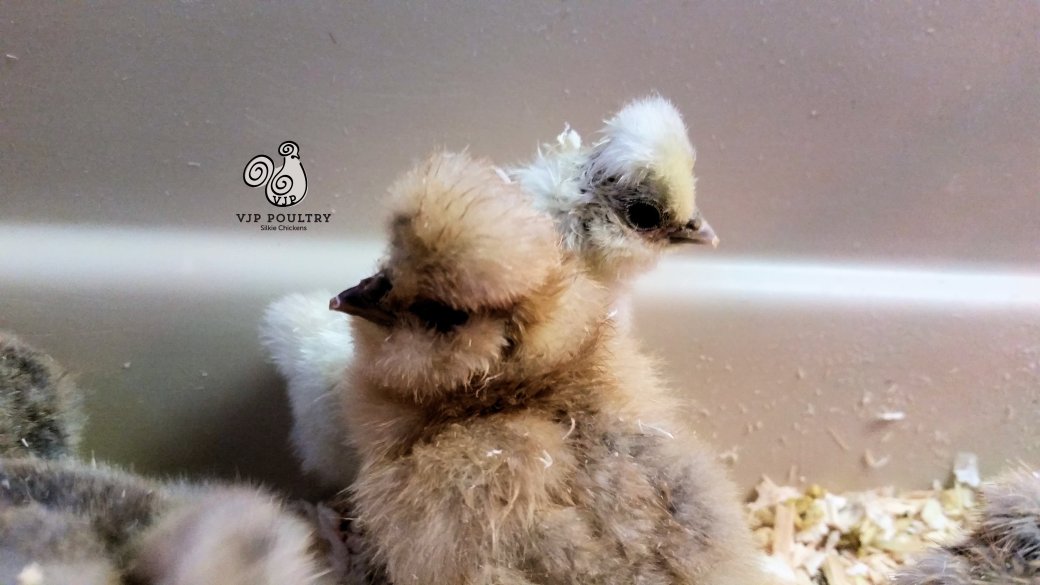
20160605_153326If you have ever wondered what you call that extra bump at the top of a silkie chicken’s head, it is called a Vaulted Skull.. They are very easy to see in newborn silkie chicks but become less noticeable as the chick grows up. Not all silkies have them. About half of my chicks hatch with noticeable vaults. They make the chick appear very cute and that is one reason they are very popular with people purchasing silkies.

Vaulted skulls are common in silkies and in polish chickens. It started out as a mutation. People then selected it because they liked the look of it. They polish had them first. The polish were then bred into silkies to improve and create larger crest sizes. Often chickens are bred together to get new colors, traits and types. Because polish have had this trait longer than silkies, their vaulted skulls are more closed and less susceptible to injury.

A vaulted skull is a skull which has an opening at the top not unlike  when a human baby is born. The soft spot on a human skull grows together and become hard. Sometimes a silkies hole will grow over but sometimes it does not. There are pictures online which shows silkie chicken skulls with this opening.

Because of having a vault, a part of the silkies brain is therefore unprotected. A vaulted skull will just have skin and down covering the opening of the skull. Since there is an opening in the silkies skull, it can allow a portion of the brain to protrude through the opening. This is what causes the look of the bump on top of their heads. This can cause the chicks to be quite delicate.  Once they are a month old, the bones in the vaulted area usually grow thicker and closer together.

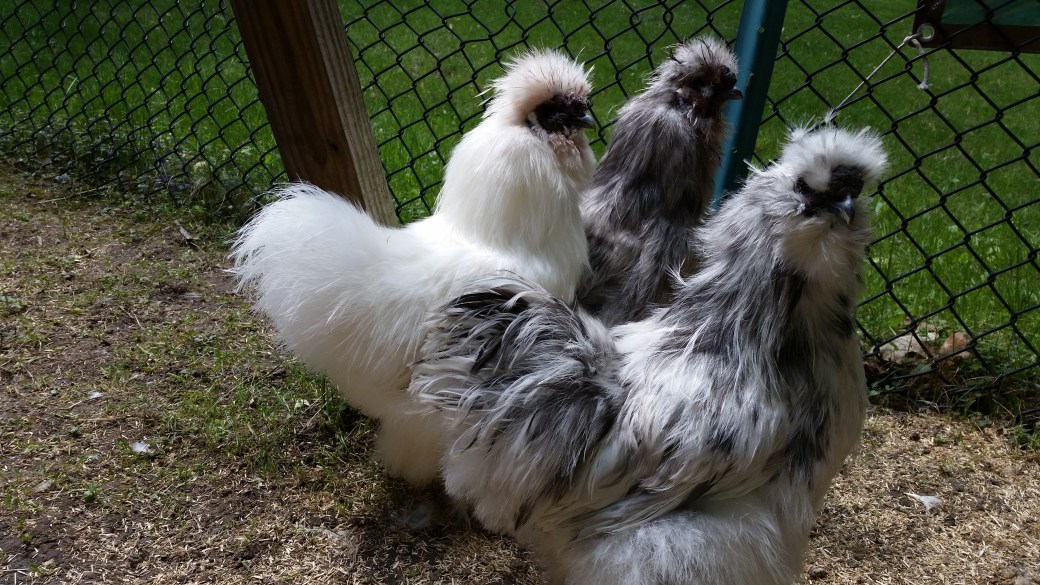
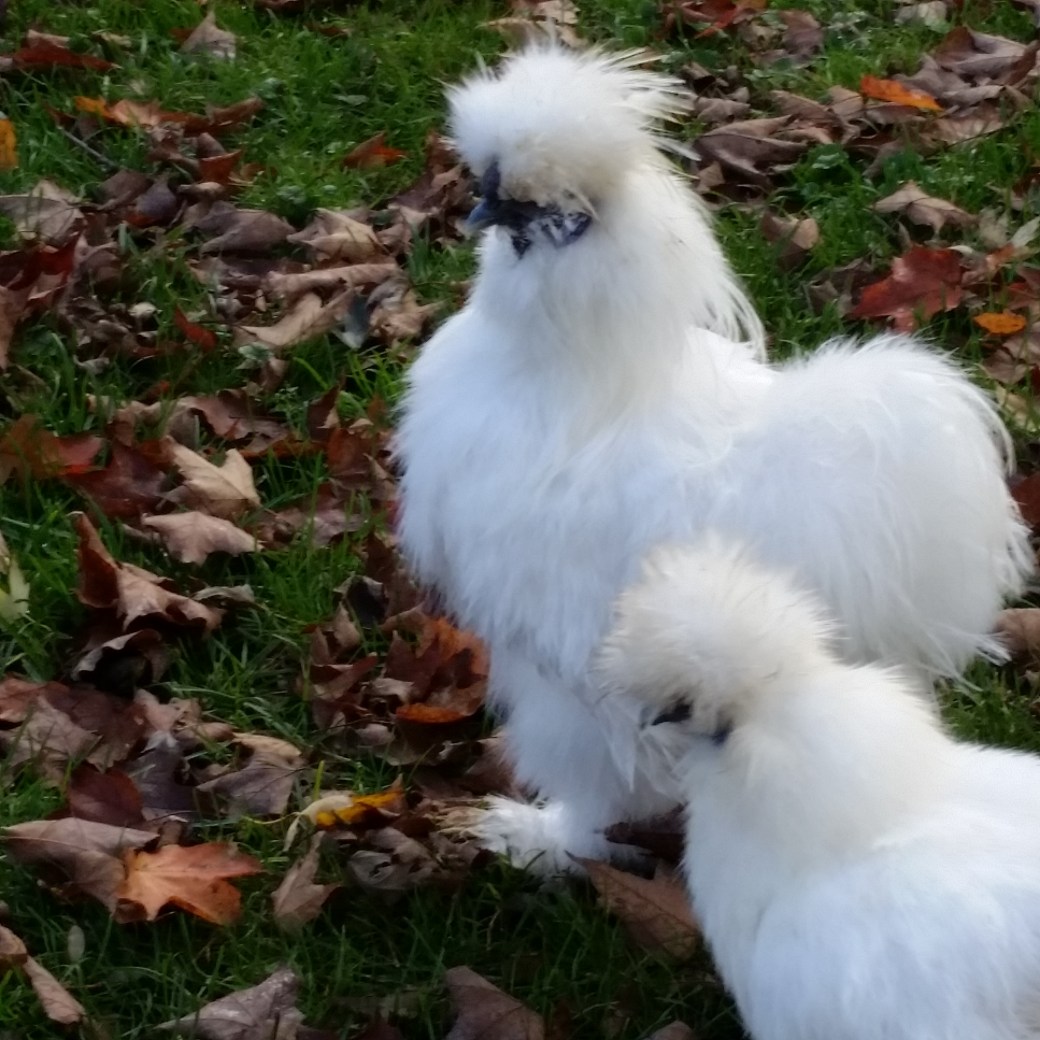
A vault on a silkie looks like the crest has a rubber band around it. The skull vault gives more stability to the crest as as well as shape. Birds with large crests often have crests that flop over to one side or the other. Something about the fact that the skull is open stimulates feathers to grow that way which can look very attractive. Silkies born with vaults are more apt to have larger crests as adults and are said to win more poultry shows.

Silkie chicks with or without vaults can have nice top knots. It all depends on the quality of the line. The standard states that a silkie’s crest should be nice and round and even in shape.  I like to think of it looking like a cotton ball or powder puff on top of the head.

Extremely vaulted heads should be moved to a separate brooder for added protection. They can be injured if something hits them on top of the head or if they run into something. The chicks with the huge vaults are usually the ones more likely to get stuck in the shells. They have a hard time pipping since they can’t move rotate in the shell very well. They are the ones more likely to need help hatching out.

People wonder if it is worth it to purchase a silkie with a large vault. Understand that you are taking a risk. Some people chose silkie chicks that do not display a vault for that very reason. Vault or not, all silkie chicks will develop nice crests. It is difficult to tell for sure which adult birds were born with vaults if you didn’t keep records. Since vaults are here to stay in most lines it is important to understand how you can protect your bird.

For tips and tricks for raising outstanding silkies check out our Chicken Learning Center at VJPPoultry.com .  VJP Poultry is an NPIP and state inspected hatchery located 30 miles north of St. Paul.  We hatch out silkies all year long so we always have stock available.  Like us on Facebook to get weekly updates on what we currently have for sale.

Victoria J. Peterson
20170321_091742


Silkies For Sale – 3/17/17

Silkies For Sale – 3/10/17

How To Sex Young Silkie Chickens at VJP Poultry – 3/7/17

20170220_143206Silkies have always been known as a breed of chicken that is extremely difficult to sex. Most people will tell you that you won’t know the sex of your silkie until it either crows or lays an egg.  I am going to give you some helpful hints and tricks to improve your chances of getting the sex of silkie chick that you desire.

Lets start with looking at physical appearance in newborn chicks. A boy may be slightly bigger than a girl chick. It will have thicker, more sturdy legs than a female. Remember that you need to judge each by its own color.  My buffs are always bigger than my other colors. You can’t judge a buff against a white for size for example. You need to judge them within their own color group and within their own hatch mates.

A male chick will be more curious and outgoing than a female. If you put your finger into the brooder, the males will tend to peck at it more than the females will. A males will just have a more tough guy look to it and will be more likely to look you in the eye.

At ages two to four weeks, behavior will still be a good indicator. I notice that when taking pictures the boys tend to stand in the front, between the the unfamiliar camera and the girls in the back of the group. The boys will lift their heads up high and stand up straighter. The females will hunch down lower to the ground.  If you make a noise or move your fingers, the boys will be more curious and come closer to you.

At around five weeks, I begin looking at their combs.  I notice that the comb tends to be wider on the males and more narrow on the females.  The boys will also begin to develop a bump that is circular in the middle of the comb.   This bump will become larger as the chick grows. The female’s will stay flat for awhile..

Behavior is still important.  Boys will need more room as they start to chest bump the others and hopping around the brooder. Females will chest bump too but it is really more of a boy thing. Males will continue to be more outgoing and curious.

At around twelve weeks the girls will begin to have a slight bump in their comb making it more difficult to tell them apart. Males will begin to develop small red wattles under and on either side of their beaks. The comb begins to look redder in the males.

Obvious boys are easy to tell. It is very apparent that they are males in looks and behavior.  Late blooming boys are much harder. They can look like females for a long time and then suddenly develop a male boy type.

Boys will also sound different from girls when you pick them up. Boys will make more of a honking sound  which will gradually develop into a crow.

As boys grow and develop their body shape will change and they will begin to grow streamer feathers from the back of their heads. Their combs will become prominent and red wattles will appear.  Girls will have a pom pom shape to their crest . They will also sit lower to the ground with boys standing up straighter.

Remember – until an egg is laid, we are guessing as to gender. These guesses are based on observation but nothing is 100% accurate unless you have a DNA test done. These hints should help you make a guess as to what sex your silkie chicks is, but do not be surprised if your little pullet suddenly begins to crow!

For tips and tricks for raising outstanding silkies check out our Chicken Learning Center at VJPPoultry.com .  VJP Poultry is an NPIP and state inspected hatchery located 30 miles north of St. Paul.  We hatch out silkies all year long so we always have stock available.  Like us on Facebook to get weekly updates on what we currently have for sale.

Victoria J. Peterson

20160514_130558


Improve your Silkie Hatch Before the Incubator – 3/2/17

20161019_115944Many people enjoy incubating and hatching eggs in the springtime. Whether you use an incubator or a broody hen to do your work, the hatchability  of the egg itself is of the up most importance.
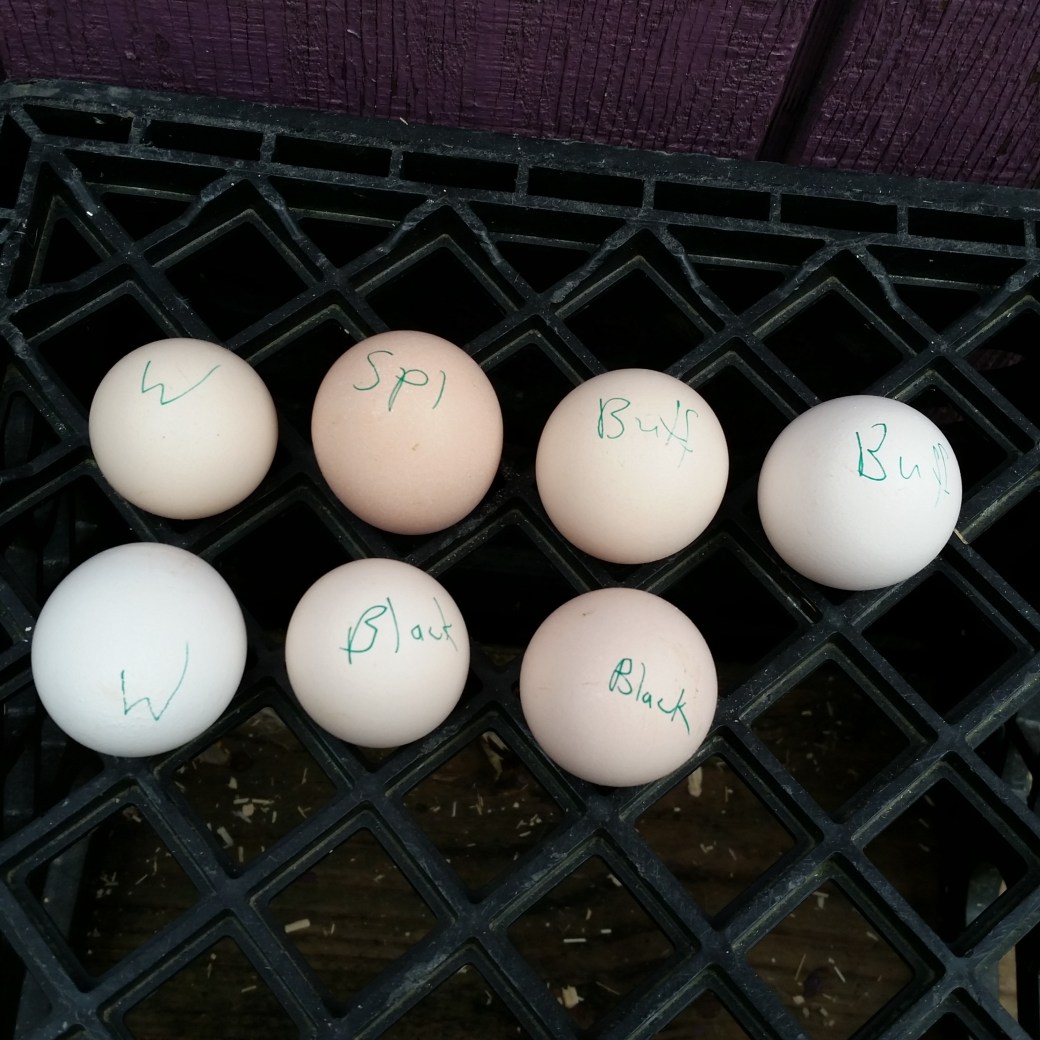
The first step is to start with healthy, happy hens. Healthy hens are hens that eat a varied diet that is high in protein such as Gamebird Conditioner. Varied can mean table scraps or what they find free ranging. Healthy means being free from disease and parasites.

Hens must also be getting a source of calcium in their diets. This can be obtained through their feed (layer feed) or added in the form of oyster shell. This will help to strengthen the shell of the egg.

Happy hens are hens that are not too crowded. They have clean bedding and clean containers for food and containers for water. They have companion hens so they are not ostracized or alone. They have access to the outside and plenty of room to scratch and take dust baths.

The ability of the rooster to perform his duty will make a huge difference in whether or not your egg will be fertile. If the hen was not mated successfully , the egg will not become fertilized.  You may need to trim around the vents on both the rooster and then hen so that contact can be made easier. The feathers can get in the way. Use a curved scissor with a blunt end to safely cut the feathers.

Age of both the hens and roosters can also play a part in the hatching ability of the egg. Young hens who are just beginning to lay often lay very small eggs. These are nick named “pullet eggs” and they have a low chance of hatching out chicks.  Young roosters also are very inexperienced  when mating and the eggs are often not fertile.  Older hens and roos also experience the problems of infertility. Older hens often lay sporadically and eventually stop laying altogether.  Older roosters can become heavy and have a harder time mounting the hens.

The area where the hens lay their eggs should be clean and soft. I add fresh bedding to those spots every day.  Broody hens come in handy as they will sit on other hens eggs and protect them from getting dirty or getting stepped on and broken.  Some birds will try to peck and eat eggs left alone in the nest.

Eggs need to stay dry and clean and collected several times a day.  Do not wash dirty eggs but gently pick off the dirt or use fine sand paper to rub it off.  Washing will destroy the “bloom” on the eggs and allow bacteria to enter it.

Store your collected eggs in a dry, cool spot. I have a place in the cellar that stays around 50 degrees all year round.  Do not keep eggs longer than 10 days before incubating as their fertility will drop. Eggs that are odd shapes do not hatch well. Eggs that have very porous shells do not hatch well either.

Eggs that are shipped can often become “scrambled” and do not have a good development and hatching rate.  It is best to buy eggs close by and not have them go through the postal service.

Following these simple suggestions will increase the chances of your eggs hatching even before you place them in the incubator. Each egg is precious at VJP Poultry and we do our best to make sure that each egg can improve its chance at hatchability!

For tips and tricks for raising outstanding silkies check out our Chicken Learning Center at VJPPoultry.com .  VJP Poultry is an NPIP and state inspected hatchery located 30 miles north of St. Paul.  We hatch out silkies all year long so we always have stock available.  Like us on Facebook to get weekly updates on what we currently have for sale.

Victoria J. Peterson

20161015_165444