Silkies For Sale – 7/2/19

Here is what is available for the week of July 2, 2019. My next scheduled hatches are for July 1, July 6, July 12 and July 21st.  We are NPIP and a state inspected hatchery. No shipping /Pick up only.

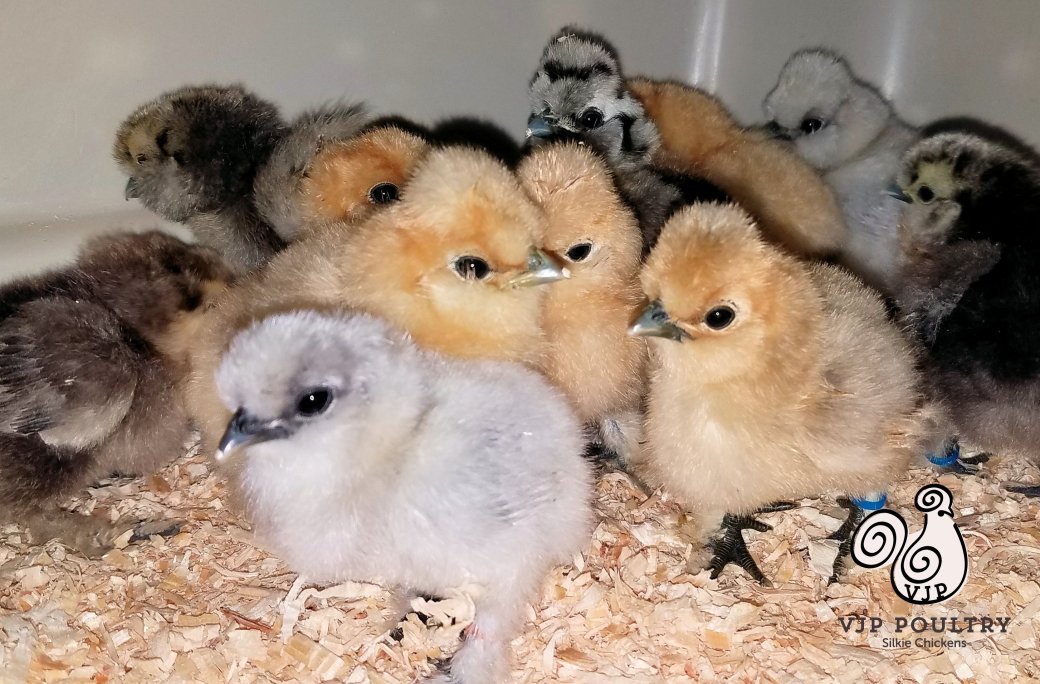
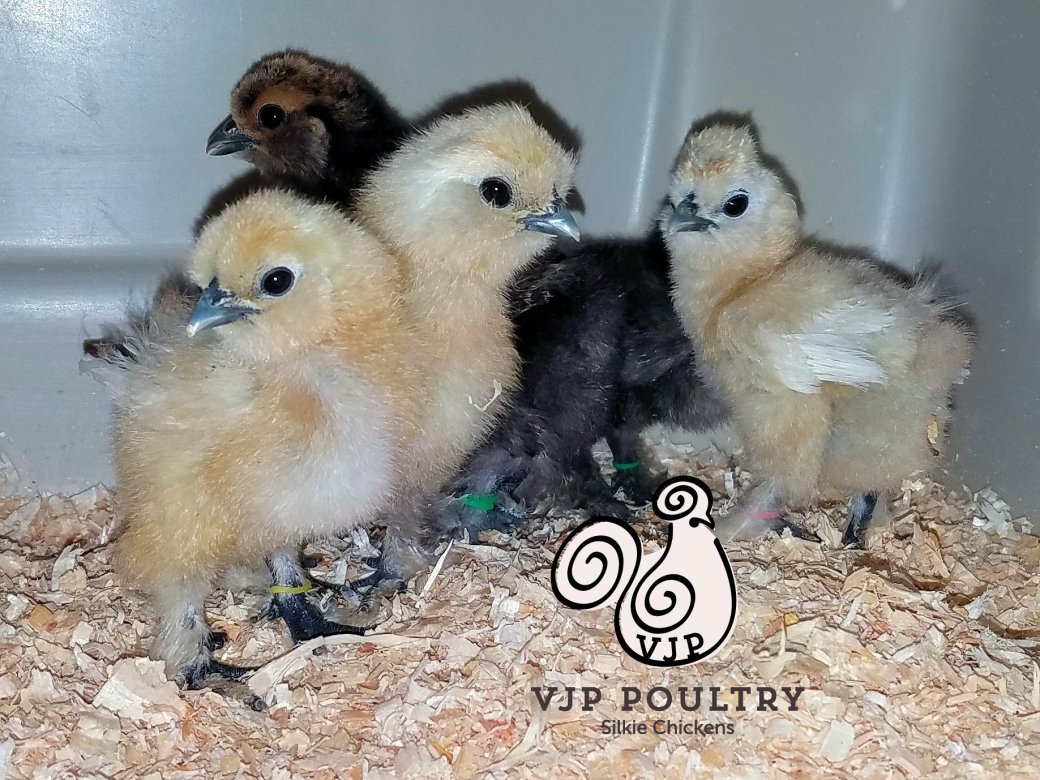
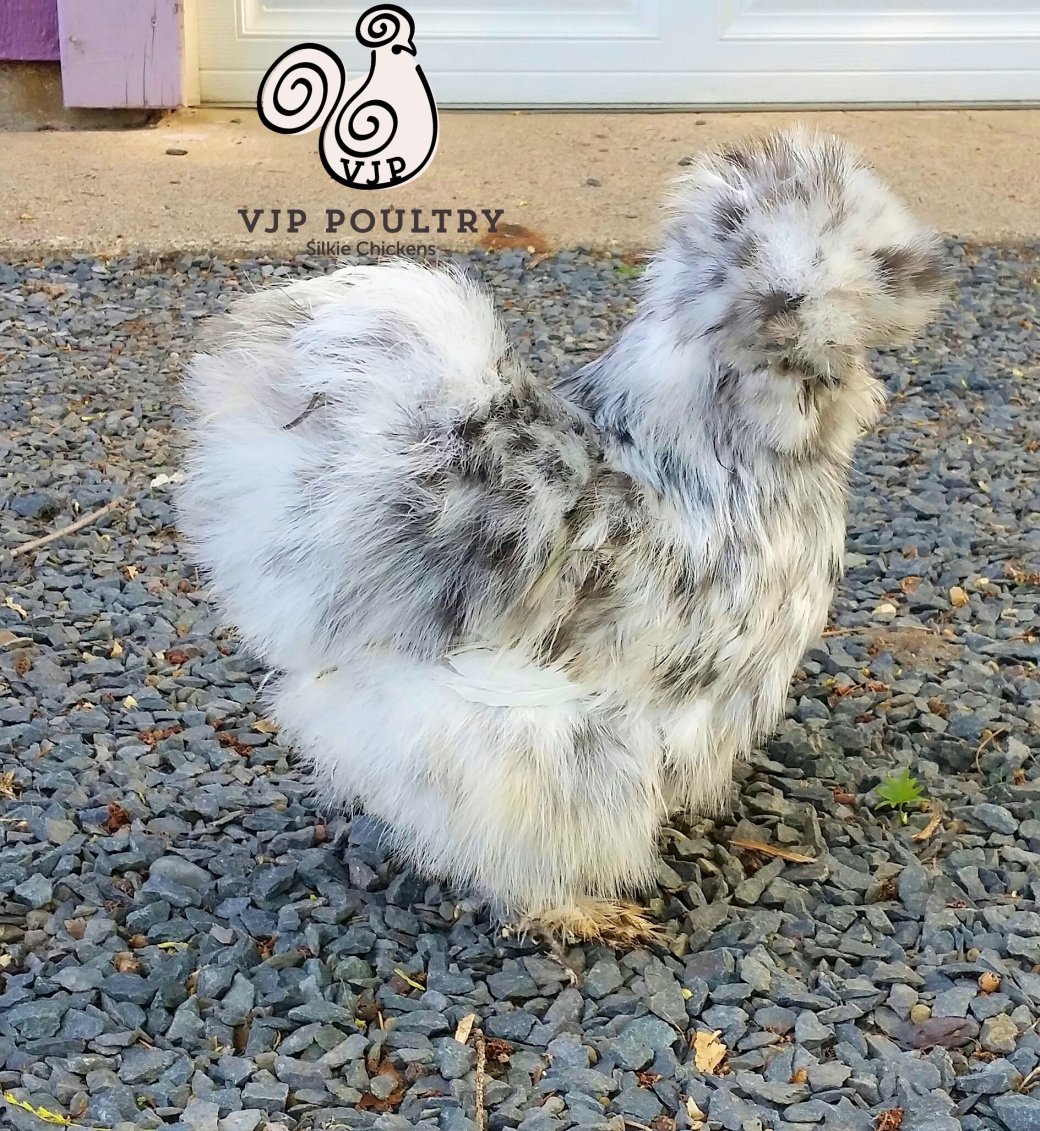
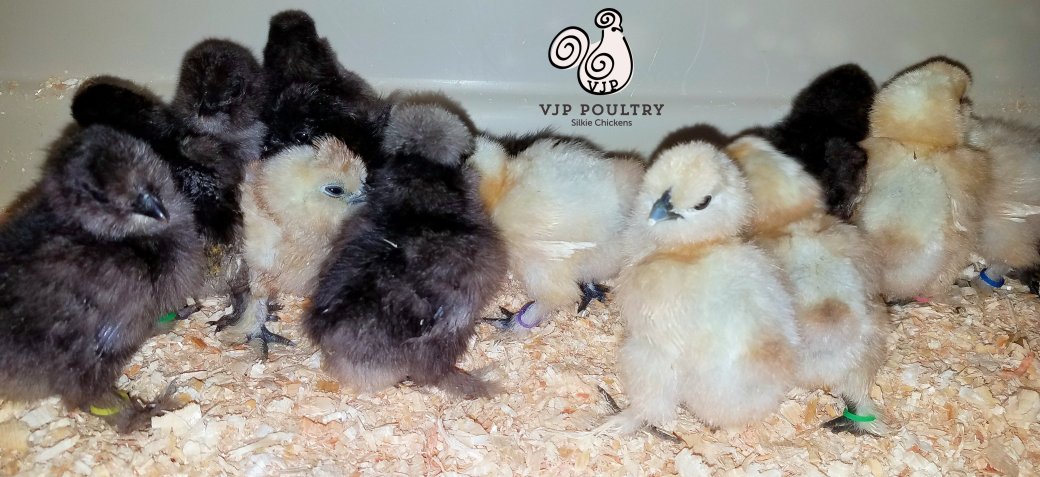
Pen 21 – Newborns hatched 6/26 – 4 white, 6 black – $11 each.

20190630_154912

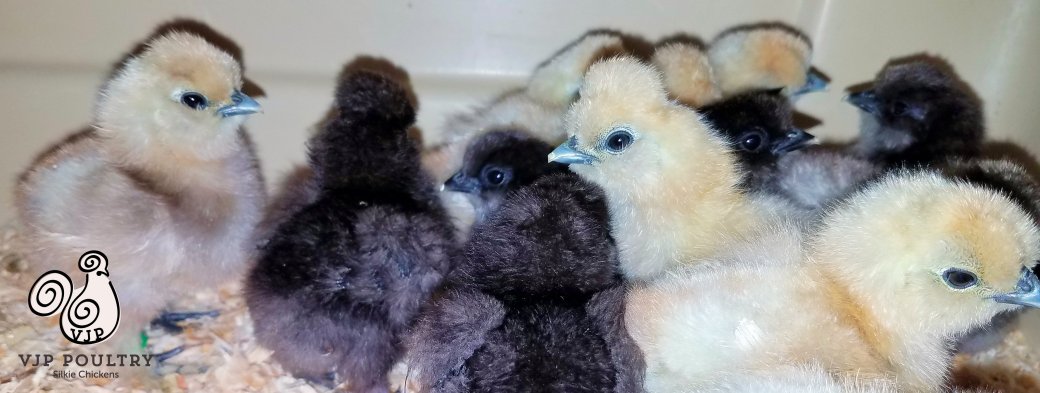
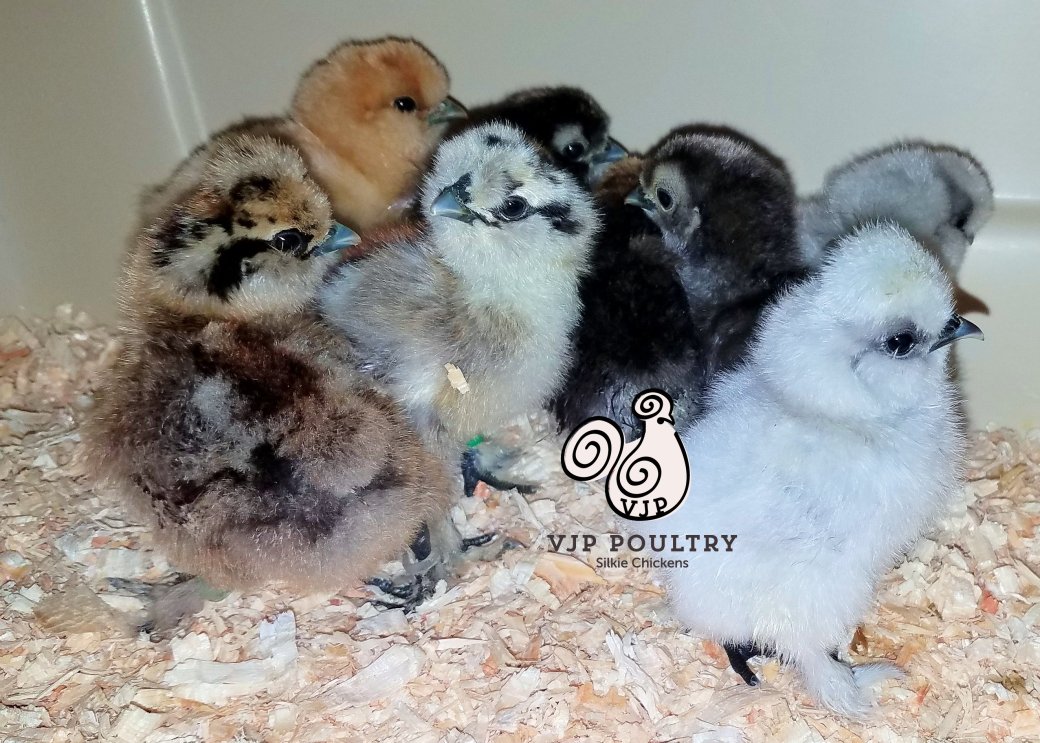
Pen 20 – Newborns hatched 6/26 – 1 splash, 1 buff, 3 grey partridge – $11 each.

20190630_155149

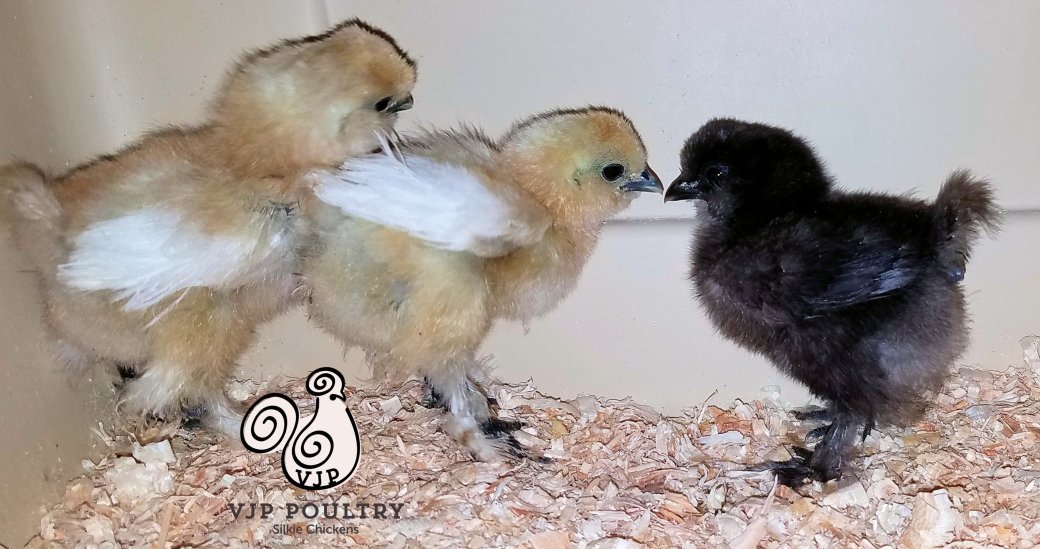
Pen 6 – One week olds hatched 6/21 – 4 white, 1 black, 1 buff, 1 gray – $12 each.

20190630_145318

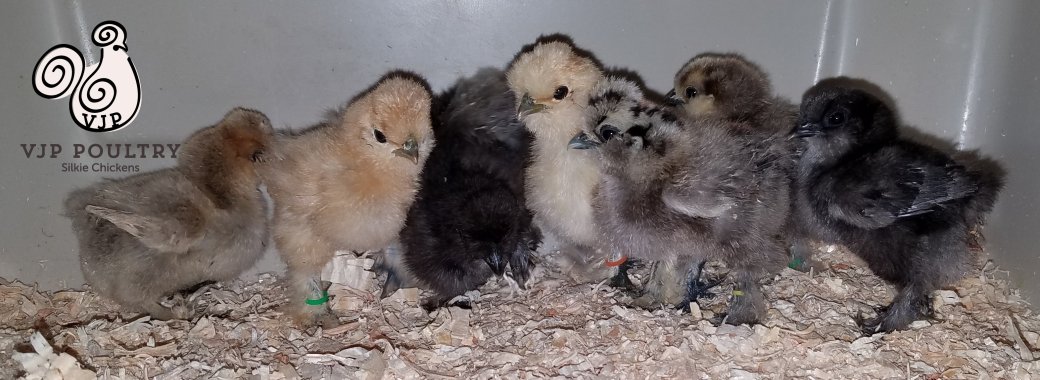
Pen 7 – Two week olds hatched 6/16 – 2 white, 1 black – $13 each.

20190630_143649

If you have questions or want to set up a time to come out and pick up some chicks you can text me at 612-756-1414 or PM me at the VJP Poultry Facebook page.

Silkies For Sale – 6/26/19

Here is what is available for the week of June 26, 2109.  My next scheduled hatches are for 6/26, 7/1, 7/6 and 7/12.  We are NPIP and a state inspected hatchery.  No shipping/Pick up only.  Chicks are sold unsexed but ask us about our rooster return policy.

20190625_143739

Pen 21 – Newborns hatched 6/21 – 5 buff, 1 splash, 4 gray/partridge, 1 partridge – $11 each.

20190625_143558

Pen 20 – Newborns hatched 6/21 – 7 white, 5 black – $11 each.

20190625_124420

Pen 6 – One week olds hatched 6/16 – 3 white, 1 black, 1 grey/partridge – $12 each.

If you want to set up a time to come out and look at silkies or if you have questions, you can contact me through text at 756-1414 or PM me at the VJP Poultry Facebook page.

Chicken Themed Gift Wrap

When it comes to wrapping paper, we want something that reflects our own personal obsessions or those to whom the gift is for.  People who like chickens often like to find special or unique gift wrap featuring pictures of chickens.  Maybe someone you know is crazy about poultry and you would like to find a wrapping paper to show that you are thinking about what makes them.


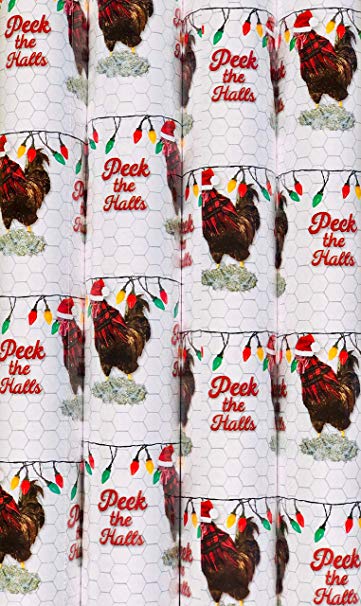
Chicken in a Santa hat gift wrap and Farm Life at Christmas wrapping paper.

Use some glitter chicken wire ribbon with it.


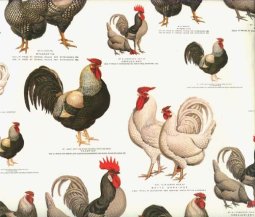
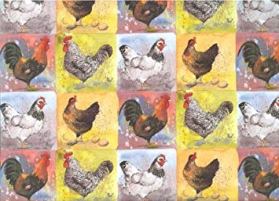
Tassotti  and Cavallini have two beautiful sets of wrapping paper. Almost too nice to use, you may want to frame it. The first is Chickens and Roosters 51CqyJWqLZL

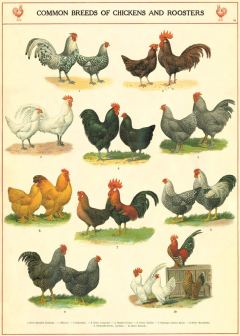
and the second is Common Breeds of  Chickens71CYe+eMjvL._SL1200_

Beautiful Italian wrapping paper featuring Baby Chicks. 61Bg0vJ9G8L._SL1000_

Alex Clark has a few designs printed in England. Checkerboard Chickens 512LzaXE3nL._SX355_


Everyone will be Oohing and Ahhing over your choice of Chicken and Peeps Kraft wrapping paper. 71a5YSo5EmL._SL1000_


Farm Animal wrapping paper and Farmyard Birthdaygift wrap.

To store all of this gorgeous paper you may need one of these gift wrap storage containers.


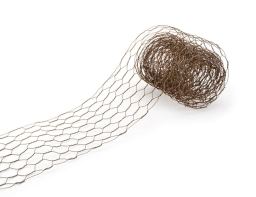
This would look great paired with a rusty chicken wire ribbon615zyGmn9bL._SL1250_

For more tips and tricks for raising outstanding silkies check out our Chicken Learning Center at VJPPoultry.com .  VJP Poultry is an NPIP and state inspected hatchery located 30 miles north of St. Paul.  We hatch out silkies all year long so we always have stock available.  Like us on Facebook to get weekly updates on what we currently have for sale.

Victoria J. Peterson
buy_now_amazon    Click Here


91hQulit-hL._SY606_


How to Practice Biosecurity in Your Own Backyard Silkie Flock

7a31a8c5e329aa4f6b0d5ac6083b2c62Everyone wants their chickens to be healthy, but are you truly giving them the best protection possible?  There are some very lethal poultry diseases out there and you may, without even knowing it, be bringing those pathogens into your backyard. It is important to think about setting up some kind of defense between disease and your birds.

When we use the term “Biosecurity” we are talking about a system of methods that, used correctly, will help to protect your birds from the unseen viruses and bacteria that are looking for a new home. We don’t want that new home to be your chicken coop.

There are many contagious diseases out there that can effect your flock.  There has been an outbreak of Virulent Newcastle Disease is southern California this summer.  This particular outbreak is effecting small backyard flocks and not the large commercial poultry houses like we saw with the Avian Flu a few years back. The Newcastle outbreak highlights the need for year round poultry biosecurity.  If biosecurity is not practiced it would be very easy for Newcastle disease to make its way across the United States infecting birds as it hitches a ride on the tires of a truck or on the bottom of someone’s shoe.

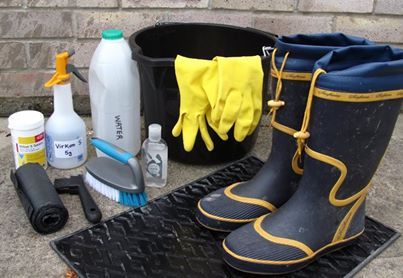
The first thing that you can do is to keep things clean in your own backyard.  Something as simple as washing your hands or using hand sanitizer  before entering or exiting your bird area can be effective. Change food and water daily in your pen.  Clean and disinfect cages, tools or other equipment that comes in contact with your birds or their droppings. There are several good disinfecting products.  I use Oxivir on everything. Other good products include Oxine and Virkon S.  Cleaning and disinfecting are important steps to keep your bird’s environment healthy.  Disinfectants only work effectively when you first clean all dirt,  manure, and bird droppings from your tools, cages, boots and equipment. Clean these things outside of your house to keep germs outside.

Have a separate set of clothes and shoes that you wear only in your poultry area. I have a pair of slogger boots that I only wear when I am doing chicken chores. They slip on and off easily and can be cleaned daily with a garden hose.  I do not go down to the chicken coop unless I am wearing those boots. I have a set of snowmobile boots that I use in the winter for chicken chores. When I go into the house I change into my house shoes.  Those shoes I will wear in the brooder room and the incubation area.  I wear an apron in the brooder room that is washable.  Outside in the adult chicken area I have a coat that I only wear when doing chicken chores. It is washable as well. I also wear gloves that are easily washed as well.   It is important to me to keep the adult chicken germs away from the baby chick area and the rest of the house.  Wash and disinfect shoes and clothes often.

It is important to keep other people and other birds away from your flock as much as possible. That includes birds you just bought and wild birds. Both could carry disease to your chickens.  Restrict access to your property and your birds.  Avoid visiting farms or other households with poultry.  At your own place, do not let visitors near your birds at all if they have their own birds. It is sad to have to say this, but you need to protect your flock.  If you can’t avoid contact with others then make sure that you disinfect your shoes and clothes before being with your birds again.  This is why you need separate boots and coats that you only use with your chickens.  Don’t use other people poultry equipment without disinfecting it first.

If you like to exhibit birds at poultry shows, make sure that you quarantine birds for at least two weeks after the event. Wear different shoes and clothing when at the show or fair and disinfect when you return home. Disinfect cages that were used for transport.

Be sure to buy birds from a reputable source. Check and see what kind of biosecurity they practice.   Someone who is an NPIP breeder has their flock pullorum tested every year and can only buy from others who are NPIP.  A state inspected hatchery has a state vet come out and inspect the premises every year and discusses biosecurity standards with them.  Whoever you do buy from make sure that you keep new birds quarantined for at least 30 days.

Don’t let wild birds have contact with your flock.  If your birds are outside, consider keeping them in a screened area. Do not let wild birds eat food in your chicken run. This will also help keep insects and rodents away.  Hang fly strips or fly traps in the coop. Flies can transmit disease on the bottom of their feet. Put out mouse traps and clean up spilled feed to keep your area rodent free.

Change is always hard especially if you are used to doing things in a certain way. Just pick one suggestion and start with that. Once it becomes a habit, choose another biosecurity measure to implement.  You will feel better knowing that you are keeping your flock safe and healthy.


For tips and tricks for raising outstanding silkies check out our Chicken Learning Center at VJPPoultry.com .  VJP Poultry is an NPIP and state inspected hatchery located 30 miles north of St. Paul.  We hatch out silkies all year long so we always have stock available.  Like us on Facebook to get weekly updates on what we currently have for sale.

Victoria J. Peterson
cute Chicken cartoon character with stop sign


Strengthen Your Chicken’s Egg Shells With the Shell of an Oyster

20180515_123422-1Hens work hard to provide us with their daily eggs.  Making egg shells takes a lot of calcium.  The more eggs they lay, the more calcium they need.  If a hen doesn’t get enough in her diet, her body will steal calcium from her bones to make the egg shell.  This leaves her bones very brittle. You may think of Osteoporosis which women sometimes get as they age.  Hens often have that same problem.

The egg shell that a hen lays is 95% calcium by weight.  In one year the amount of calcium put into her shells can equal 20 times the amount of calcium that is contained in her bones. In order to stay healthy  and create strong egg shells, she needs to consume a large amount of calcium in steady intervals.

The most recognizable sign of calcium deficiency is thin shelled eggs or even eggs laid without a shell .  Lack of calcium in the diet can also lead to soft  shell eggs which look rubbery.  This can also lead to egg binding which can be fatal in hens.  Rough spots and wrinkles on the shells are another sign of low calcium.  The egg shells should look hard and smooth.

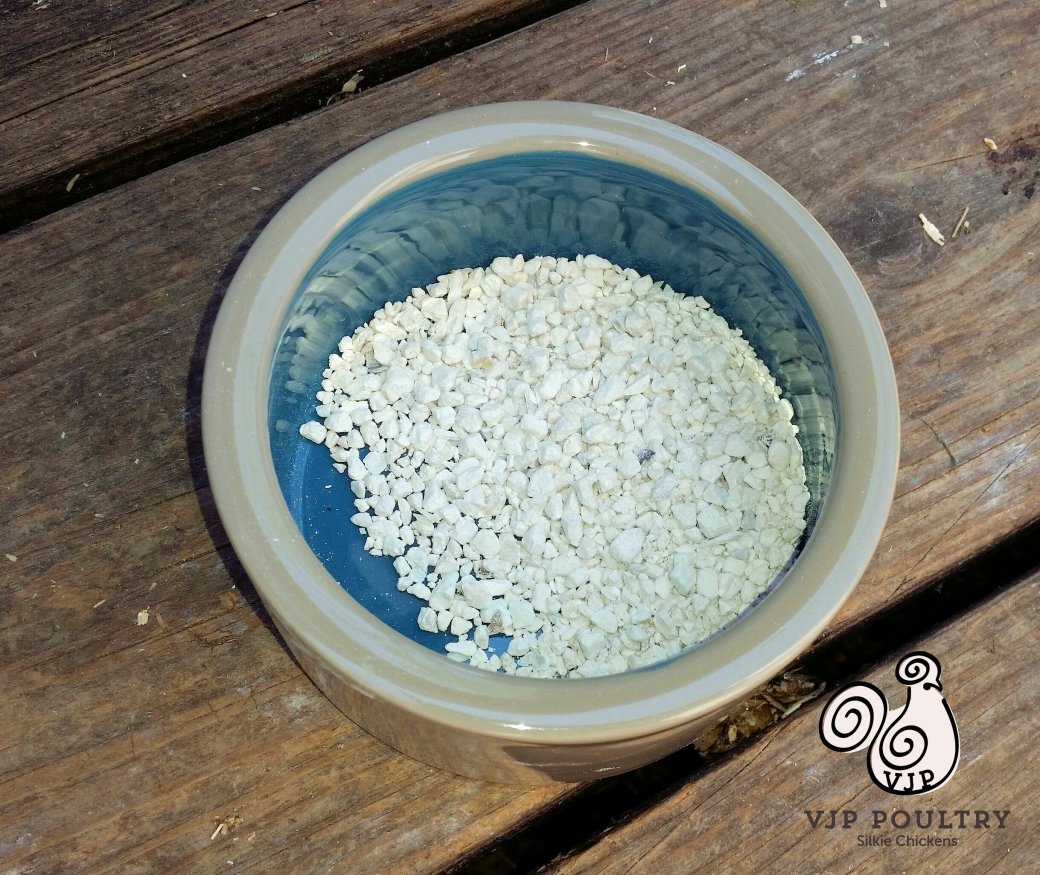
Ground oyster shell is the most common supplement to increase the amount of calcium in a hen’s diet. Oyster shell is inexpensive and lasts a long time. It does not spoil or go bad. Oyster shell is eaten by hens and the shell dissolves in the gut.  It is not the same thing as grit.  Grit aids digestion by grinding up food in the crop.  Oyster shell has nothing to do with digestion.  It also does not stimulate egg laying. It simply provides the mineral calcium to the hen.

To lay well, a hen needs 16% crude protein .  Most grains range 7-12% protein and are low in certain essential amino acids.  High amounts of protein can contribute to more frequent ovulation in a hen. Make sure that you are giving your hens a balanced feed with the correct nutrients and protein. Most of their food should come from a nutritionally balanced food. If you give them treats or let them free range you can be upsetting this balance.

Most hens start to lay at about 20 weeks.  Wait until the hen has actually laid an egg to begin giving them oyster shell supplement.  Giving it too early can damage the young pullet’s kidneys. Oyster shell should be given free choice in a separate bowl so they can eat as much as their body needs.  Laying hens who aren’t getting enough calcium can produce weak or irregularly shaped eggs.  This issue can also cause slow laying or even problems like egg eating because they are so desperate for the calcium they need.

How much calcium a hen needs is an individual issue and all hens are different. Some breeds lay eggs every single day. Other breeds take more time off, such as silkies.  The hen’s bodies will prompt them to eat the oyster shell as they need it. If you don’t see them eating it, they may not need it

Do not mix the oyster shell into the food.  This can force them to eat too much calcium which can damage their kidneys.  Feed it to them in a separate bowl or even scatter it on the ground.  Some commercial feeds contain calcium, but it is often not enough for typical layers, especially if they have access to table scrapes and treats.

In order for the hen to be able to absorb the calcium, two  nutrients seem to affect it the most. These nutrients are Phosphorus and vitamin D3.  Phosphorus is easily found in grains. D3 come from sunshine so you want to make sure that your hens have exposure to sunlight.  Powdered vitamins added to the water will help with this.

I have found oyster shell to come in many different sizes.  Some pieces are so large they can barely swallow it,  down to basically nothing but powder. The ideal particles size of supplemental calcium ranges between 2 mm and 5 mm.  Larger pieces of calcium carbonate take longer to digest than smaller particles and are more desirable.  Hens seek out large particles of oyster shell late in the day before the period of shell formation occurs.  Shell formation usually occurs during the night.  Too much calcium will give the eggs an extra coating of powdery calcium around the entire egg or you will see calcium deposits around the shell.

Hens do best when fed a balanced crumble or pelleted diet, especially an all-flock diet with oyster shell in a separate bowl on the side.  Meat birds should be given a separate feed.  Birds that eat other things besides their layer food such as free range foragers or birds that get extra treats need the extra calcium from oyster shell.

Oyster shell is not for pullets that haven’t started laying eggs yet. Wait until they actually start laying eggs to give them the extra calcium.  Chickens who are not laying will get enough calcium in their daily feed for normal calcium use.  When they are laying they need four times as much calcium as a non laying hen.  Giving additional calcium to chickens who are not layers is detrimental to their health. This would include roosters, cockerels,  and older hens no longer laying.

Oyster shell should never be mixed with the food.  Just leave it out in a separate bowl.  They will instinctively know to take it when they need it.  Do make it available all year round.  If they aren’t laying as much in the winter, they will just lower their intake of it.

There are other forms of calcium you can use. Limestone is a rock that contains calcium. If you live in an area with limestone gravel they may naturally pick some up.  Some people save egg shells and offer these back to the hens.  Remember that a hen’s own shells will not provide enough calcium if she doesn’t have other supplements.  Bake the shells first in a 350 degree oven for 10 minutes to kill any bacteria that may be present.  Crush them finely so that they do not look like egg shell, otherwise you are teaching the hens to eat their own eggs.

For tips and tricks for raising outstanding silkies check out our Chicken Learning Center at VJPPoultry.com .  VJP Poultry is an NPIP and state inspected hatchery located 30 miles north of St. Paul.  We hatch out silkies all year long so we always have stock available.  Like us on Facebook to get weekly updates on what we currently have for sale.

Victoria J. Peterson
20180517_091554-1