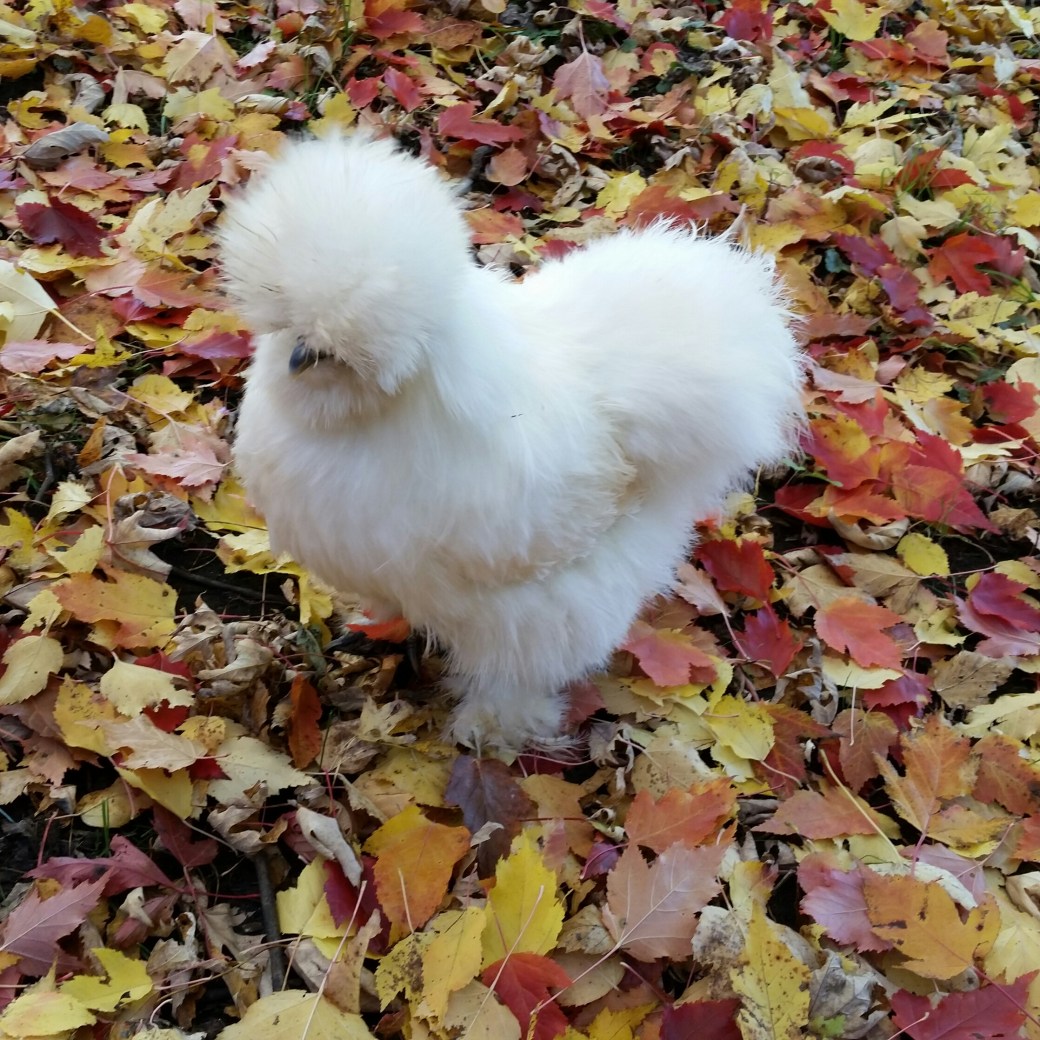
A Look at the Silkie Standard of Perfection

20171020_121935-1The American Standard of Perfection is a wonderful book published by the American Poultry Association. In it you will find all kinds of valuable information on all of the breeds of chickens that are recognized by this group.  Their main purpose is to list characteristics of each breed at their highest level.  This information is used by judges to help them judge the qualities of individual birds against what has been decided as the “perfect” bird of that breed and variety by the American Poultry Association. It is also used by breeders to improve their birds through breeding towards the standard and by exhibitors who want to place well in poultry shows who use the standard as a guide for choosing birds.

In judging, there is a scale of points that equals 100.  Points are assigned to different attributes of the bird.  Points will be deducted if the bird does not meet the standard given.  There are also disqualifications that can be given which will eliminate a bird from competition.  Since silkies  have crests and beards their point system is adjusted to include points for those areas.

The disqualifications specifically for silkies include :  Bright red comb, face and wattles.  Shanks not feathered down outer sides.  Feathers not truly silky (except in primaries, secondaries, leg, toe and main tail feathers.) Vulture hocks. There are other disqualifications that are for all birds, not just silkies.  You would find those under “General Disqualifications” elsewhere in the book.

The standard weight for a silkie cock is 36 oz.  The standard weight for a silkie hen is 32 oz.  The standard weight for a silkie cockerel is 32 oz.  The standard weight for a silkie pullet is 28 oz.

The standard then lists descriptions of each of the areas of the silkie’s appearance.  This is all part of the bird’s shape.  It is best to obtain a copy of the standard so that you can read in detail what the standard entails. I will mention a few of the items of interest but there is much more information listed in the book. I will be discussing the Bearded Silkie only.

The comb should be walnut shaped. In the males it should be circular shaped and have a horizontal indentation across the middle of it. Females should also be walnut and smaller. The wattles should be small and concealed by the beard in bearded silkie males.  The females should be very small and concealed.

The crest should be medium sized. The beard and muffs should be thick and full. The neck should be short and gracefully curved.  The back should be short and broad and rising back in a curve towards the tail.  The cushion of the tail should be broad and round and very fluffy.  The tail should be  shredded at the ends.

The wings should be closely folded and carried well back being nearly horizontal.  Primaries should be concealed  by secondaries.  The tips should be well shredded with tips being concealed by saddle feathers.

The silkie needs to have five toes. Three in the front and two in the back.  One toe in the natural position and the other placed above it curving upwards and backwards.  Feathering should be to the middle toe.

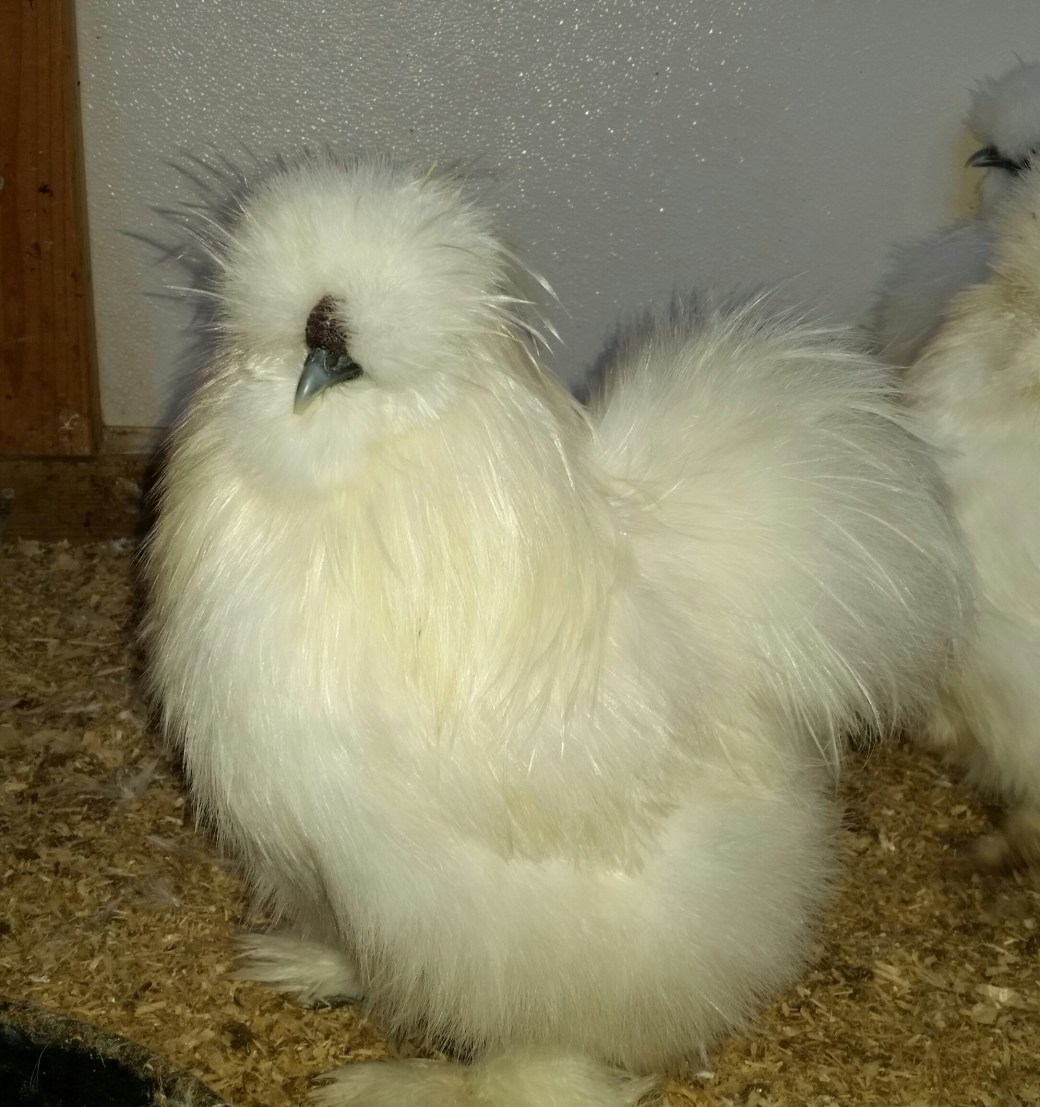
Comb should be deep mulberry colored.  Beak should be slaty blue and eyes should be black.  Earlobes should be turquoise blue. Skin should be dark blue and toes slaty blue.

Silkie’s feathers come in different colors and not all colors are recognized by the APA. Here are the ones that are recognized: white, black, blue, partridge, buff, gray, splash, self-blue (lavender) and paint.  There are separate descriptions for each of the different color varieties indicating what is accepted and what is not.

Symmetry, as well as, condition and vigor are also important in judging.  The overall shape and balance of the bird is important.  The silkie should look like a “S” curve with the bottom part of the “s” continuing upward.  They almost look completely circular, like a bowling ball when they stand correctly.

There is much more to the silkie standard than I have talked about in this article.  If you would like to purchase a copy, you can get one through the American Poultry Association here.

There are also old copies and  knockoff copies at Amazon that are not printed through the APA.  I think that they are basically  xerox copies and have the same information.

Hopefully this will answer some of your questions concerning what the standard of perfection is.  As a breeder, we are constantly trying to improve our silkies and have them come as close as possible to the standard that has been set. It is important to show your birds as a breeder or attend shows so that you can talk with judges and other people who are knowledgeable about silkies.

For tips and tricks for raising outstanding silkies check out our Chicken Learning Center at VJPPoultry.com .  VJP Poultry is an NPIP and state inspected hatchery located 30 miles north of St. Paul.  We hatch out silkies all year long so we always have stock available.  Like us on Facebook to get weekly updates on what we currently have for sale.

Victoria J. Peterson

Information for this article was taken from The American Standard of Perfection 2010 published by American Poultry Association, Inc.
20171126_125635-1


Egg Color and Colored Earlobes in Chickens

20180324_153532-1Chickens lay a rainbow of colors when it comes to egg shells.  White, cream, tan, pink, blue, green, brown and speckled.  But did you realize that a chicken’s earlobes are different colors as well, and that some people can make guesses as to what color egg a certain hen will lay based on her earlobe color.
A chicken’s ears are located on each side of its head, just below its eyes.  They do not stick out like most animals do.  The ears are located inside of the head.  The earlobe is just below the ear.  It is a slight thickening of the skin and is smooth with no feathers.

Birds are the only animal that lay colored eggs.  Popular folklore says that if a chicken’s earlobes are white, they will tend to lay white eggs.  If they have red earlobes they will lay brown eggs.  We know that there are many exceptions to this.  Some red earlobed birds lay greenish or blue eggs.  Silkies have turquoise earlobes and lay a cream colored egg.  Chicken breeds which have white earlobes with a pearly iridescent shine such as a cream legbar, lay blue eggs.

Eggshell color is definitely based on breed.  Unless you have a mixed chicken, the birds will lay true to their breed.  Araucana have red earlobes and lay blue or green eggs.  Penedesencas have white earlobes and lay dark brown eggs.  Some Americanas have white earlobes and lay blue eggs.  Earlobe color is based on breed genetics as well.  You can’t correlate earlobe color and egg shell color because one is not based on the other.

Depending on the breed, a hen will lay about 500 eggs in her lifetime.  All eggs start out white.  Those that are other shades have pigments deposited on them as the eggs travel through the hen’s oviduct.  This journey takes about 26 hours until the egg is laid.  The shell itself takes 20 hours to complete.  Ameraucanas have the pigment oocyanin deposited on the egg as it travels.  This pigment permeates the eggshell resulting in both the inside and the outside of the shell being blue.

Chickens that lay brown eggs deposit the pigment protoporphyrin on the eggs while they are forming their shells.  This pigment only stays on the top of the shell.  The inside of the shell remains white.  The darkest brown eggs are from Marans.

In order to create a green colored egg, a brown pigment overlays a blue egg shell.  The darker the brown pigment, the more olive color the egg will look.

No matter what color the outside of the egg is , the inside will all look similar.  The color of the yolk is determined by the hen’s diet.  The more green veggies in the diet, the deeper the color of the yolk.

Chickens have two ears on each side of their head.  They have eardrums and an outer ear, middle ear and inner ear.  They are able to harness sound waves and send them to the inner ear.  Unlike humans, who experience hearing loss as they age, chickens are able to regrow damaged hearing cells.  Scientists are very interested in learning more about this special adaption and in being able to apply it to help humans with hearing loss.

Hearing well is very important to all birds.  It is imperative that they can hear approaching predators.  Chickens can tell how far away a sound is coming from by gauging how long it takes the sound to reach the ear.

Baby chicks are able to hear their mother clucking from inside of the egg.  An embryo can hear by around day 12 of their incubation period.  Once hatched a chick will respond to its mother tapping on the ground when she finds food.  If you tap on the food dish your baby chicks should come running.

Ear infections in chickens are often caused by bacteria entering the ear.  Antibiotic drops can be given for 3 to 5 days if the infection is caused by bacteria.  Clean the ear with hydrogen peroxide and a Q-tip to loosen any debris on the ear.  Do not put a Q-tip deep into the chicken’s ear as it can damage it.

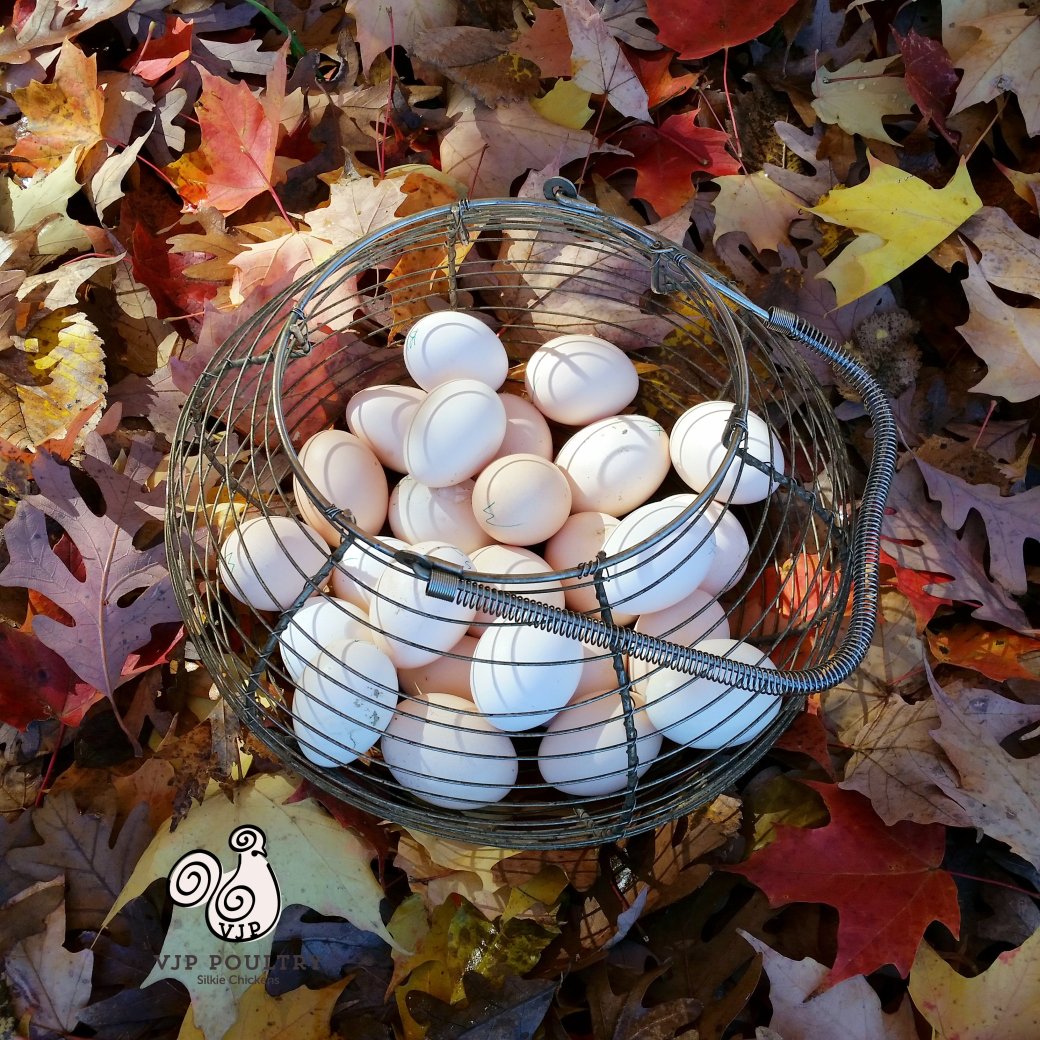
Timely egg collection is important.  Don’t leave eggs under hens unless you plan on hatching.  I like to use a wire egg basket to  help me handle all of the eggs if find.  If you are interested in more information on egg collection check out our blog.

It is fun to see the assortment and variety of egg colors that can come from your hens. You can display them quite creatively with an egg spiral holder or egg counter holder.  Eggs that have not previously been refrigerated can stay on your counter for about a week and stay fresh.  You can get quite fancy with your egg storage holder.

For tips and tricks for raising outstanding silkies check out our Chicken Learning Center at VJPPoultry.com .  VJP Poultry is an NPIP and state inspected hatchery located 30 miles north of St. Paul.  We hatch out silkies all year long so we always have stock available.  Like us on Facebook to get weekly updates on what we currently have for sale.

Victoria J. Peterson

20161018_132530

How to Prevent Pasty Butt in Baby Chicks


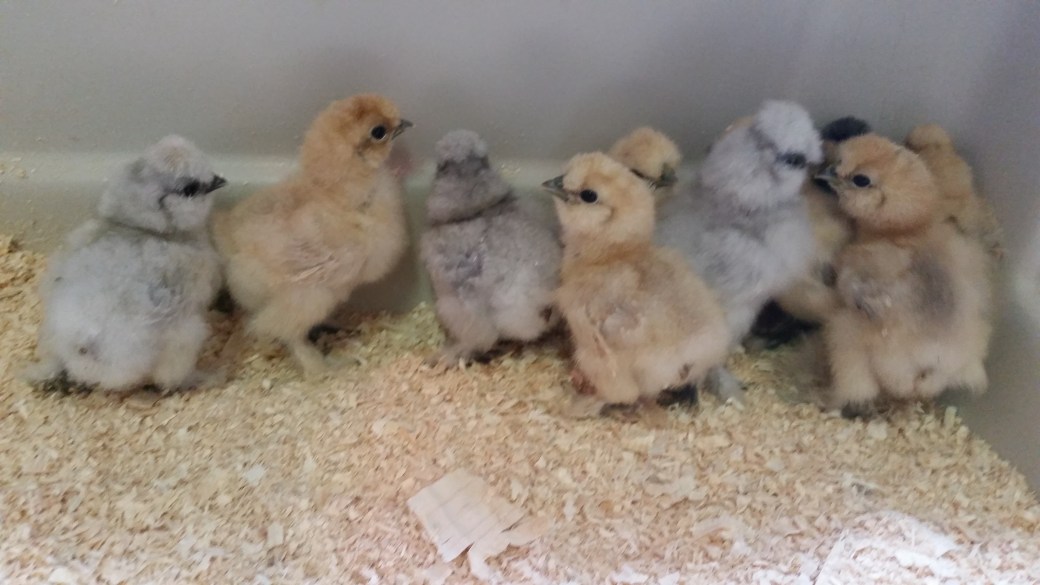
20160919_121349Almost everyone has had a chick which has had a piece of poo sticking to its behind.   We try to remove it and end up making an even bigger mess by smearing  the poo around the poor chick’s backside. It ends up drying hard like cement or worse capping the vent causing a small explosion of backed up poo when finally removed.  There must be a way to prevent all of this from happening again.
Pasty Butt or “pasting up”, is a condition in which the little chick’s poo gets stuck to the vent (small slit on chick’s back end) and “stops up” the chick like a cork.  The chick can’t eliminate its poo and the poo gets backed up into the body of the chick.  This can kill the chick fairly quickly if not removed.

If I see that a chick is plugged up, I will carefully remove the piece of poo with my fingernail. I gently tug, being careful not to hurt the chick. This works best when the poo is dried. Some feather down may come off with the poo using this method.  Sometime there is too much poo and it is too wet to remove it with your fingernail.  I will then use a Q-tip and warm water to soften the poo until it comes off.  The disadvantage with this method is that now the chick has a wet behind and can quickly become chilled.  I gently dry it off with a towel or paper towel and place it back under the heat lamp to finish drying.

Pasty Butt is common in chicks sent in the mail or in crowded feed store bins.  It tends not to happen in chicks who are hatched and raised by a broody hen.  Their temperature is regulated by her feathers and she will take care of making sure that their behinds are clean.

When you’ve hatched out chicks in an incubator or have had chicks arrive in the mail, you must take the place of the mother hen and clean the chicks yourself.  The new baby chicks will not be able to clean themselves until they are at least a week old. They are not capable of reaching around to that spot to clean it properly.  This will be your job as surrogate mother hen.  You will need to check your chicks regularly for the first week of life.  After the first week is finished pasty butt  is less common and they are better able to keep themselves clean.  Their bodies have also become better regulators of heat and their digestive system is better able to handle new food.

When checking your chicks, don’t confuse the vent with the belly button.  The vent is immediately below the tail feathers.  It is a thin line that opens and closes.  This opening is also through which the eggs will come out of the hen’s body when she starts to lay.  The belly button is between the vent and the chick’s legs.  There may, perhaps, be a piece of the umbilical cord still there.  Don’t pull on it as sometimes intestines can still be attached to it and you can end up pulling out the baby chicks bowels.  The cord will drop off itself in a day or two.

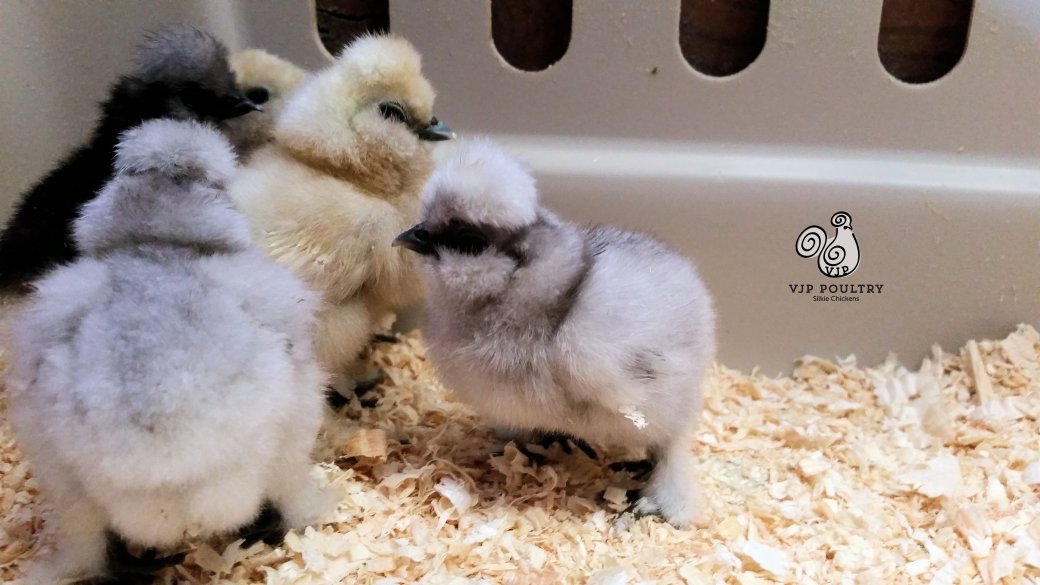
You may wonder what causes pasty butt in the first place and why do only some chicks suffer from it.  Silkies in particular seem to get it quite a bit.  This may have something to do with their extra fluffy down.  The poo seems to stick to it quite easily.  It may help to put a dab of vaseline jelly with a Q-tip right below the vent line.  The poo is then unable to stick to the down.

Temperature regulation has a lot to do with whether your chick will develop pasty butt.  Too hot or too cold conditions will bring on an outbreak.  Chicks that are sent in the mail often are left in cold mail rooms where they may become chilled.  If mailed out in the summer they may also suffer from too warm of conditions.

250 Watt  Heat lamp bulbs can often put too much heat into your small brooder.  Try a smaller watt bulb or use a different heating source.  I like  the Ecoglow or the Sweeter Heater.  They both mimic a mother hen by creating a warm cave where the chick can feel protected.  I have not found them to be too warm.  Radiant heat does not heat the air but does heat the chick and bedding.  Watch your bird’s behavior.  They will let you know if they are too hot or too cold.  Chicks that are too cold will huddle up together and make loud cheeping sounds.  Chicks that are too warm will spread out to the corners of your brooder to try and get away from the heat source.  For the first week the brooder should be 90-95 degrees.  For more information check out How to choose a Heat Source for your Brooder.

Placing the chick in stressful situations will also bring on pasty butt.   Overcrowding in the brooder can bring on stress for baby chicks.  Too many chicks can trample each other in their frenzy to find the best spot in the brooder, best place to get food or best place at the waterer.  Stronger chicks will walk over weaker ones.  Smaller chicks can get squished into corners.  Keep your numbers in the brooder manageable.  Newborn chicks need about six square inches of space each.  They also need space in which to get away from the heat source if they need to.  More information about brooder size is at Choosing the Perfect Brooder.

Other things that can cause stress are loud noises and frequent handling by over eager children.  The first week of life should be a time of calmness with no major transitions.  They are very cute to look at but when you sweep your hands into their brooder to scoop them up all they are thinking about are flying predators.  They instinctively know that they should fear things that come from above.  Try moving the brooder off the floor and onto a table where your presence is not so threatening.  Keep the brooder in a quiet area.  Limit your handling of the chicks during that first week.  There will be plenty of time later to cuddle with your chick.  Chickens do not imprint like some other birds. There is not need to try and tame them that first week.

Baby chick’s first food should be “Chick Starter” crumbles.  The size of the crumbles can vary.  For the first week of life I recommend grinding the chick starter up so that it resembles powder. I use a coffee grinder. I think that this is easier to digest than some of the large crumbles that are in some packages.  Pasty Butt poo is sometimes very loose and runny.  Oatmeal can firm it up. I take old fashioned oatmeal and grind that up in a coffee grinder and then add it to the ground up chick starter.  I make a batch that is 1/4 oatmeal and 3/4 chick starter.  They seem to really like it and tend to eat more food with the oatmeal in it. I will also sprinkle some chick grit (sand) on top of it, kind of like just adding a sprinkling of salt to something.  This will also help to firm their poo up as well.  Grit can also be offered in a separate dish.

Treats should be given very sparingly that first week.  I wouldn’t give them any treats beyond ground up oatmeal, hard boiled egg yolk, or perhaps some plain yogurt.  Pasty butt is often a result of the chick switching from nutrients found in their egg to the new food out in the world.  Stick with the chick starter for now.  There is plenty of time for treats after they are a week old and their digestive systems can better handle it.

I do add some things to their water.  Probiotics and vitamins can give them a good start.  Rooster Booster has both vitamins and probiotics .  It can be added to water or sprinkled on feed. Probios is also a choice for adding active cultures to your chick’s gut. Gro – 2 – Max is a product that is organic and provides probiotics for your water .I also add a splash of apple cider vinegar to their water for gut health.

Be on the lookout for listless behavior.  I notice that my chicks move and walk differently when they have pasty butt.  They do not feel well when they are plugged up.  Remember that temperature, stress and food each play a role in your chick’s health.

For tips and tricks for raising outstanding silkies check out our Chicken Learning Center at VJPPoultry.com .  VJP Poultry is an NPIP and state inspected hatchery located 30 miles north of St. Paul.  We hatch out silkies all year long so we always have stock available.  Like us on Facebook to get weekly updates on what we currently have for sale.

Victoria J. Peterson

20170609_141000