Tag: Duluth
Time To Purchase Silkie Chicks for 4-H Showing from VJP Poultry – 1/14/2017
 January is the time of year that VJP Poultry begins to get inquiries about purchasing chicks for 4-H. In most of 4-H county and state fairs, chickens shown have to have hatched anytime past January 1st of the year you are showing. They also must be owned by May 15 of that year, in case you are thinking of buying your chicks later.
It is important to get your silkie chicks as soon after that January 1st date as possible because that will mean that you will have a more mature bird when showing. A more mature bird will have advantages in judging because they will look closer to what the “Standard of Perfection” states. Silkies mature slower than other breeds so it is important to buy them early.
Every breed of chicken conforms to an ideal standard. That is what the judge looks for when they evaluate your birds. Weight and condition is also taken into account when judging.
Fixed standards for a breed include: Breed and variety, class, age, weight, sex, plumage or feathers, coloring, tails, crests, combs, earlobes and beards. Each breed and variety has a written standard that you are trying to approximate. Copies of the standard can be found on-line. It is important to make sure that there are no faults or DQs in the chicks you purchase to begin with.
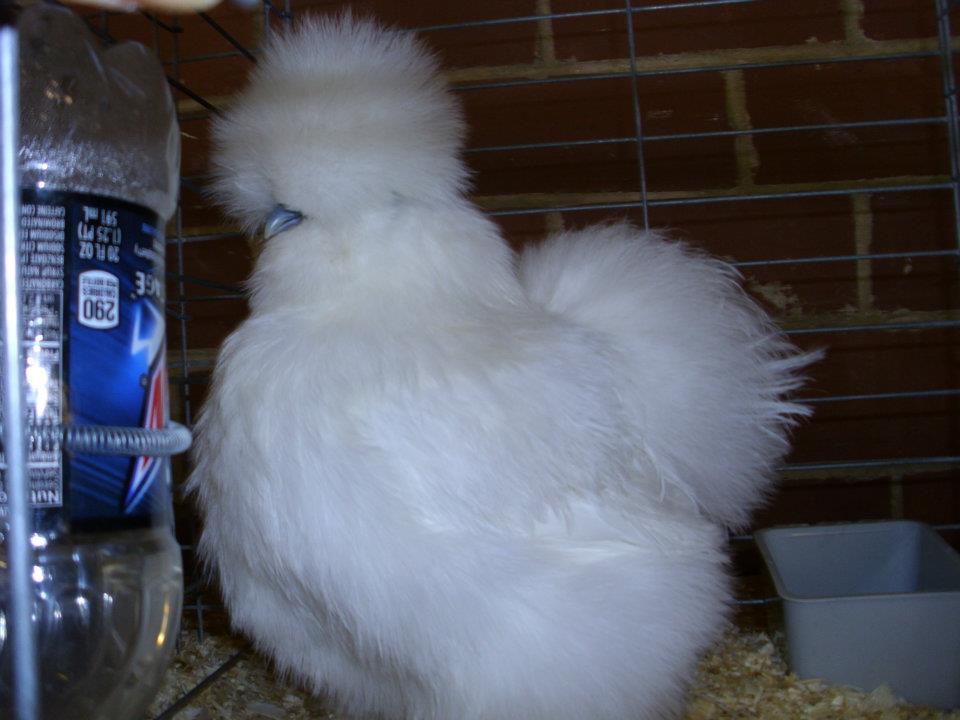
Silkies are an excellent bird to use in showing. They have a calm temperament and are easy to work with. You will eventually need to coop train or cage train them. This means getting them used to being in a small show type of cage, usually about 24″ x 24″. You will need to work with your bird teaching them to allow people to lift them in and out of the cage easily. You will also need to get your silkie used to bathing and grooming.
You will also be judged on Showmanship. Showmanship is when the judge rates how the 4-H er handles their bird. If he has a silkie, he needs to be familiar with everything about a silkie as well as basic chicken anatomy and chicken knowledge. The judge will ask the handler questions and the 4-H er should know the answers.
In 4-H, one can show one cockerel and two pullets in a breeding pen. I would purchase as many chicks as I could afford or have room for. You will be choosing a trio that matches and best conforms to the standard for that breed. The more choice you have in that decision, the better. It is always good to have back-up show birds. Sometimes molting season comes during a show so a back-up of the same variety can fill in.
I have found white and black to be the easiest colors to work with for beginners. It is easier to match these colors. Buff and Blue are harder because they grow into so many different shades.
4-H rules vary from state to state. I recommend contacting your local extension office or local 4-H group to get the details on how they run a poultry show at your fair.
Our flock is NPIP which means that we are pullorum tested. If you buy from a NPIP flock you will not need additional testing done to your birds when it comes time to show them. I have the “Statement of Origin” paperwork which you will present at the time of showing. I have worked with many 4-H ers over the years. Many have won their county shows and have gone on to the State Fair. Good luck to all with your showing!
For tips and tricks for raising outstanding silkies check out our Chicken Learning Center at VJPPoultry.com . VJP Poultry is an NPIP and state inspected hatchery located 30 miles north of St. Paul. We hatch out silkies all year long so we always have stock available. Like us on Facebook to get weekly updates on what we currently have for sale.
Victoria J. Peterson
Using Heated Water Bases at VJP Poultry – 1/7/17
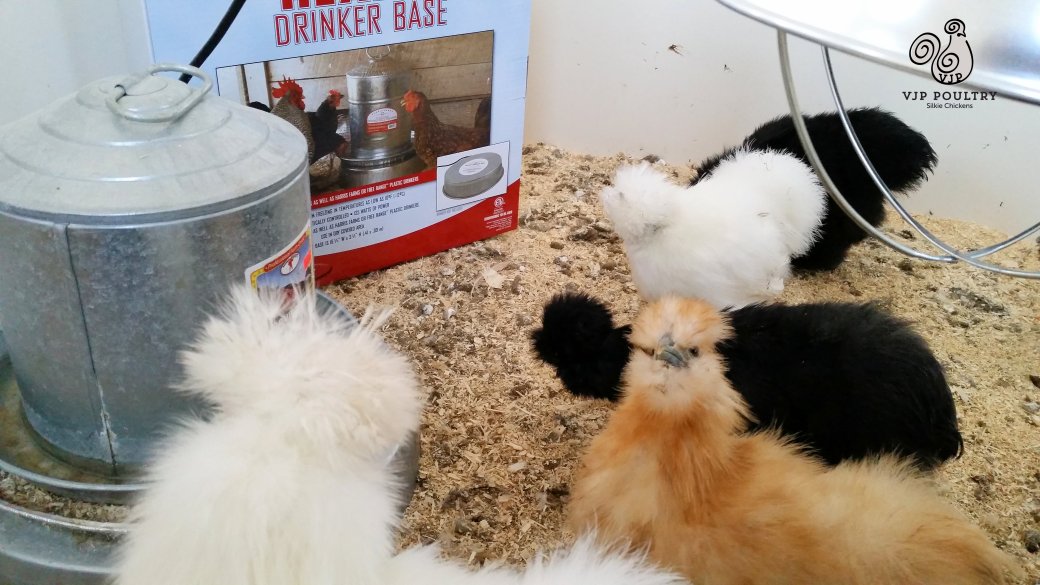 This year I decided to purchase heated water bases to use under my two gallon galvanized waterers. Winter is long in Minnesota and its important to have a reliable source of heat to keep the water open for your silkies.
In the past I have tried many different ways to keep their water from freezing. First, I used heat lamps positioned directly over plastic waterers. I used this method for many years. It worked well, but it was very expensive. It costs 90 cents a day to keep a 250 Watt bulb running. I have a total of eight watering stations which would cost me $7.20 a day if I still used this method. I was also worried about fire using all of those heat lamps around the pine bedding.
The next idea I tried involved using flat bird bath de-icers. They are the ones that are flat and covered with foil. They lay between the waterer and a metal base. The base is the kind you would use for catching oil under a car – also called an automotive drain pan. I also used a thermostatic outlet with it that only came on when the temps dipped below 32 degrees and then turned off when it got above 35 degrees.
The cords coming from the bird bath de-icers were not very good and after a year of using them, began to look burned. The cord was becoming too hot for my liking and once again I was afraid of starting a fire. This is what can happen when using something not in the way a manufacturer designed it for.
After more research, I decided to give the heated water bases a try. What I like the most about them is that the cord is very strong and well protected. The base sits in the pine shavings but I don’t have to worry about it getting too hot. It was made specifically for this use which ,then, lowers my worry level.
The base keeps the water very warm – almost too warm to my way of thinking. I found that the birds spilled or dribbled water when they drank, causing the bedding to become wet around it. I ended up using pizza circle tins between the base heater and the waterer to catch the spills.
The silkies do not burn themselves on these bases. In fact, they like to hop on top of it when I am changing out the water. The top is warm but not hot. The heated water in the waterer also helps to warm the surrounding area in your coop when it is cold out.
You can make them much cheaper yourself and there are many You-Tube videos on how to do this, but the price is worth my peace of mind knowing that the water will not freeze nor will it set the coop on fire. These heated bases are not designed for outdoor use so they need to be kept inside of the coop. They should not be used with plastic waterers. You should use metal galvanized waterers.
The base will automatically kick on when the temperature drops below 35 degrees. This is a nice feature when you didn’t expect cold weather in the middle of the night or if you don’t want to waste electricity (money) by having them run all the time when the water is not going to freeze.
The cost to run these base heaters ends up being around 45 cents a day. They are 125 Watts. I make sure that I turn mine off if the temp is above freezing in the coop. I would also not leave them out all year round. Put them safely away when the cold weather is done as you don’t want them to rust. You will want to be able to use them for many winters to come. This winter is not over yet, but so far I am really enjoying using these heated water bases.
For tips and tricks for raising outstanding silkies check out our Chicken Learning Center at VJPPoultry.com . VJP Poultry is an NPIP and state inspected hatchery located 30 miles north of St. Paul. We hatch out silkies all year long so we always have stock available. Like us on Facebook to get weekly updates on what we currently have for sale.
Victoria J. Peterson


 VJP Poultry