 Molting occurs in the late summer and early fall. Your run and coop will look as though a feather pillow has exploded and you may worry about what is happening to your chickens. Molting is perfectly normal. During this time of year your chickens will shed old, worn out feathers and replace them with new ones. It is also a time when hens take a break from laying and rest and rejuvenate. By winter they will have a new set of feathers to keep them warm and protect them from the outside elements.
We call the losing of feathers and the regrowing of new ones, molting. It occurs every year as the days get shorter and there is less daylight. During the molt, chickens typically stop laying eggs and use their down time to build up their nutrient reserves. It isn’t just lack of daylight that can trigger a molt. Molting can occur during times of stress, lack of access to food or water, or even after a bird has been broody.
Young chicks go through four cycles of molt. The first occurs between 1-6 weeks. They lose their down and begin to grow hard feathers. The second molt comes between 7-9 weeks. The third is between 12-13 weeks and the last is 20-22 weeks. That is why there are always loose feathers flying around the brooder and why there is so much dander dust settling on everything. After that, adult birds that are over 18 months will molt once a year usually during the fall. Both hens and roosters will molt.
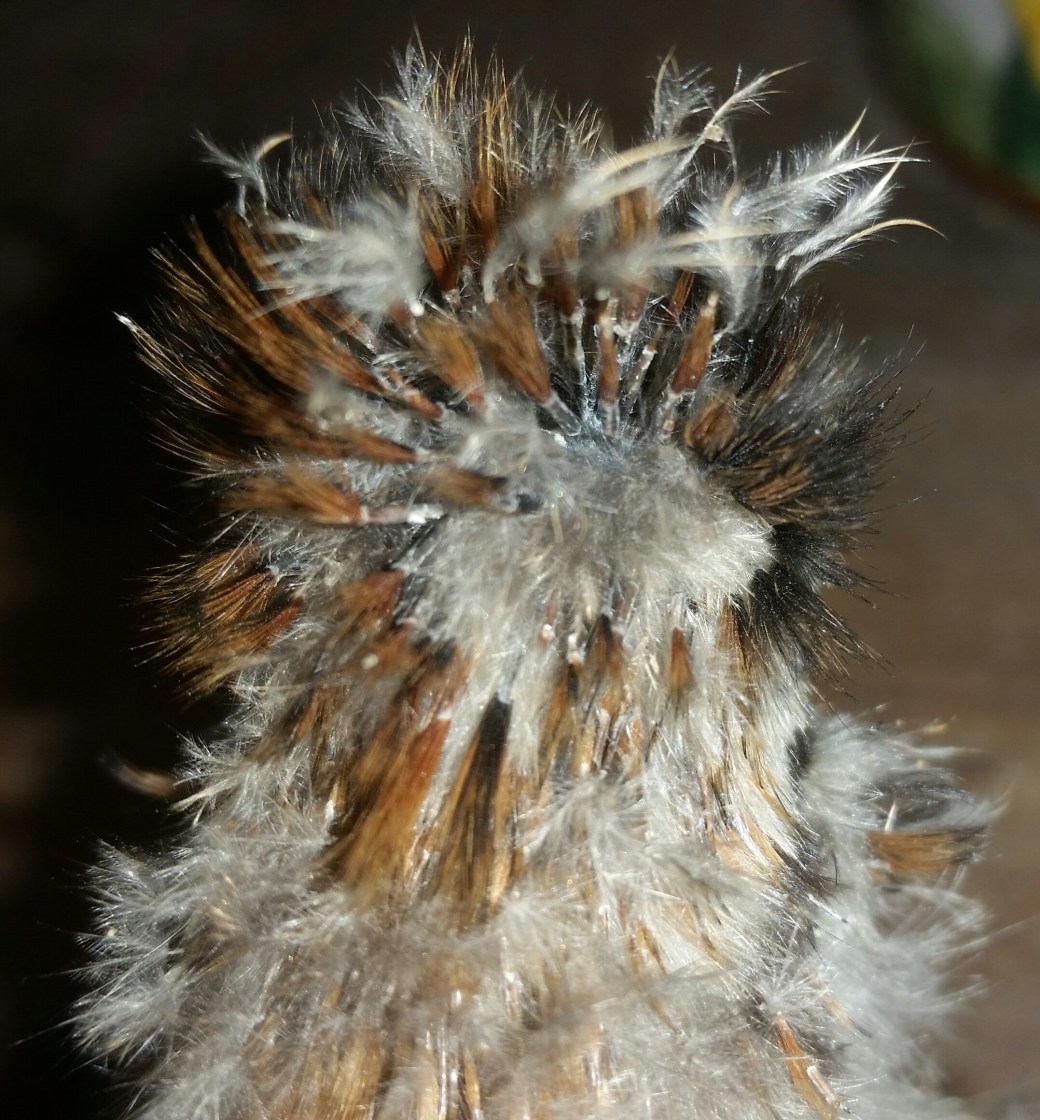
Chickens will lose feathers in a sequence starting with the head and neck. It then moves down the back and across the chest and legs. The last set will be the tail feathers. The new feathers that emerge are called pin feathers. They are encased in a sheath that feels like plastic and has a porcupine look to it. The sheath either falls off or is removed by the preening of the bird. The new pin feathers will grow in following the same sequence as they were lost.
Molting will cause your bird to look different. Molting can cause some chickens to look unhealthy and lose weight. The chicken is putting all of its energy into feather production and its immune system is often at a low point. Chickens need to be well cared for during this time. Vitamins in the water can be helpful. You may see bald spots and a dull comb. Your bird will be moody and short tempered. There will be reduced, or a pause in egg production. Your bird will have an increased appetite for protein.
Different chickens molt at different rates. some will lose only a few feathers and grow them back in 3-4 weeks. Other chickens lose a lot of feathers and it may take 12-16 weeks to grow feathers back. Your chicken should never actually be completely bald when molting. The new feathers emerging are pushing out the old feathers. If your bird has bald spots near the vent it could be from mites. Another cause of bald spots is from feather picking. Use Blue Kote on any wound that can develop.
Your flock will not molt in unison. Different birds will be in different stages and molt at different rates. A “hard molt” is when the chicken loses most of its feathers in a short period of time. A “soft molt” is a slow process where they lose their feathers gradually. It could take as long as 4-5 months to complete a soft molt.
Changes to your bird’s diet during the molting process can help them through it easier. Feathers are made of 80-85% protein. Producing those feathers uses almost all the protein consumed by the chicken. This causes the hens to stop, reduce size or reduce quantity of eggs laid. Increasing the right forms of protein can help. Mealworms, cooked eggs, pumpkin seeds, Japanese Millet, fish, Grubblies, tuna and sardines, are all good forms of protein for chickens. Feather fixer is a higher protein feed to be used during molting season. Any high protein feed such as Gamebird Conditioner will be helpful.
Chickens should act normal during a molt even if they don’t look normal. If they are acting sick, then something else is wrong. Avoid handling your chickens during a molt. The newly growing feathers are very sensitive. They emerge through a shaft and can bleed heavily if damaged. It can be painful to your bird if you handle them too much. If the shaft breaks and bleeding occurs, use vetericyn wound and infection spray.
Remember that your chicken needs to be resting during this time. If you use a lamp in your coop to extend daylight hours, you may want to leave it off for six weeks in the fall to help your birds completely finish a molt. That way they can start laying again in top condition. Be careful with your light timing so that you won’t leave your birds without protection and have them end up going through a hard molt in the winter. Avoid introducing stress during a molt such as introducing new flock members or keeping them in too crowded of an area. Give them plenty of space and time and they will come through it with beautiful new glamorous feathers.
For tips and tricks for raising outstanding silkies check out our Chicken Learning Center at VJPPoultry.com . VJP Poultry is an NPIP and state inspected hatchery located 30 miles north of St. Paul. We hatch out silkies all year long so we always have stock available. Like us on Facebook to get weekly updates on what we currently have for sale.
Victoria J. Peterson
 For most chickens, winter is a time of rest and repair. They have just finished a long summer of laying and their bodies are depleted of energy. Most people will see a decrease in egg production from their flock as the days grow shorter. It is discouraging to think that one might have to start buying eggs from the grocery store again. We miss those beautiful golden yolked eggs.
 VJP Poultry