Building a Coop for Silkie Chickens

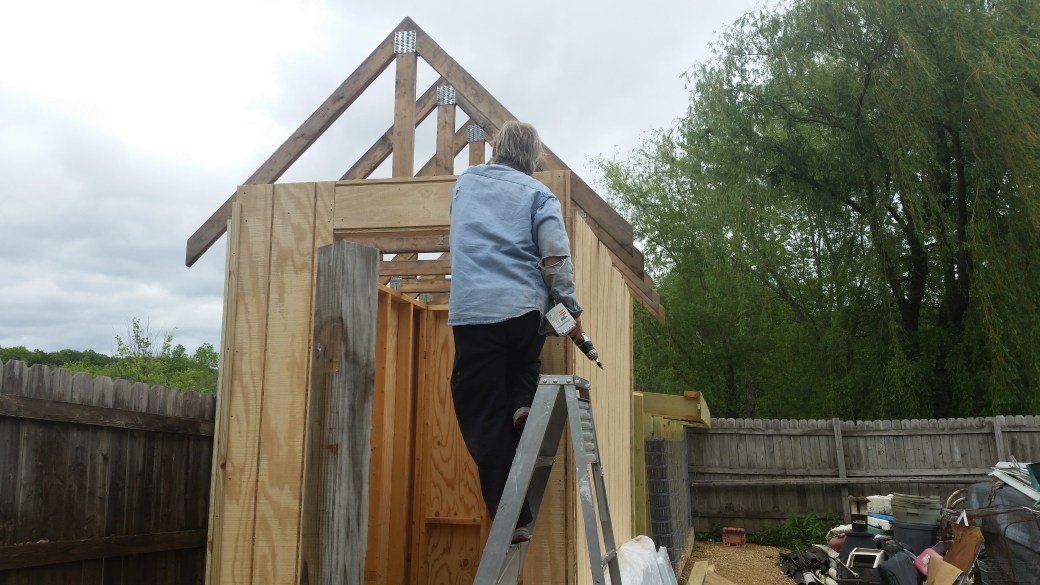
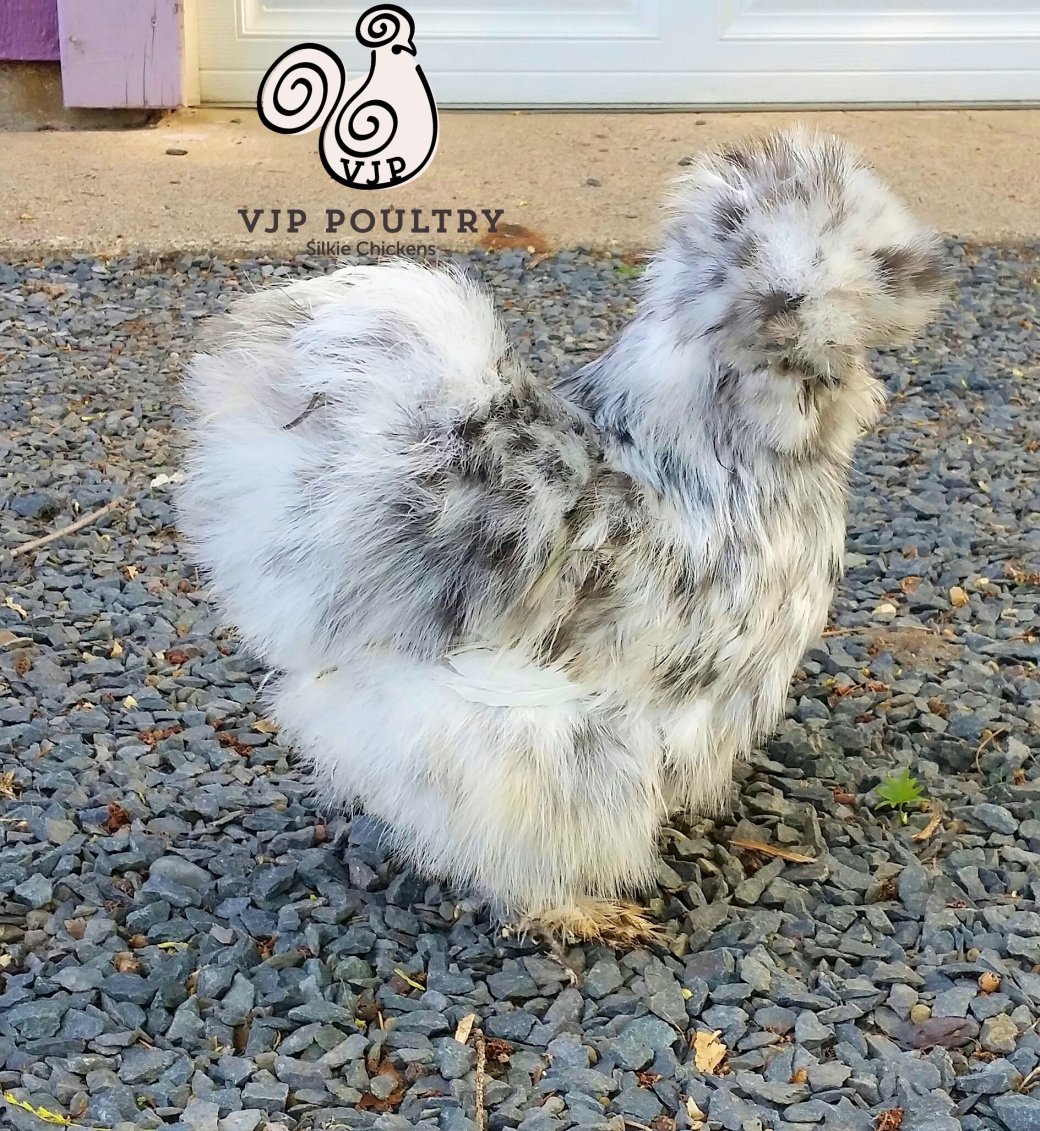
20180527_124135-1Silkie chickens have slightly different requirements when it comes to housing.  Silkies are different from other breeds of chickens in several ways and these differences can be reflected in the type of coop you end up designing or purchasing.  The only chickens we have at VJP Poultry are silkies so we are always thinking of ways to improve housing with their uniqueness in mind.

The first coop we had was a refurbished ice house. This worked perfect for our needs. It was built very sturdy and was well insulated for winter. We added electricity out to it, put in nest boxes and roosting poles and had a ramp going down to a chain link fence enclosed run.  We had a variety of breeds of chickens to start out with but I really fell in love with the silkies.   I found that the silkies did not “fly” up to the roost pole with the others but would sleep on the floor directly under them. The next morning they would be covered in poo from the roosting birds above them.  They also did not use the nesting boxes, but preferred to find a corner on the floor in which to lay their eggs. Silkies go broody often but can’t fly up to nesting boxes that are very far off of the ground.

In a few years we found a second ice house to refurbish as we continued to expand our chicken habit. By now we only had silkies in our coops. We did not bother putting in a roosting pole or nesting boxes.  We made sure that the ramp to the ground was a long gradual incline.  Silkies do not like high ramps, especially with their eyesight often being blocked by feathers.  I find it best to trim above and below the eyes so that they can find food and water.

The third coop we built ourselves. We overbuilt it, but I was glad that we did. It is very sturdy and tall. There is a long walkway inside with four sections of divided pens. Everything is easily stored inside of the coop, such as food, bedding, brooms and assorted tools. It has electricity.  The pen walls and floor are painted with industrial enamel which is super easy to keep clean. The other coops had plastic sheeting on the floor and sides. I scrubbed them weekly but they eventually started to come away from the walls.  The enamel paint is much easier. A silkie pen needs to be kept neat and tidy. You want them to be looking at their best and poo stains are not attractive.

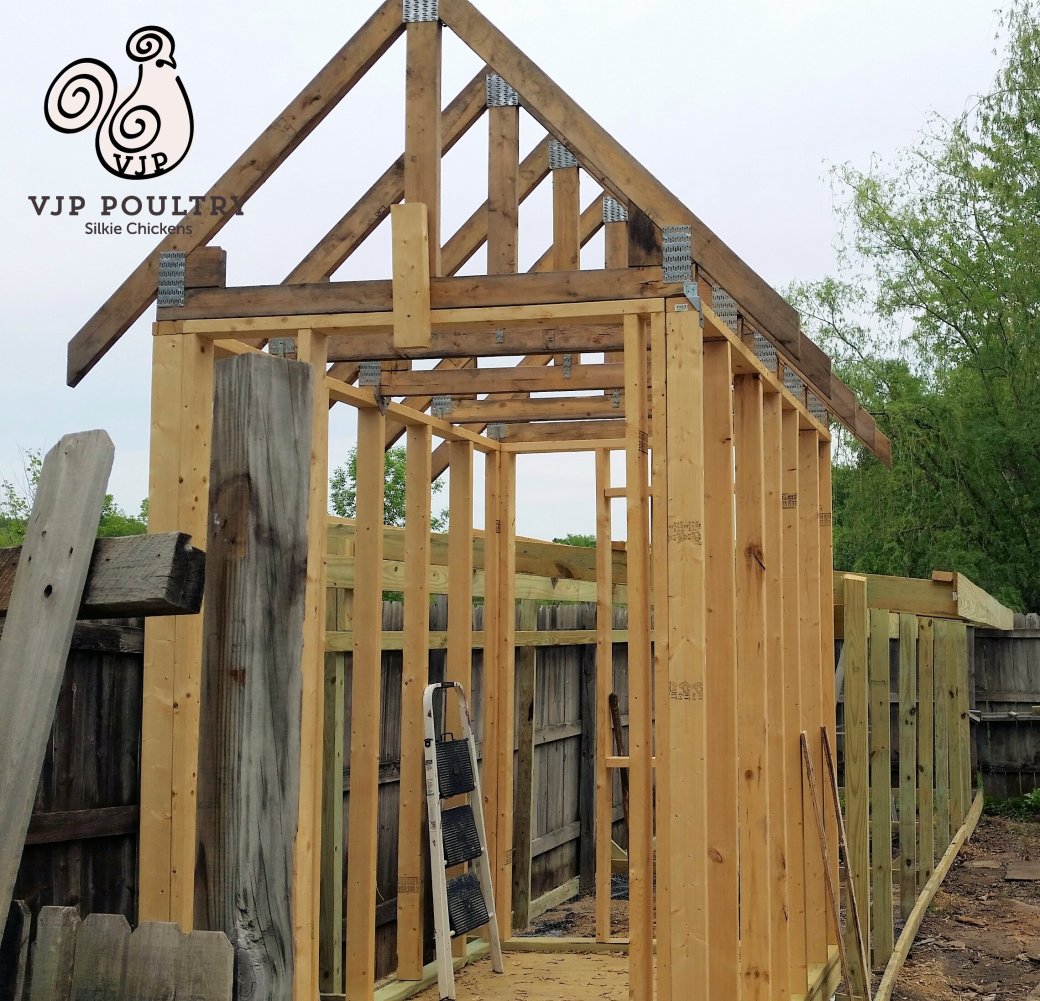
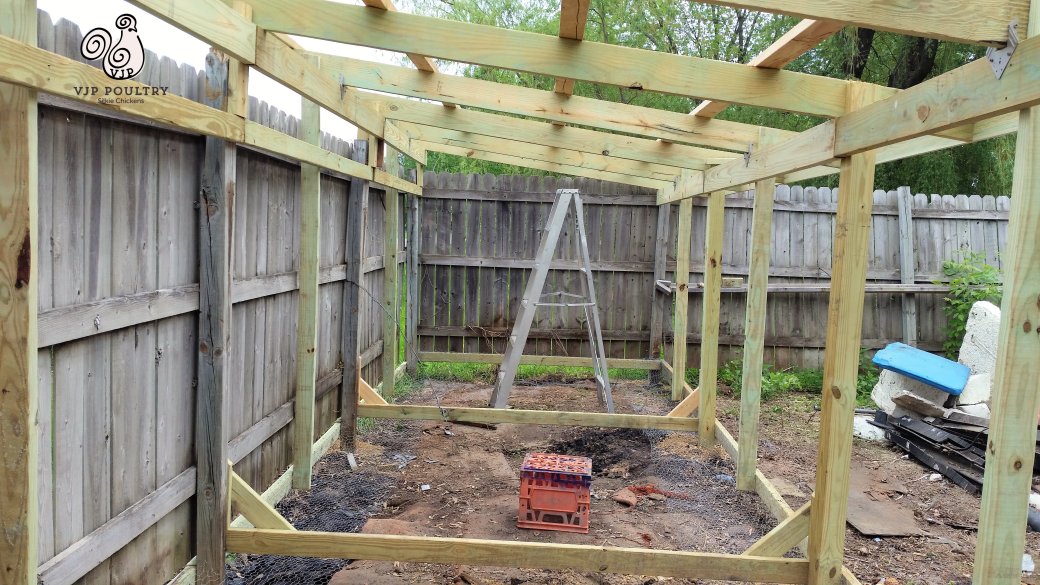
Now we are building our fourth coop and using all of the information gained from the other coops, we are able to have the best silkie coop possible. We started by making the floor of the coop. You want to make it up off of the ground but at the same time as low as possible for silkies. They have a hard time with steep inclines, so the ramps need to be long and low.  Next the walls were built and the roof rafters put on. We put on a metal roof with a steep slant. We want the snow sliding easily off.  The roof has long overhangs.  In the future we will put on gutters.  Silkies do not do well in the rain. Their fluffy feathers do not let water bead off of them. When they get wet, they look drenched.

We installed windows up high, so that there is plenty of air movement. Silkies do not do well with drafts so you want that air moving up above them.  Ventilation is very important to the health of your birds. I keep windows open at all times. Use hardware cloth stapled over the window screens to keep predators from making their way inside.

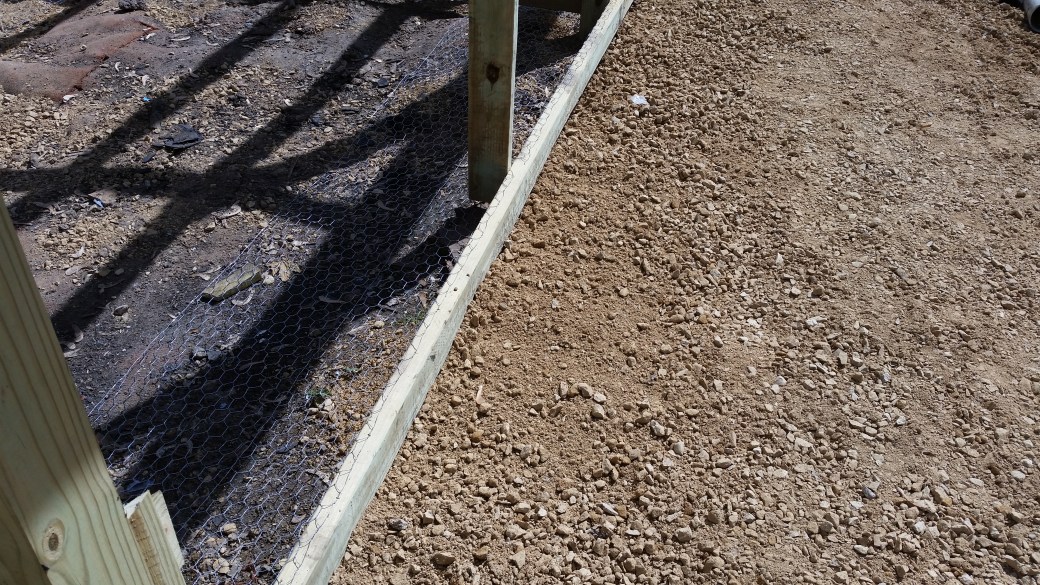
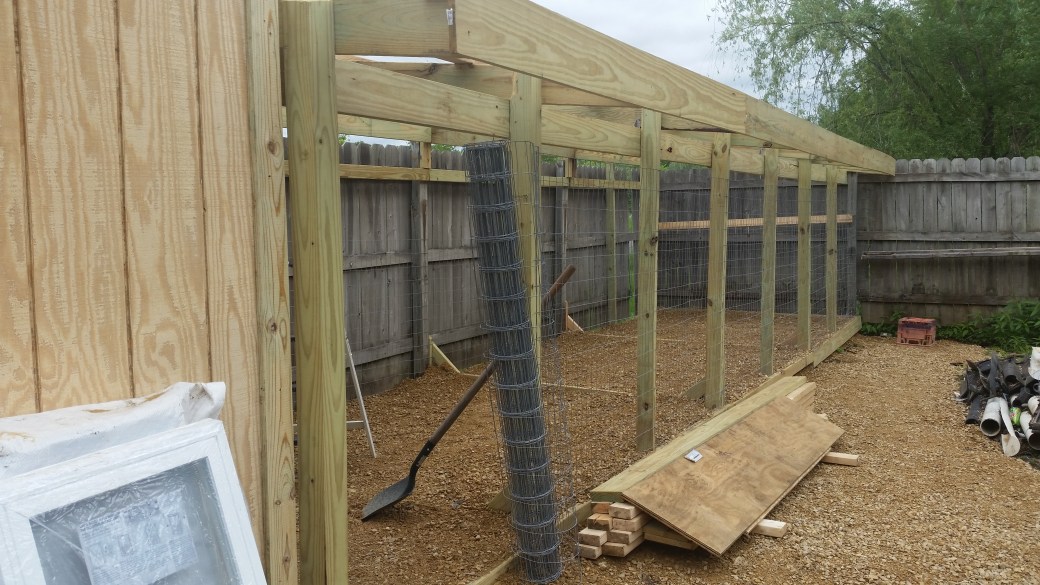
When making the run, you will want to lay down hardware cloth on the inside and as a skirt around the outside to keep digging predators from making their way in. We piled gravel on top of the the hardware cloth and placed pea rock on top of that.  Silkies have beautiful feathered feet. You want to protect those feathers by having soft bedding or even using dirt or sand in the coop or run.  Large rocks can often break off foot feathers, so use as small of rock as you can.
20180603_113021

We covered the run with a metal sloping roof.  Hawks can be a big problem for silkies. They are small enough to be lifted and taken away. Their crests are large and impedes their ability to look up.  Even their coloration can make them a standout when free ranging. Try to limit their free ranging to when you can be there to watch out for them. Otherwise a covered run is their best protection from flying predators.

Know the silkie predators in your area and design your coop with them in mind.  If your predators are diggers like fox, make sure that you have buried hardware cloth around your run. If you have trouble with weasels or mink, make sure that all small holes are plugged up and windows are secure with hardware cloth.  Larger animals such as bear will need electric wire around the outside.

If you don’t want to build a coop yourself, there are a few coops that are available for sale that are good for silkies. Look for something that is all one level such as this.  The smaller the ramp the better. Coops that are described as rabbit hutches are often on one level .  Look for sturdiness in these pre-made coops that can withstand the elements and predators.  If you live somewhere with a cold climate, you will need to insulate and possibly have heat lamps.

For tips and tricks for raising outstanding silkies check out our Chicken Learning Center at VJPPoultry.com .  VJP Poultry is an NPIP and state inspected hatchery located 30 miles north of St. Paul.  We hatch out silkies all year long so we always have stock available.  Like us on Facebook to get weekly updates on what we currently have for sale.

Victoria J. Peterson
20180603_113007

Silkies For Sale – 6/4/2018

How to Protect Your Chickens By Keeping Predators Away

20180527_124108Predators are probably the number one cause of chicken death in backyard flocks. I hear stories almost daily from people who lost their favorite bird due to animals that dig, climb or fly into their coop.  Predators are after chickens, eggs or both. Common chicken predators are birds of prey such as hawks, eagles or owls. Others include climbers such as raccoons, opossum, snakes, rats, mink, and weasel.  Diggers are skunk, fox, coyote and badger. Larger predators include, bears, fisher cats, and bob cats.  Neighborhood pets such as cats and dogs can also become predators.

The best thing that you can do to protect your chickens is to provide them with a strong, sturdy coop. If your coop has a wooden floor, you are going to need to elevate it off of the ground.  Wood will rot if it sits on the wet ground, creating entry for digging animals such as weasels, mink and rats.  If you have a dirt floor in your coop, you will need to bury fencing well below the ground level.  Cover all windows with hardware cloth.  Avoid chicken wire as many animals can chew through it or rip it apart. Chicken wire is great for keeping chickens in but not for keeping predators out. Always use half inch to one fourth inch hardware cloth for the sides, top and skirt of your coop and run.  For runs with dirt floors, bury hardware cloth two feet down and place a skirt two feet out.  Use plastic coated hardware cloth underground.  Even galvanized wire eventually wears down.

Small holes can be a problem.  They let in rats, weasels, mink and snakes.  Repair any small opening that you see. Make sure that you staple down your hardware cloth across vents and windows.  Then drill strips of wood across the edge so the wire can not be pulled up by raccoon.  Use padlocks on you large doors to keep out both humans and animals. On pop doors where the chickens come in and out, use a type of lock that raccoons cannot figure out. If a three year old can undo the lock then a raccoon can too.  A swivel lock works well.

Confine your chickens to a predator proof space at night.  Do not leave them out in the run even if you think that you have a secure run. You should be putting them into their coop before dusk. Predators are most active at dusk and dawn.  Don’t wait for them to come in on their own.  Call them in before sundown and don’t let them out until after sunrise.  If you are often gone you may want to invest in an automatic door opener .

Your run should be as secure as your coop. Placing a roof over the run is the best way to keep predators from landing or climbing into the run.  Use 1/2 to 1/4 inch hardware cloth up the sides of the run, under the dirt flooring and out as a skirting.   Every day you should be observing around the outside of your run for signs of burrowing or chewing.  Fox take several days to burrow under a run and you should be seeing signs of it. A   game cam will help you get an idea of what type of predators are visiting you at night and what their typical behavior is.

If you do not have a roof over your run, cover it with an aviary net for added protection against birds of prey but remember that climbing predators will not be stopped by it. Place objects that make  noise or reflect light to deter birds of prey.  Hanging CDs or disco balls that reflect light frighten birds away. Bird scare tape also works as do decoy animals or eye scare ballsHawk stopper netting is also effective.

Keep the area around your coop neat and clean. Brush and long grass provide hiding places for predators.  Store feed in tightly covered metal barrels. Keep feeders in the coop or run even if your chickens free range during the day.  Open feeders attract wild birds and other small animals. If your hens free range, consider getting a rooster. He will be watchful and give the alarm to take cover if anything attacks.   Other good guard animals include Great Pyrenees dogs, any other dog, donkeys, llamas, geese or guinea hens.

Electric poultry fencing can be set up as boundaries for your chicken’s free ranging.  It will deter smaller animals. If you live in bear country, you may want some electric fencing around your coop. You will need a charger,  some wire and insulators.

Install motion activated lights which will surprise and scare off predators. Night Guard or The Wikomo uses light and sound to deter pests.  Even well placed predator urine can scare away animals you don’t want around.

For tips and tricks for raising outstanding silkies check out our Chicken Learning Center at VJPPoultry.com .  VJP Poultry is an NPIP and state inspected hatchery located 30 miles north of St. Paul.  We hatch out silkies all year long so we always have stock available.  Like us on Facebook to get weekly updates on what we currently have for sale.

Victoria J. Peterson
20180528_104109.jpg

How To Prevent Chick Deaths During the First Week of Life


20170518_104519One day old chicks are so irresistibly cute when they first learn to eat, drink and move around. First time chicken owners are drawn to the sweetness of a baby chick and make rash purchases before realizing that newborns are more fragile than they think.  There is a huge difference between a chick that is one day old and a chick that is one week old.  Truth be told, a baby chick is much more apt to die in that first week than at any other time in its life.
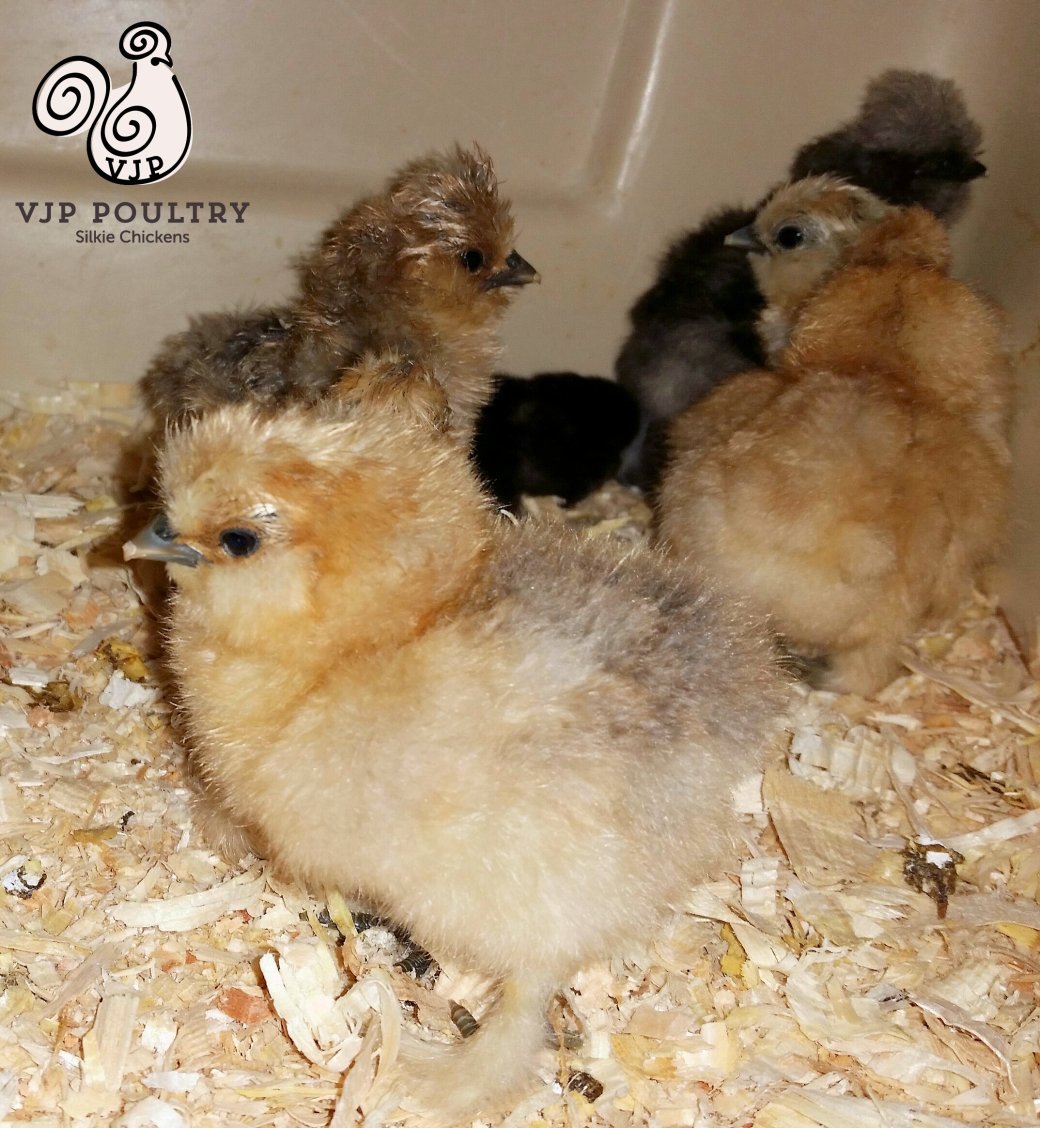
Some don’t make it to the point of hatching out. Lethal genes or creeper genes can cause chicks to die during development. This is a genetic trait that certain breeds have. Some will make it to the hatcher and then die before hatching due to humidity and temperature issues.

When a clutch of eggs is hatched the chicks that hatch first are usually the strongest and healthiest.  They have no trouble zipping around that shell and breaking free. If the chick is a late hatcher it has been my experience that they have more trouble. They are prone to leg issues or even need to be helped out of the shell.  They tend to be stickier as well and have a harder time fluffing out.  Leg issues include straddle leg or even having a hard time standing up on their feet.  Right from the beginning you have some chicks that are just healthier and stronger than others.

Hatching out too quickly or often when being helped out of the egg, can lead to unabsorbed egg yolk. The umbilical cord can also end up hanging out. Pulling on it can cause the intestines to pull through.  Sometimes by helping it hatch you are giving life to a chick that may not end up living very long. Chicks that have a red or sore looking umbilical area should be watched for infection.

Water and food should be offered to chicks within the first 24 hours.  Hatcheries that ship chicks often rely on the fact that chicks can live off the energy from their egg  yolk for three days. Chicks will become dehydrated if not offered water and will be healthier if they start eating sooner. Shipped chicks have a higher death rate than chicks bought from local breeders or raised by a broody hen.  Some hatcheries will include Grogel to their shipping boxes to help chicks stay hydrated.

By day 3 or 4 chicks are no longer receiving energy from their yolk.  Some may begin to die after the third day.  They will close their eyes and become lethargic.  Then they die.  Losses of baby chicks almost always occur in the first two weeks of life.  A mortality rate of 1-5 percent is considered normal for a hatch.  Anything above 5 percent is abnormal.  Failure to thrive is a very real thing and young chicks often die leaving us wondering what has happened.

One of the biggest chick management factors for early death has to do with brooder temperature.  Most people use a heat lamp and bulb for small groups of chicks.  You adjust the temperature by raising and lowering the heat lamp over the brooder. Often the brooder ends up being much too hot.  Too high of temperature can lead to dehydration. The body of a young chick is 70 percent water. A water loss of 10 percent will cause death.  Pasting up, which is poo that sticks and covers the chick’s vent, is often due to too high of temperature in the brooder.  Many chick deaths occur because their vents have become plugged up with dried poo and they can no longer eliminate.

Low brooder temperature can also lead to deaths in young chicks.  If they are too cool, they can become chilled and develop pneumonia. Chicks that huddle together can ultimately smother the weaker ones. Pasting up can also be caused by too cool of temperatures. Chicks will let you know they are too cold by huddling under the lamp and making very loud cheeping noises.  Too hot and they will gather in the corners, panting and lying down. Transitioning from too warm to too cold back and forth is also a cause of pasting up and ill health.  Any transition can cause stress which can lead to death.

I recommend something with radiant heat like a sweeter heater  or an ecoglow as a heat source. The radiant heat is safer than a heat lamp bulb and will give a constant temperature.  For more information check out Brooder Heat Sources.  Make sure that you adjust  the brooder temperature 24 hours before introducing chicks to it. We like to use a temperature gun for accurate readings.

The food and water you choose to give your chicks can also lead to early mortality. Chick starter that is old and has started to get moldy can cause death. Check for a date on the bag. Chick starter can often come in pieces too large for a newborn chick which could cause them to choke. I like to take my chick starter crumble and grind it up even smaller in a coffee grinder. I feel that this helps with digestion and with pasting up as well.  Do not give newborns a lot of other foods besides the chick starter. Treats should not be given until they are over one week old.  Anything besides chick starter, yogurt or scrambled eggs needs grit (sand) in order to grind it in their crop.

Water that is too salty can lead to early death.  I like to add Rooster Booster with vitamins, electrolytes and probiotics to my water. I also add apple cider vinegar with the mother as well to the water.  Make sure that you have your feeders and waterers up as high as the backs of your chicks. The chicks tend to kick shavings and poo into them which can plug up the waterers and contaminate the water. Change water daily and clean and sanitize feeders and waterers weekly.

You may need to show your young chicks how to drink.  Mother hen usually gently pushes their beaks into the water and you can do the same. If you pick up a chick and it feels much lighter than the other chicks, it has probably not learned how to eat or drink yet.  I will dip their beaks into the water first and then dip them into their feed so that the chick crumble sticks to their beaks.

Make sure that there is adequate air ventilation in and around your brooder. Toxic gasses such as ammonia, carbon monoxide and carbon dioxide can kill small chicks if they are exposed to them.  Chicks require a minimum 100 percent air exchange six times in a 24 four period. This should not be a cold draft but continuous movement of air in the brooder.  A plastic tub with high sides does not have a lot of air movement allowed.  One problem encountered with poor air movement is sinusitis. This is caused by excess humidity and ammonia released from chicken poo. Remove damp bedding which causes pathogenic micro organisms  to multiply  and large clumps of poo in the brooder and spread a thin layer of bedding on top of the old. Once a week change out the bedding and sanitize the brooder with something like Oxivir.

Construct your brooder to keep out predators.  A screen should lay over the top to keep out insects, vermin, dogs and cats.  If you have small children who like to handle the chicks make sure that they are supervised.  Newborn chicks can jump out of your hands. Injuries caused by crushing or squeezing too hard are a very real problem with little ones. I would keep handling of chicks less than a week old to a minimum. Any injuries can lead to infection and should be treated with Vetericyn spray.

Avoid having too many chicks in a brooder. Overcrowding is one of the number one causes for early death.  Trampling, starvation and damp litter are caused by overcrowding.  Chicks with vaults like silkies or polish need to be especially careful with having too many pen mates. A well placed peck to the head will result in death. Any drop of blood or open bare spot is an invitation for the other chicks to peck at it. Loss of down caused by pasting up attracts others in the pen to continue to peck at it until bleeding occurs. Separation is sometimes necessary.

Practice biosecurity around your brooder. Wear gloves around your adult chickens and wash your hands before handling the newborns. Wear different shoes or boots around your adults than you do around your brooder.  Newborns do not have well developed immune systems.  You will be bringing in germs and diseases on the bottoms of your feet. You may also bring in mites from the outside coop.  Young chicks are very prone to an attack by mites which will result in death if not dealt with. I use the powder very sparingly if I think that they have been exposed.

Light is important in your brooder.  Chick activity is greatest in bright light. They need to be able to see the food and water. Lights should be low or off at night. If you use a heat lamp bulb, choose one with an infrared coating. This helps with pecking and at night can help simulate darkness.

Coccidiosis can be a killer during the first week of life. Because of possible exposure to the disease people will use medicated chick starter.  I would only use it if you think that your chicks are being exposed. If they are inside and you practice good brooder hygiene you probably won’t need to worry. Medicated feed can rob your chick of some vitamins.

Some items to have on hand just in case of a problem would be Save-a-chick, which goes into their water and provides electrolytes.  There is also one which adds probioticsNutridrench can give a boost to a lethargic chick but read directions for use with young birds.

Chicks under one week old are very fragile. If at all possible try and purchase birds over one week old. They are stronger and sturdier and have a much better chance of survival.  They know how to eat and drink and the pasting up usually ends after the first week.

For tips and tricks for raising outstanding silkies check out our Chicken Learning Center at VJPPoultry.com .  VJP Poultry is an NPIP and state inspected hatchery located 30 miles north of St. Paul.  We hatch out silkies all year long so we always have stock available.  Like us on Facebook to get weekly updates on what we currently have for sale.

Victoria J. Peterson

20180522_103733-1


Strengthen Your Chicken’s Egg Shells With the Shell of an Oyster

20180515_123422-1Hens work hard to provide us with their daily eggs.  Making egg shells takes a lot of calcium.  The more eggs they lay, the more calcium they need.  If a hen doesn’t get enough in her diet, her body will steal calcium from her bones to make the egg shell.  This leaves her bones very brittle. You may think of Osteoporosis which women sometimes get as they age.  Hens often have that same problem.
The egg shell that a hen lays is 95% calcium by weight.  In one year the amount of calcium put into her shells can equal 20 times the amount of calcium that is contained in her bones. In order to stay healthy  and create strong egg shells, she needs to consume a large amount of calcium in steady intervals.

The most recognizable sign of calcium deficiency is thin shelled eggs or even eggs laid without a shell .  Lack of calcium in the diet can also lead to soft  shell eggs which look rubbery.  This can also lead to egg binding which can be fatal in hens.  Rough spots and wrinkles on the shells are another sign of low calcium.  The egg shells should look hard and smooth.

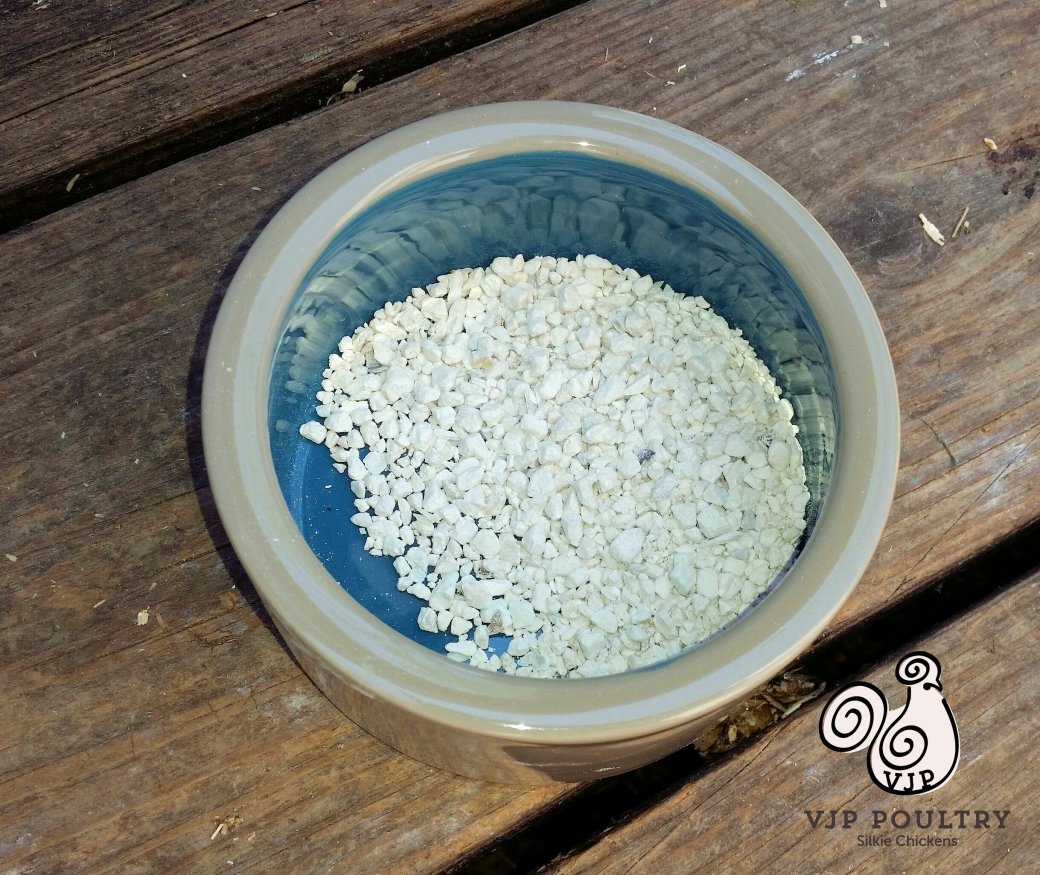
Ground oyster shell is the most common supplement to increase the amount of calcium in a hen’s diet. Oyster shell is inexpensive and lasts a long time. It does not spoil or go bad. Oyster shell is eaten by hens and the shell dissolves in the gut.  It is not the same thing as grit.  Grit aids digestion by grinding up food in the crop.  Oyster shell has nothing to do with digestion.  It also does not stimulate egg laying. It simply provides the mineral calcium to the hen.

To lay well, a hen needs 16% crude protein .  Most grains range 7-12% protein and are low in certain essential amino acids.  High amounts of protein can contribute to more frequent ovulation in a hen. Make sure that you are giving your hens a balanced feed with the correct nutrients and protein. Most of their food should come from a nutritionally balanced food. If you give them treats or let them free range you can be upsetting this balance.

Most hens start to lay at about 20 weeks.  Wait until the hen has actually laid an egg to begin giving them oyster shell supplement.  Giving it too early can damage the young pullet’s kidneys. Oyster shell should be given free choice in a separate bowl so they can eat as much as their body needs.  Laying hens who aren’t getting enough calcium can produce weak or irregularly shaped eggs.  This issue can also cause slow laying or even problems like egg eating because they are so desperate for the calcium they need.

How much calcium a hen needs is an individual issue and all hens are different. Some breeds lay eggs every single day. Other breeds take more time off, such as silkies.  The hen’s bodies will prompt them to eat the oyster shell as they need it. If you don’t see them eating it, they may not need it

Do not mix the oyster shell into the food.  This can force them to eat too much calcium which can damage their kidneys.  Feed it to them in a separate bowl or even scatter it on the ground.  Some commercial feeds contain calcium, but it is often not enough for typical layers, especially if they have access to table scrapes and treats.

In order for the hen to be able to absorb the calcium, two  nutrients seem to affect it the most. These nutrients are Phosphorus and vitamin D3.  Phosphorus is easily found in grains. D3 come from sunshine so you want to make sure that your hens have exposure to sunlight.  Powdered vitamins added to the water will help with this.

I have found oyster shell to come in many different sizes.  Some pieces are so large they can barely swallow it,  down to basically nothing but powder. The ideal particles size of supplemental calcium ranges between 2 mm and 5 mm.  Larger pieces of calcium carbonate take longer to digest than smaller particles and are more desirable.  Hens seek out large particles of oyster shell late in the day before the period of shell formation occurs.  Shell formation usually occurs during the night.  Too much calcium will give the eggs an extra coating of powdery calcium around the entire egg or you will see calcium deposits around the shell.

Hens do best when fed a balanced crumble or pelleted diet, especially an all-flock diet with oyster shell in a separate bowl on the side.  Meat birds should be given a separate feed.  Birds that eat other things besides their layer food such as free range foragers or birds that get extra treats need the extra calcium from oyster shell.

Oyster shell is not for pullets that haven’t started laying eggs yet. Wait until they actually start laying eggs to give them the extra calcium.  Chickens who are not laying will get enough calcium in their daily feed for normal calcium use.  When they are laying they need four times as much calcium as a non laying hen.  Giving additional calcium to chickens who are not layers is detrimental to their health. This would include roosters, cockerels,  and older hens no longer laying.

Oyster shell should never be mixed with the food.  Just leave it out in a separate bowl.  They will instinctively know to take it when they need it.  Do make it available all year round.  If they aren’t laying as much in the winter, they will just lower their intake of it.

There are other forms of calcium you can use. Limestone is a rock that contains calcium. If you live in an area with limestone gravel they may naturally pick some up.  Some people save egg shells and offer these back to the hens.  Remember that a hen’s own shells will not provide enough calcium if she doesn’t have other supplements.  Bake the shells first in a 350 degree oven for 10 minutes to kill any bacteria that may be present.  Crush them finely so that they do not look like egg shell, otherwise you are teaching the hens to eat their own eggs.

For tips and tricks for raising outstanding silkies check out our Chicken Learning Center at VJPPoultry.com .  VJP Poultry is an NPIP and state inspected hatchery located 30 miles north of St. Paul.  We hatch out silkies all year long so we always have stock available.  Like us on Facebook to get weekly updates on what we currently have for sale.

Victoria J. Peterson

20180517_091554-1