Tag: baby silkie chicks for sale
How To Winterize a Chicken Coop Built From a Kit
 It is never too early to start thinking about winterizing your coop. Most coops fall into two groups. One type of coop is made from existing buildings such as part of a barn or an ice house. DIY coops could be put in this category too as they were all probably insulated when they were built.
The other group of coops are the kind that are built from a coop kit. You can order these kits online or purchase them at DYI big box stores. They turn out to be cute, little coops that hold less than 10 chickens.
The problem is that these coops do not come insulated. You may have bought them in the spring when it was warm and now we are headed towards winter. What can be done to them to help them remain a cozy home for all your birds?
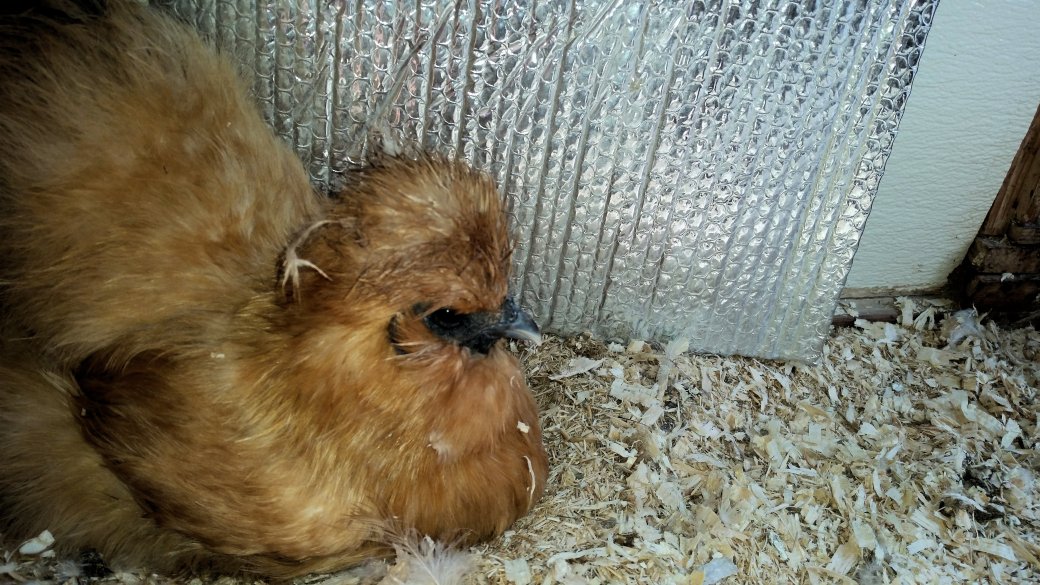
The first thing that comes to mind is insulation. I would suggest using reflective insulation. You can easily measure, cut and attach the insulation using a staple gun or with spray contact adhesive. Just cover the sides and the ceiling of your coop with the reflective insulation and tape the seams with aluminum foil tape.
I have found that the chickens do not pay a whole lot of attention to the shininess of the insulation. They will, however, peck at the pink insulation or the styrofoam insulation and eat it as well. That is why I do not recommend using that kind. The birds have never pecked at the silver insulation and it has worked well for us.
Make sure that there is adequate ventilation across the top part of the coop. You do not want drafts at the bottom where the silkies sleep, but you do want there to be air exchange inside of the coop. Moisture build up is not good for the birds and causes respiratory issues. If you see a frost build up inside the coop on the walls and doors, then you need to have the windows opened wider.
I would also suggest wrapping the run in clear plastic. The plastic cuts down the sharp, cold wind inside the run and keeps the snow out. Silkies do not like walking on the snow. You want your birds to have fresh air, so I don’t wrap all of the run. Make sure you do the north and the west side as that is where the winds are the strongest. I do not wrap the door. When spring comes, take down the plastic and save it for next fall.
You will need some way to keep the water dish from freezing. Some people use heated dog bowls. We use heated bases with galvanized metal waterers on top. You will need to run aheavy duty electrical cordout to the coop to run either of these water options.
Chickens generate a lot of body heat when they are together. Silkies tend to huddle up together to keep each other warm. Heat is also generated from the heated water bases. If your coop is small, this should be enough to keep things warm.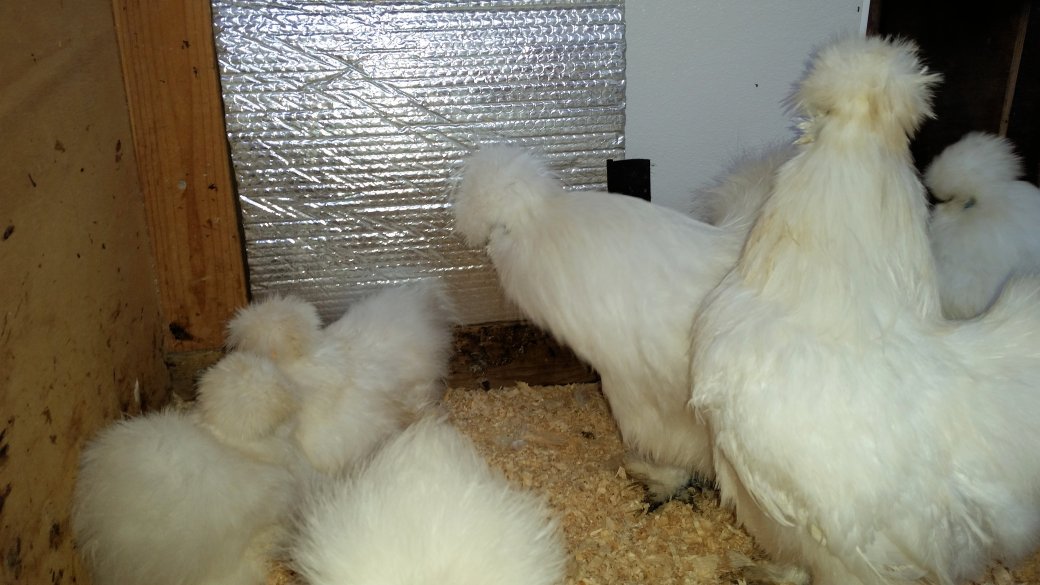
I do not think it is healthy for a chicken to go from hot to cold temperatures every time they go out in the run. Both places should be about the same temperature. If you use the insulation and the heater bases, these small coops should be warm even with a small number of chickens.
For tips and tricks for raising outstanding silkies check out our Chicken Learning Center at VJPPoultry.com . VJP Poultry is an NPIP and state inspected hatchery located 30 miles north of St. Paul. We hatch out silkies all year long so we always have stock available. Like us on Facebook to get weekly updates on what we currently have for sale.
Victoria J. Peterson
Silkies For Sale – 10/26/16
Silkies For Sale – 10/19/16
Adult Black Pen


When I began my silkie journey seven years ago, the first colors I started with were Black and Blue. I was told by my breeder that they were the two easiest colors to start with. You can pen Blue, Black and Splash together. They breed true according to certain percentages. Eventually, I separated my Black pen and my Blue pen because it was getting too difficult to tell the difference between the Black chicks and the very dark Blue chicks. I wanted to keep my blacks undiluted and as coal black as possible. The very Black roosters will have a beetle green sheen in their tails which the diluted blacks will not always have. True Black is very desirable for people working with breeding Paint silkies. In order to breed them you need that very dark black color. Black Silkies combs should be a walnut shaped circle with a horizontal line running across it. The comb should be very dark.
I currently have 12 Black hens and 2 Black roosters. I try to always keep two roosters in each color pen. Usually a young one (one year) and an older one (two years or more). I do switch out and bring in new roosters about every year. Sometimes I grow out my own chicks to use and sometimes I purchase from another breeder. I always stick with the same breeder (thanks always, Amy Piehl) because she has excellent stock and because if I jump around and buy from other people, I am opening up a whole can of genetic worms. Bringing in new genetics can make your chicks more healthy, but it can also cause headaches and genetic faults that can be introduced to your flock.
The APA and ABA recognize silkies in eight different color varieties: Black, Blue, Buff, Gray, Partridge, Self Blue (lavender), Splash and White. The standard of Perfection is used in judging. It states that “Black birds should be even although a small amount of color is permissible in the hackle but not desirable.”
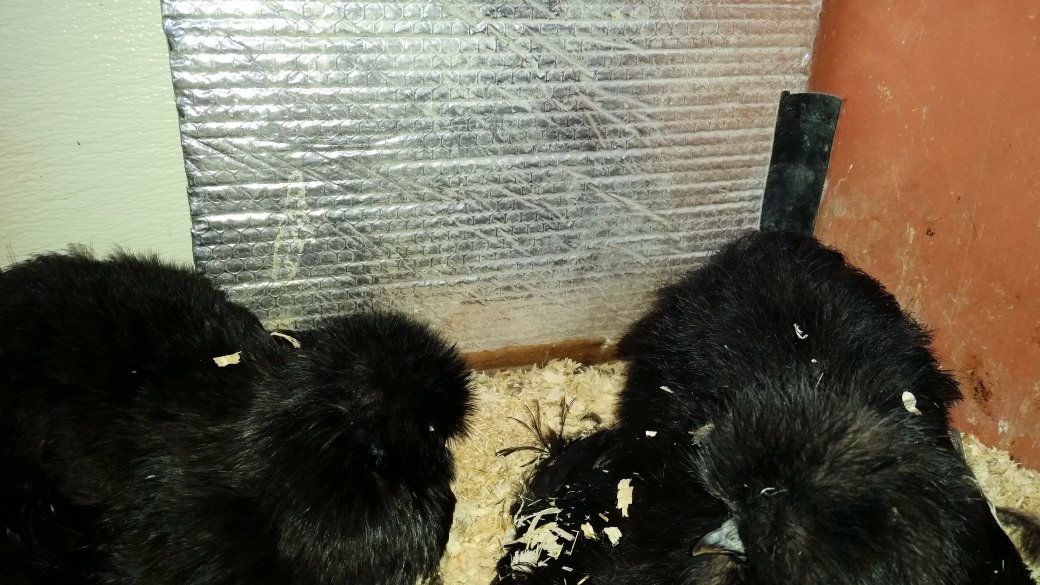
Black silkies are very difficult to photograph. They either end up looking like they have a brownish tint to them or they look like black blobs with no features. I am sure there are some tricks that can make them really stand out. Let me know if you know them.
Black has always been one of my favorite colors of silkies. They are so beautiful wandering on the green grass on a sunny day. They always look clean. I have seen some gorgeous Black silkies in the show ring. Hopefully, you will choose to add some of these stunning birds to your flock.
For tips and tricks for raising outstanding silkies check out our Chicken Learning Center at VJPPoultry.com . VJP Poultry is an NPIP and state inspected hatchery located 30 miles north of St. Paul. We hatch out silkies all year long so we always have stock available. Like us on Facebook to get weekly updates on what we currently have for sale.
Victoria J. Peterson
 ban
ban
 VJP Poultry