October Fall Chores at VJP Poultry 10/29/16

20161028_113851October is the time of year for finishing what didn’t get done this summer and planning for what will be happening this winter. One big project that needs finishing up is our new coop and run. We started it last fall and we still need to put the last finishing touches on it.

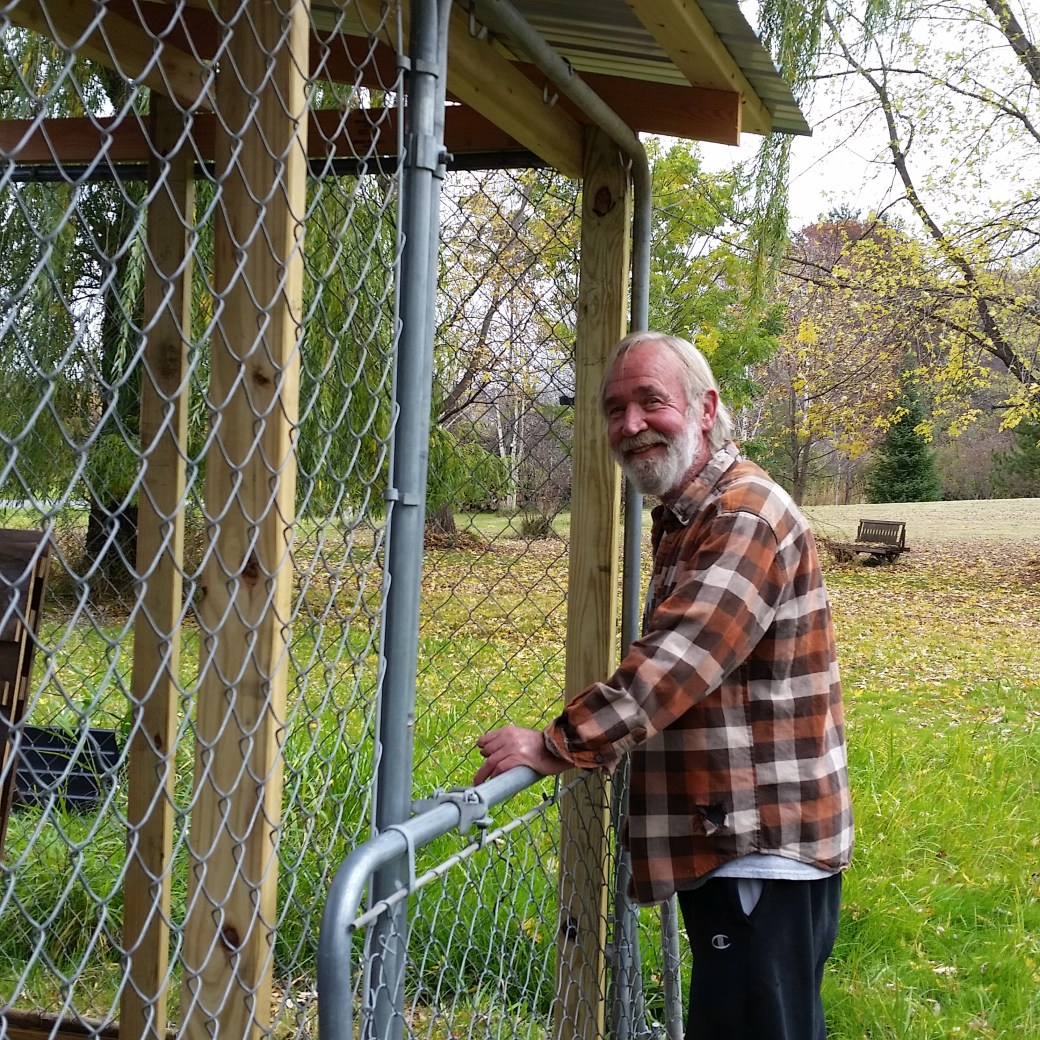
My husband, Dennis, is the handy man in our family. He has been busy this month finishing ramps and doors for the four pop door openings in the new pens. We painted today (purple) and hoped that the white silkies stayed white and did not turn into purple Paints!  We also finished up the fencing in the run and closed up any holes that are left.

Since October is the month for planning, we measured all of the runs for the plastic sheeting we wrap around. In past years, we used clear plastic that came on a roll. We measured, cut and zip tied it but by spring it looked pretty beat up.

This year we are going to order clear tarps that have grommet holes. They will cost more than the roll of plastic , but we will be able to use them for possibly three years. Again, we will use zip ties and bungee cords to hang them. They keep snow out of the run and create a kind of greenhouse effect inside it. The plastic cuts the wind and lets the silkies come out of the coop when it is well below freezing.

While ordering the tarp, I decided to also stock up on heat lamp bulbs. I ordered six 125 watt bulbs to be used in the chicks room. Better to have some on hand than to have a crisis occur and be out of them.

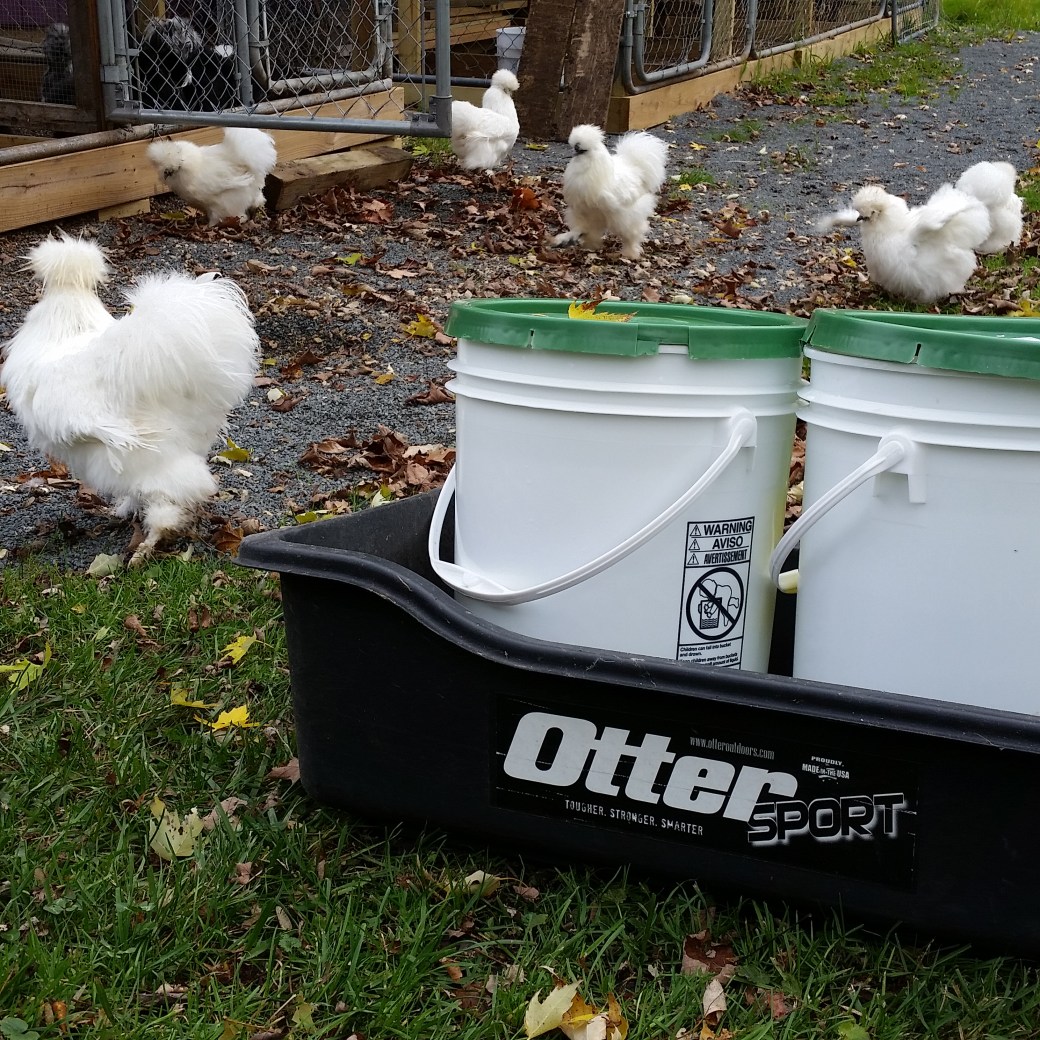
Another chore to plan for is water transporting. By the end of October the hoses are put away and I need to start carrying water out to the coops. In previous years, I carried the water in two, 5 gallon buckets. Not my favorite chore. This year I will need twice as much water since we added another coop. I found a few 5 gallon buckets with lids which will work nicely. I plan on using the  otter sled to bring the water down to the coops. Always trying to improve the way we do things around here.

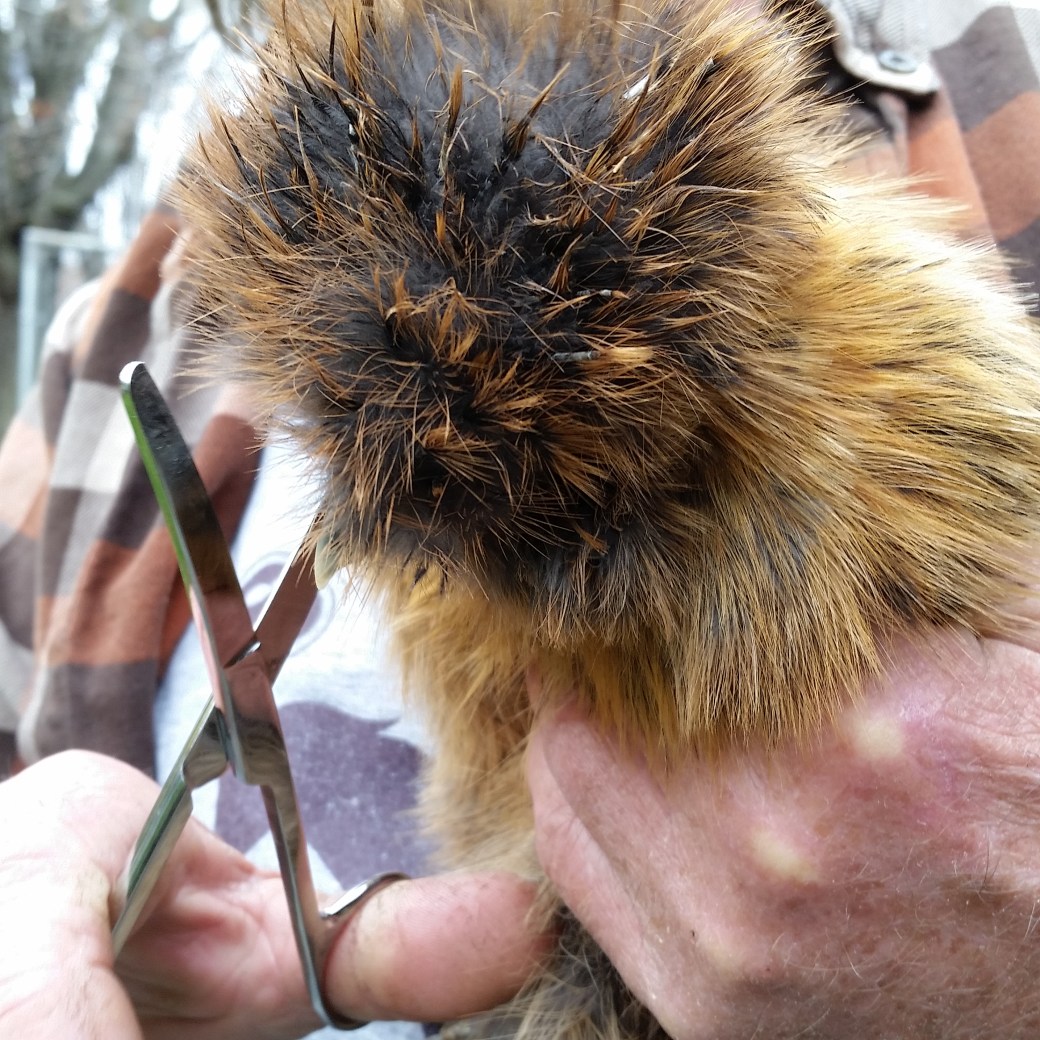
One last chore is to go through all of the birds individually. We check to see whether it can see. If not , we trim the feathers around the eyes and underneath the eye with curved scissors. We trim the beak and trim away any long toenails with diagonal wire cutters.  We are now set for winter. The birds will be snug in their coops. All it takes is a little October pre-planning.

For tips and tricks for raising outstanding silkies check out our Chicken Learning Center at VJPPoultry.com .  VJP Poultry is an NPIP and state inspected hatchery located 30 miles north of St. Paul.  We hatch out silkies all year long so we always have stock available.  Like us on Facebook to get weekly updates on what we currently have for sale.

Victoria J. Peterson
20161028_122410

20161028_121929

Silkies For Sale – 10/26/16

Collecting Eggs At VJP Poultry

Egg collecting is an important activity for any backyard breeder. At  VJP Poultry we collect at least two times a day. I collect in the morning when I am setting out the feed and letting them out of the coop into the run. I also collect in the late afternoon when I am changing out the water. If I am around I might do it midday as well. The more often you collect, the less chance you will have of eggs becoming dirty, broke or frozen. I find a traditional egg basket works well to get them safely in the house without becoming squished in my pocket.

Silkies do not usually use nest boxes.  They will pick a corner of the coop and all of the hens will end up laying there. The broody hens will steal the eggs laid by others and keep them warm. This is wonderful when it is cold outside and you don’t want them to freeze. I then just check under all of the sitting broody hens and find the majority of the eggs. Wear gloves to keep from being pecked by them. Some may lay a few in the run, so be sure and check there as well.

It is important to keep the bedding in these nesting corners clean. I daily add clean bedding to those spots I know will have eggs. If you let your hens free range, you may want to wait until later in the day to let them out. Otherwise, they will lay their eggs in hidden spots in your yard and it will be difficult to find them all.

I mark every egg to show what color pen the egg came from. You could also write the date on them if you wanted. I just use a regular marker, but not a permanent one. They are then placed in egg cartons, pointy side down, and left in a cool, dry area. I put mine in my basement which stays a consistent  temperature of 50 degrees. I tilt the egg cartons in the opposite direction each day so that they are not always in the same position. If you incubate,  then you don’t want anything sticking to the sides of the shell.

I usually set eggs every five to seven days. Eggs that are dirty are not incubated but could be fed back to the chickens for extra protein. Dirty eggs cause bacteria to enter through the pores of the egg shell. You can use fine sand paper to scrape off some of the larger chunks. Do not wash eggs until you are ready to cook them as that will remove the protective bloom from the surface of the egg.  If you have a question about whether an egg is too old to eat or not you could give it the float test. Place it in cold water. If it floats, it is old.

The environment can effect the frequency of egg laying. As daylight decreases so does egg production. You could set up a timer with a nightlight in your coop to increase the amount of light but I like to give my hens a break in the winter. They do need a dark period or their bodies get out of whack. Twelve to fourteen hours of light is sufficient.

Hens also take a break from laying when they are molting. Additional protein can help them recover from a molt. All the calories and protein are used to grow new feathers, so laying takes a back seat. Gamebird or meatbird food, lean meats, fish, scrambled eggs, BOSS sunflower seeds and flax seed all offer extra protein.

Silkies tend to go broody. When they do they will stop laying attempt to hatch a clutch. It may take several weeks for their hormones to settle down and get them back to laying.

One problem you may encounter is chickens eating the eggs that have been laid. In this case you need to hide the eggs from the view of the other silkies. A separate nesting box with curtains for privacy can do the trick and keep the other broodies from stealing the eggs.

Once you have eaten farm fresh eggs, it is hard to go back to grocery store quality. Silkies lay a medium sized, cream color egg. They will lay every day depending on the time of year and whether they are broody or molting. Hope you enjoy cooking and baking with your fresh silkie eggs.

For tips and tricks for raising outstanding silkies check out our Chicken Learning Center at VJPPoultry.com .  VJP Poultry is an NPIP and state inspected hatchery located 30 miles north of St. Paul.  We hatch out silkies all year long so we always have stock available.  Like us on Facebook to get weekly updates on what we currently have for sale.

Victoria J. Peterson


VJP Poultry


e

Silkies For Sale – 10/19/16


Adult Black Pen


When I began my silkie journey seven years ago, the first colors I started with were Black and Blue. I was told by my breeder that they were the two easiest colors to start with. You can pen Blue, Black and Splash together. They breed true according to certain percentages. Eventually, I separated my Black pen and my Blue pen because it was getting too difficult to tell the difference between the Black chicks and the very dark Blue chicks. I wanted to keep my blacks undiluted and as coal black as possible. The very Black roosters will have a beetle green sheen in their tails which the diluted blacks will not always have. True Black is very desirable for people working with breeding Paint silkies. In order to breed them you need that very dark black color. Black Silkies combs should be a walnut shaped circle with a horizontal line running across it. The comb should be very dark.
I currently have 12 Black hens and 2 Black roosters. I try to always keep two roosters in each color pen. Usually a young one (one year) and an older one (two years or more). I do switch out and bring in new roosters about every year. Sometimes I grow out my own chicks to use and sometimes I purchase from another breeder. I always stick with the same breeder (thanks always, Amy Piehl) because she has excellent stock and because if I jump around and buy from other people, I am opening up a whole can of genetic worms. Bringing in new genetics can make your chicks more healthy, but it can also cause headaches and genetic faults that can be introduced to your flock.
The APA and ABA recognize silkies in eight different color varieties: Black, Blue, Buff, Gray, Partridge, Self Blue (lavender), Splash and White. The standard of Perfection is used in judging. It states that “Black birds should be even although a small amount of color is permissible in the hackle but not desirable.”
Black silkies are very difficult to photograph. They either end up looking like they have a brownish tint to them or they look like black blobs with no features. I am sure there are some tricks that can make them really stand out. Let me know if you know them.
Black has always been one of my favorite colors of silkies. They are so beautiful wandering on the green grass on a sunny day. They always look clean. I have seen some gorgeous Black silkies in the show ring. Hopefully, you will choose to add some of these stunning birds to your flock.

For tips and tricks for raising outstanding silkies check out our Chicken Learning Center at VJPPoultry.com .  VJP Poultry is an NPIP and state inspected hatchery located 30 miles north of St. Paul.  We hatch out silkies all year long so we always have stock available.  Like us on Facebook to get weekly updates on what we currently have for sale.

Victoria J. Peterson

VJP Poultry Logoban