Fly Strike – Help! What Do I Do Now?

20170907_105345    Fly Strike is a serious condition where fly larvae are living in and feeding on the dead skin of a live chicken.  Fly Strike can effect other animals besides chickens and they can even effect humans.  Another name for it is myiasis or fly – blown.  The larvae can move internally and cause very painful problems.  It can be fatal if not treated promptly.

Flies like moist, dark, areas in order to lay their eggs.  The vent area of the chicken is a favorite place, but they can strike any place on the body where there is an open wound.  Flies lay their eggs and within 8-12 hours, larvae emerge to begin eating on the chicken’s flesh.  The larvae feed on the skin causing  sores that can become infected.

Flies that are known to cause this are bot flies, blow flies and screw flies.  Fly strikes are most common in warm weather.  Summer and Fall is a prime time.  Whenever you begin to see more than normal the amount of flies around your coop, you should take action to diminish them.

Dust Bathing is a great way for birds to keep themselves clean. Make sure that your birds have the opportunity to dust bath.  Runny droppings can build up in the vent area.  This soiled vent area can cause an opening in the skin which can be attractive to the fly.  Try and keep those fluffy butts as clean as you can.  You may need to give them a bath.  Always treat open wounds with an antiseptic to help heal.

Clean water is important as well.  Wash and disinfect the waterers as often as you can.  Some people switch to nipple waterers which will remove the standing water mess.  Chickens often have poo and dirt in their waterers which will attract flies.

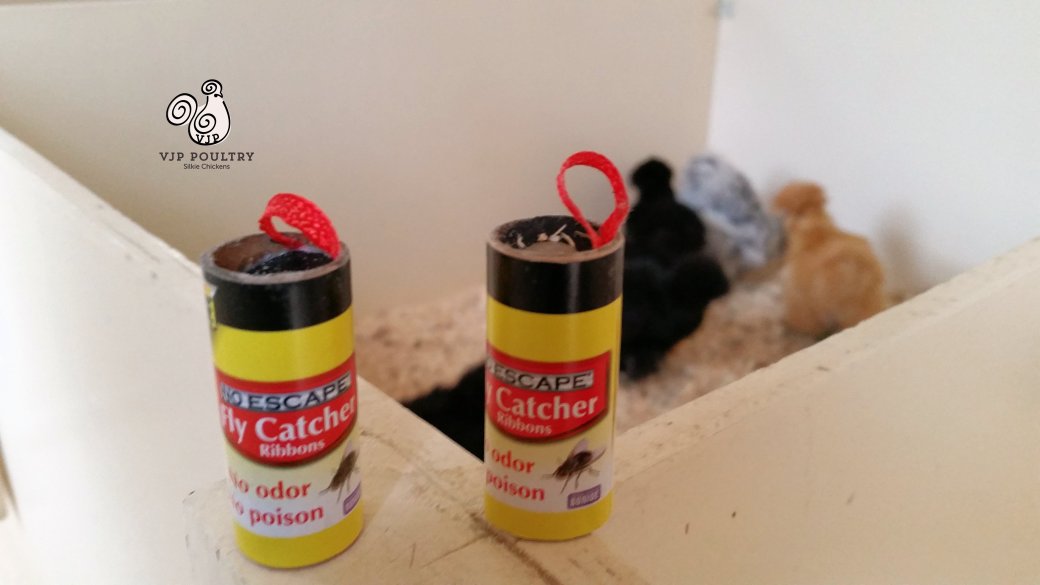
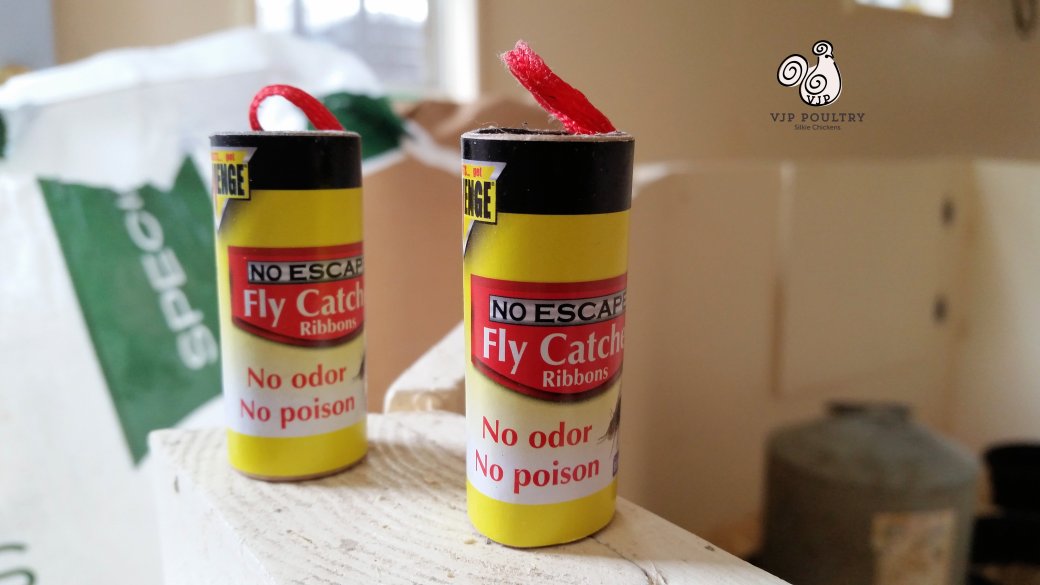
One thing you can do is to control the fly population around your coop.  We use flypaper strips  but there are other products as well.  Hang vanilla air fresheners up in the coop. Flies hate the smell.  Add screens to windows and doors in your coop. Keep the ventilation but cut down on flies.

Keep your chickens in good general health by giving them probiotics in the water.  Watch any injuries very closely as they heal.

Treat fly strike by first segregating the bird from the others. Chickens are attracted to red colors and will peck at wounds on other chickens.  This will make the wound even worse.  Apply Blue Kote to the wound.

Add vitamins and electrolytes to the water to help with healing.

Bathe the chicken and try to drown as many larvae as possible.  Physically remove as many as you can see.  Flush wound with vetericyn spray.  If the wound is deep, use a syringe to drive the solution into the wound.  Dry the area with a hair dryer and then spray again with the vetericyn wound and infection treatment.  If it is really infected then antibiotics may be needed. See your veterinarian or use Tylan .

Hopefully fly strike will not happen in your flock but it is best to be prepared and to understand it when you see it.  Good luck with your silkie flock!

For tips and tricks for raising outstanding silkies check out our Chicken Learning Center at VJPPoultry.com .  VJP Poultry is an NPIP and state inspected hatchery located 30 miles north of St. Paul.  We hatch out silkies all year long so we always have stock available.  Like us on Facebook to get weekly updates on what we currently have for sale.

Victoria J. Peterson
20170907_105232

Silkies For Sale – 9/5/17

Silkie Starter Kit – What You Need Before the Chicks Arrive

20170330_130644 As with any pet, it is important to plan ahead and purchase any equipment and supplies you will need before you bring home the actual animal.  This is especially important with baby chicks.

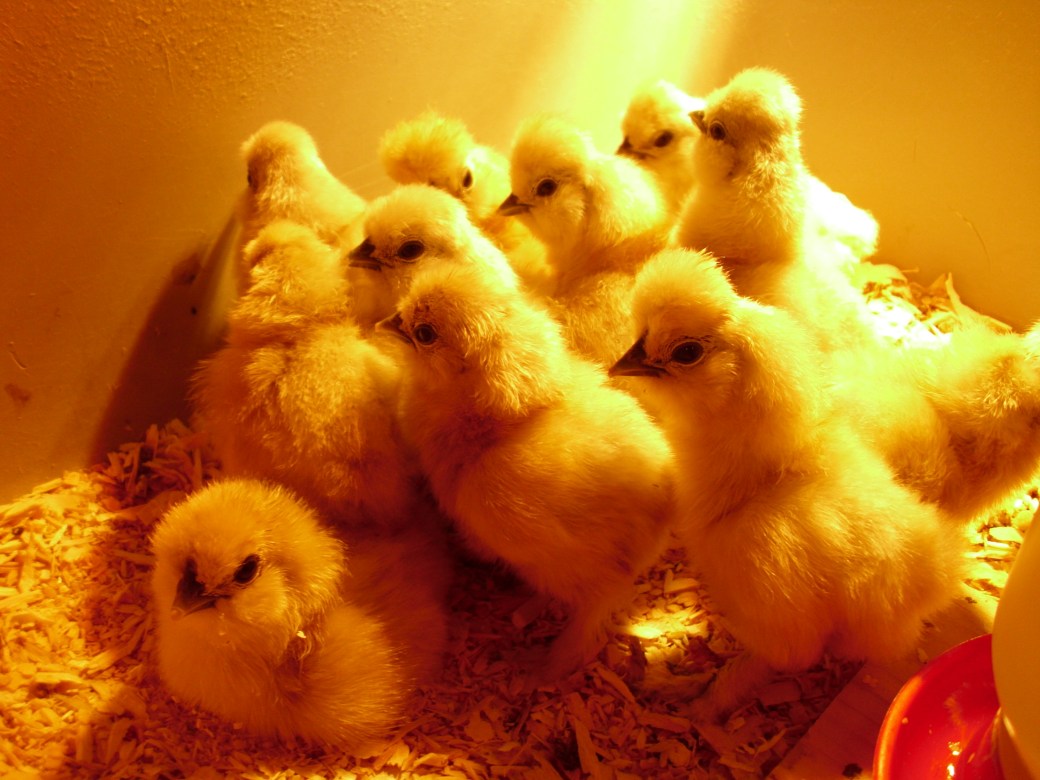
If you plan on purchasing newborns or one week olds, you will first of all need to have a heat lamp and a heat lamp bulb to go with it. The heat lamp should be up and running before you bring the chicks home so that they can immediately warm to the right temperature after their car ride.  When setting the heat lamp up, do not rely on just the clamp that comes with the fixture.  Use mechanics wire to hang and secure the lamp over the brooder.  The lamp should be able to be raised or lowered as needed to keep the chicks at the right temperature. This temp should be around 85-90 degrees when they are very young.  Use their behavior as a guide. If they are too cold they will huddle under the lamp and cry.  If they are too warm they will try and get as far away from the bulb as possible.  You want them comfortably moving to all parts of the brooder.

I bulb should be a red infrared variety.  I think those are the best so that the chicks can experience a night time cycle.  It can also keep down the pecking of each other that can occur when there is the stress of constant daylight.

Any type of a tub can become a brooder.  You will need to line the brooder with animal bedding to absorb moisture.  I use pine shavings.  I change the bedding about once a week and throw the used bedding on my garden to act as a mulch and fertilizer.

Your silkie chicks will also need a feeder and a waterer.  Quart size is best when they are small chicks.  Later you can get the gallon sized.    I like to add a couple of things to the water for the silkie chicks.  Vitamins with electrolytes can be added to give them a good start.  I also add a splash of apple cider vinegar to help with digestion and general health.

Young chicks should be given chick starter until they are at least 10 weeks old.  They can eat it longer than that, but you may want to switch to a grower feed.  Chick starter is high in protein.  Use medicated until they are around six weeks old and then switch to regular chick starter.  Medicated can help their developing  immune system to fight coccidiosis.

On my website near the top, there is a page called Silkie Supplies. There are some suggested products there to guide you in deciding what you need to start in silkie chickens.  Good luck with your new pets!

For tips and tricks for raising outstanding silkies check out our Chicken Learning Center at VJPPoultry.com .  VJP Poultry is an NPIP and state inspected hatchery located 30 miles north of St. Paul.  We hatch out silkies all year long so we always have stock available.  Like us on Facebook to get weekly updates on what we currently have for sale.

Victoria J. Peterson

20170417_072559

Silkies For Sale – 8/30/17

Heat Lamp Use at VJP Poultry – 12/20/16

20161123_120428    Now that the weather is getting colder, I have a lot of VJP Poultry customers asking me about using heat lamps in their coops. People are concerned that their silkies will not be able to stand the cold of a Minnesota winter.
My use of heat lamps has changed dramatically since I started raising silkies seven years ago.  I used to worry that my silkies would die from exposure. I had 250 Watt heat lamp bulbs hanging in every color pen the entire winter. Some even had two hanging in them.  My electric bill was crazy. I kept the windows open only a crack and tried to raise the temps as high as I could inside.

After seven years of experience , I now rarely turn on the heat lamps in my outside coops. The silkies are fine. They actually are very winter hardy. They have a small comb so you don’t need to deal with frostbite issues. They aren’t fond of snow but they do love to go out into their runs no matter what the temperature. What is cold for a human is not cold for them. Think about all of the woodland birds. They do just fine in the cold Minnesota winter.

I have one 250 Watt heat lamp above each waterer just in case it gets really cold. I did have them all on during the spell of -40 windchill. They shouldn’t be thought of as a way to heat an entire room. They only heat what is directly below them. If it gets to be around -10 I will flip the heat lamps on. My waterers are heated a different way (from below) so I don’t need the heat lamps unless it is super cold and the water is staying frozen.

I do use heat lamps in my baby chick room. I like to use the lower 125 watt bulbs. They are not as hot and not as expensive to run. I will use a heat lamp over the newborns and the one week olds  I don’t always use it over the two week old, but I could if I needed to. The chicks are in a small room off of my garage. The room is not heated with central air, so I also use a standing space heater to keep the entire room warm during January.

I am very aware that heat lamps must be hung securely. I use chains and wire so I can adjust the distance down to the brooder. I do not rely on the clamps that come with them. Heat lamps that are not secure and fall can easily start a fire. Make sure that the hoods are wiped clean of dust and that you also blow out the outlets with an air hose.

Heat lamp bulbs gradually become less strong the longer you have used them.  You are still paying for the same amount of electricity from the 250 Watt  bulb, but you are not receiving the same amount of heat the longer you continue to use it. When I feel that its not as strong anymore, I generally switch it out for a new bulb.  I don’t want the surprise of it burning out when I really need it over newborn chicks. The 125 Watt bulbs are harder to find so we order ours online.

Remember, it is not the lack of heat that can cause issues with silkies in the winter. It is the moisture present in the coop. If you are seeing frost on your doors or walls, it is a sign that there is too much moisture and not enough ventilation.  Open the windows, but keep the drafts off of the sleeping birds. I use pillow cases stuffed with old T-shirts and place them in front of the pop holes to block the drafts on the floor.

Electricity from heat lamps can be costly. One 250 Watt heat lamp costs about 90 cents a day to run. Add a space heater and that would be an additional $1.80 a day to run.

At VJP Poultry, we use heat lamps as sparingly as possible. They are necessary for young chicks in the first few weeks of life. Make sure they are hanging securely and change out the bulbs when they start losing their heat. They can be a useful part of your breeding program.

An alternative to heat lamps brooder heat plates. There is less of a chance of fire with these.  You can also use the sweeter heaters that are hung from a chain above the chicks. This would be a more secure way of doing it.

For tips and tricks for raising outstanding silkies check out our Chicken Learning Center at VJPPoultry.com .  VJP Poultry is an NPIP and state inspected hatchery located 30 miles north of St. Paul.  We hatch out silkies all year long so we always have stock available.  Like us on Facebook to get weekly updates on what we currently have for sale.

Victoria J. Peterson

VJP Poultry newborns 4