Tag: bantam blog
What You Need to Have in Your Poultry Showbox
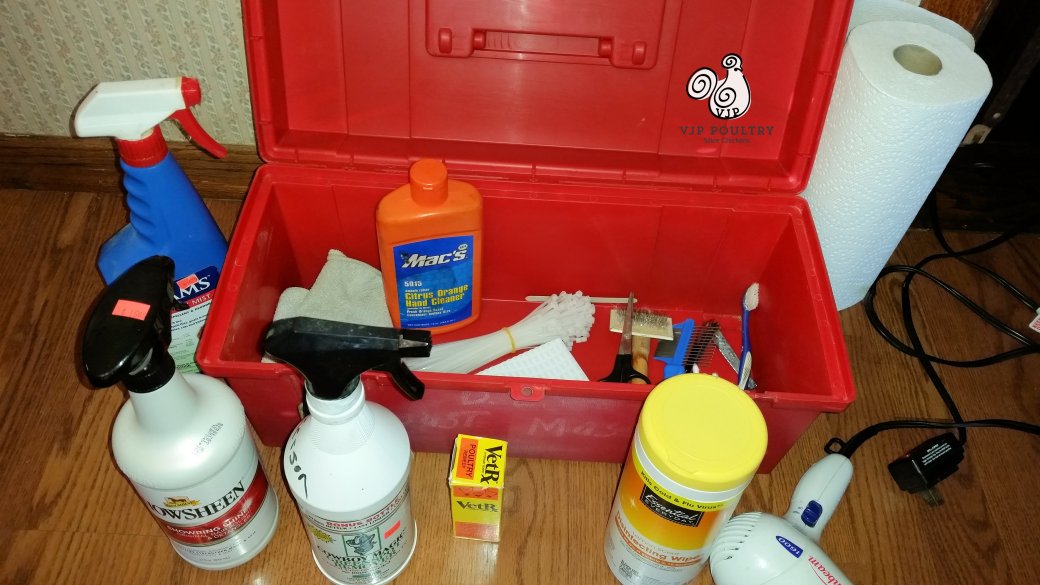 It’s the day before you leave for the poultry show and your birds have all had their baths, toenails clipped and general primping taken care of. Now it is time to organize your Showbox and pack everything that you will need in order to keep your bird in tip top condition at the poultry show.
You will need some kind of carriers to transport your birds to the show. A cat carrierworks very well. Remember to line it with some kind of bedding. Try to have only one bird per carrier if possible. You do not want extra poo rubbing on to your birds nice clean feathers.
At most shows you will be bringing your own feeders and waterers. Since I have silkies, I use a pop bottle waterer. You will need to pack enough waterers and empty pop bottles for each bird as well as mini bungee cords to secure them. I also like to place an empty cat food can under the waterer to prop it up.
Bring a jug of your own water. Add electrolytes to it as birds can often become stressed at a show. The electrolytes will help to boost their immune system. Get them used to this water a week ahead of time. Birds can be finicky about change in water and food so you want to make sure that they are used to both.
If you have been cage training your chicken they should be used to using the feeders and waterers in the small cages. Bring a bag of feed for your birds. Bird seed with sunflower seeds and nuts is nice because it keeps the poo more solid than regular feed. It makes it easier to remove it from the cage and from the bird.
Remember to withhold food on the morning of the judging. A bird with a full crop will create a lump in their chest and will not have a nice shape for the judges. You may also want to withhold water so as not to have a silkie with a wet beard.
You will need to bring your own bedding shavings. Constantly be on the look out for poo on the shavings and remove it before the bird can step or sit in it. Some people will have booties on their birds until the judging starts.
On the day of the show you will see a lot of people frantically working on their birds before the judging starts. You can put Vet Rx or another type of oil on their combs, earlobes, beaks, wattles and legs. This makes the surface more shiny and brings out their colors. Apply a thin coat. Vet Rx is especially good because it helps the bird fight off diseases that they might come in contact with at the show.
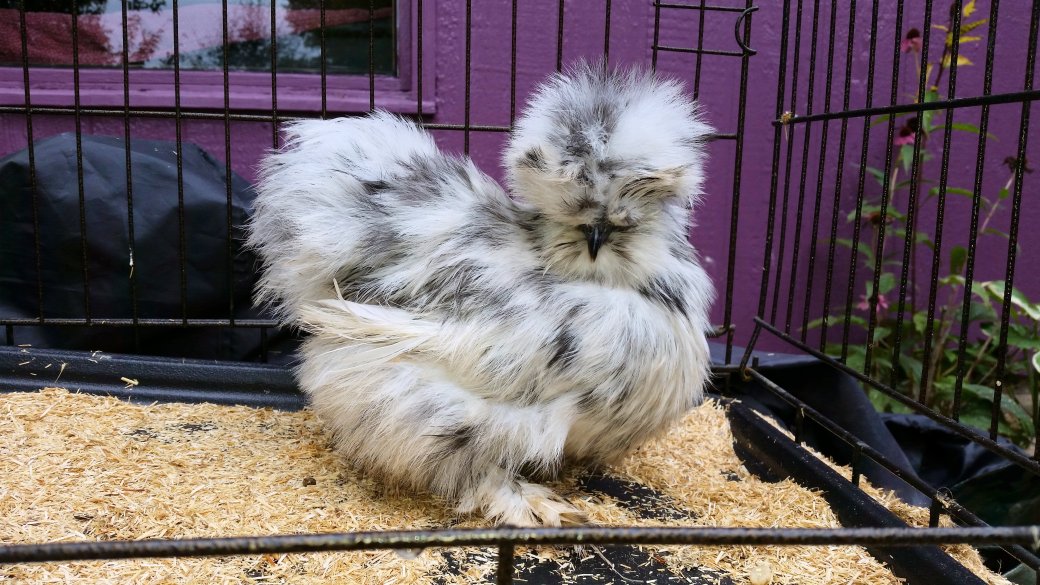
You can also shine up a bird using a piece of silk cloth and running it over the feathers. A micro fiber cloth works well for this too. Feathers are oily and dust will stick to them. This helps to remove the dust and make your bird shine.
To finish a bird off, I will use Show Sheen. Spray it lightly on or spray a cloth and run it onto the feathers. Then blow dry and puff out those silkie feathers. You can use a slicker brush or a fine tooth comb to really fluff it up and back tease it.
If you see that dirt or manure has gotten on any feathers, you can use Gempler’s Citra Clean hand cleaner or Cowboy Magic Greenspot Remover for those last minute touch ups. Baby wipes and Mr. Clean Magic Eraser as also good tools for spot removing dirt.
I also bring paper towels, baby wipes, small spray bottle with water to loosen up dirt, tooth brush, hand sanitizer, portable chair, extra carriers in case you buy a bird or two, health forms for pullorum testing, cage ID numbers if the show sent you that information.
Remember to not leave all of this stuff out. The judge should not see anything of yours. Pack it up and take it out of the judging area. It is considered bad form to enhance the cages your birds are in or to distinguish your birds from other people’s birds. Don’t write your name anywhere such as on your cage cups. Do not put up barriers between your birds and the birds next to you. The judges need to be able to look down the aisle at all of the birds to compare them.
Dress for the show. Be sure to wear clothing that is washable and comfortable. Dress in layers as temperatures can change. Do not wear shoes that you wear when tending your flock. You do not want to bring home disease to the rest of your birds.
A few other things for your showbox would be, scotch tape, nail file, scissors, pen and don’t forget the Flea and Tick spray. You will want to spray your birds as they leave the show and go back into their carriers in case they picked up a bug
Some people will bring zip ties or small locks to lock up their birds when they aren’t around. No one should be touching or handling any one else’s birds. Just remember to have the zip ties off before judging starts. If the judge can’t get into your cage, they can’t judge your bird.
One last thing I like to bring is a book on poultry breeds. I enjoy finding actual examples of breeds I am reading about. It is fun to learn about breeds different than your own. It is also a lot of fun to meet other breeders and get tips from them about your favorite breed. It is a great place to just talk chicken!
For tips and tricks for raising outstanding silkies check out our Chicken Learning Center at VJPPoultry.com . VJP Poultry is an NPIP and state inspected hatchery located 30 miles north of St. Paul. We hatch out silkies all year long so we always have stock available. Like us on Facebook to get weekly updates on what we currently have for sale.
Victoria J. Peterson
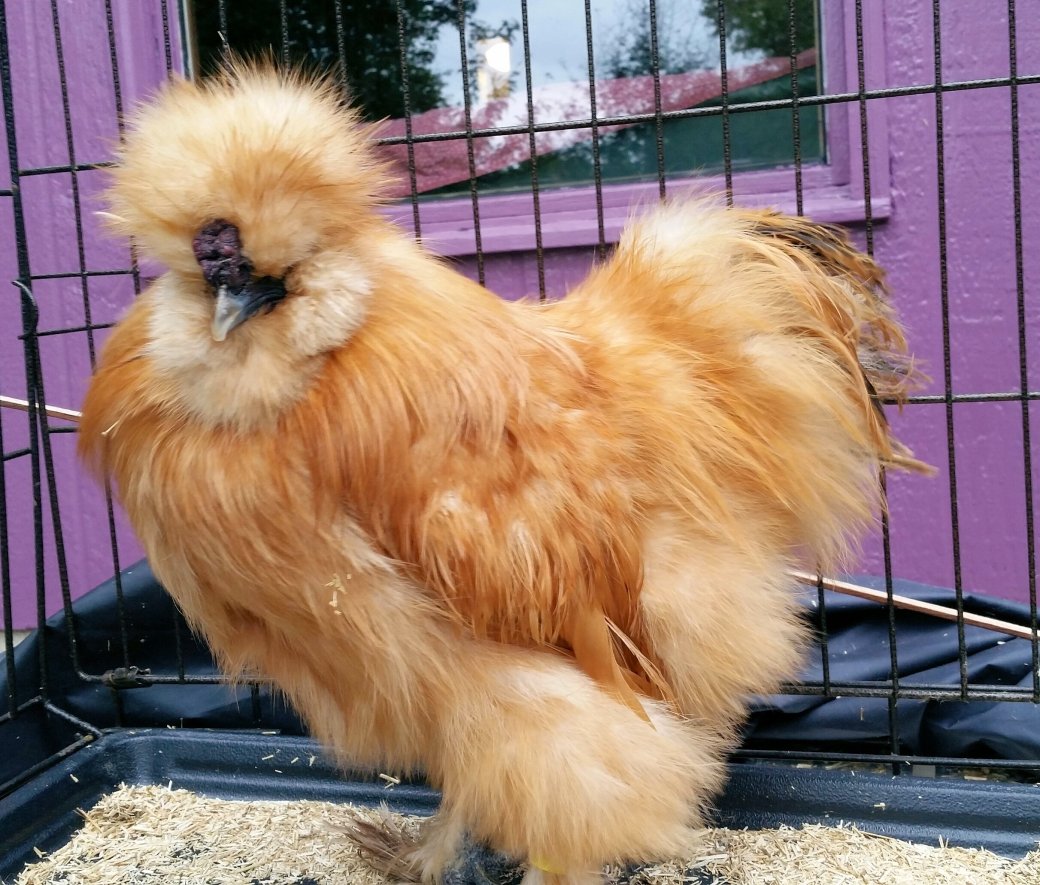
Silkies For Sale – 10/16/17
Silkies For Sale – 10/10/17
Collecting Eggs At VJP Poultry
Egg collecting is an important activity for any backyard breeder. At VJP Poultry we collect at least two times a day. I collect in the morning when I am setting out the feed and letting them out of the coop into the run. I also collect in the late afternoon when I am changing out the water. If I am around I might do it midday as well. The more often you collect, the less chance you will have of eggs becoming dirty, broke or frozen. I find a traditional egg basket works well to get them safely in the house without becoming squished in my pocket.
Silkies do not usually use nest boxes. They will pick a corner of the coop and all of the hens will end up laying there. The broody hens will steal the eggs laid by others and keep them warm. This is wonderful when it is cold outside and you don’t want them to freeze. I then just check under all of the sitting broody hens and find the majority of the eggs. Wear gloves to keep from being pecked by them. Some may lay a few in the run, so be sure and check there as well.
It is important to keep the bedding in these nesting corners clean. I daily add clean bedding to those spots I know will have eggs. If you let your hens free range, you may want to wait until later in the day to let them out. Otherwise, they will lay their eggs in hidden spots in your yard and it will be difficult to find them all.
I mark every egg to show what color pen the egg came from. You could also write the date on them if you wanted. I just use a regular marker, but not a permanent one. They are then placed in egg cartons, pointy side down, and left in a cool, dry area. I put mine in my basement which stays a consistent temperature of 50 degrees. I tilt the egg cartons in the opposite direction each day so that they are not always in the same position. If you incubate, then you don’t want anything sticking to the sides of the shell.
I usually set eggs every five to seven days. Eggs that are dirty are not incubated but could be fed back to the chickens for extra protein. Dirty eggs cause bacteria to enter through the pores of the egg shell. You can use fine sand paper to scrape off some of the larger chunks. Do not wash eggs until you are ready to cook them as that will remove the protective bloom from the surface of the egg. If you have a question about whether an egg is too old to eat or not you could give it the float test. Place it in cold water. If it floats, it is old.
The environment can effect the frequency of egg laying. As daylight decreases so does egg production. You could set up a timer with a nightlight in your coop to increase the amount of light but I like to give my hens a break in the winter. They do need a dark period or their bodies get out of whack. Twelve to fourteen hours of light is sufficient.
Hens also take a break from laying when they are molting. Additional protein can help them recover from a molt. All the calories and protein are used to grow new feathers, so laying takes a back seat. Gamebird or meatbird food, lean meats, fish, scrambled eggs, BOSS sunflower seeds and flax seed all offer extra protein.
Silkies tend to go broody. When they do they will stop laying attempt to hatch a clutch. It may take several weeks for their hormones to settle down and get them back to laying.
One problem you may encounter is chickens eating the eggs that have been laid. In this case you need to hide the eggs from the view of the other silkies. A separate nesting box with curtains for privacy can do the trick and keep the other broodies from stealing the eggs.
Once you have eaten farm fresh eggs, it is hard to go back to grocery store quality. Silkies lay a medium sized, cream color egg. They will lay every day depending on the time of year and whether they are broody or molting. Hope you enjoy cooking and baking with your fresh silkie eggs.
For tips and tricks for raising outstanding silkies check out our Chicken Learning Center at VJPPoultry.com . VJP Poultry is an NPIP and state inspected hatchery located 30 miles north of St. Paul. We hatch out silkies all year long so we always have stock available. Like us on Facebook to get weekly updates on what we currently have for sale.
Victoria J. Peterson


VJP Poultry
e
 VJP Poultry