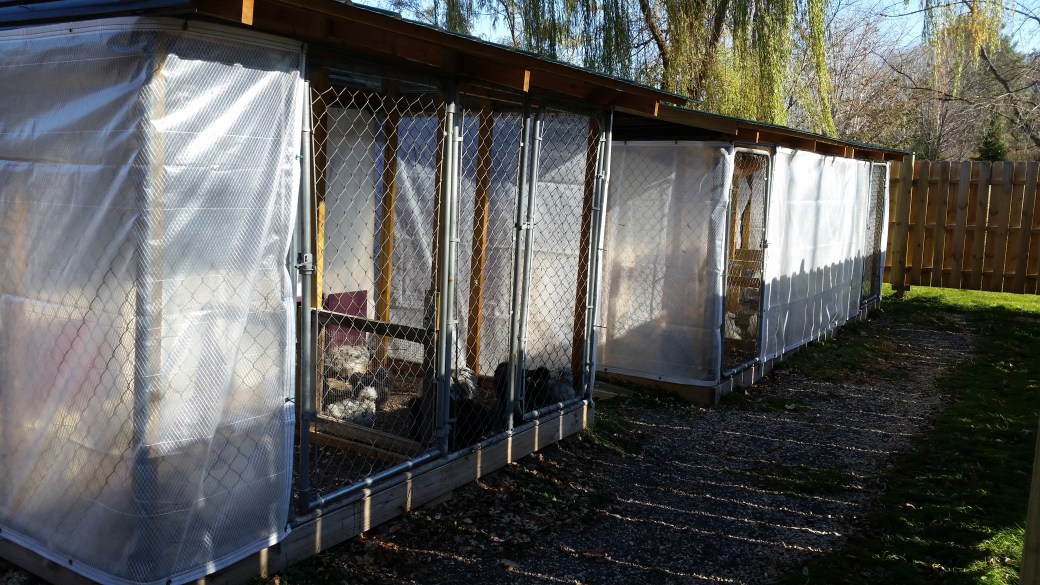
 Now that it is colder outside, you may find that your chickens are spending more of their time inside the coop. If you do not have a chicken run that is set up for colder temperatures, they may be choosing to snuggle up where it is warmer. The problem with that is that chickens need fresh air and exercise. They will be hardier and healthier if they spend part of their day outside in the run.
Here in Minnesota it can get quite cold in the winter. Always start with a hardy breed of chicken. It should be one that has small combs and wattles. Silkies are ideal for cold areas. Not only do they have small walnut combs and almost nonexistent wattles, they also have feathering on their feet to help keep their legs warmer.
Silkies are tolerant of the cold but they must be protected from wet and wind. Enclosing your run with plastic wrap or a tarp can help to block wind and prevent snow and rain from entering the run. Most chickens do not like walking in snow. The plastic will keep the snow from entering the run. Then you will not need to spend time shoveling out the run every time it snows.
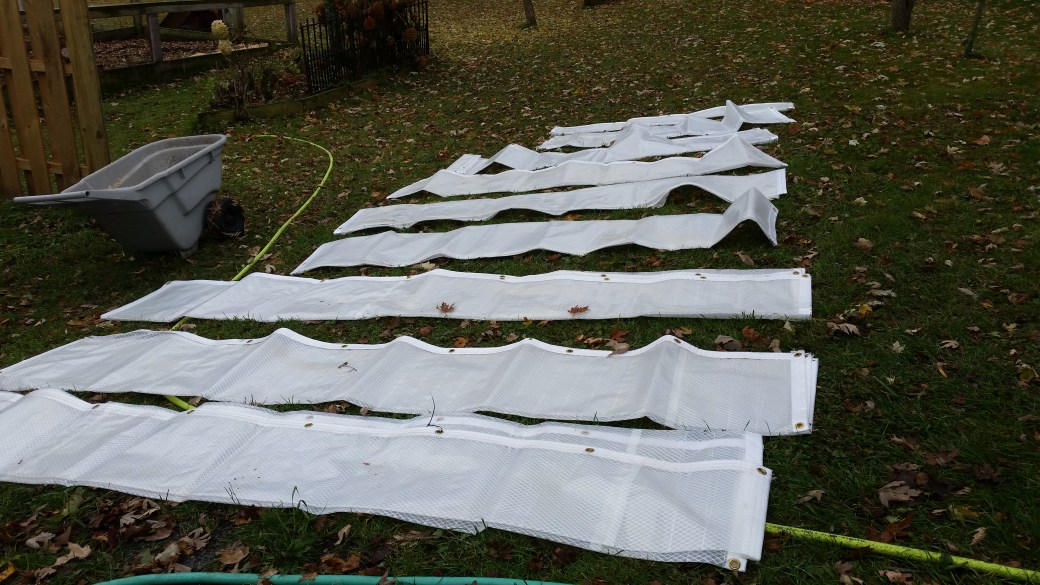
We are trying a new kind of plastic this year Instead of using plastic that comes on a roll, we ordered clear tarps that have built in grommet holes. The tarp also has lines running through it to keep the tarp stronger and to keep it from ripping in the wind.
We placed eye hooks in the wood along the bottom of the run. The grommet holes fit into the hooks and secure the tarp. We then use ball bungee cords at the top to fasten the tarp down. Hopefully this clear tarp can be easily taken down and put up for many years to come. We also use zip ties where needed to keep the tarps secure.
You do not need to cover the entire run. The North and West sides are the most important to cover as this will provide the best wind and snow block. You need some holes for ventilation. I leave the doors uncovered so that air can move in and out.
A spacious run gives chickens personal space and exercise opportunities. Boredom can be a problem in the wintertime. This can lead to behavior problems such as feather picking and egg eating.
You can use plywood, tarps or even bales of hay or straw to block the wind, but clear plastic is best. This lets the sun shine through and keeps the run bright. It will warm the inside of it just like a greenhouse would. In the Spring, just take it down, fold it up and store it out of the way until next year.
You could provide an outside shelter in your run such as a small dog house. Use straw inside of it to keep your chickens warm. Straw hold more warmth because it traps warm air in its shaft. Use some of that straw to create paths for chickens to walk on. Laying down straw is often easier than trying to shovel the snow out of the run. The straw will make it warmer on their feet.
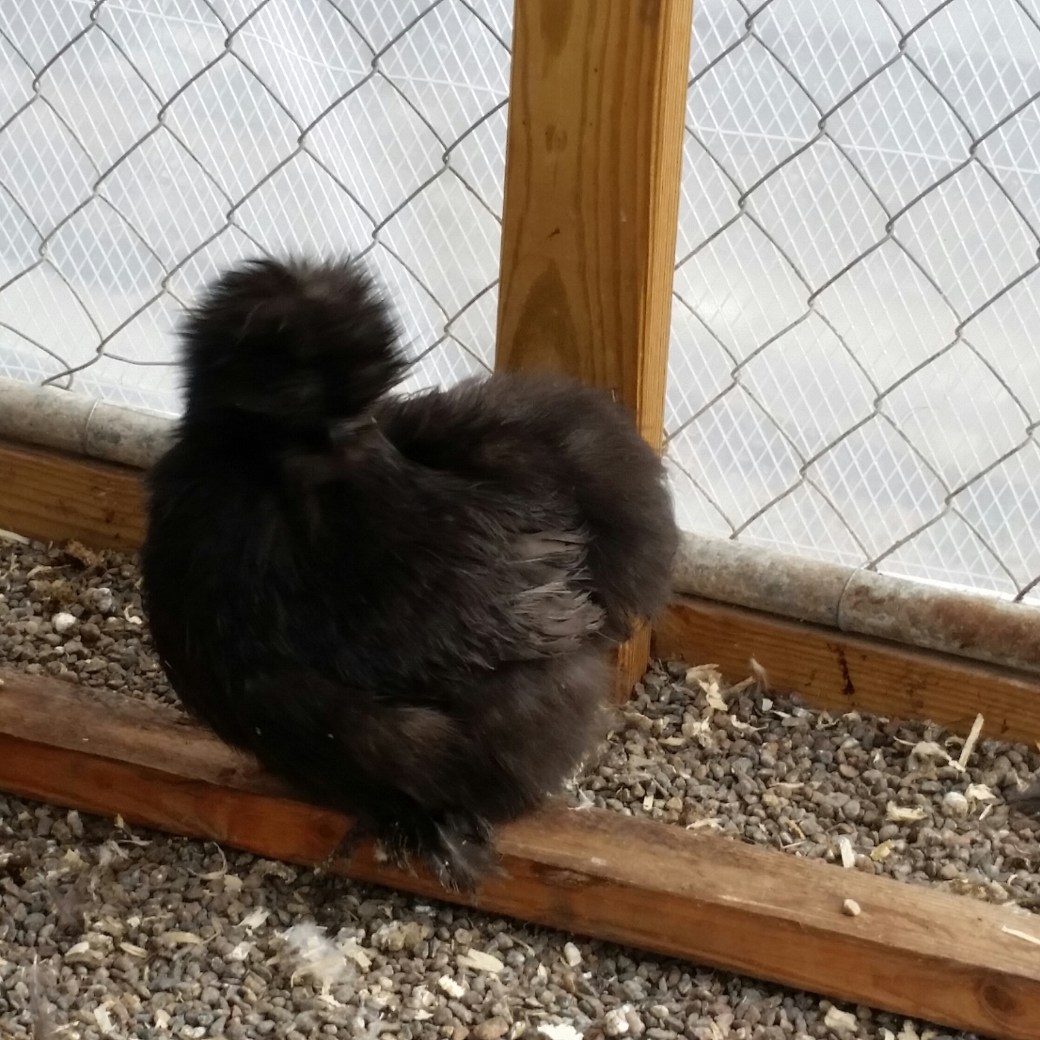
I like to provide something for them to perch on inside the run. We have pea rock in our run which can become cold on their feet in the winter. Silkies do not need very high perches. We just lay a few 2 X 4 boards down for them. They love to perch on these boards when it is cold. You could also use logs or stumps for them to stand on.
Set up a dust bathing area for them in the wintertime. Since most of their regular dusting areas are now under snow, you could make a new spot by purchasing some dust bathing materials and putting them in a kitty litter box.
Provide energy treats for your birds that they can only get if they venture outside in the run. These could be BOSS sunflower seeds or cracked corn. The more time that they spend outside, the less messy the inside of your coop will be.
It is important to remember that birds are not mammals. They can tolerate much colder temperatures than humans. You just need to keep them dry and out of drafts or wind. Do not overheat your chickens based on how you feel. I keep the windows and doors to the coops open all winter long. If your coop is one temperature and your run another, this can lead to sickness as birds go back and forth from hot to cold temperatures.
For tips and tricks for raising outstanding silkies check out our Chicken Learning Center at VJPPoultry.com . VJP Poultry is an NPIP and state inspected hatchery located 30 miles north of St. Paul. We hatch out silkies all year long so we always have stock available. Like us on Facebook to get weekly updates on what we currently have for sale.
Victoria J. Peterson
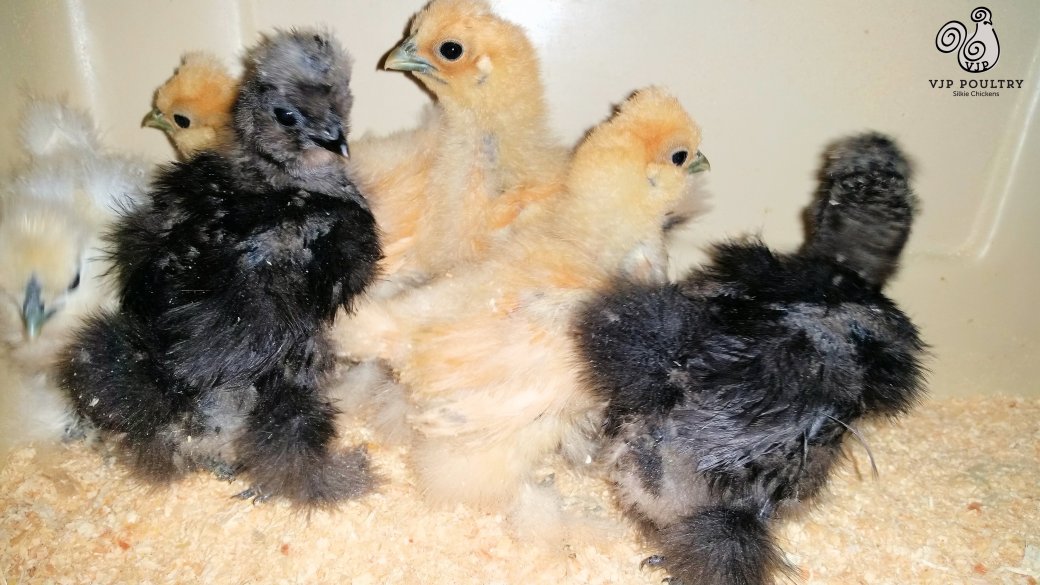 Silkies are sometimes described as a more high maintenance breed of chicken. Owners are known to give them baths and pedicures and to trim around their eyes when they are so fluffy that they can no longer see. Many live a pampered existence.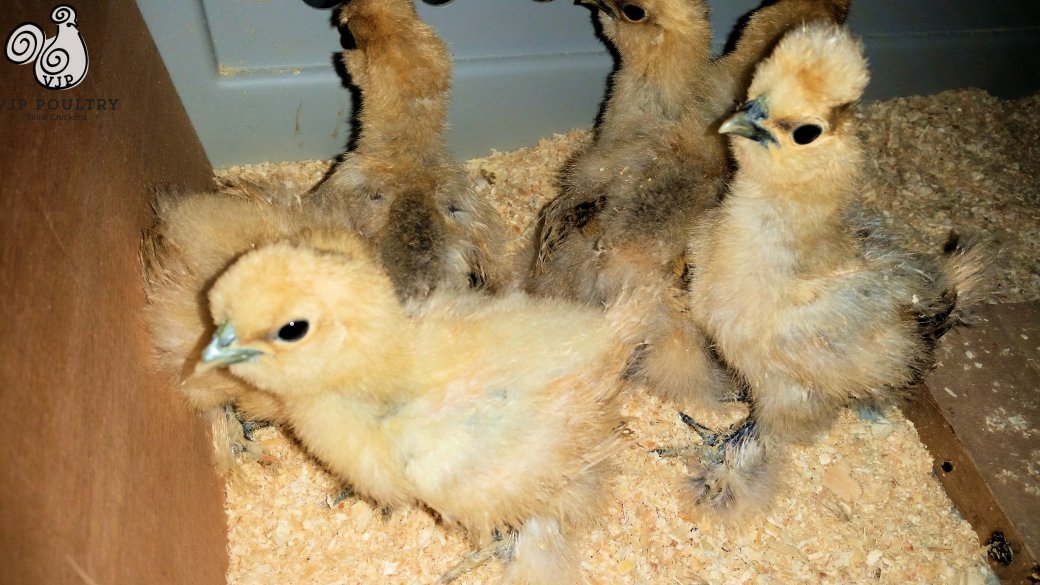
 VJP Poultry