Tag: sell
How to Deal with Below Zero Temps in the Chicken Coop
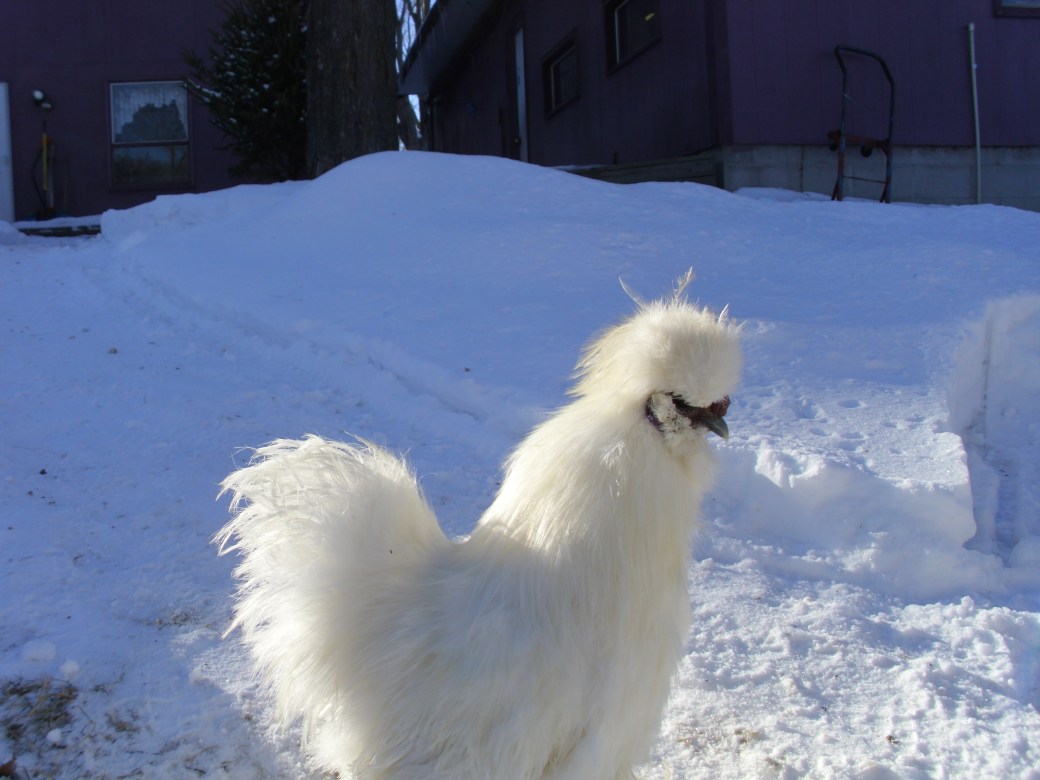 Often we think that we have winterized correctly for normal winter temperatures. But often in January the temperature can dip below zero which leaves us scrambling for additional tricks to get us through a couple of days of rough weather.
The first thing to do is observe you chickens. A chicken that is feeling stressed from the cold will look cold. It will be huddled up and not moving much. It may be standing on one leg trying to keep the other leg warm under its feathers. This may be the time to take action.
Chickens are designed to self regulate body heat. Their feathers hold in the warm air around their bodies. There is a lot of heat inside of a coop just from the number of living, breathing chickens in it. The more chickens you have, the warmer your coop will become.
Your coop probably has some insulation in it already. A coop should be designed for the kind of weather you live in. Insulation can be built in or added later. Coops built with a double layer wall will trap air between the layers or, you can us conventional insulation covered with plywood to keep the chickens from pecking at it.
Last minute insulation ideas are things that you can place either inside your coop or outside. Straw bales can be placed around the outside of the coop as well as inside the coop to block drafts. Straw is a warm bedding because it holds the warm air inside the shaft of the stem. Use it sprinkled on the floor of the coop or outside sprinkled on the run. It will keep their feet warmer than on just plain pea rock.
I use square pieces of reflective insulation to block the pop door at night after I shut the main door. This helps to block drafts at the floor level. Remove the square in the morning or leave it on extra cold days where you don’t want them to go outside. I also stuff old pillow cases with old t-shirts and put those in the pop hole area to cut off drafts.
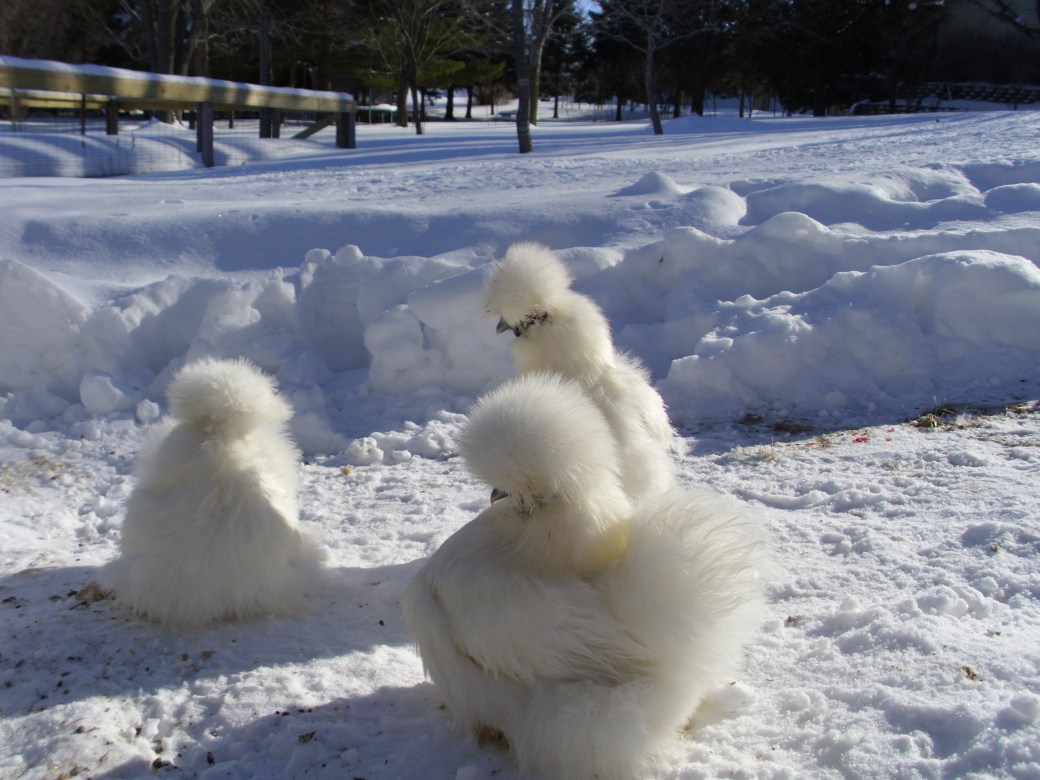
A coop should provide shelter from wind, wet weather and cold drafts along the floor. The north sides and west sides need extra protection. Wrap clear tarps around the fencing in your run to use as a wind break and to keep snow out of your run. Information on how to do this can be found here. Silkies do not like to walk on snow and won’t leave the coop until it is shoveled off of their run.
Ventilation is very important. Keep the wet out (snow/rain) but remember, water vapor needs to escape. Do not keep the coop air-tight. I leave my windows open all year long. When it is below zero, I will shut them halfway but I probably shouldn’t. Ventilation is air that moves freely in and out of the coop. Drafts are air currents that blow directly on the chickens both on the floor and on their roosts. You want to eliminate drafts but you want as much ventilation as you can. Trapped water vapor will make things damp in your coop. If you see frost on your walls and on your doors inside the coop, then you need to increase your ventilation.
Your birds will increase the amount of food that they eat in below zero temps. You need to keep their food bowls filled and keep the food inside the coop where they can find it easily. Cracked corn is your friend in below zero temps. It will keep your bird warm. When it is really cold I give them cracked corn before going to bed so that their crop is full all night. I cook eggs every morning to feed back to the silkies. Warm, cooked oatmeal will warm up their insides and help them in low temperatures.
You will need to have a way to keep your water from freezing up. I use heated bases and put a galvanized metal 2 gallon waterer on top. Information on Heated Water Bases is here. Other people use a heated dog dish for their water. I worry about the silkies beards becoming wet with an open dish like that. I like to put vitamins and electrolytes in their water when it becomes cold to help perk them up.
I change my chicken’s bedding fairly often, but when the temp is below zero I begin to use the deep litter method. I keep adding more and more pine shaving bedding to their pen. I kick it around with my boot every morning so that it does not become compacted. You want it nice and fluffy. Do not try and clean or change bedding when it is below zero. Just keep adding more to the mix. You want it as dry as possible in the pen. Remove large chunks of poo when possible. You will need to gather eggs more often as well or they will freeze and crack.
If you see a bird that is clearly weak or sick you will need to separate it from the rest of the flock. You can crate it in a dog crate in your laundry room or garage. You will need to wait for warmer temperatures to introduce the bird back to the flock as they will have to be acclimated to outside life.
I use heat lamps as a last resort. I do not like to use them as they can be a fire hazard and are expensive to run. I will turn them on if the temperature is -10 degrees or colder. You need to factor wind chill in there as well especially if you have drafts you can’t block out. If you want to read more about heat lamps, look here. Some people like to use Sweeter Heaters instead of heat lamps because they can be safer and less expensive to use. They will not be as warm as a heat lamp will be. Other flat panel heaters include Cozy Products which is similar. Make sure you have a back up plan in case the power goes out. A portable generator is a good thing to have on hand. Birds will not be able to handle extreme changes in temperature and may it may prove deadly.
Frostbite can occur especially on feet, combs and wattles. Silkies have small combs and wattles so usually frostbite is not a problem in those spots. However, frostbite on feet can happen to silkies. If you have other breeds of birds you may want to use some Waxlene on their combs and wattles to protect them.
Remember that you need to dress appropriately in order to do your chicken chores in these cold temperatures. I wear Carhartt gear because it is very warm. Their products are made for people who have to work outdoors. Start with insulated bib overhauls. Add some Carhartt winter boots and your feet will stay very warm. A warm winter jacket and a hat that covers your face. Don’t forget warm gloves as my fingers are the first thing to get cold and warm socks for my toes that also get very cold.
Ultimately, it is your decision on what steps to take for your birds. There are some days where I don’t even open the pop doors to the run because I think that it is too cold. If you want more information on winterizing your coop check out Tips for winterizing your chicken run and How to Winterize a chicken coop built from a Kit.
For tips and tricks for raising outstanding silkies check out our Chicken Learning Center at VJPPoultry.com . VJP Poultry is an NPIP and state inspected hatchery located 30 miles north of St. Paul. We hatch out silkies all year long so we always have stock available. Like us on Facebook to get weekly updates on what we currently have for sale.
Victoria J. Peterson
Silkies For Sale – 5/12/17
Heat Lamp Use at VJP Poultry – 12/20/16
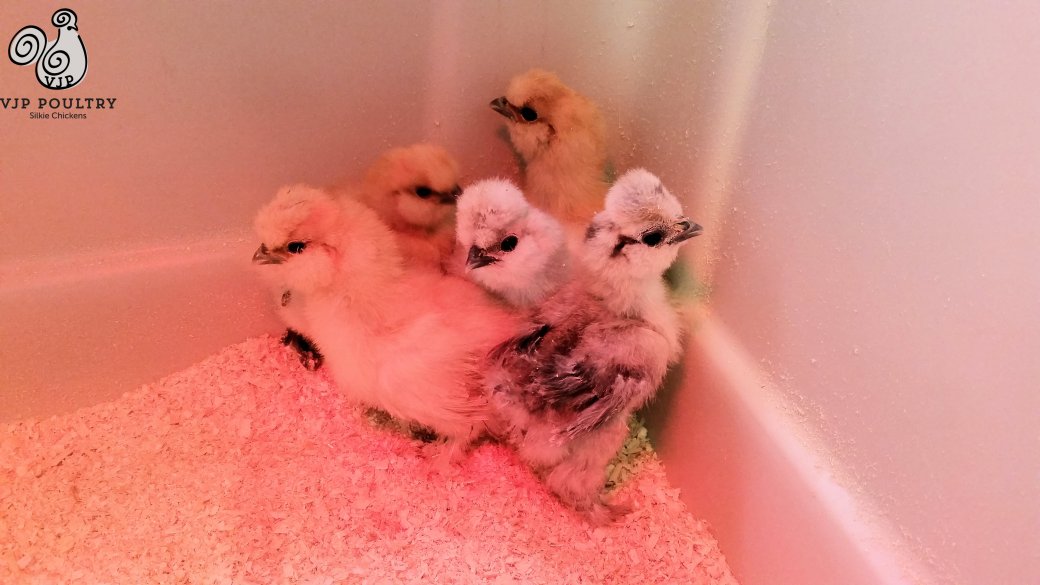 Now that the weather is getting colder, I have a lot of VJP Poultry customers asking me about using heat lamps in their coops. People are concerned that their silkies will not be able to stand the cold of a Minnesota winter.
My use of heat lamps has changed dramatically since I started raising silkies seven years ago. I used to worry that my silkies would die from exposure. I had 250 Watt heat lamp bulbs hanging in every color pen the entire winter. Some even had two hanging in them. My electric bill was crazy. I kept the windows open only a crack and tried to raise the temps as high as I could inside.
After seven years of experience , I now rarely turn on the heat lamps in my outside coops. The silkies are fine. They actually are very winter hardy. They have a small comb so you don’t need to deal with frostbite issues. They aren’t fond of snow but they do love to go out into their runs no matter what the temperature. What is cold for a human is not cold for them. Think about all of the woodland birds. They do just fine in the cold Minnesota winter.
I have one 250 Watt heat lamp above each waterer just in case it gets really cold. I did have them all on during the spell of -40 windchill. They shouldn’t be thought of as a way to heat an entire room. They only heat what is directly below them. If it gets to be around -10 I will flip the heat lamps on. My waterers are heated a different way (from below) so I don’t need the heat lamps unless it is super cold and the water is staying frozen.
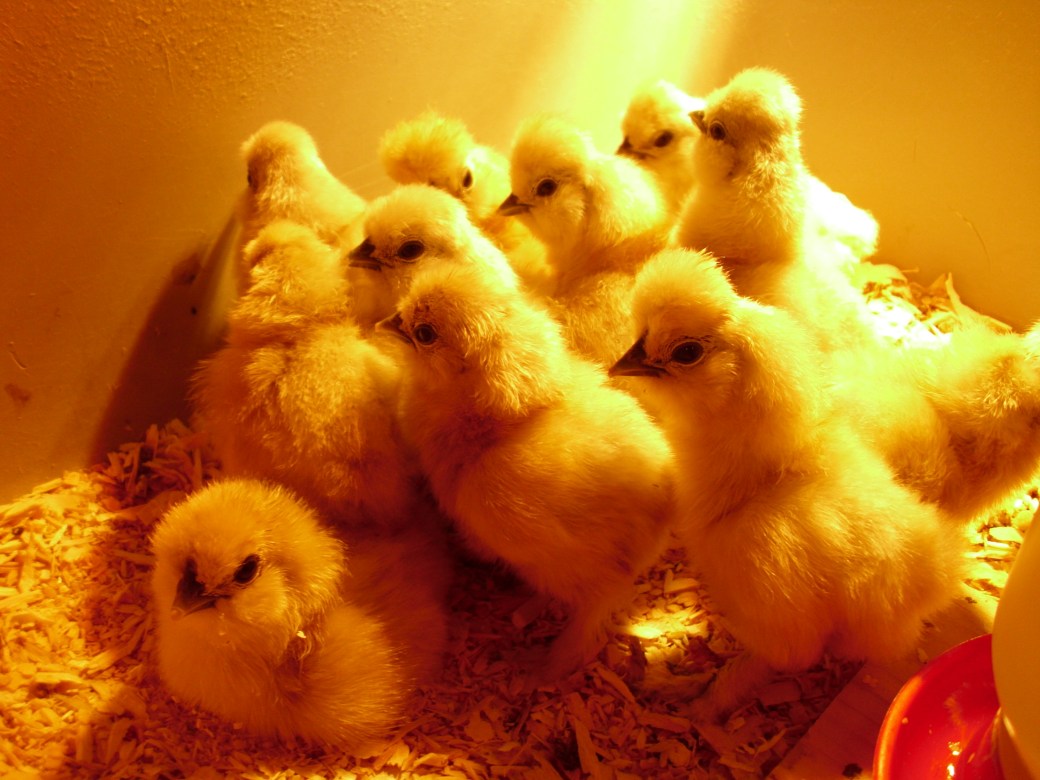
I do use heat lamps in my baby chick room. I like to use the lower 125 watt bulbs. They are not as hot and not as expensive to run. I will use a heat lamp over the newborns and the one week olds I don’t always use it over the two week old, but I could if I needed to. The chicks are in a small room off of my garage. The room is not heated with central air, so I also use a standing space heater to keep the entire room warm during January.
I am very aware that heat lamps must be hung securely. I use chains and wire so I can adjust the distance down to the brooder. I do not rely on the clamps that come with them. Heat lamps that are not secure and fall can easily start a fire. Make sure that the hoods are wiped clean of dust and that you also blow out the outlets with an air hose.
Heat lamp bulbs gradually become less strong the longer you have used them. You are still paying for the same amount of electricity from the 250 Watt bulb, but you are not receiving the same amount of heat the longer you continue to use it. When I feel that its not as strong anymore, I generally switch it out for a new bulb. I don’t want the surprise of it burning out when I really need it over newborn chicks. The 125 Watt bulbs are harder to find so we order ours online.
Remember, it is not the lack of heat that can cause issues with silkies in the winter. It is the moisture present in the coop. If you are seeing frost on your doors or walls, it is a sign that there is too much moisture and not enough ventilation. Open the windows, but keep the drafts off of the sleeping birds. I use pillow cases stuffed with old T-shirts and place them in front of the pop holes to block the drafts on the floor.
Electricity from heat lamps can be costly. One 250 Watt heat lamp costs about 90 cents a day to run. Add a space heater and that would be an additional $1.80 a day to run.
At VJP Poultry, we use heat lamps as sparingly as possible. They are necessary for young chicks in the first few weeks of life. Make sure they are hanging securely and change out the bulbs when they start losing their heat. They can be a useful part of your breeding program.
An alternative to heat lamps brooder heat plates. There is less of a chance of fire with these. You can also use the sweeter heaters that are hung from a chain above the chicks. This would be a more secure way of doing it.
For tips and tricks for raising outstanding silkies check out our Chicken Learning Center at VJPPoultry.com . VJP Poultry is an NPIP and state inspected hatchery located 30 miles north of St. Paul. We hatch out silkies all year long so we always have stock available. Like us on Facebook to get weekly updates on what we currently have for sale.
Victoria J. Peterson
 VJP Poultry