Tag: show quality bearded silkies for sale
My Experience With VJP Poultry from Cage-Free Mom
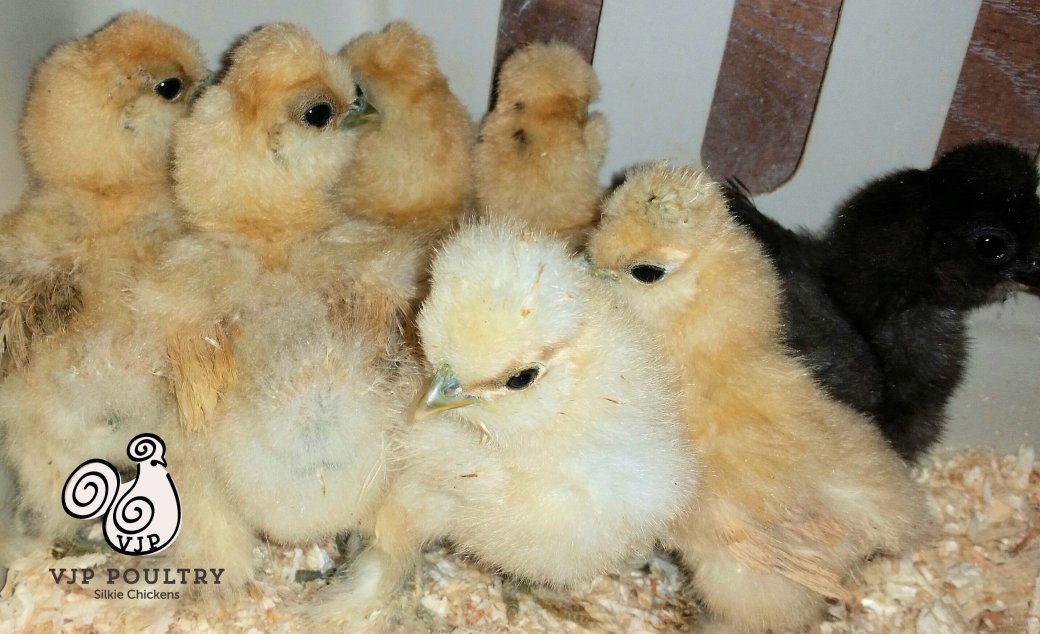 When we decided to get chickens, we knew we wanted them as pets and not for meat production. That led us down a rabbit hole of research and getting opinions from people we trusted. We decided that we were going to get some Silkie chickens. They are known for being friendly , beautiful, small and easy as well as having fairly good egg production (3 per week). Everything we wanted in our first batch of chickens.
A friend of mine referred us to VJP Poultry in Forest Lake, Minnesota. One of her friends had some show chickens from VJP that had done very well in the 4-H program. We were relieved to find someone near us that had quality chickens. They are NPIP tested and hold a State of Minnesota Hatchery Permit. We felt confident that we could get some great chicks from here.
At that point I still wanted to do some more research on how to care for our new chickens and how to sex them so we wouldn’t end up with all roosters! The internet gave me a bunch of mixed information (turns out it is nearly impossible to sex Silkie chicks) so I decided to reach out to VJP Poultry and see if they could give me any nuggets of information! The response time was very fast and they were very patient with all of my questions. I was relieved that they have a rooster return program. I was really nervous about this because in our area, we are not allowed to have roosters. If we do end up with any roosters we can return them to VJP and they will re-home them. Every question was answered and we were welcomed to come out and see their options.They do post weekly on their Facebook Page VJP Poultry Facebook which is very helpful. You can see what colors and ages are available as well as the pricing of them.
Not only do they have great customer service but they also run blog posts on their website. They have links to items you can purchase for your chicks/chickens , articles on ventilation and how to keep your Silkies safe and happy during the winter.
We set a date and went out to see the chicks. Victoria (owner) met us and gave us some time in the chick room. It was nice to have some time to check all the chicks out and discuss our options without feeling the pressure of picking right away. When she came in, she was able to guide us in the right direction. We really wanted a few splash chicks so she went upstairs and brought down some 4 day old babies. We fell in love and decided to take them.
Along with the chicks, she provided us with some bedding and a little sheet giving us tips on how to care for young chicks as well as a copy of their certification. We were very pleased with our experience and will be returning for all of our future Silkie purchases! I highly recommend them and if you are anywhere in MN or surrounding states, go check them out as they do not ship. Tell them Ashley with Cage-Free Mom sent you!
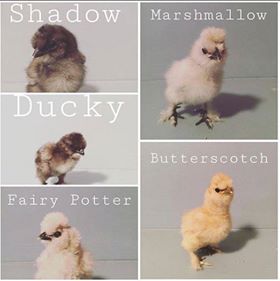
Stay tuned for pictures of our new chicks! (Shadow, Ducky, Butterscotch, Marshmallow & Fairy Potter)
You can find more blogs from Cage-Free Mom here. Text and lower picture by Ashley Molin – The Cage-Free Mom
For tips and tricks for raising outstanding silkies check out our Chicken Learning Center at VJPPoultry.com . VJP Poultry is an NPIP and state inspected hatchery located 30 miles north of St. Paul. We hatch out silkies all year long so we always have stock available. Like us on Facebook to get weekly updates on what we currently have for sale.
Victoria J. Peterson
Cage Training For The Silkie Show
Fall poultry shows are coming up and hopefully, if you are planning on showing, you have selected your birds that you are bringing and are in the process of conditioning them.
Conditioning means that you have separated your selections from the rest of your flock and have made sure that the boys and the girls are not in the same pen. Separate areas are important as rowdy boys can break or tear feathering on the females.
You should also be feeding them a diet that is high in protein to keep those feathers in tip top shape. Showbird food or Feather Fixer are good choices. I also add vitamins to the water or Roster Booster to improve the over all health and beauty of the bird.
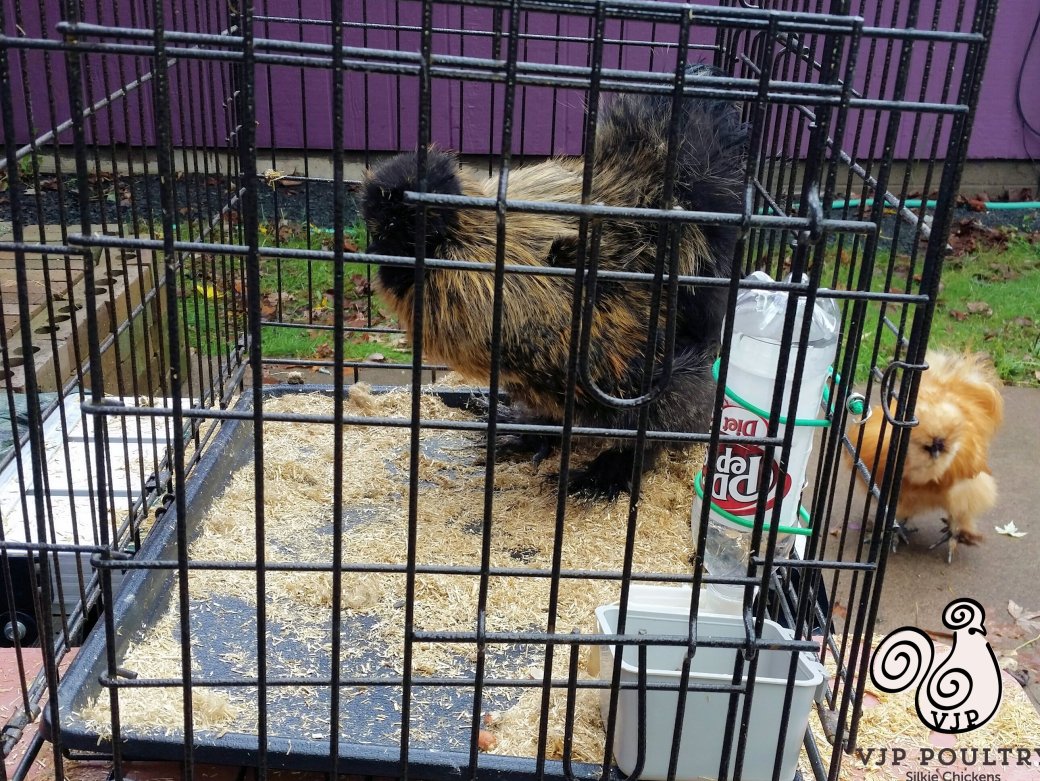
About a month before the show you will want to start training your birds to be comfortable in a small wire cage. These are the type of cages you will find at a poultry show. They are about 24 X 24 in size. Place the cage on saw horses so that they are about table high.
This enclosed cage will be very different from what your silkie is used to out in the coop. I would start with short time spans and then gradually increase how much time the bird spends in there.
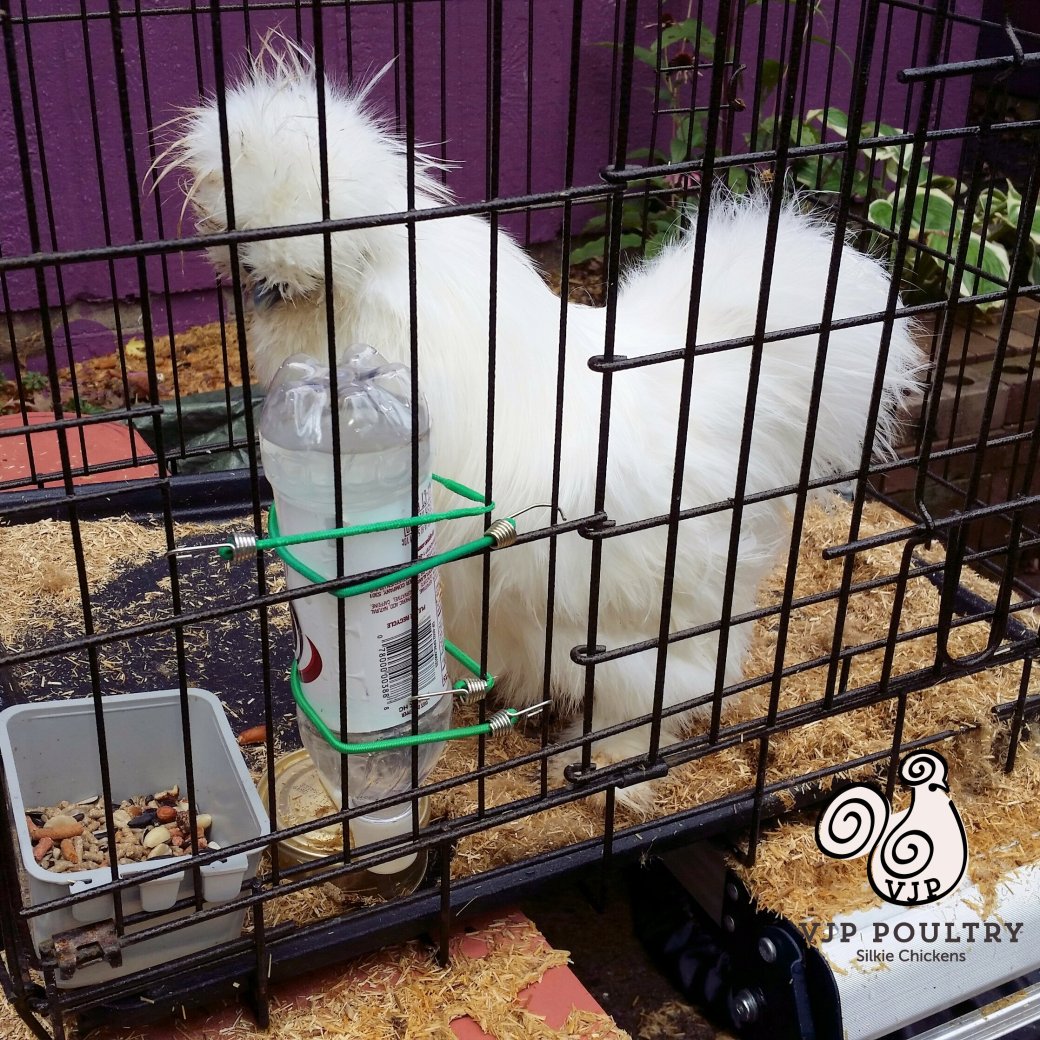
You will need to teach your bird how to eat and drink inside of the cage. A good waterer for silkies is the pop bottle waterer. You buy the bottom where the birds drink from and then place a plastic pop bottle with water in it on top. They provide a spring to secure it on the side of the cage but I use small bungee cords and place something underneath the bottom to support it. I use an empty cat food can. I like these because they are small and don’t take up much space in the cage and because the silkie is less likely to dunk their heads and get wet and messy. You will want the judges to see a clean, dry bird. It is a good idea to remove the waterer before judging starts to keep your bird looking perfect.
The food container hangs on the side. I like to put food they really like in there while you are training them. Treats such as mealworms, sunflower seeds and berries, or cracked corn will teach your bird how to eat from the little container. They will begin to associate treats with time spent in the cage.
Learning to eat and drink from these different containers is very important. Silkies who have not had their feathers trimmed around their eyes will have a hard time finding the food and water in the cage. Use pink hair tape or blue painters tape to pin up the feathers in the crest which will allow the birds to see.
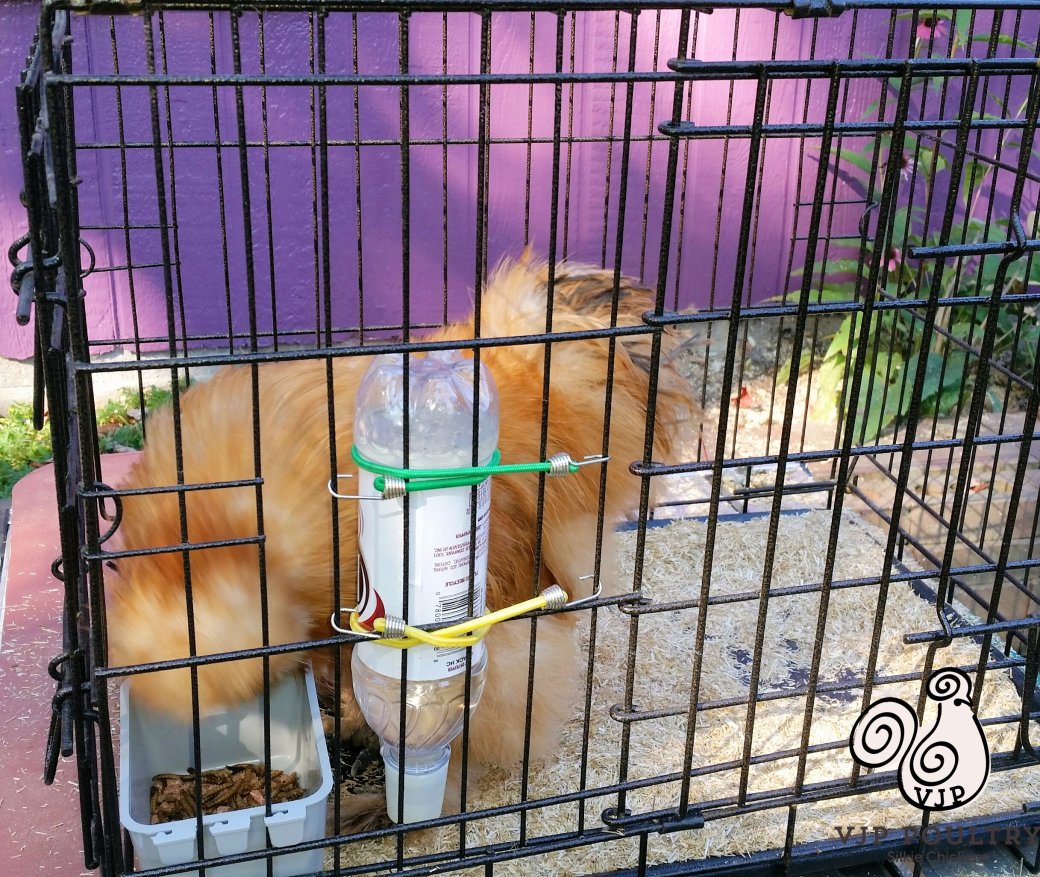
Place the feeders and waterers in the front of the cage. This will get them used to being on that side of the cage where the judge will be. A judge does not want to see a bird cowering in the back. They should be up front where they are easy to see and judge.
The judge will have a little baton that he uses to get the bird to pose properly. You should practice with a dowel or stick so that your silkie is used to seeing it in the cage and feeling it against its body.
Shows are very noisy places. You may want to place a radio by your cage so that the bird gets used to loud noises while they are in the cage. I have the radio tuned to the Oldies station that has lots of commercials.
Practice taking your bird in and out of the cage. The judge will be taking the bird out head first and placing it in the cage head first. You should practice the same way. Hold the bird with one hand under the keel one hand on top of the wings. Birds will struggle if they are not used to being handled. Judges would rather not work with struggling birds. Spread the wings out and check all over the bird the same way a judge would.
Give the bird a treat while handling them so that they associate people holding them with treats. Treats include Chicken Crack, Happy Hen Treats, Grublies, and Mana Pro Garden Delights. Roosters will especially need practice in handling. Sit with them on your lap when you are watching tv and cuddle up with them. You will enjoy it and so will they.
For tips and tricks for raising outstanding silkies check out our Chicken Learning Center at VJPPoultry.com . VJP Poultry is an NPIP and state inspected hatchery located 30 miles north of St. Paul. We hatch out silkies all year long so we always have stock available. Like us on Facebook to get weekly updates on what we currently have for sale.
Victoria J. Peterson
Silkies For Sale – 10/2/17
Vitamins, Silkies, and Wry Neck
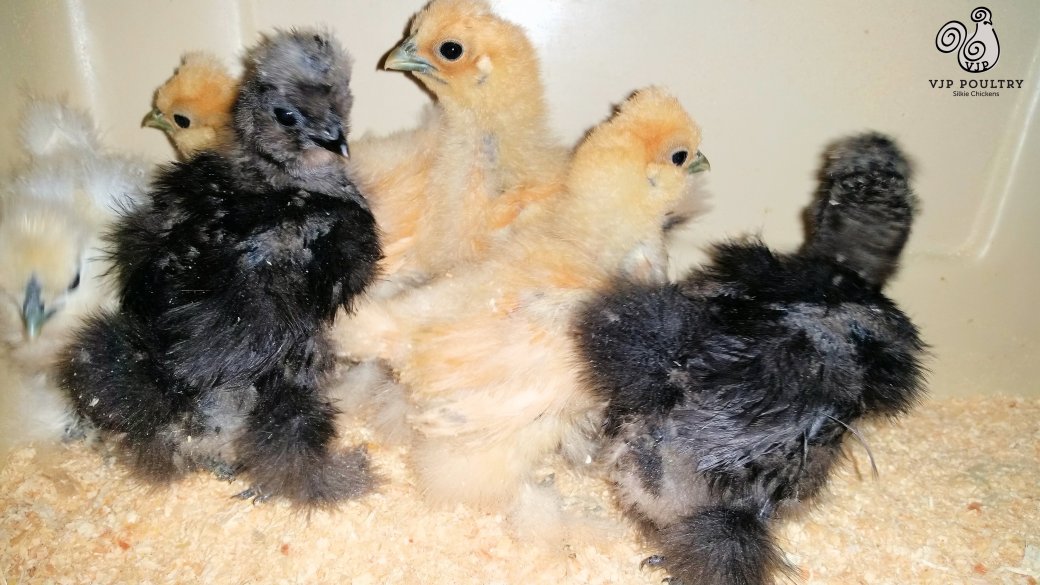 Silkies are sometimes described as a more high maintenance breed of chicken. Owners are known to give them baths and pedicures and to trim around their eyes when they are so fluffy that they can no longer see. Many live a pampered existence.
Silkies are often thought to need a higher protein chicken food than most other breeds. We feed all of our adult silkies a Gamebird Conditioner feed which is 20% protein. But, does the feed contain all of the vitamins needed for outstanding birds?
Most commercial feed companies will make sure that there is the proper amount of vitamins and minerals for the type and age of the bird. For example, layer feed will have the higher amount of calcium that the hen needs to create egg shells.
However, with any product, the age of the feed is critical to its nutritional content. Vitamins are sensitive to changes due to light, heat and moisture and can lose potency over time.
Some people try to create their own feed mixtures and this can leave the birds with incorrect amounts of certain vitamins and minerals. Corn and scratch are enjoyed by chickens but are empty calories.
Silkies need extra vitamins during times of stress, very cold weather, when they are breeding , when they are chicks and growers and when they are ill.
There are two kinds of vitamins. Fat soluble and water soluble. Water soluble vitamins are not affected by the fats in the chickens diet. These would be the B and C vitamins. If too much is ingested, it is excreted through the urine. Fat soluble vitamins are A, D, E and K. More care needs to be taken not to over supplement these particular vitamins.
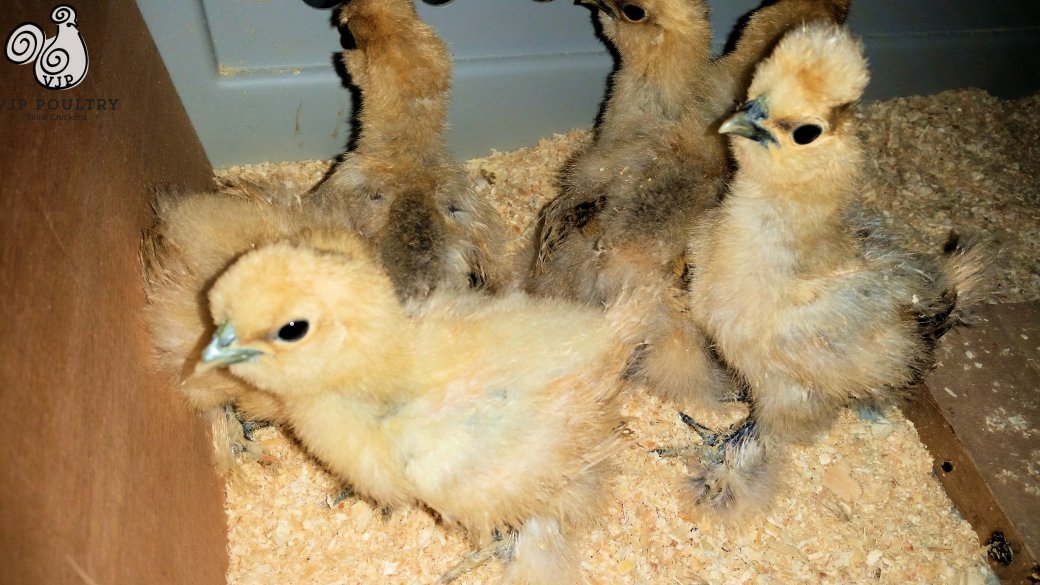
Cluck N Sea Kelp is a nice mixture of Kelp meal that can be added to the regular feed with many benefits. Poultry Power can be added to their food and is a good source of vitamin E. Life Lytes Mega tabs is another product that can be added to the water. It is a good souce for vitamins A, B12, D and E. Durvet Vitamins and Electrolytes is what I use to add to both my chick’s and adult’s water. Rooster Booster is a product I would use with adults for show conditioning or if I was having problems with roosters not performing. Nutri Drench can be used if you have a sick chick and need something fast acting.
Now a word about Wry Neck…. Wry Neck is evident when you see a bird tucking her head between her legs. It usually hits young chicks but can happen in older birds. This can be caused by a vitamin E deficiency . Vitamin E and vitamin B complex are both known to be good for neurological disorders.
Wry Neck is different from a peck on the head, which silkies are very susceptible to. Their vaulted look when chicks is caused by an opening in their skull like a baby’s soft spot. Pecks can lead to head injuries that look very similar to what you see with Wry Neck. Vitamin E and Selenium (helps animals absorb vitamin E) can be helpful with these injuries.
If you think that your silkie has wry neck or a head injury, the first thing to do is separate it from the rest of the flock. Stress will make it worse, so it needs a quiet environment. Take a vitamin E capsule and squirt it onto its feed or into its mouth. Take 25 micrograms of a selenium tablet (or break a 50 mcg tablet in half ) and crush that up and add it to the feed. Give this to the chick two or three times a day. You may have to hand feed it if it is not eating by itself. It may take as long as a month before the condition disappears. Keep giving it the vitamins for two additional weeks beyond where they appear to be recovered. Wry neck affects 8% of chicks across all breeds. It is not contagious.
Since silkies are more prone to head injuries, you may want to take care not to place them in a pen along with more aggressive chickens. Keep them away from bully birds and do not place them in crowded situations.
As a preventative and just for general good health, I place 1/16 tsp of vitamins and electrolytes per 2 quarts of water. This is at the feed supplementation level. More could be used if the bird was showing illness. I also add 1/2 tsp of apple cider vinegar to the 2 quarts of water. The chicks are given vitamins every day but the adults are given it every other day. With the adults I alternate with Red Cell ( one half capful per gallon of water ) and regular vitamins as well as days where they just get plain water. Use less vitamins on hot days as they will drink more water than usual.
For tips and tricks for raising outstanding silkies check out our Chicken Learning Center at VJPPoultry.com . VJP Poultry is an NPIP and state inspected hatchery located 30 miles north of St. Paul. We hatch out silkies all year long so we always have stock available. Like us on Facebook to get weekly updates on what we currently have for sale.
Victoria J. Peterson
 VJP Poultry