Tips For Winterizing Your Chicken Run

20171107_103708Now that it is colder outside, you may find that your chickens are spending more of their time inside the coop. If you do not have a chicken run that is set up for colder temperatures, they may be choosing to snuggle up where it is warmer. The problem with that is that chickens need fresh air and exercise. They will be hardier and healthier if they spend part of their day outside in the run.

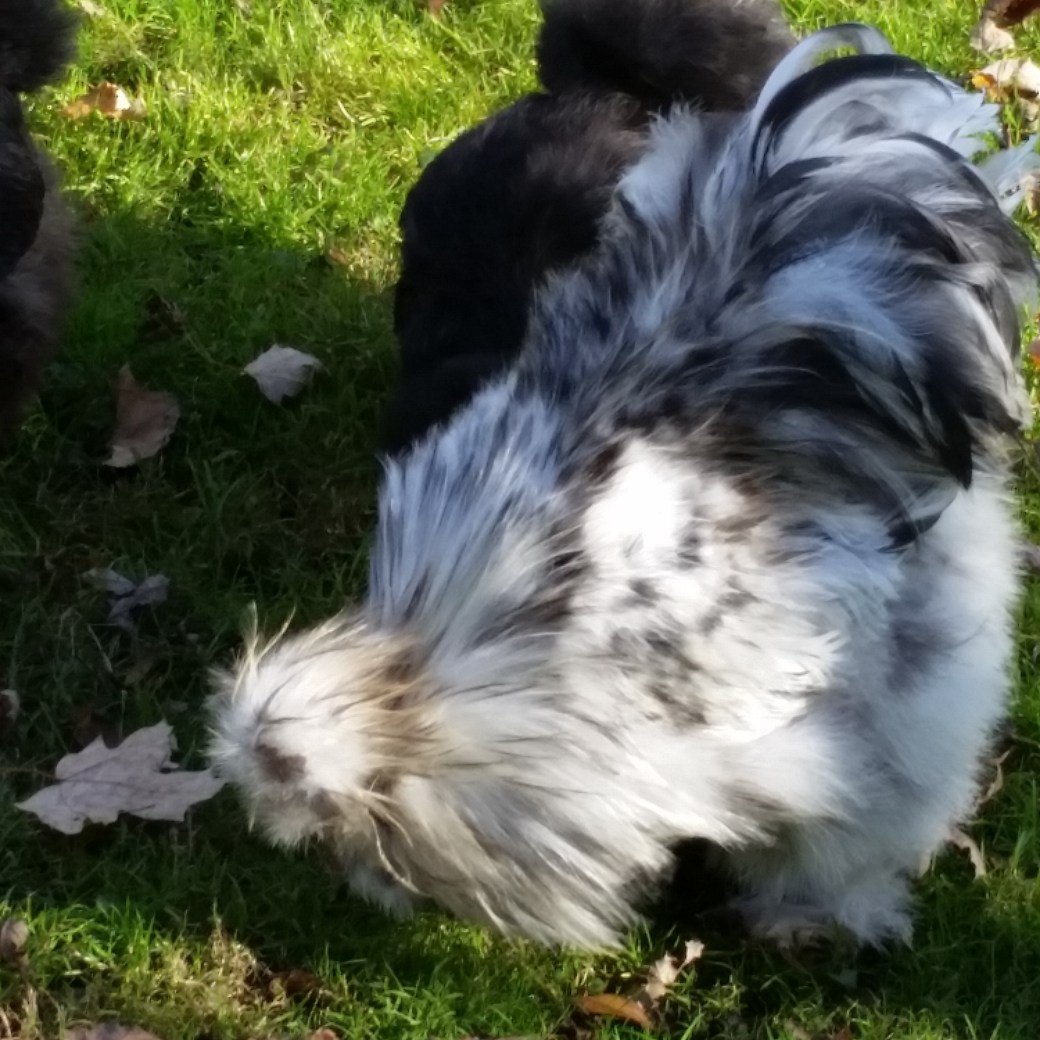
Here in Minnesota it can get quite cold in the winter. Always start with a hardy breed of chicken. It should be one that has small combs and wattles. Silkies are ideal for cold areas. Not only do they have small walnut combs and almost nonexistent wattles, they also have feathering on their feet to help keep their legs warmer.

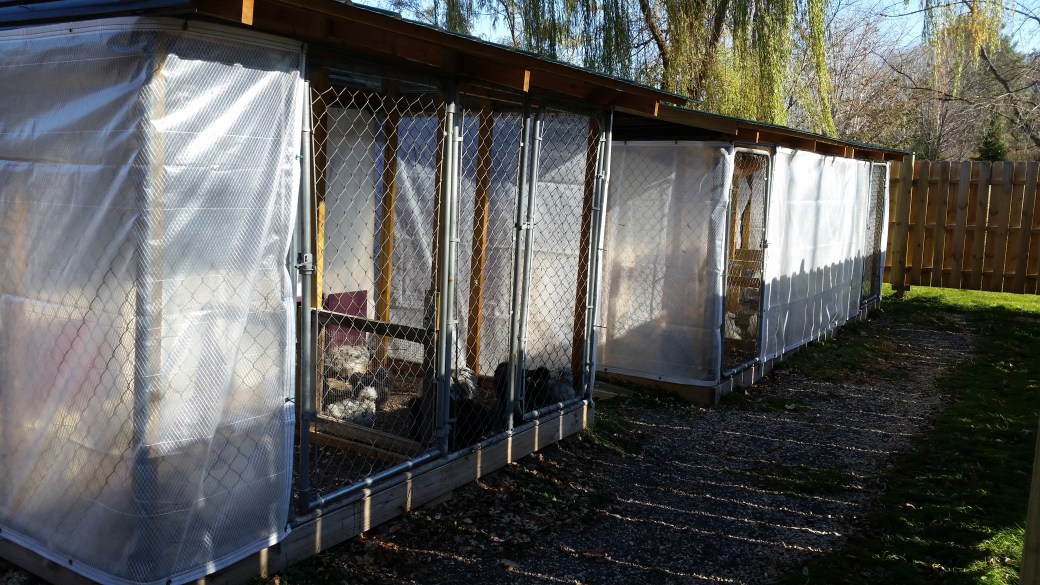
Silkies are tolerant of the cold but they must be protected from wet and wind. Enclosing your run with plastic wrap or a tarp can help to block wind and prevent snow and rain from entering the run. Most chickens do not like walking in snow. The plastic will keep the snow from entering the run. Then you will not need to spend time shoveling out the run every time it snows.

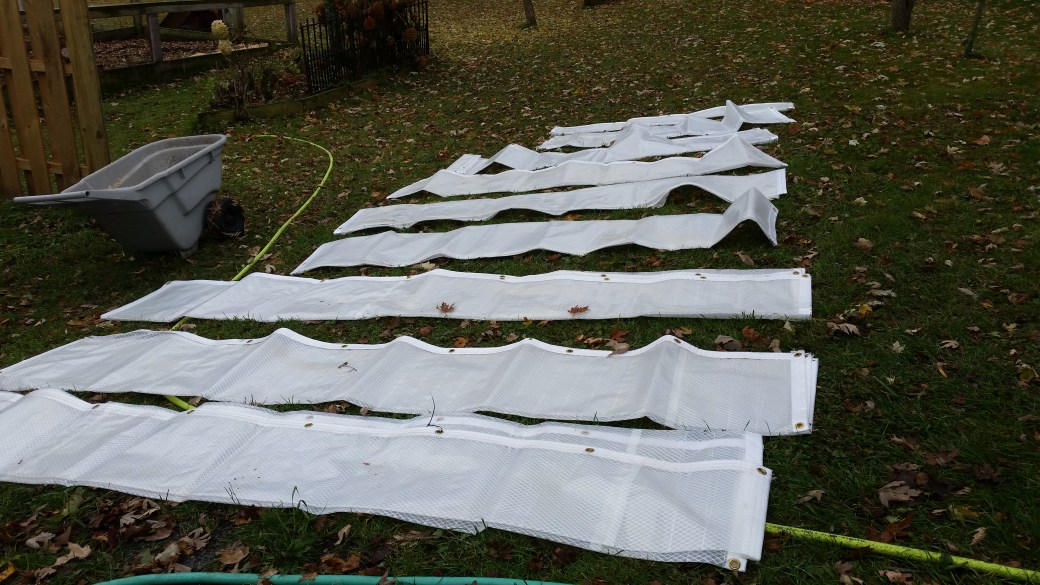
We are trying a new kind of plastic this year Instead of using plastic that comes on a roll, we ordered clear tarps  that have built in grommet holes.  The tarp also has lines running through it to keep the tarp stronger and to keep it from ripping in the wind.

We placed eye hooks in the wood along the bottom of the run.  The grommet holes fit into the hooks and secure the tarp.  We then use ball bungee cords at the top to fasten the tarp down. Hopefully this clear tarp can be easily taken down and put up for many years to come. We also use zip ties where needed to keep the tarps secure.

You do not need to cover the entire run.  The North and West sides are the most important to cover as this will provide the best wind and snow block. You need some holes for ventilation. I leave the doors uncovered so that air can move in and out.

A spacious run gives chickens personal space and exercise opportunities.  Boredom can be a problem in the wintertime.  This can lead to behavior problems such as feather picking and egg eating.

You can use plywood, tarps or even bales of hay or straw to block the wind, but clear plastic is best.  This lets the sun shine through and keeps the run bright.  It will warm the inside of it just like a greenhouse would.  In the Spring, just take it down, fold it up and store it out of the way until next year.

You could provide an outside shelter in your run such as a small dog house. Use straw inside of it to keep your chickens warm. Straw hold more warmth because it traps warm air in its shaft.  Use some of that straw to create paths for chickens to walk on.  Laying down straw is often easier than trying to shovel the snow out of the run.  The straw will make it warmer on their feet.
20171110_100537-1

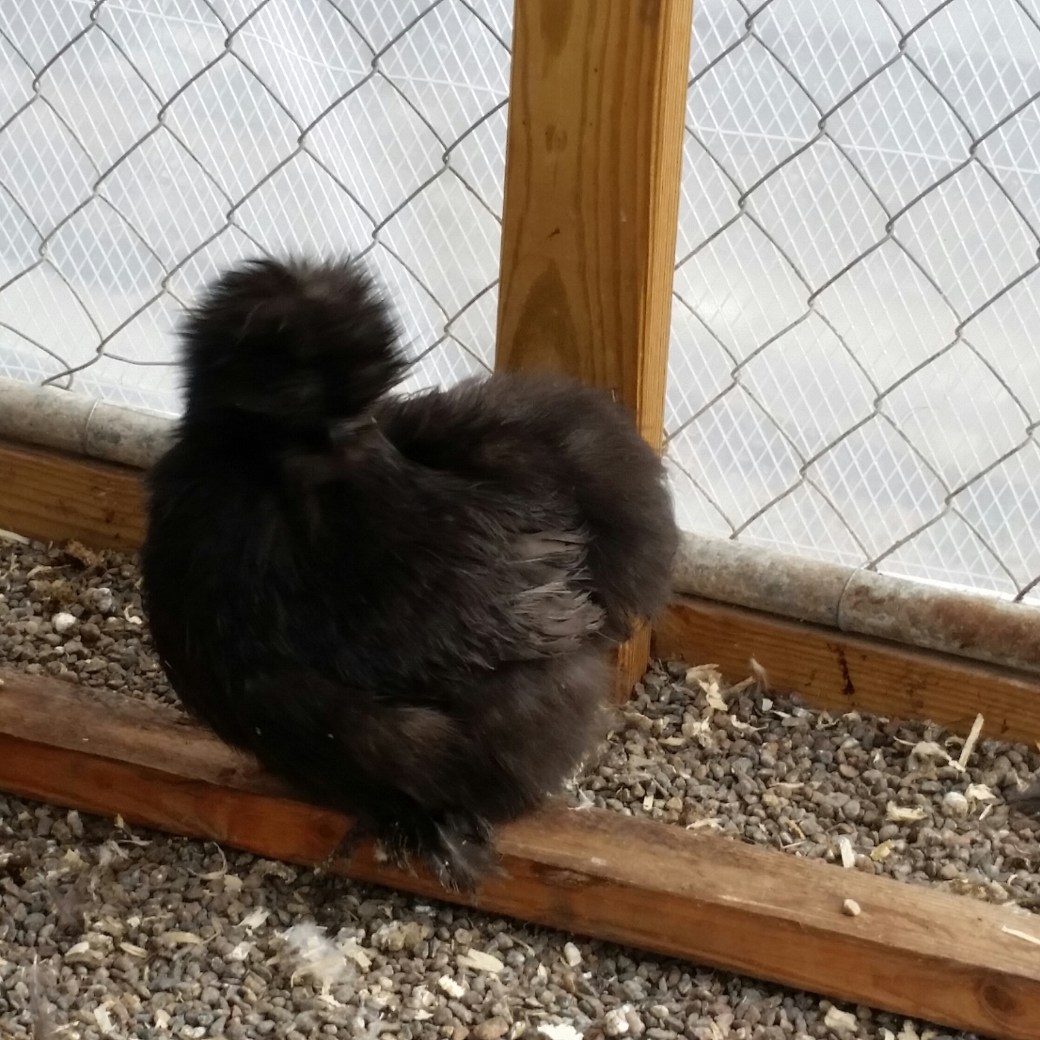
I like to provide something for them to perch on inside the run. We have pea rock in our run which can become cold on their feet in the winter. Silkies do not need very high perches. We just lay a few 2 X 4 boards down for them. They love to perch on these boards when it is cold.  You could also use logs or stumps for them to stand on.

Set up a dust bathing area for them in the wintertime. Since most of their regular dusting areas are now under snow, you could make a new spot by purchasing some dust bathing materials and putting them in a kitty litter box.

Provide energy treats for your birds that they can only get if they venture outside in the run. These could be BOSS sunflower seeds or cracked corn.  The more time that they spend outside, the less messy the inside of your coop will be.

It is important to remember that birds are not mammals.  They can tolerate much colder temperatures than humans.  You just need to keep them dry and out of drafts or wind. Do not overheat your chickens based on how you feel.  I keep the windows and doors to the coops open all winter long. If your coop is one temperature and your run another, this can lead to sickness as birds go back and forth from hot to cold temperatures.

For tips and tricks for raising outstanding silkies check out our Chicken Learning Center at VJPPoultry.com .  VJP Poultry is an NPIP and state inspected hatchery located 30 miles north of St. Paul.  We hatch out silkies all year long so we always have stock available.  Like us on Facebook to get weekly updates on what we currently have for sale.

Victoria J. Peterson
20171102_114954

The Grooming Process – Primping your Silkie for the Show

20171018_103551-1    It’s a week until the poultry show and it’s time to think about primping, prepping and grooming your birds so that they all look their best.   All of them will need to be bathed, toenails trimmed and beaks clipped and filed.

I find that I can bath around three birds a day successfully.  On the Monday before the show I will trim toenails and beaks. I always do those two jobs before I start baths.  If there is any bleeding the blood will not get into your bath water.

I use a diagonal wire cutter on the toenails.  Do not trim too short or you will cut the quick and your bird will begin to bleed.  Use an emery board to file down the sharp edges.  There should be no sharp points which can scratch and hurt a judge.  Remove any dirt or poo from the foot prior to the up coming bath.  Hydrogen Peroxide and a cotton ball is good for loosening up all of that dirt especially in the scaly part of the leg. Hydrogen Peroxide is good for about one month after opening the lid. Exposure to air will lesson its abilities.

You will need to clip your bird’s beak if the top beak creates an overbite to the bottom beak.  A toenail clipper works best for this job.  The beak should come together with no overhang.  File it with an emery board to sand away any rough edges.

I will start bathing the silkies on Tuesday starting with with the darkest birds The lighter ones will be done later in the week.  I only do three a day because it takes a while to do a thorough job.  I also want to make sure that they are dry enough to be placed back outside.  Always bath your silkies in the morning so that  they will be thoroughly dry by the time they go to sleep at night.  It is very important that they do not go to bed damp.

Before starting the bath, I take the hydrogen peroxide and pour it into a small dish. I then take cotton balls and carefully clean around the eyes, beak and crest.  Its like a good face washing. The hydrogen peroxide will help to break down the organic dirt and poo that sticks to the feathers. I also use an old tooth brush to clean the scales and toes with the peroxide.  You could put some Spray ‘n Wash on the foot feathers if the are very stained.

I bathe my birds in the laundry room sink.  It has a spray attachment which I really find handy.  I start by gathering all of my supplies.  You don’t want to be hunting for things when the bird is already wet and starting to get chilled.  I will even have the hair dryer and combs all set and ready to go.

I first fill two large buckets with warm water. I fill them about waist high to the bird.  Into one bucket I put about 1/2 cup white vinegar.  The other is just plain water for the final rinse but you could add glycerin to it.

I put the bird in the sink and begin soaking the feathers in warm water. If you think that your bird might have mites, I would start with a flea and tick shampoo.  I use blue Dawn or Ivory for the first wash.  The Dawn dish foam pump is nice because it is easy to use while holding a bird in one hand.

20171018_101721-1   I start with the crest and then work my way down.  Dirty areas include the crest, beard, vent and foot feathers.  I use the sprayer to carefully rinse the Dawn soap out.  To remove the soap from the crest, I tip the bird upside down and then rinse with the sprayer.  This way the soap does not drip into its eyes.

White birds can become dingy in color turning a grey or yellow.  This can happen from being out in the sunlight too often or being fed corn which discolors white feathers.  Adding bluing to your dingy whites will make your whites appear whiter.  The effect is not permanent and bluing will wear off.

The second shampoo is either a bluing shampoo if it is a white bird or a color enhancing shampoo if it is a dark colored bird.  Horse shampoos offer a variety of colors.  I use the Gallop brand but you could also use a human bluing shampoo or just add laundry bluing to the water.  Be careful with the bluing shampoo that the bird is soaking wet before applying or you may end up with a dyed blue or purple chicken.

Rinse as much soap off as you can with the sprayer and then place the bird in the bucket with the vinegar rinse.  The vinegar will cut the soap so that it does not stick to the feathers.

Place the bird in the final rinse water.  Always hang on tightly to your bird.  Do not let its beak go under the water line.  You can add some glycerin to the final rinse for extra shine.  Remove the bird and squeeze as much water out as possible.  Then wrap it tightly in a towel to absorb water and help it stay warm.  It should look like a silkie mummy.

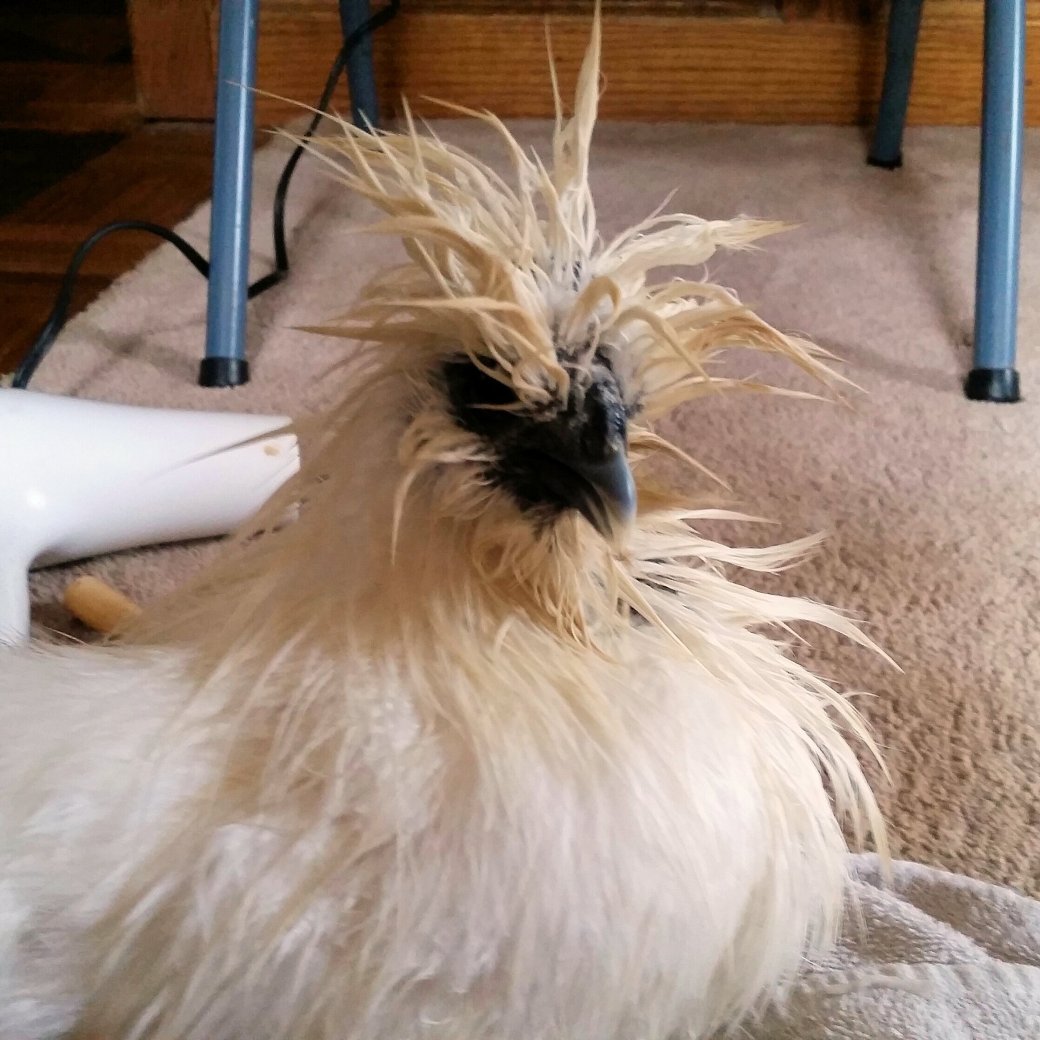
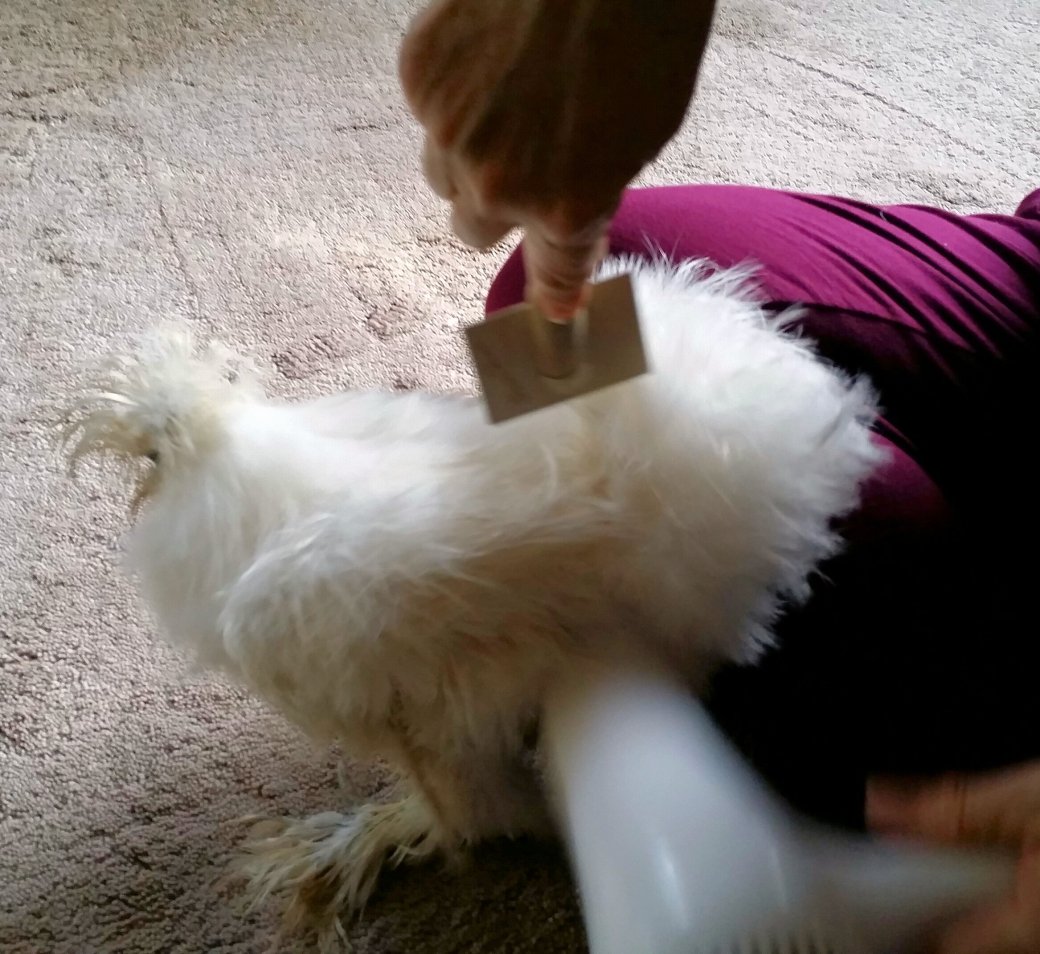
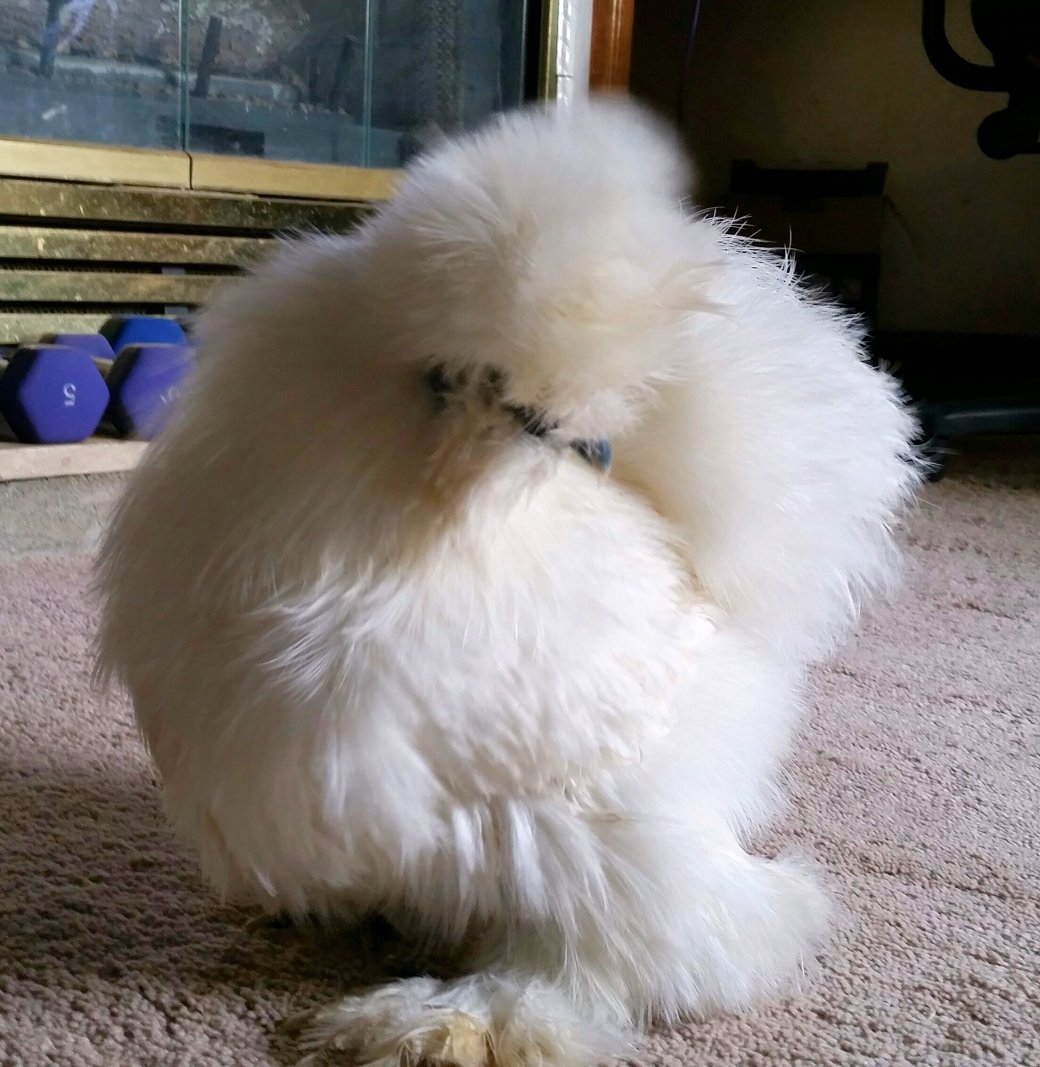
I leave the bird tucked up in the towel but begin to use the hair dryer on the crest.  Use the low setting on the hair dryer so as not to burn the skin of the silkie.  I gradually undo more of the towel as I do drying the bird and fluffing the feathers with my fingers.  You can also use a comb or slicker brush.  It will take a while to get it dry enough that she can finish the job herself.  If it is cold out have her stay somewhere warm like a  bathtub until she is dry enough.  She will finish preening and applying oil from her oil gland.  Baths should be at least one full day before leaving for the show to get the natural oils back on the feathers.  Add some Vet Rx to shine up the toes and comb.

Place your bird in a separate small holding coop that has fresh shavings or back in her old coop which would also have new shavings put down.  Keep her locked up and out of the muddy run.  Remove any poo you see so that she is not stepping in it.

Some people put booties on their feathered feet to keep their foot feathers from staining.

Hopefully your bird will stay clean until it is time to pack up and head for the poultry show.

For tips and tricks for raising outstanding silkies check out our Chicken Learning Center at VJPPoultry.com .  VJP Poultry is an NPIP and state inspected hatchery located 30 miles north of St. Paul.  We hatch out silkies all year long so we always have stock available.  Like us on Facebook to get weekly updates on what we currently have for sale.

Victoria J. Peterson
 

20171018_102406(0)-1

Silkies For Sale – 10/16/17

Worming Your Silkies in the Fall and Spring

20161105_120836    You may not believe it but a normal silkie is probably harboring some worms in their body at all times.  A healthy chicken can tolerate a small amount of worms in their system, but it is when a bird is sick or stressed that this can become a problem.  If the bird’s immune system is down this can lead to an over population of worms.
Chickens should be wormed regularly to prevent this buildup of worms in the digestive system and elsewhere in their bodies.  If you keep your birds in an enclosed run or in a fixed grazing area this can lead to an increased number of worms.  The poo from the chicken will contain worms and worm eggs will then be on the ground as well.

Infected silkies can shed thousands of eggs in the feces onto the ground.  Worm eggs are so tiny that you will not be able to see them.

Symptoms to look for if you think that your bird has worms would be : worms in the chicken’s egg, abnormal droppings, diarrhea, foamy looking poo, weight loss, pale comb and wattles, listlessness, dirty vent feathers, worms in droppings, gasping and head stretching, head shaking, reduced egg production and sudden death of the bird.

Worming can be hard on the chicken’s body and should not be done without some thought.  If you choose to worm, avoid worming during the winter in freezing temperatures.  Do not worm if your bird is molting or under six weeks of age.  Most people that worm do it in the spring and in the fall.

There are several different types of worms that may be found in poultry. Hairworms/threadworms are found in the crop, esophagus and intestine.  Round worms are common and found in the digestive tract. Tapeworms are found in the intestine.  Gapeworms can be found in the trachea and lungs.  Cecal worms live in the ceca where poo is made.  These different worms enter a chicken when the bird eats worm infected droppings or if it eats a slug or insect carrying worm eggs.

When choosing a wormer, be sure that the wormer you select is recommended for the type of worms you are treating. Not all de-worming medications are capable of treating all kinds of worms.

You may want to order an at-home Fecal Worm Test Kit which is available on-line.  This will let you know whether or not your chicken has any worms.

20161019_115954    Even if you suspect that one chicken has worms, you should treat the entire flock.  It is best to do it twice a year, in the fall and in the spring.  You will need to treat the birds twice. Once to get rid of the adult worms and the second time to get rid of the worms that have hatched from eggs since the first treatment.
Wazine ( piperazine) is used to worm round worms.  Check the directions on the bottle for treatment and egg withdrawal time.  That would be the amount of time you will not be able to eat eggs that are laid.  Wazine is added to the birds drinking water.

Safe-guard or Panacur  (Fenbendazile) treats threadworms,  roundworms, cecal worms and gapeworms.

Invermectin pour-on treats roundworms, threadworms, gapeworms as well as mites and lice.

These three done in a rotation (one in the spring, a different one in the fall, and the third one the following spring) will cover all worm infestations.

Durvet Strike III Type B medicatied feed is used as an aid in the control of infections caused by intestinal parasites (worms).  It has an antibiotic in it. It helps to heal but not to get rid of worms.

Diatomaceous Earth Food Grade is a more natural type of dewormer.  You mix it into your feed. 1/4 cup of DE to 35 oz of feed.

Pumpkin seeds in kernel form or pumpkin seeds in the shell help to make the environment inside the chicken less attractive for the parasite.  The seeds are more suited to preventing worms than removing them.

The best worm preventative is to keep your chickens healthy.  Give them proper food without too many treats.  Do not feed them on the ground but in bowls or feeders.  Clean and sanitize feeders and waters every week. Add vitamins to the water to improve their immune system.

Do not crowd birds.  Keep the coop clean and change the litter to beak the eggs cycle.  Rotate the runs and pasture.  Chicken tractors are a great way to move your chickens from one grazing site to another.  Keep the grass cut short.  Sunlight helps to kill the worm eggs.

In between wormings use Verm-X and Apple cider vinegar to help keep worm numbers down.

For tips and tricks for raising outstanding silkies check out our Chicken Learning Center at VJPPoultry.com .  VJP Poultry is an NPIP and state inspected hatchery located 30 miles north of St. Paul.  We hatch out silkies all year long so we always have stock available.  Like us on Facebook to get weekly updates on what we currently have for sale.

Victoria J. Peterson

20161018_132530


Silkies For Sale – 10/10/17