Tag: buff
Worming Your Silkies in the Fall and Spring
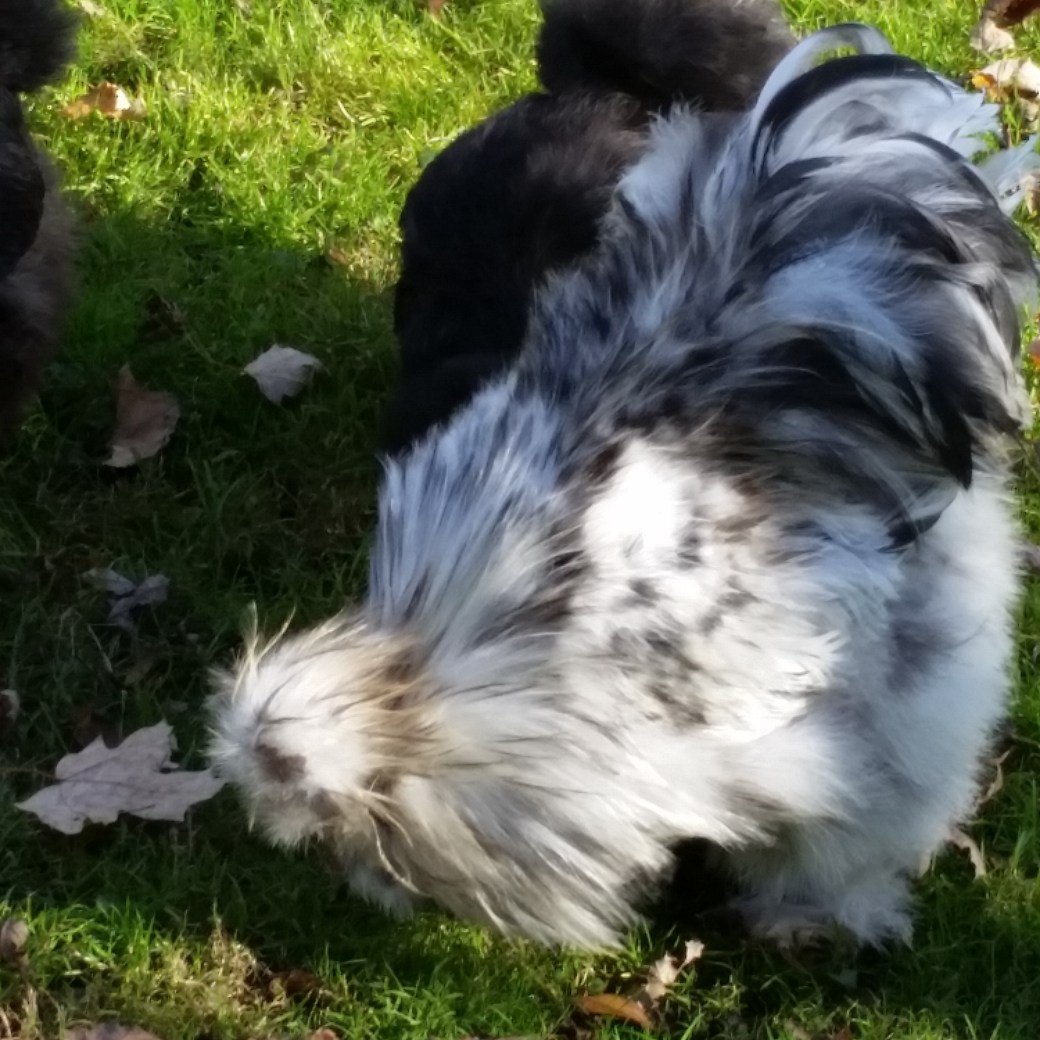 You may not believe it but a normal silkie is probably harboring some worms in their body at all times. A healthy chicken can tolerate a small amount of worms in their system, but it is when a bird is sick or stressed that this can become a problem. If the bird’s immune system is down this can lead to an over population of worms.
Chickens should be wormed regularly to prevent this buildup of worms in the digestive system and elsewhere in their bodies. If you keep your birds in an enclosed run or in a fixed grazing area this can lead to an increased number of worms. The poo from the chicken will contain worms and worm eggs will then be on the ground as well.
Infected silkies can shed thousands of eggs in the feces onto the ground. Worm eggs are so tiny that you will not be able to see them.
Symptoms to look for if you think that your bird has worms would be : worms in the chicken’s egg, abnormal droppings, diarrhea, foamy looking poo, weight loss, pale comb and wattles, listlessness, dirty vent feathers, worms in droppings, gasping and head stretching, head shaking, reduced egg production and sudden death of the bird.
Worming can be hard on the chicken’s body and should not be done without some thought. If you choose to worm, avoid worming during the winter in freezing temperatures. Do not worm if your bird is molting or under six weeks of age. Most people that worm do it in the spring and in the fall.
There are several different types of worms that may be found in poultry. Hairworms/threadworms are found in the crop, esophagus and intestine. Round worms are common and found in the digestive tract. Tapeworms are found in the intestine. Gapeworms can be found in the trachea and lungs. Cecal worms live in the ceca where poo is made. These different worms enter a chicken when the bird eats worm infected droppings or if it eats a slug or insect carrying worm eggs.
When choosing a wormer, be sure that the wormer you select is recommended for the type of worms you are treating. Not all de-worming medications are capable of treating all kinds of worms.
You may want to order an at-home Fecal Worm Test Kit which is available on-line. This will let you know whether or not your chicken has any worms.
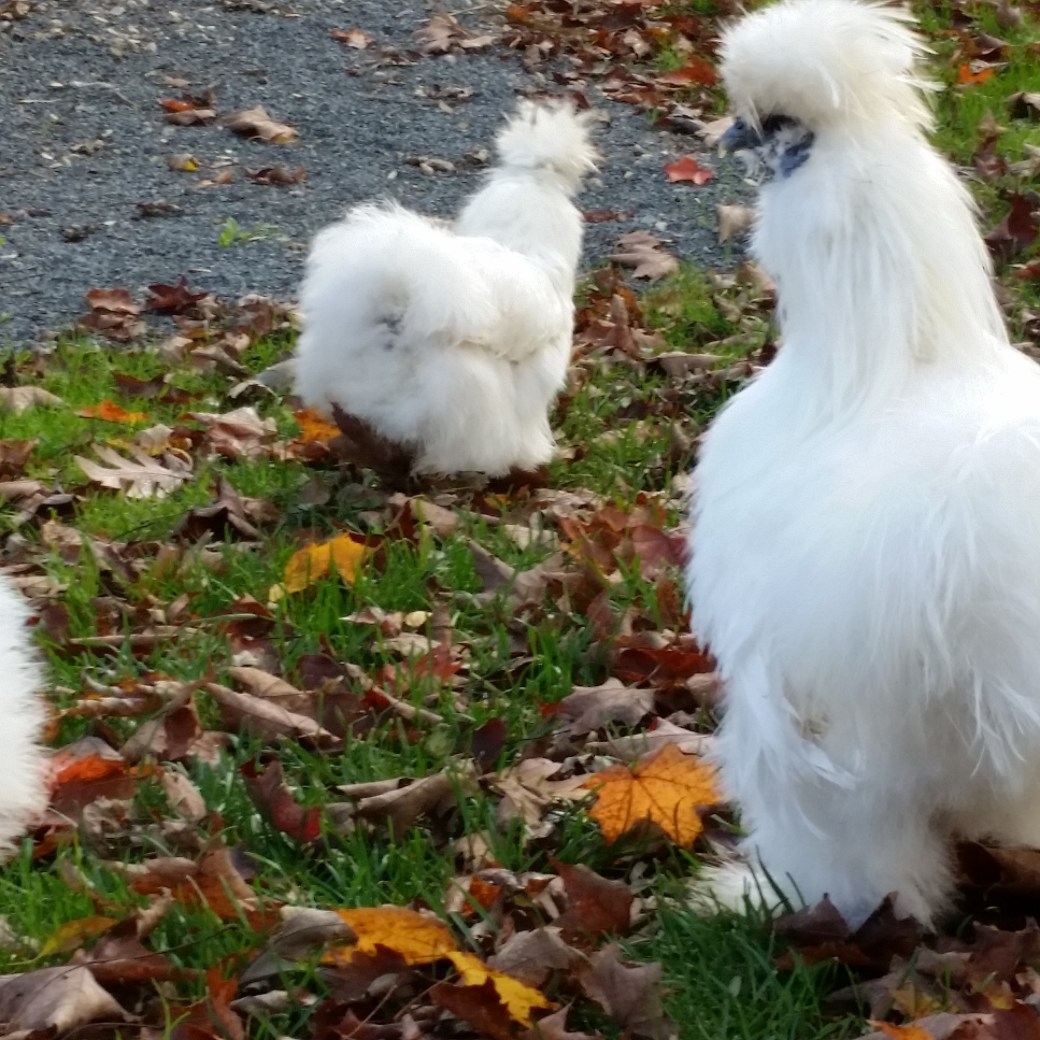 Even if you suspect that one chicken has worms, you should treat the entire flock. It is best to do it twice a year, in the fall and in the spring. You will need to treat the birds twice. Once to get rid of the adult worms and the second time to get rid of the worms that have hatched from eggs since the first treatment.
Wazine ( piperazine) is used to worm round worms. Check the directions on the bottle for treatment and egg withdrawal time. That would be the amount of time you will not be able to eat eggs that are laid. Wazine is added to the birds drinking water.
Safe-guard or Panacur (Fenbendazile) treats threadworms, roundworms, cecal worms and gapeworms.
Invermectin pour-on treats roundworms, threadworms, gapeworms as well as mites and lice.
These three done in a rotation (one in the spring, a different one in the fall, and the third one the following spring) will cover all worm infestations.
Durvet Strike III Type B medicatied feed is used as an aid in the control of infections caused by intestinal parasites (worms). It has an antibiotic in it. It helps to heal but not to get rid of worms.
Diatomaceous Earth Food Grade is a more natural type of dewormer. You mix it into your feed. 1/4 cup of DE to 35 oz of feed.
Pumpkin seeds in kernel form or pumpkin seeds in the shell help to make the environment inside the chicken less attractive for the parasite. The seeds are more suited to preventing worms than removing them.
The best worm preventative is to keep your chickens healthy. Give them proper food without too many treats. Do not feed them on the ground but in bowls or feeders. Clean and sanitize feeders and waters every week. Add vitamins to the water to improve their immune system.
Do not crowd birds. Keep the coop clean and change the litter to beak the eggs cycle. Rotate the runs and pasture. Chicken tractors are a great way to move your chickens from one grazing site to another. Keep the grass cut short. Sunlight helps to kill the worm eggs.
In between wormings use Verm-X and Apple cider vinegar to help keep worm numbers down.
For tips and tricks for raising outstanding silkies check out our Chicken Learning Center at VJPPoultry.com . VJP Poultry is an NPIP and state inspected hatchery located 30 miles north of St. Paul. We hatch out silkies all year long so we always have stock available. Like us on Facebook to get weekly updates on what we currently have for sale.
Victoria J. Peterson
Silkies for Sale – 1/22/17
Silkies For Sale – 12/27/2016
Heat Lamp Use at VJP Poultry – 12/20/16
 Now that the weather is getting colder, I have a lot of VJP Poultry customers asking me about using heat lamps in their coops. People are concerned that their silkies will not be able to stand the cold of a Minnesota winter.
My use of heat lamps has changed dramatically since I started raising silkies seven years ago. I used to worry that my silkies would die from exposure. I had 250 Watt heat lamp bulbs hanging in every color pen the entire winter. Some even had two hanging in them. My electric bill was crazy. I kept the windows open only a crack and tried to raise the temps as high as I could inside.
After seven years of experience , I now rarely turn on the heat lamps in my outside coops. The silkies are fine. They actually are very winter hardy. They have a small comb so you don’t need to deal with frostbite issues. They aren’t fond of snow but they do love to go out into their runs no matter what the temperature. What is cold for a human is not cold for them. Think about all of the woodland birds. They do just fine in the cold Minnesota winter.
I have one 250 Watt heat lamp above each waterer just in case it gets really cold. I did have them all on during the spell of -40 windchill. They shouldn’t be thought of as a way to heat an entire room. They only heat what is directly below them. If it gets to be around -10 I will flip the heat lamps on. My waterers are heated a different way (from below) so I don’t need the heat lamps unless it is super cold and the water is staying frozen.
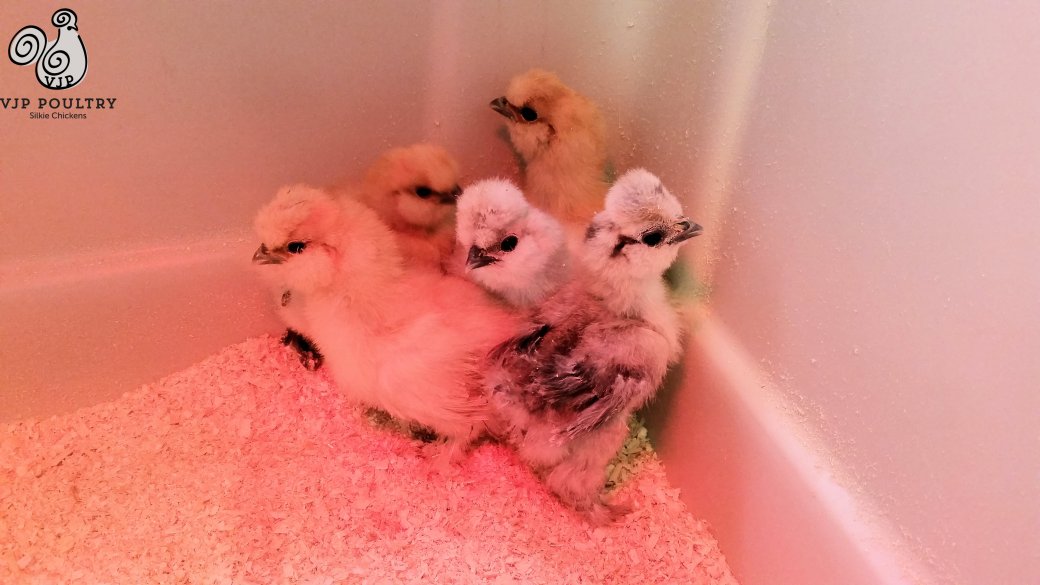
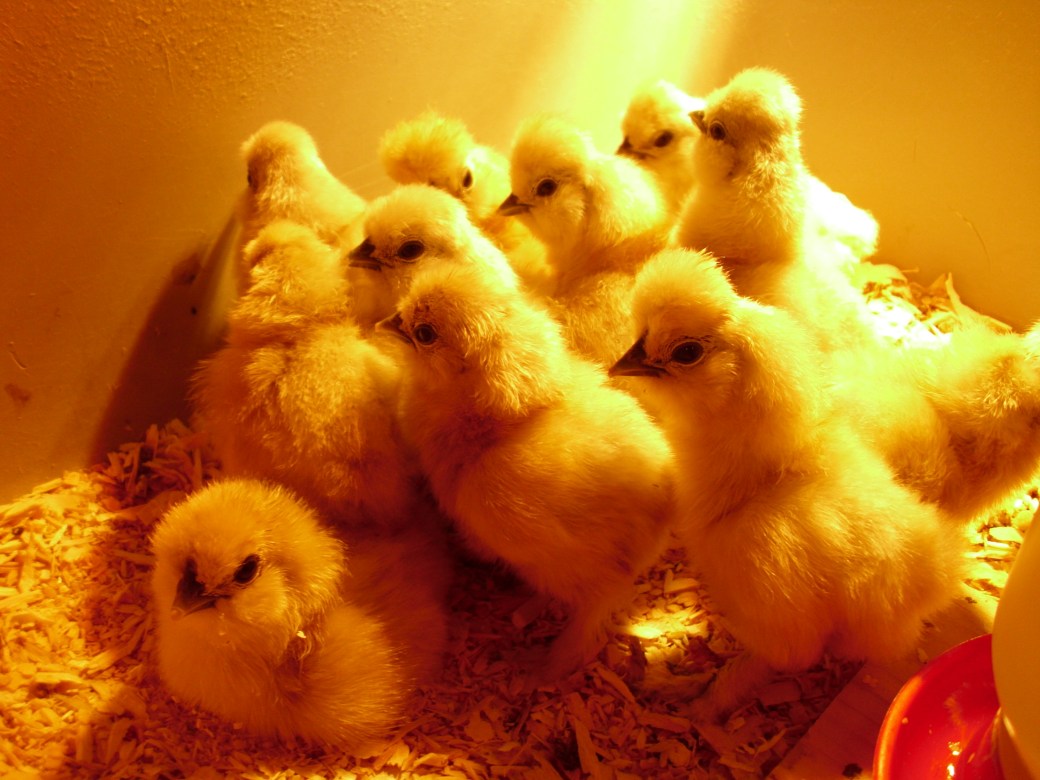
I do use heat lamps in my baby chick room. I like to use the lower 125 watt bulbs. They are not as hot and not as expensive to run. I will use a heat lamp over the newborns and the one week olds I don’t always use it over the two week old, but I could if I needed to. The chicks are in a small room off of my garage. The room is not heated with central air, so I also use a standing space heater to keep the entire room warm during January.
I am very aware that heat lamps must be hung securely. I use chains and wire so I can adjust the distance down to the brooder. I do not rely on the clamps that come with them. Heat lamps that are not secure and fall can easily start a fire. Make sure that the hoods are wiped clean of dust and that you also blow out the outlets with an air hose.
Heat lamp bulbs gradually become less strong the longer you have used them. You are still paying for the same amount of electricity from the 250 Watt bulb, but you are not receiving the same amount of heat the longer you continue to use it. When I feel that its not as strong anymore, I generally switch it out for a new bulb. I don’t want the surprise of it burning out when I really need it over newborn chicks. The 125 Watt bulbs are harder to find so we order ours online.
Remember, it is not the lack of heat that can cause issues with silkies in the winter. It is the moisture present in the coop. If you are seeing frost on your doors or walls, it is a sign that there is too much moisture and not enough ventilation. Open the windows, but keep the drafts off of the sleeping birds. I use pillow cases stuffed with old T-shirts and place them in front of the pop holes to block the drafts on the floor.
Electricity from heat lamps can be costly. One 250 Watt heat lamp costs about 90 cents a day to run. Add a space heater and that would be an additional $1.80 a day to run.
At VJP Poultry, we use heat lamps as sparingly as possible. They are necessary for young chicks in the first few weeks of life. Make sure they are hanging securely and change out the bulbs when they start losing their heat. They can be a useful part of your breeding program.
An alternative to heat lamps brooder heat plates. There is less of a chance of fire with these. You can also use the sweeter heaters that are hung from a chain above the chicks. This would be a more secure way of doing it.
For tips and tricks for raising outstanding silkies check out our Chicken Learning Center at VJPPoultry.com . VJP Poultry is an NPIP and state inspected hatchery located 30 miles north of St. Paul. We hatch out silkies all year long so we always have stock available. Like us on Facebook to get weekly updates on what we currently have for sale.
Victoria J. Peterson
 VJP Poultry