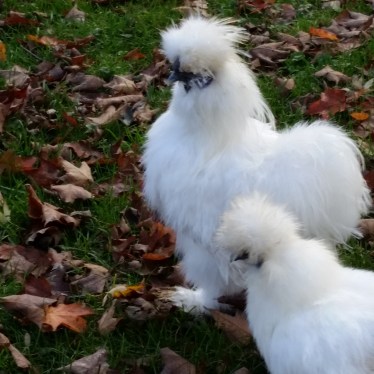
Does a Silkie Need a Christmas Gift? 12/05/16

I have always loved this video – VJP Poultry’s- Ballet of the Unhatched Chick- because it shows chicken’s somewhat playful side. Some people refer to this as “Chicken Football” because they are all chasing after the one meal worm that someone has in its beak.   Do chickens play? Do they get bored? Do they require a gift at Christmas? These are all questions people have asked about their birds.

Well, Cyber Monday is over, but there is still time to order your chickens a few treats online before December 25th.  Most of the customers at VJP Poultry consider their chickens to be family pets. They lavish love and attention on their silkies and I would bet      that some of them are planning a few Christmas surprises in their chicken’s stockings.

Most gifts are the kind that silkies can eat or the kind that silkies can play with. Let’s start with the chicken toys. Most of the chicken playthings are balls that can be filled with treats. The chicken pushes the ball around and treats fall out. Some of the balls are more complicated and the chicken needs to work at it to get the treats out. An example would be Lixit Chicken Toy  or Peck and Play Ball .

The toy that I liked the best was the Chicken Veggie Ball .It is described as “an entertaining way to provide nutritious treats to a backyard flock”. You can put a head of lettuce or  cabbage inside it and watch your flock kick it around like a soccer ball. This idea has been around for a long time. Oldsters used to tie a rope around a head of cabbage and hang it on a hook inside of the coop for the same effect. All of these toys are good boredom busters for your birds in the wintertime.

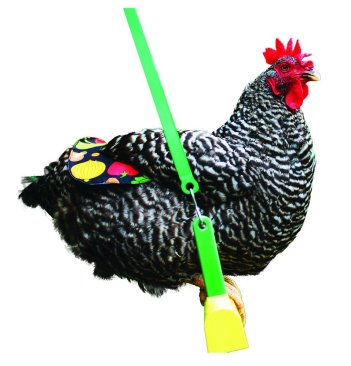
The most unusual toy was the Chicken Swing. The chicken hops on and is able to pump the swing back and forth. Probably not the best gift for a silkie as they may have a hard time jumping on , but other breeds seem to swing just fine on it.

Silkies always like special food treats. There is the Flock Block which lets them peck away and find treats of corn and seed. They are manufactured by many different companies and you should find it at your local feed store.

The treat my flock loves the best are meal worms.  Real or freeze dried, they go crazy for them. I have, in the past, kept a meal worm farm going in my house. The live worms are a great source of protein and a wonderful way for you to bond with your bird. They will come running every time they see you if they think that you have worms for them in your apron pockets.  You can also purchase freeze dried worms from Happy Hen Treats .

There has been a craze of late for putting chickens in sweaters and other kinds of outfits. You are not doing your chickens any favors by doing this. It will compromise their ability to self – regulate their body temperature. Best to leave the clothes off the birds unless it is Chicken Diapers for inside of the house. You can give them a little jewelry by giving them leg bands that have charms on them.  If you are looking for a gift for a guy, check out Gifts For Guys Who Like Chickens.  We also have Gifts For Silkie Chicken Lovers for anyone who likes silkies.

If you are interested in gifts for the Chicken Lady or for chicken loving kids or gifts for the home for chicken lovers check out our weekly silkie blog at VJPPoultry.com. We also have silkie basics at Silkie Supplies.

So, do chickens play? I think so. All animals play. I know that the chest bumping I see among juvenile silkies seems to have a very playful nature to it. Do Chickens get bored? Yes, often this will result in pecking to the extreme. Do they need Christmas gifts? That’s up to you. I know that my little silkies will be getting some nice meal worms come Christmas Eve.

For tips and tricks for raising outstanding silkies check out our Chicken Learning Center at VJPPoultry.com .  VJP Poultry is an NPIP and state inspected hatchery located 30 miles north of St. Paul.  We hatch out silkies all year long so we always have stock available.  Like us on Facebook to get weekly updates on what we currently have for sale.

Victoria J. Peterson
chicken-swing

Why Fall is an Excellent Time To Buy Chicks – 11/11/16

You may have heard people say that they would never buy chicks in the fall because they don’t want chicks spending the entire winter in the house. But, fall chick brooding has some important advantages over spring.

If you purchase in the fall, your chicks will be the right age to begin laying in the spring. They will lay wonderfully once they begin since its typical for them to lay more eggs in the springtime as the days are growing longer. Even breeds such as silkies will be laying at their best and you will be getting plenty of eggs before those who purchase later in the spring.

Another important advantage is that if you start them early in the fall, their laying is delayed until your birds reach a larger size. They will lay generally larger eggs throughout their lives and they will lay with more consistency.

If you do decide to raise chicks in the fall remember to be prepared to provide adequate heat to help your young birds transition to cold outside weather. The goal for them is to be fully feathered and able to deal with temps down to 32 degrees at 5 weeks and down to zero degrees at eight weeks.  Whether they can handle lower temps depends on how well they have feathered and how much they are used to being in cooler temperatures.

The garage is a great place to get them acclimated to lower temps. Start taking them down in temperature as soon as they appear able to handle it. Playtime outside can help with this. More chicks will generate more warmth as they huddle together. You might try increasing the number of chicks in your brooder. If you need more space, you could move them out to the coop with a heat lamp at night.

One way to think of it, is to image how the chick would be doing if it were being raised by a mother hen. At four weeks the chick would not be under its mama hardly at all. They would be out and about looking for tidbits of food.

Exposure to the cold encourages  them to feather out faster. Broody hen chicks are much faster at feathering out than brooder raised chicks.

Staggering the ages in your flock by purchasing chicks at different times in the year, works well. It is not always a good idea to have all of your birds at the same age. If you buy some in the fall and more in the spring, you can escape the issue of them all molting at the same time or all going out of lay at the same time. You will have a steadier amount of eggs if you include different ages in your flock.

If you are interested in open class poultry showing, fall chicks will be more fully grown than springtime chicks. They will show better in competition . These shows are usually held in the late summer and fall, right when the fall chicks would be at the one year old mark. Silkies are a slow maturing breed, so buying in the fall would be a real advantage.

Chicks are truly resilient and you can easily raise them anytime of the year. At VJP Poultry we hatch out all year long. What is nice for you, as a customer, is that you have more availability in the fall months. There is more choice because there is less demand. You have a better chance of buying a splash or other fancy color when everyone else isn’t trying to buy one. You will probably get a better price for it too.

Baby chicks are tougher than than most people give them credit for. Our garage and chick room are not heated and the doors are opened and shut many times a day. They stay under heat lamps until around 2 weeks old. I use 130 watt red heat lamp bulbs. The red helps with them not pecking at each other and lets them have a sense of night time. The chicks stay in the brooder room until they are around six weeks old. Then they are moved to the garage. At seven to eight weeks old, they move out to a coop with a room just for them. If a chick is too cold, it will let you know by crying and huddling up together. If it’s too extreme for them, I just move them back to the garage.

Fall is a time of year that I raise and keep back some for myself. I know that by June these birds will be laying, productive members of my backyard silkie flock.

For tips and tricks for raising outstanding silkies check out our Chicken Learning Center at VJPPoultry.com .  VJP Poultry is an NPIP and state inspected hatchery located 30 miles north of St. Paul.  We hatch out silkies all year long so we always have stock available.  Like us on Facebook to get weekly updates on what we currently have for sale.

Victoria J. Peterson


VJP Poultry


Why Roosters Are Important To Your Silkie Backyard Flock 11/01/16

20161018_133335Hens don’t need a rooster in order to lay eggs. Without a rooster, the eggs are infertile. They won’t develop into young chicks. If you are interested in breeding your own hens, then you will need a rooster. Hens, however, will lay eggs without having a rooster around.

A virile rooster will mate  frequently with most or all of the hens in its coop, no matter what the breed. A good minimum ratio is 8 to 10 hens per rooster.

A rooster will serve as a guard and defender against perceived and actual danger. He’ll scan the sky and ground looking for potential predators. He will warn the hens if he senses danger. Some roosters will defend their flock with their life. They will normally position themselves between the flock and the outside unknown.

He’ll seek out food for the flock and alert the other backyard chickens that he’s found something tasty. Usually he’ll stand back and let the hens get started before he begins to partake himself. It is fun to see them “tidbit” call the girls. He will sing to them and court them by dipping his wing and dancing around them. All the girls are more relaxed since they know that he is on guard.

Roosters do crow and some people really like that sound. Some people think that silkies have a quieter crow than other breeds. I think that it really depends on the individual rooster. They all sound slightly different and I can tell which rooster is crowing by his individual sound.

A rooster is a handsome bird. It is fun to watch him strutting around the yard and being in charge. Generally, the more a cockerel is handled as a chick, the less likely he is to become an aggressive rooster. Again, some people think that silkie roosters are less aggressive than other breeds. It depends on the individual rooster.

Within each flock there is a social order, or pecking order, that exists among  the hens. A rooster will help maintain order by breaking up fights in the hen house. The rooster will keep them focused on him.

Many people like to watch the interaction between the rooster and the hens. Each has his own personality and can be quite entertaining. If a flock consists of only hens, typically one hen will take over the running of the flock. This can lead to aggression. Some hens take it so seriously that they can begin to crow.

I’ve had flocks of just hens before, and I can say that my hen’s truly seem happier with one or two good, responsible roosters around. Roosters will look after the hens, alert them to food and even help them find good spots to lay their eggs.

For tips and tricks for raising outstanding silkies check out our Chicken Learning Center at VJPPoultry.com .  VJP Poultry is an NPIP and state inspected hatchery located 30 miles north of St. Paul.  We hatch out silkies all year long so we always have stock available.  Like us on Facebook to get weekly updates on what we currently have for sale.

Victoria J. Peterson

20161019_115944silkys

Silkies For Sale – 10/26/16

Collecting Eggs At VJP Poultry

Egg collecting is an important activity for any backyard breeder. At  VJP Poultry we collect at least two times a day. I collect in the morning when I am setting out the feed and letting them out of the coop into the run. I also collect in the late afternoon when I am changing out the water. If I am around I might do it midday as well. The more often you collect, the less chance you will have of eggs becoming dirty, broke or frozen. I find a traditional egg basket works well to get them safely in the house without becoming squished in my pocket.

Silkies do not usually use nest boxes.  They will pick a corner of the coop and all of the hens will end up laying there. The broody hens will steal the eggs laid by others and keep them warm. This is wonderful when it is cold outside and you don’t want them to freeze. I then just check under all of the sitting broody hens and find the majority of the eggs. Wear gloves to keep from being pecked by them. Some may lay a few in the run, so be sure and check there as well.

It is important to keep the bedding in these nesting corners clean. I daily add clean bedding to those spots I know will have eggs. If you let your hens free range, you may want to wait until later in the day to let them out. Otherwise, they will lay their eggs in hidden spots in your yard and it will be difficult to find them all.

I mark every egg to show what color pen the egg came from. You could also write the date on them if you wanted. I just use a regular marker, but not a permanent one. They are then placed in egg cartons, pointy side down, and left in a cool, dry area. I put mine in my basement which stays a consistent  temperature of 50 degrees. I tilt the egg cartons in the opposite direction each day so that they are not always in the same position. If you incubate,  then you don’t want anything sticking to the sides of the shell.

I usually set eggs every five to seven days. Eggs that are dirty are not incubated but could be fed back to the chickens for extra protein. Dirty eggs cause bacteria to enter through the pores of the egg shell. You can use fine sand paper to scrape off some of the larger chunks. Do not wash eggs until you are ready to cook them as that will remove the protective bloom from the surface of the egg.  If you have a question about whether an egg is too old to eat or not you could give it the float test. Place it in cold water. If it floats, it is old.

The environment can effect the frequency of egg laying. As daylight decreases so does egg production. You could set up a timer with a nightlight in your coop to increase the amount of light but I like to give my hens a break in the winter. They do need a dark period or their bodies get out of whack. Twelve to fourteen hours of light is sufficient.

Hens also take a break from laying when they are molting. Additional protein can help them recover from a molt. All the calories and protein are used to grow new feathers, so laying takes a back seat. Gamebird or meatbird food, lean meats, fish, scrambled eggs, BOSS sunflower seeds and flax seed all offer extra protein.

Silkies tend to go broody. When they do they will stop laying attempt to hatch a clutch. It may take several weeks for their hormones to settle down and get them back to laying.

One problem you may encounter is chickens eating the eggs that have been laid. In this case you need to hide the eggs from the view of the other silkies. A separate nesting box with curtains for privacy can do the trick and keep the other broodies from stealing the eggs.

Once you have eaten farm fresh eggs, it is hard to go back to grocery store quality. Silkies lay a medium sized, cream color egg. They will lay every day depending on the time of year and whether they are broody or molting. Hope you enjoy cooking and baking with your fresh silkie eggs.

For tips and tricks for raising outstanding silkies check out our Chicken Learning Center at VJPPoultry.com .  VJP Poultry is an NPIP and state inspected hatchery located 30 miles north of St. Paul.  We hatch out silkies all year long so we always have stock available.  Like us on Facebook to get weekly updates on what we currently have for sale.

Victoria J. Peterson


VJP Poultry


e