How to Fix a Heated Water Base Which is Too Hot


Last fall I purchased eight new heated water bases to be used under galvanized waterers in order to keep my water from freezing in the chicken coop.  I began to notice that the water was alway spilling over and making a wet mess of the pine shaving bedding.  This seemed strange because the water never overflowed in the summer. I ended up buying pizza trays to place under the metal waterers. This was successful but the pizza trays had to be drained off every day which was extra work.

Then I began to notice that the water was beginning to become very warm – hot even.  I could see the steam cloud raising up from the waterer when ever I changed out the water. I put my finger in the water and it was like very hot bath water.  I figured that the water was around 100 degrees F.  The water should have been between 32 F and and 45 F.

Chickens do not like to drink hot water.  They wouldn’t wait until I changed out the water and then they would descend on the cooler water.  There wasn’t an empty spot all the way around the waterer when the cool water was added to it.

As the water was heated, the water expanded and was forced over the rim.  This created the situation with the wet bedding which had to be replaced.  This would happen every time new water was added.

I did a little research and read some reviews of the product. I noticed that quite a few people were having the exact same problem that I was having – overheated water and water expanding and spilling out.

Dennis troubleshooted the situation and found that the snap disc thermostat was defective which was causing the base to operate at too high of temperature.  He purchased new snap disc thermostats that turn on at 32 F and off at 45 F.  You actually can buy the thermostats at different temperatures but these are the correct ones for the water bases.

Here are the steps for replacing the thermostats:

  1. Flip the Heated base over.
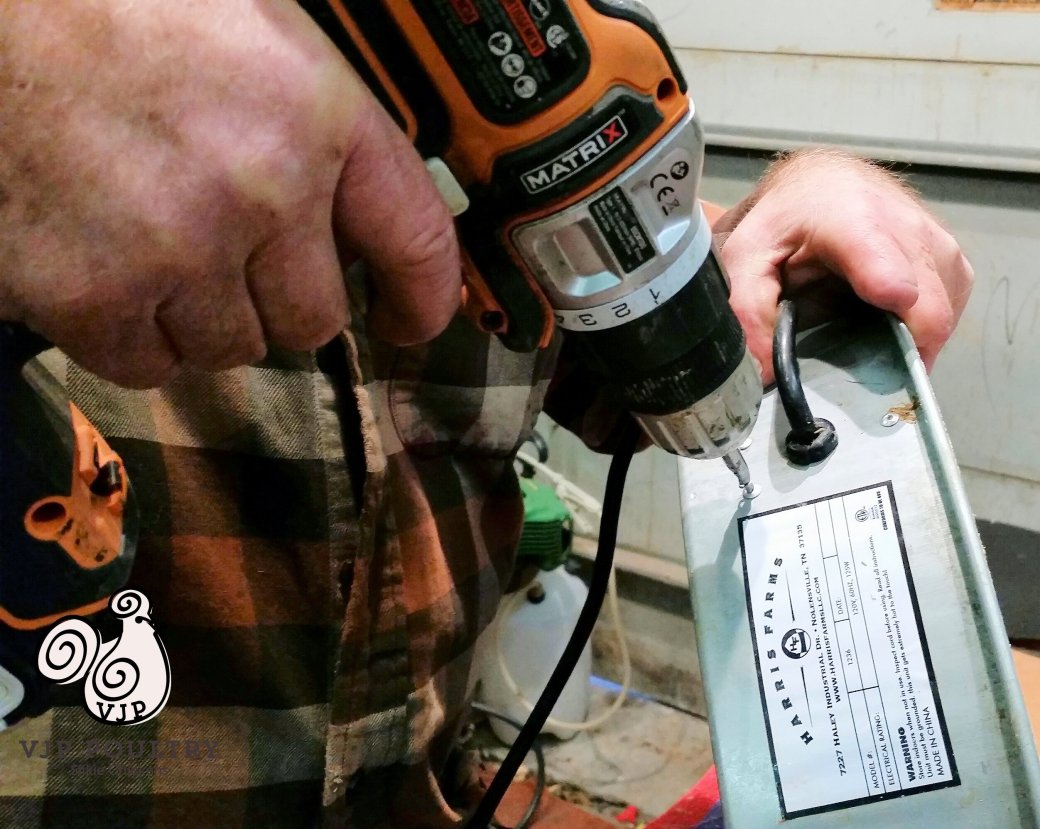
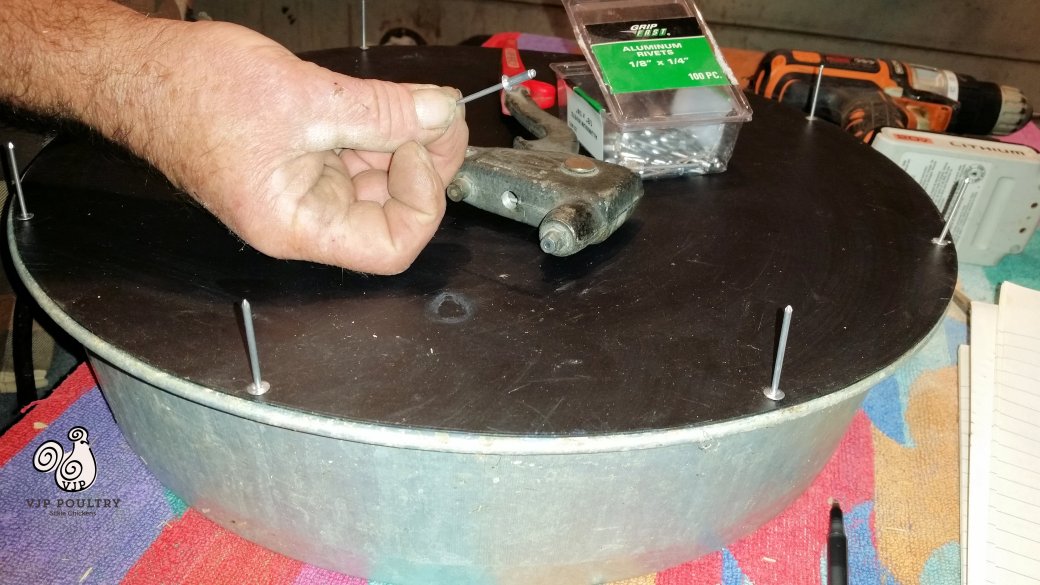
  2. Us a cordless drill to drill out the pop rivets holding the back plate on.  Be sure to mark the placement because we found the holes to be an uneven distance from each other.
  3. Pry off the back cover with something like a screw driver.
  4. . Unplug the connections to the thermostat.
  5.   Remove the rivets to the thermostat with a cordless drill.
  6.   Take out the old thermostat and replace it with the new one. Ours had a red casing.
  7.   Fasten the new thermostat with new pop rivets using a pop rivet gun.
  8.   Connect the wires back up to the new thermostat.
  9. Using aluminum pop rivets, fasten the protective back cover on the pan.  Use the pop rivet gun to do this.
  10.   The little pop rivets go in each hole on the back side.
  11.  End of repair.                                                                                                                                20171116_105520-1                                                                                                                                                               I originally purchased two different brands of heated bases.  The Farm Innovators we purchased worked great and we did not have to repair them.  The other brand had to have all of its thermostats replaced.  All appliances wear out sooner or later.  It’s nice to be able to repair instead of having to replace.                                                                                                                                                                                .For tips and tricks for raising outstanding silkies check out our Chicken Learning Center at VJPPoultry.com .  VJP Poultry is an NPIP and state inspected hatchery located 30 miles north of St. Paul.  We hatch out silkies all year long so we always have stock available.  Like us on Facebook to get weekly updates on what we currently have for sale.

    Victoria J. Peterson
    20171116_110628

Silkies For Sale – 11/15/17

The Grooming Process – Primping your Silkie for the Show

20171018_103551-1    It’s a week until the poultry show and it’s time to think about primping, prepping and grooming your birds so that they all look their best.   All of them will need to be bathed, toenails trimmed and beaks clipped and filed.

I find that I can bath around three birds a day successfully.  On the Monday before the show I will trim toenails and beaks. I always do those two jobs before I start baths.  If there is any bleeding the blood will not get into your bath water.

I use a diagonal wire cutter on the toenails.  Do not trim too short or you will cut the quick and your bird will begin to bleed.  Use an emery board to file down the sharp edges.  There should be no sharp points which can scratch and hurt a judge.  Remove any dirt or poo from the foot prior to the up coming bath.  Hydrogen Peroxide and a cotton ball is good for loosening up all of that dirt especially in the scaly part of the leg. Hydrogen Peroxide is good for about one month after opening the lid. Exposure to air will lesson its abilities.

You will need to clip your bird’s beak if the top beak creates an overbite to the bottom beak.  A toenail clipper works best for this job.  The beak should come together with no overhang.  File it with an emery board to sand away any rough edges.

I will start bathing the silkies on Tuesday starting with with the darkest birds The lighter ones will be done later in the week.  I only do three a day because it takes a while to do a thorough job.  I also want to make sure that they are dry enough to be placed back outside.  Always bath your silkies in the morning so that  they will be thoroughly dry by the time they go to sleep at night.  It is very important that they do not go to bed damp.

Before starting the bath, I take the hydrogen peroxide and pour it into a small dish. I then take cotton balls and carefully clean around the eyes, beak and crest.  Its like a good face washing. The hydrogen peroxide will help to break down the organic dirt and poo that sticks to the feathers. I also use an old tooth brush to clean the scales and toes with the peroxide.  You could put some Spray ‘n Wash on the foot feathers if the are very stained.

I bathe my birds in the laundry room sink.  It has a spray attachment which I really find handy.  I start by gathering all of my supplies.  You don’t want to be hunting for things when the bird is already wet and starting to get chilled.  I will even have the hair dryer and combs all set and ready to go.

I first fill two large buckets with warm water. I fill them about waist high to the bird.  Into one bucket I put about 1/2 cup white vinegar.  The other is just plain water for the final rinse but you could add glycerin to it.

I put the bird in the sink and begin soaking the feathers in warm water. If you think that your bird might have mites, I would start with a flea and tick shampoo.  I use blue Dawn or Ivory for the first wash.  The Dawn dish foam pump is nice because it is easy to use while holding a bird in one hand.

20171018_101721-1   I start with the crest and then work my way down.  Dirty areas include the crest, beard, vent and foot feathers.  I use the sprayer to carefully rinse the Dawn soap out.  To remove the soap from the crest, I tip the bird upside down and then rinse with the sprayer.  This way the soap does not drip into its eyes.

White birds can become dingy in color turning a grey or yellow.  This can happen from being out in the sunlight too often or being fed corn which discolors white feathers.  Adding bluing to your dingy whites will make your whites appear whiter.  The effect is not permanent and bluing will wear off.

The second shampoo is either a bluing shampoo if it is a white bird or a color enhancing shampoo if it is a dark colored bird.  Horse shampoos offer a variety of colors.  I use the Gallop brand but you could also use a human bluing shampoo or just add laundry bluing to the water.  Be careful with the bluing shampoo that the bird is soaking wet before applying or you may end up with a dyed blue or purple chicken.

Rinse as much soap off as you can with the sprayer and then place the bird in the bucket with the vinegar rinse.  The vinegar will cut the soap so that it does not stick to the feathers.

Place the bird in the final rinse water.  Always hang on tightly to your bird.  Do not let its beak go under the water line.  You can add some glycerin to the final rinse for extra shine.  Remove the bird and squeeze as much water out as possible.  Then wrap it tightly in a towel to absorb water and help it stay warm.  It should look like a silkie mummy.

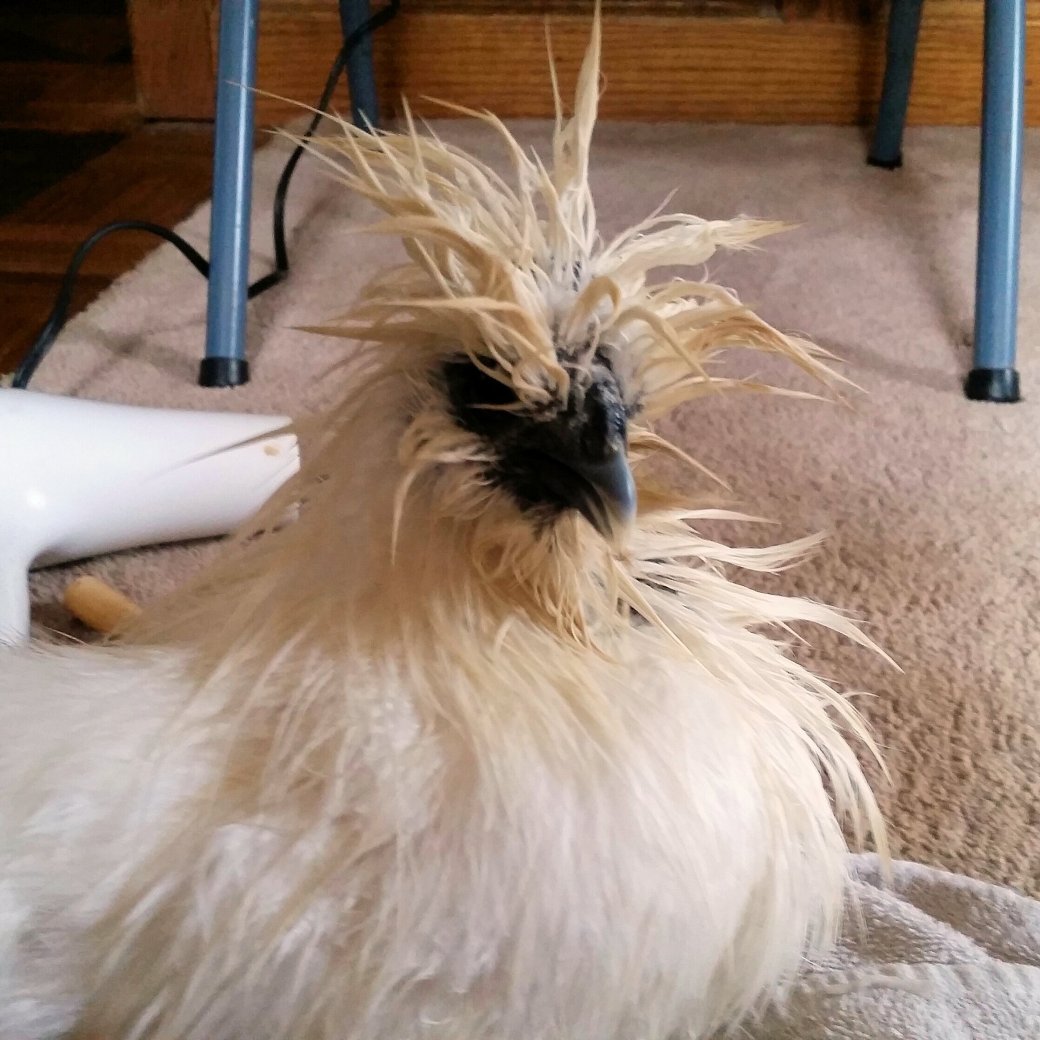
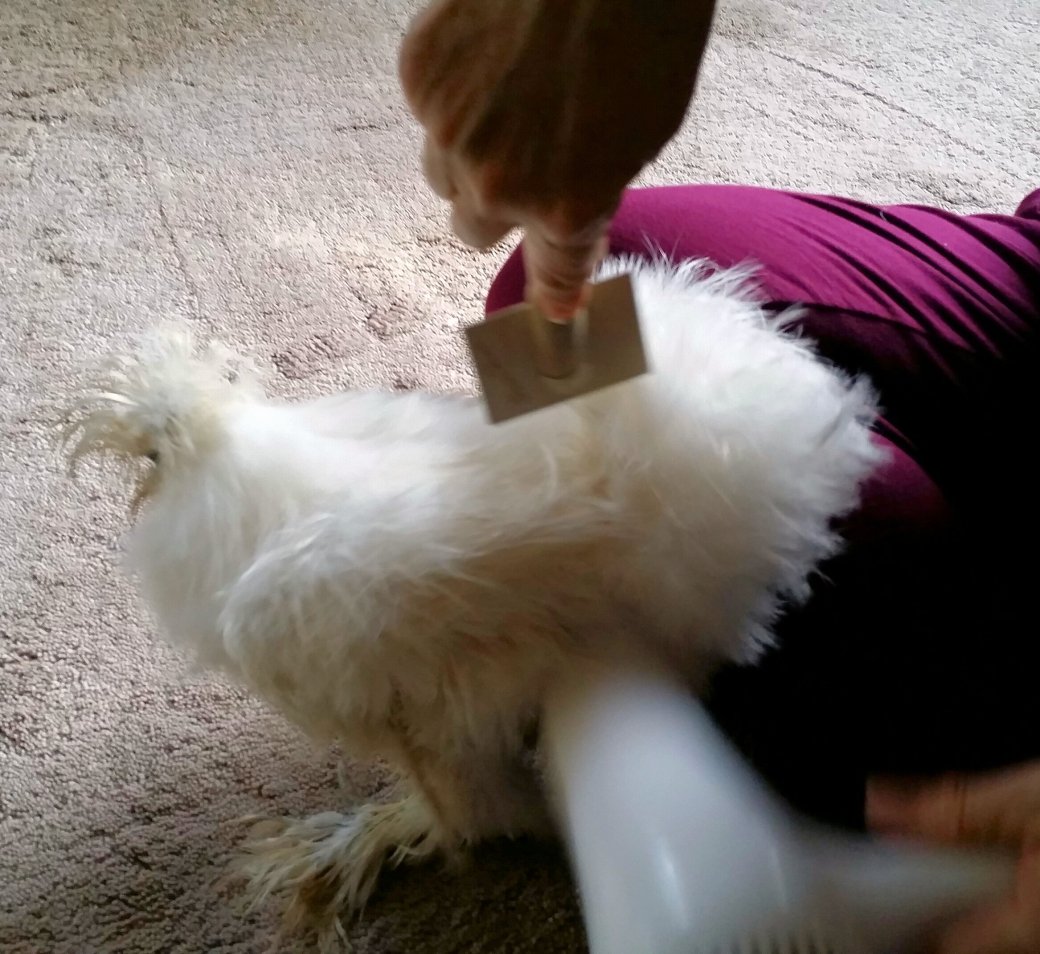
I leave the bird tucked up in the towel but begin to use the hair dryer on the crest.  Use the low setting on the hair dryer so as not to burn the skin of the silkie.  I gradually undo more of the towel as I do drying the bird and fluffing the feathers with my fingers.  You can also use a comb or slicker brush.  It will take a while to get it dry enough that she can finish the job herself.  If it is cold out have her stay somewhere warm like a  bathtub until she is dry enough.  She will finish preening and applying oil from her oil gland.  Baths should be at least one full day before leaving for the show to get the natural oils back on the feathers.  Add some Vet Rx to shine up the toes and comb.

Place your bird in a separate small holding coop that has fresh shavings or back in her old coop which would also have new shavings put down.  Keep her locked up and out of the muddy run.  Remove any poo you see so that she is not stepping in it.

Some people put booties on their feathered feet to keep their foot feathers from staining.

Hopefully your bird will stay clean until it is time to pack up and head for the poultry show.

For tips and tricks for raising outstanding silkies check out our Chicken Learning Center at VJPPoultry.com .  VJP Poultry is an NPIP and state inspected hatchery located 30 miles north of St. Paul.  We hatch out silkies all year long so we always have stock available.  Like us on Facebook to get weekly updates on what we currently have for sale.

Victoria J. Peterson
 

20171018_102406(0)-1

Does a Silkie Need a Christmas Gift? 12/05/16

I have always loved this video – VJP Poultry’s- Ballet of the Unhatched Chick- because it shows chicken’s somewhat playful side. Some people refer to this as “Chicken Football” because they are all chasing after the one meal worm that someone has in its beak.   Do chickens play? Do they get bored? Do they require a gift at Christmas? These are all questions people have asked about their birds.

Well, Cyber Monday is over, but there is still time to order your chickens a few treats online before December 25th.  Most of the customers at VJP Poultry consider their chickens to be family pets. They lavish love and attention on their silkies and I would bet      that some of them are planning a few Christmas surprises in their chicken’s stockings.

Most gifts are the kind that silkies can eat or the kind that silkies can play with. Let’s start with the chicken toys. Most of the chicken playthings are balls that can be filled with treats. The chicken pushes the ball around and treats fall out. Some of the balls are more complicated and the chicken needs to work at it to get the treats out. An example would be Lixit Chicken Toy  or Peck and Play Ball .

The toy that I liked the best was the Chicken Veggie Ball .It is described as “an entertaining way to provide nutritious treats to a backyard flock”. You can put a head of lettuce or  cabbage inside it and watch your flock kick it around like a soccer ball. This idea has been around for a long time. Oldsters used to tie a rope around a head of cabbage and hang it on a hook inside of the coop for the same effect. All of these toys are good boredom busters for your birds in the wintertime.

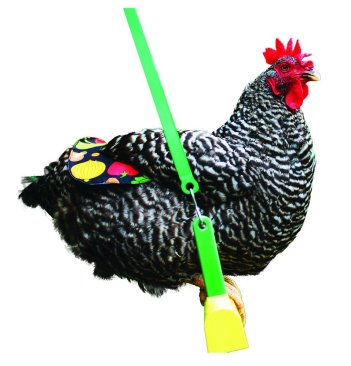
The most unusual toy was the Chicken Swing. The chicken hops on and is able to pump the swing back and forth. Probably not the best gift for a silkie as they may have a hard time jumping on , but other breeds seem to swing just fine on it.

Silkies always like special food treats. There is the Flock Block which lets them peck away and find treats of corn and seed. They are manufactured by many different companies and you should find it at your local feed store.

The treat my flock loves the best are meal worms.  Real or freeze dried, they go crazy for them. I have, in the past, kept a meal worm farm going in my house. The live worms are a great source of protein and a wonderful way for you to bond with your bird. They will come running every time they see you if they think that you have worms for them in your apron pockets.  You can also purchase freeze dried worms from Happy Hen Treats .

There has been a craze of late for putting chickens in sweaters and other kinds of outfits. You are not doing your chickens any favors by doing this. It will compromise their ability to self – regulate their body temperature. Best to leave the clothes off the birds unless it is Chicken Diapers for inside of the house. You can give them a little jewelry by giving them leg bands that have charms on them.  If you are looking for a gift for a guy, check out Gifts For Guys Who Like Chickens.  We also have Gifts For Silkie Chicken Lovers for anyone who likes silkies.

If you are interested in gifts for the Chicken Lady or for chicken loving kids or gifts for the home for chicken lovers check out our weekly silkie blog at VJPPoultry.com. We also have silkie basics at Silkie Supplies.

So, do chickens play? I think so. All animals play. I know that the chest bumping I see among juvenile silkies seems to have a very playful nature to it. Do Chickens get bored? Yes, often this will result in pecking to the extreme. Do they need Christmas gifts? That’s up to you. I know that my little silkies will be getting some nice meal worms come Christmas Eve.

For tips and tricks for raising outstanding silkies check out our Chicken Learning Center at VJPPoultry.com .  VJP Poultry is an NPIP and state inspected hatchery located 30 miles north of St. Paul.  We hatch out silkies all year long so we always have stock available.  Like us on Facebook to get weekly updates on what we currently have for sale.

Victoria J. Peterson

chicken-swing