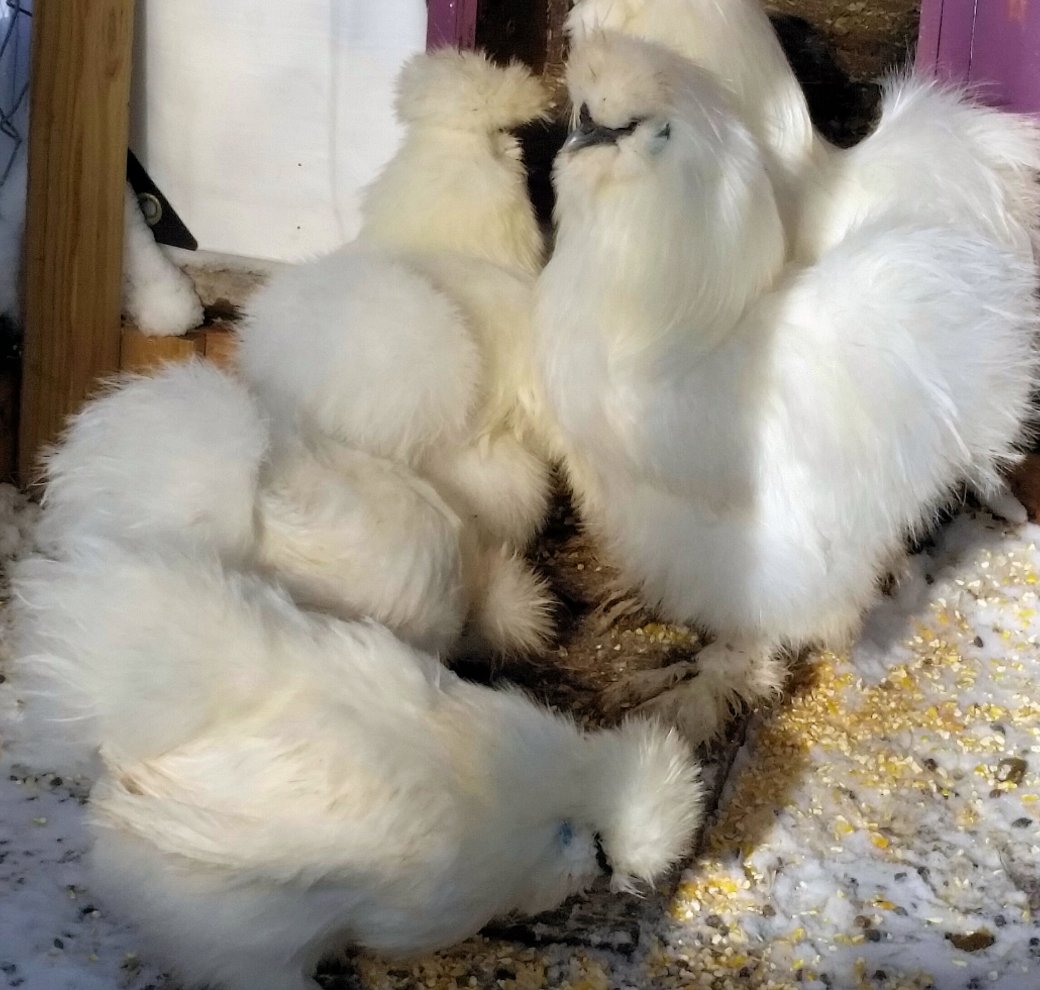
 For most chickens, winter is a time of rest and repair. They have just finished a long summer of laying and their bodies are depleted of energy. Most people will see a decrease in egg production from their flock as the days grow shorter. It is discouraging to think that one might have to start buying eggs from the grocery store again. We miss those beautiful golden yolked eggs.
Chickens will stop laying during the year for many different weather related reasons. Hot spells, storms, steady rain can all have an effect on how the girls are laying but almost all hens dramatically slow down in winter for the entire season. All breeds reduce egg production but the silkie never has had a steady egg production to begin with. You might see nary an egg until spring.
First of all it isn’t natural for hens to lay at all in the winter, but selective breeding has made it possible to continue to get eggs all year long. Hens instinctively know that winter is not a good time to be raising a brood of chicks but they can be tricked into thinking that spring is on the way.
Reduction in egg laying is caused by two factors. The first is the molt. A molt causes the replacement of feather on the chickens body by shedding all of the old feathers and growing new ones.
Feathers are made out of protein. Replacing all these feathers is very hard on the hen. After the fall molt she needs a rest and a break from laying. Increasing the amount of protein in the diet will decrease the time it takes for the hen to regrow her feathers and return to laying.
Make sure that you have a good Gamebird feed that is high in protein. Feather Fixer is also a feed that many people use during a molt. In addition there are high protein treats available to help with new feathers growing in. Mealworm Frenzy is a dried mealworm supplement but you can also serve the live mealworms to your birds. Omega Fields has a high protein chicken supplement that can help with new feather growing and cat fish pellets or fish choware high protein treats. Remember that these supplements are for treats only. They should not replace a good Gamebird feed which also includes needed vitamins and minerals.
During a molt reduce their stress level. Don’t move them to new quarters or introduce new flock members. Increase their regular feed so that it is around 20-22% protein.
The second reason for a decline in laying has to do with the length of daylight. Shorter days are telling the hen to suspend laying because it is not a good time to hatch out a family of baby chicks. For more information on the effects of shortened days check out “Changes to Silkies as the Days Grow Shorter.”
One way to increase the rate of lay is to manipulate the length of day using artificial lights in the coop. You don’t need much light to fool the hens into thinking that the days are getting longer. A 25-40 watt bulb is sufficient to do the trick.
I use 40 watt Led bulbs on a manual on/off night light fixture. You plug the entire assembly into a timer and plug it into an outlet. You could even use a string of Christmas lights on a timer.
Have the lights on a set schedule with the timer, not just whenever you think about turning the lights one. Erratic lighting will encourage chickens to molt which you do not want in the winter. They need their feathers in order to keep them warm in the winter.
The combined artificial and natural light should total around 14 hours. Make sure that the supplemental light is coming on during the morning hours. If you do it in the evening it will confuse the birds to have the lights suddenly go off and them may not make it to their usual night time spot. This will cause them stress.
Set the timers so the light comes on between 4 am and 8 am. Remember to check periodically to make sure that the bulb is still working. Make sure you have a back up plan in case there is a power outage. Battery powered camping lanterns work well.
If your birds are getting up at 4 am they probably are not getting outside until sunrise. Your chickens may get bored during this time. This can result in them pecking at each other. Food and water should be inside the coop so they have something to do. Chicken toys such as Treat Balls and Peck and Play balls relieve boredom. If you are a late sleeper you could install an Automatic Coop Door where you could decide when you wanted them let out.
One other thing that can influence egg laying is the temperature outside. The colder it is, the less eggs seem to be laid. Heat lamps, which create warmth, can stimulate laying. 250 watt red bulbs give the feeling of night time. For more information on heat lamps check out “Heat Lamp Use.” Sweeter Heaters also create warmth in the coop.
Silkies are very hardy in winter temperatures far below freezing. If their eggs remain at these temps for too long they will crack. It takes temperatures below the freezing point for eggs to crack. That means they need to be 28 degrees or lower for there to be a problem. Hopefully a silkie will cover the eggs until you can pick them up or that a soft bed of pine shavings can act as an insulator.
Make sure that your hens have plenty of water in the winter. If their water is frozen most of the time this will lead a huge drop in egg productivity. Hens need a great deal of water to create an egg. Use a heated water base to make sure that the water is always open. For more information on using heated water bases check out “ Using Heated Water Bases. ” at the VJP Poultry blog.
In addition, offer supplemental oyster shell so that the hens have plenty of calcium for eggshell formation.
For tips and tricks for raising outstanding silkies check out our Chicken Learning Center at VJPPoultry.com . VJP Poultry is an NPIP and state inspected hatchery located 30 miles north of St. Paul. We hatch out silkies all year long so we always have stock available. Like us on Facebook to get weekly updates on what we currently have for sale.
Victoria J. Peterson
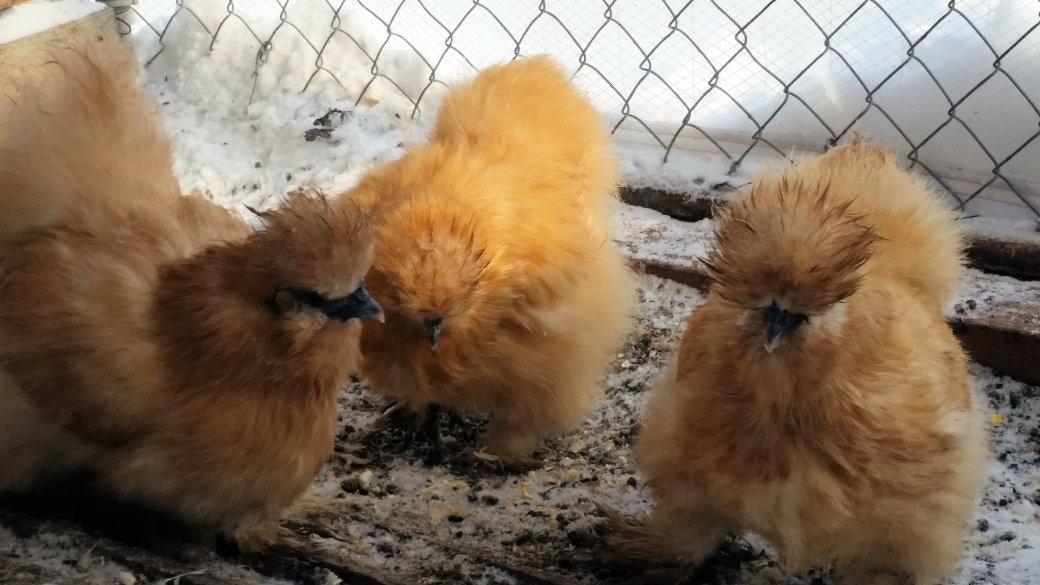
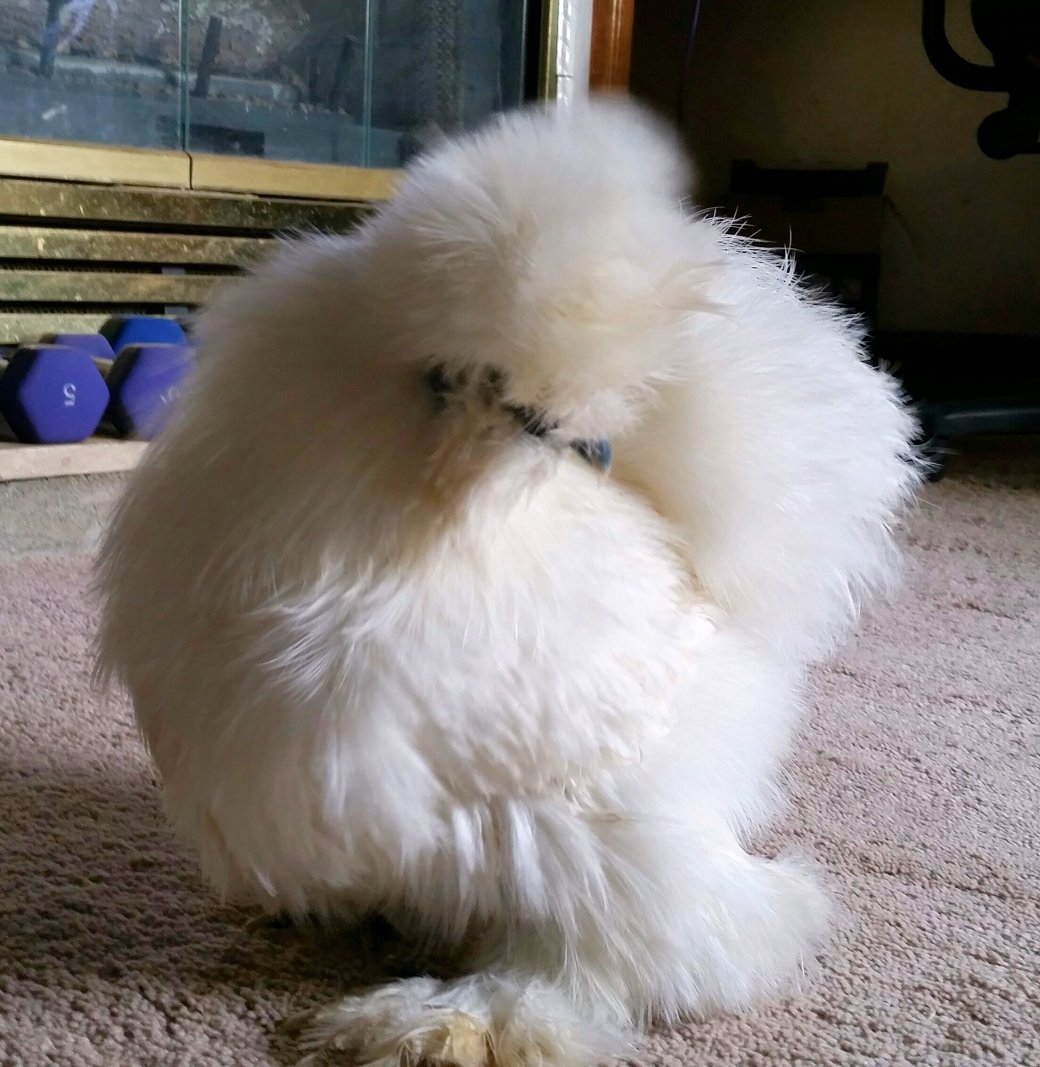 It’s a week until the poultry show and it’s time to think about primping, prepping and grooming your birds so that they all look their best. All of them will need to be bathed, toenails trimmed and beaks clipped and filed.
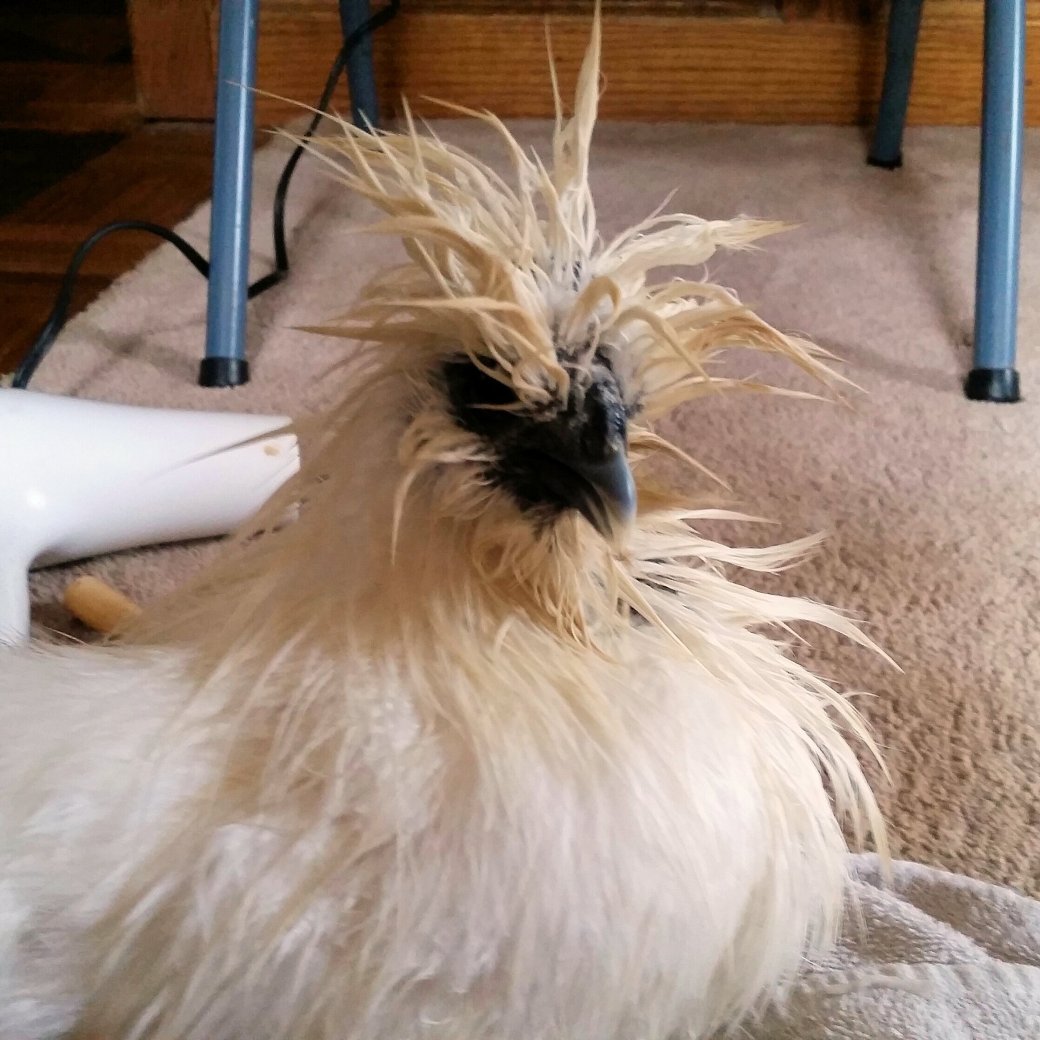 I start with the crest and then work my way down. Dirty areas include the crest, beard, vent and foot feathers. I use the sprayer to carefully rinse the Dawn soap out. To remove the soap from the crest, I tip the bird upside down and then rinse with the sprayer. This way the soap does not drip into its eyes.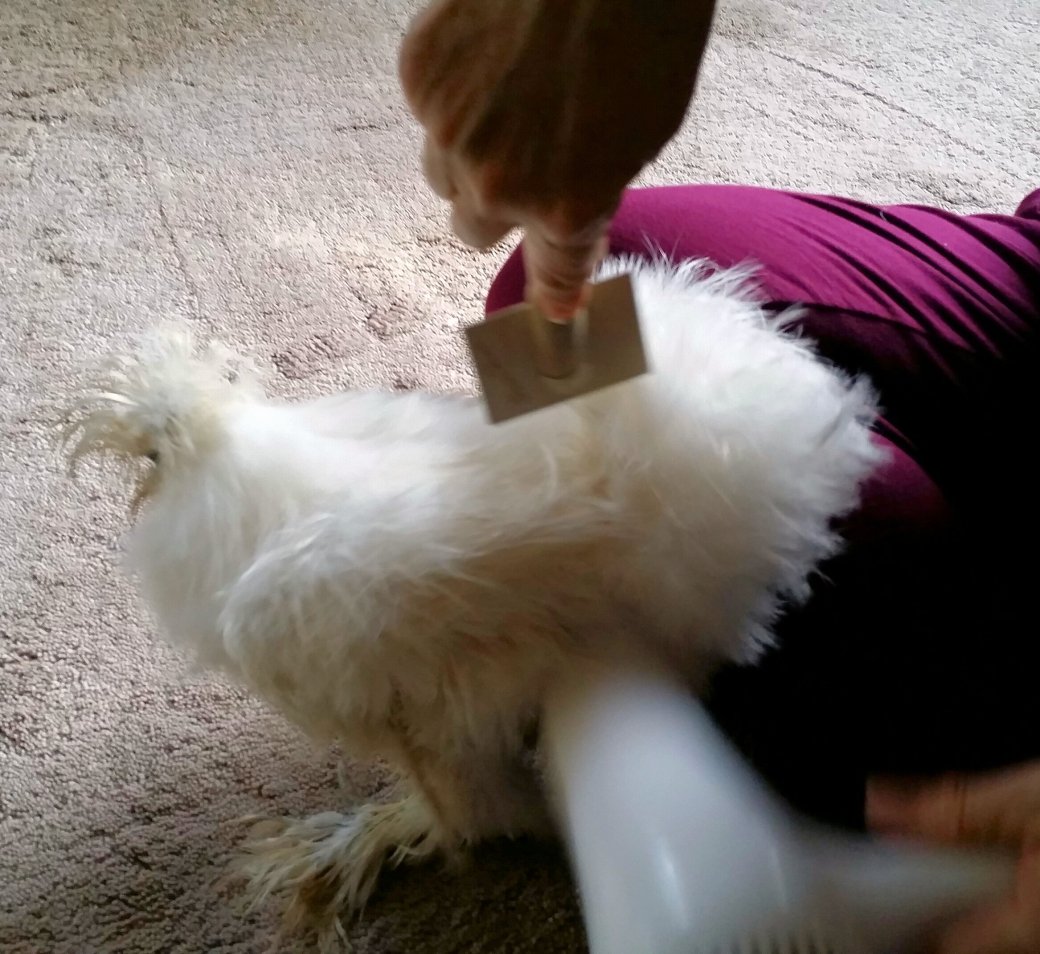
 VJP Poultry