A Look at the Silkie Standard of Perfection

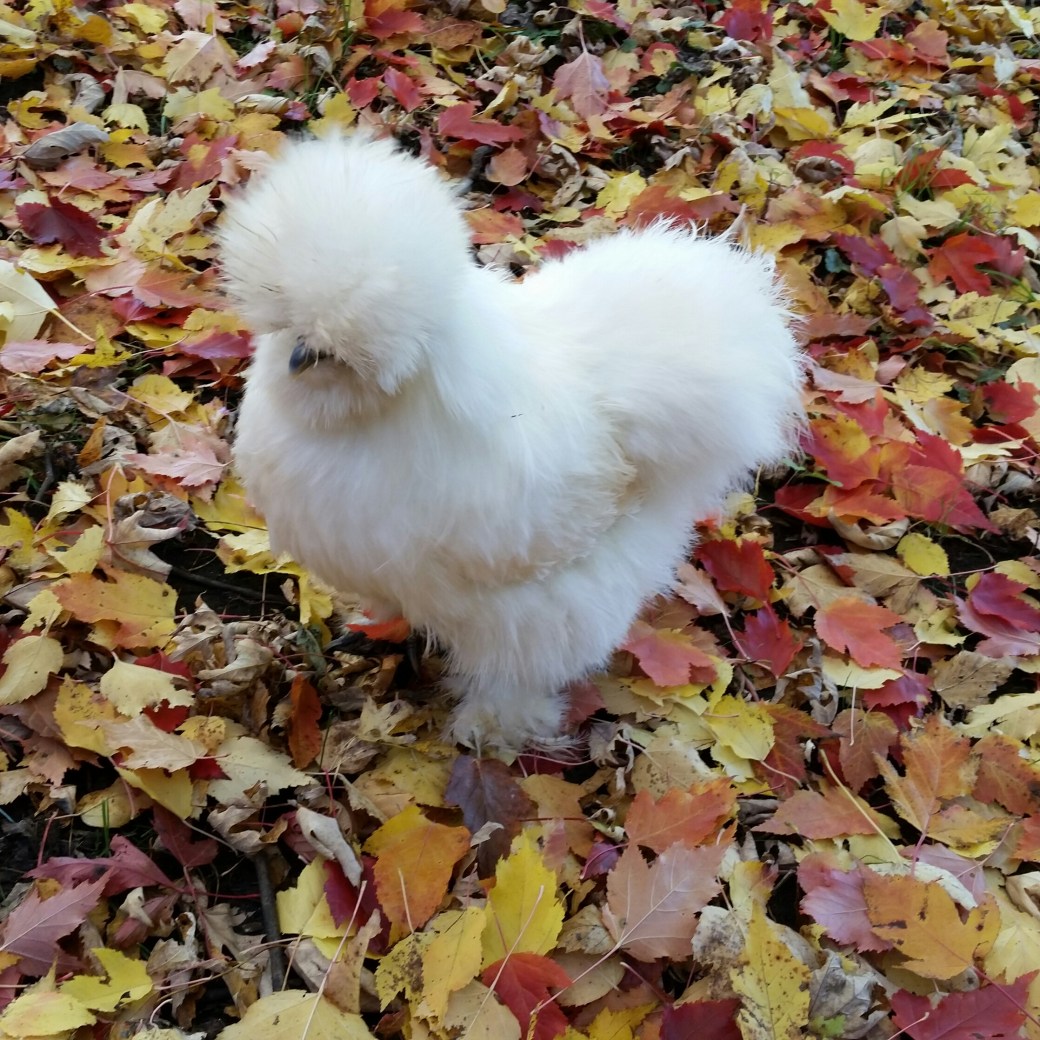
20171020_121935-1The American Standard of Perfection is a wonderful book published by the American Poultry Association. In it you will find all kinds of valuable information on all of the breeds of chickens that are recognized by this group.  Their main purpose is to list characteristics of each breed at their highest level.  This information is used by judges to help them judge the qualities of individual birds against what has been decided as the “perfect” bird of that breed and variety by the American Poultry Association. It is also used by breeders to improve their birds through breeding towards the standard and by exhibitors who want to place well in poultry shows who use the standard as a guide for choosing birds.

In judging, there is a scale of points that equals 100.  Points are assigned to different attributes of the bird.  Points will be deducted if the bird does not meet the standard given.  There are also disqualifications that can be given which will eliminate a bird from competition.  Since silkies  have crests and beards their point system is adjusted to include points for those areas.

The disqualifications specifically for silkies include :  Bright red comb, face and wattles.  Shanks not feathered down outer sides.  Feathers not truly silky (except in primaries, secondaries, leg, toe and main tail feathers.) Vulture hocks. There are other disqualifications that are for all birds, not just silkies.  You would find those under “General Disqualifications” elsewhere in the book.

The standard weight for a silkie cock is 36 oz.  The standard weight for a silkie hen is 32 oz.  The standard weight for a silkie cockerel is 32 oz.  The standard weight for a silkie pullet is 28 oz.

The standard then lists descriptions of each of the areas of the silkie’s appearance.  This is all part of the bird’s shape.  It is best to obtain a copy of the standard so that you can read in detail what the standard entails. I will mention a few of the items of interest but there is much more information listed in the book. I will be discussing the Bearded Silkie only.

The comb should be walnut shaped. In the males it should be circular shaped and have a horizontal indentation across the middle of it. Females should also be walnut and smaller. The wattles should be small and concealed by the beard in bearded silkie males.  The females should be very small and concealed.

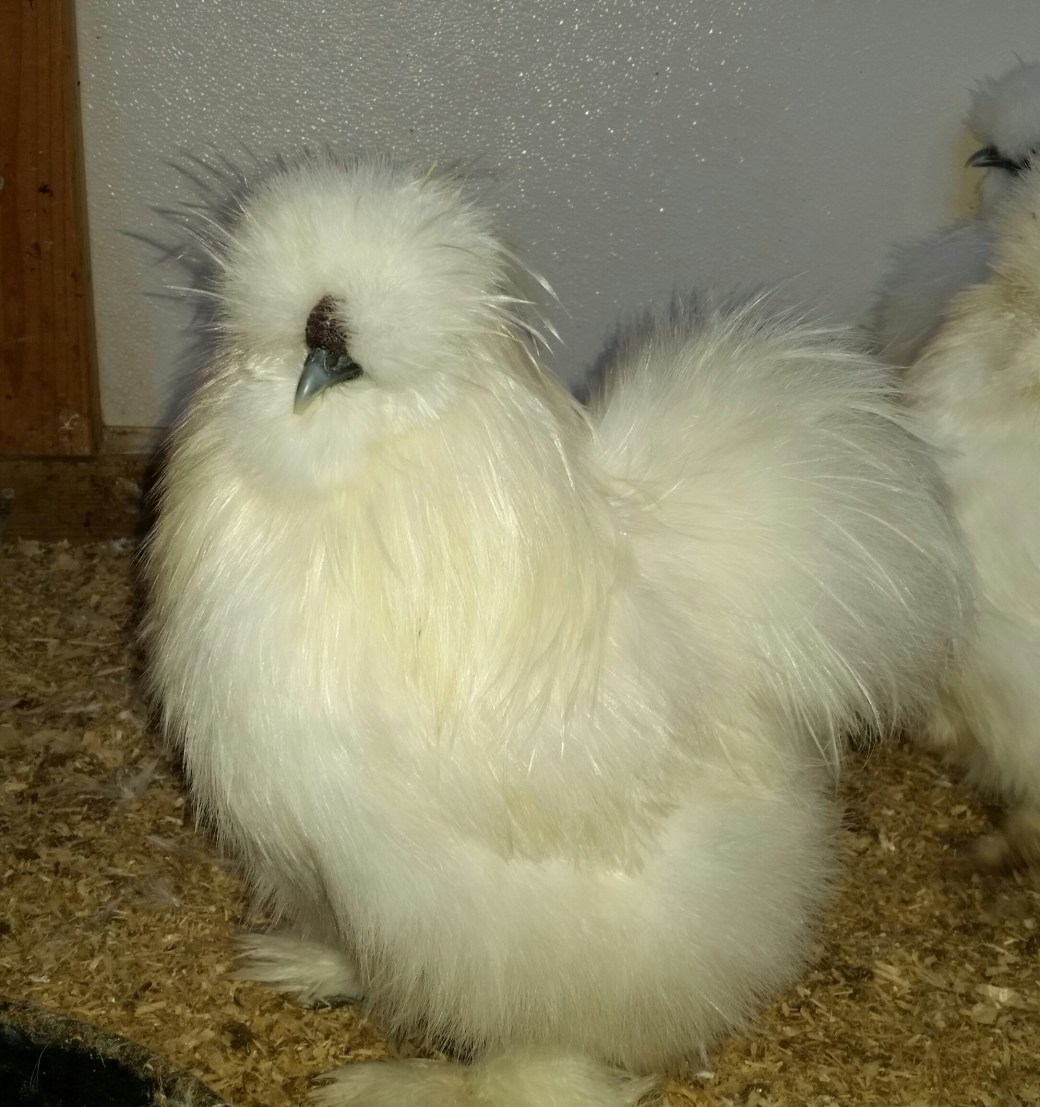
The crest should be medium sized. The beard and muffs should be thick and full. The neck should be short and gracefully curved.  The back should be short and broad and rising back in a curve towards the tail.  The cushion of the tail should be broad and round and very fluffy.  The tail should be  shredded at the ends.

The wings should be closely folded and carried well back being nearly horizontal.  Primaries should be concealed  by secondaries.  The tips should be well shredded with tips being concealed by saddle feathers.

The silkie needs to have five toes. Three in the front and two in the back.  One toe in the natural position and the other placed above it curving upwards and backwards.  Feathering should be to the middle toe.

Comb should be deep mulberry colored.  Beak should be slaty blue and eyes should be black.  Earlobes should be turquoise blue. Skin should be dark blue and toes slaty blue.

Silkie’s feathers come in different colors and not all colors are recognized by the APA. Here are the ones that are recognized: white, black, blue, partridge, buff, gray, splash, self-blue (lavender) and paint.  There are separate descriptions for each of the different color varieties indicating what is accepted and what is not.

Symmetry, as well as, condition and vigor are also important in judging.  The overall shape and balance of the bird is important.  The silkie should look like a “S” curve with the bottom part of the “s” continuing upward.  They almost look completely circular, like a bowling ball when they stand correctly.

There is much more to the silkie standard than I have talked about in this article.  If you would like to purchase a copy, you can get one through the American Poultry Association here.

There are also old copies and  knockoff copies at Amazon that are not printed through the APA.  I think that they are basically  xerox copies and have the same information.

Hopefully this will answer some of your questions concerning what the standard of perfection is.  As a breeder, we are constantly trying to improve our silkies and have them come as close as possible to the standard that has been set. It is important to show your birds as a breeder or attend shows so that you can talk with judges and other people who are knowledgeable about silkies.

For tips and tricks for raising outstanding silkies check out our Chicken Learning Center at VJPPoultry.com .  VJP Poultry is an NPIP and state inspected hatchery located 30 miles north of St. Paul.  We hatch out silkies all year long so we always have stock available.  Like us on Facebook to get weekly updates on what we currently have for sale.

Victoria J. Peterson

Information for this article was taken from The American Standard of Perfection 2010 published by American Poultry Association, Inc.
20171126_125635-1


Egg Color and Colored Earlobes in Chickens

20180324_153532-1Chickens lay a rainbow of colors when it comes to egg shells.  White, cream, tan, pink, blue, green, brown and speckled.  But did you realize that a chicken’s earlobes are different colors as well, and that some people can make guesses as to what color egg a certain hen will lay based on her earlobe color.
A chicken’s ears are located on each side of its head, just below its eyes.  They do not stick out like most animals do.  The ears are located inside of the head.  The earlobe is just below the ear.  It is a slight thickening of the skin and is smooth with no feathers.

Birds are the only animal that lay colored eggs.  Popular folklore says that if a chicken’s earlobes are white, they will tend to lay white eggs.  If they have red earlobes they will lay brown eggs.  We know that there are many exceptions to this.  Some red earlobed birds lay greenish or blue eggs.  Silkies have turquoise earlobes and lay a cream colored egg.  Chicken breeds which have white earlobes with a pearly iridescent shine such as a cream legbar, lay blue eggs.

Eggshell color is definitely based on breed.  Unless you have a mixed chicken, the birds will lay true to their breed.  Araucana have red earlobes and lay blue or green eggs.  Penedesencas have white earlobes and lay dark brown eggs.  Some Americanas have white earlobes and lay blue eggs.  Earlobe color is based on breed genetics as well.  You can’t correlate earlobe color and egg shell color because one is not based on the other.

Depending on the breed, a hen will lay about 500 eggs in her lifetime.  All eggs start out white.  Those that are other shades have pigments deposited on them as the eggs travel through the hen’s oviduct.  This journey takes about 26 hours until the egg is laid.  The shell itself takes 20 hours to complete.  Ameraucanas have the pigment oocyanin deposited on the egg as it travels.  This pigment permeates the eggshell resulting in both the inside and the outside of the shell being blue.

Chickens that lay brown eggs deposit the pigment protoporphyrin on the eggs while they are forming their shells.  This pigment only stays on the top of the shell.  The inside of the shell remains white.  The darkest brown eggs are from Marans.

In order to create a green colored egg, a brown pigment overlays a blue egg shell.  The darker the brown pigment, the more olive color the egg will look.

No matter what color the outside of the egg is , the inside will all look similar.  The color of the yolk is determined by the hen’s diet.  The more green veggies in the diet, the deeper the color of the yolk.

Chickens have two ears on each side of their head.  They have eardrums and an outer ear, middle ear and inner ear.  They are able to harness sound waves and send them to the inner ear.  Unlike humans, who experience hearing loss as they age, chickens are able to regrow damaged hearing cells.  Scientists are very interested in learning more about this special adaption and in being able to apply it to help humans with hearing loss.

Hearing well is very important to all birds.  It is imperative that they can hear approaching predators.  Chickens can tell how far away a sound is coming from by gauging how long it takes the sound to reach the ear.

Baby chicks are able to hear their mother clucking from inside of the egg.  An embryo can hear by around day 12 of their incubation period.  Once hatched a chick will respond to its mother tapping on the ground when she finds food.  If you tap on the food dish your baby chicks should come running.

Ear infections in chickens are often caused by bacteria entering the ear.  Antibiotic drops can be given for 3 to 5 days if the infection is caused by bacteria.  Clean the ear with hydrogen peroxide and a Q-tip to loosen any debris on the ear.  Do not put a Q-tip deep into the chicken’s ear as it can damage it.

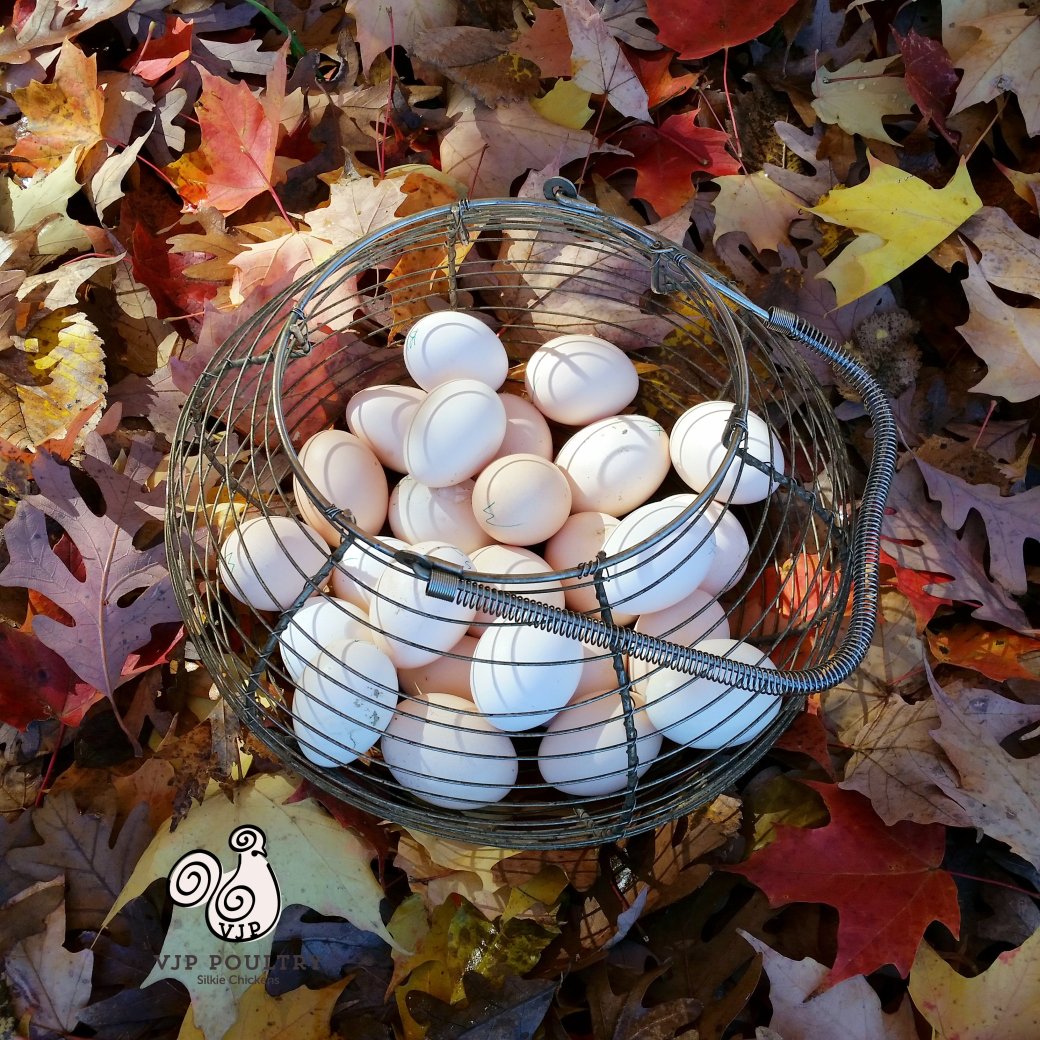
Timely egg collection is important.  Don’t leave eggs under hens unless you plan on hatching.  I like to use a wire egg basket to  help me handle all of the eggs if find.  If you are interested in more information on egg collection check out our blog.

It is fun to see the assortment and variety of egg colors that can come from your hens. You can display them quite creatively with an egg spiral holder or egg counter holder.  Eggs that have not previously been refrigerated can stay on your counter for about a week and stay fresh.  You can get quite fancy with your egg storage holder.

For tips and tricks for raising outstanding silkies check out our Chicken Learning Center at VJPPoultry.com .  VJP Poultry is an NPIP and state inspected hatchery located 30 miles north of St. Paul.  We hatch out silkies all year long so we always have stock available.  Like us on Facebook to get weekly updates on what we currently have for sale.

Victoria J. Peterson

20161018_132530

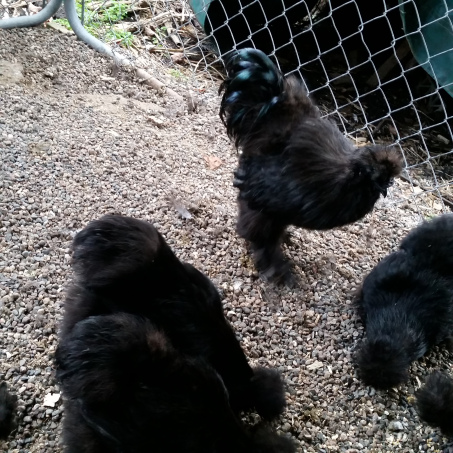
How to get Beetle Green Sheen in Black Chickens


The green sheen on a black chicken is something very much desired.  You find it in the tail feathers, wings, saddle and hackles of solid, deep black feathered birds.  The purple sheen is not a desired trait and some will even say that it is a nutritional deficiency that causes it.

Microraptor was a very small, four winged dinosaur that lived 130 million years ago. Its feathers have been fossilized and they show black and blue hues similar to a crow.  It is the earliest evidence of iridescent feather color.  Microraptor was completely black with a glossy, iridescent blue sheen.

Feather color is produced in birds by arrays of pigment bearing organelles called melanosomes.  Iridescence happens when the melanosomes are organized in stacked layers.  This iridescence is widespread in modern birds and is frequently used in courtship displays.

In chickens, the green sheen on black is very much sought after and appears to be in part produced by the structure of the feathers and in part by the condition of the pigment in them.  It is found only in chickens with good black color and in the absence of any purple barring.  It can also be found in any chicken that has some black feathers such as partridge silkies.

The quality of the feather is a very important issue.  A black chicken with a strong green sheen will have a much smoother feather feel to it.  You should almost be able to feel how soft and conditioned that green sheen feather is when compared to duller feathers.

The amount of green sheen varies from bird to bird.  Some have a lot of sheen and others don’t.  Mostly it is found in roosters, but hens can have it too.  I have seen some beautiful sheen on the wings and body of very dark hens.  Sheen is more apparent in the sun where light can reflex off of the feathers.

Keratin is a crucial protein in bird’s feathers. The way it is structured allows light to twist and turn and separate.  It allows feathers to act like a prism by scattering the longer wavelengths of light and reflecting shorter ones to give us the gorgeous blues, purples and greens.

The preen gland is a gland that is located at the base of the tail. This secreted oil helps to keep keratin flexible.  This makes feathers appear more saturated with color.  Most birds preen by rubbing their beak and head over the preen gland pore and then rubbing the accumulated oil over the feathers on its body.

The green color you see is due to the effect of light scattering and reflecting off the feather structure.  This is called the Tyndall Effect and it creates the illusion of certain colors.

There are four basic types of feather luster.  There is green, red/purple, blue and matte- the absence of any sheen.  Feather sheen is a matter partly of genes and partly of feather condition.

Gold based blacks are easier to get the correct green sheen and eliminate purple sheen.  Green sheen is good and purple sheen is not among chicken breeders in the United States. A dilute black will not give you the same sheen display as a pure black color. Here is an article on my adult black silkie pen and what it is like to work with the black color.  That super black color is especially useful if you are working with varieties such as Paint Silkies.

If you want to breed towards improving green sheen you must selectively breed for those desired traits.  Breed green to green and remove birds with the purple/red sheen from your breeding program.  Have a separate coop to keep your breeding pair in; that way you can be sure of the parentage.  Keep track of your breeding pens and keep careful written records of parents and the quality of their offspring.  For more information check out “How to Keep a Flock History“.

The degree of iridescence seen on all feathers is a matter of condition.  A healthy bird on a good diet has more vibrant colors.  Excellent food and clean, safe conditions in the coop will go a long way towards bringing out the color in your birds.  Good health will improve the sheen of the feathers so they better reflect the light.

Feather Fixeris a supplement feed that people often use to improve a chicken’s feathers.  Any higher protein feed will help to condition feathers.  Adding vitamins and electrolytes to your bird’s water will also improve its overall health as well as probiotics and Rooster Booster.

For tips and tricks for raising outstanding silkies check out our Chicken Learning Center at VJPPoultry.com .  VJP Poultry is an NPIP and state inspected hatchery located 30 miles north of St. Paul.  We hatch out silkies all year long so we always have stock available.  Like us on Facebook to get weekly updates on what we currently have for sale.

Victoria J. Peterson

20161015_173613 (1)

Silkie Wings – What makes Show Quality?

20180222_161805There has been lots of discussion about the difference between a show quality silkie and a pet quality silkie. Some of that has to do with their wings. I am going to talk about a few different problems that the silkie breed is known to have difficulties with as far as wings are concerned.
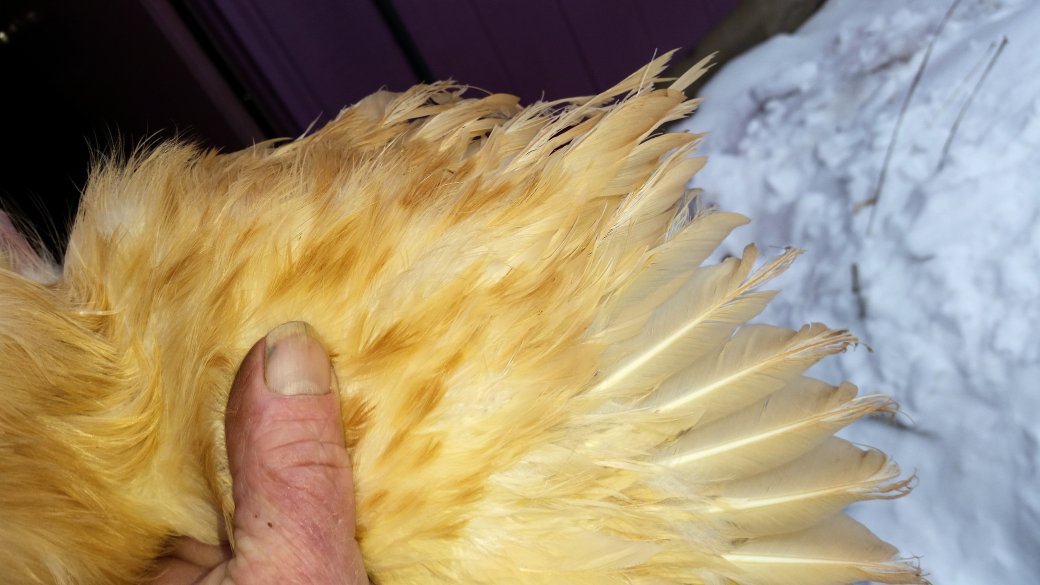
First of all, what is a perfect wing on a chicken?  The wings should be well formed when the wing is opened out.  You may see judges at a poultry show opening and shutting a bird’s wing.  You need to open the wing and stretch it out so you can see from one end to the other and look at every individual feather.  The formation should be perfect and easy to fan out. There should be no gaps showing and the feathers should form an arc.  When there is an open space between the primaries and the secondaries when the wing is opened, the defect is called a split wing.

There are ten primary feathers and ten secondary feathers. There should be no gap between them. There is also a small axle feather between the primaries and the secondaries.

The wing muscle should also be sufficiently strong enough to fold the wing back correctly and firmly.  The primary feathers should tuck under the secondary feathers and be held tightly to the body and into the cushion.  They should be held horizontally and not droop. The wing should be flat against the body and not stick out.

The entire body of the silkie should be covered in abundant fluff and the wings should be ragged, almost shredded or tattered looking.   Ideally, they should be shredded one third up the primary feathers.  No hard looking feathers should be visible.

20180222_162617-1

There are three main faults that can be seen in silkie wings.  Split wing is where the feathers have a gap between the primary and secondary feathers or at the top of the wing between the primaries.  You will always know when a wing is split as the wing feels weak and has a lot of give when handling it.  Both sets of feathers should be level. With split wing on set of feathers will be longer than the other.


Slipped wing is when the wing does not return to its natural folded position when opened. The primary feathers may overlap in reverse order or there is a tendency for the primary feathers to be held outside the secondaries when the wing is closed.  The primaries should tuck under the secondaries but instead the reverse happens. The primary feathers show from the outside and may even be twisted.   Angel wing is slang for slipped wing in chickens.  Actual Angel wing is found in water fowl.

Twisted feather is when a feather is in the slipped wing position but is turned upside down so that you are seeing the bottom side of the feather.

All three of these conditions are considered disqualifications in the show ring.  When assessing for faults in your bird make sure that you are not looking at it if it is heading into its annual molt.  The best age to be checking is the thirty week mark.  By this point the bird will be mature enough and is not usually going through a molt. You can begin to look at wings earlier at three to four months as most birds have fully feathered out by then to start getting an idea of what you want to save for poultry showing.

An APA standard is a valuable book to own. It gives you complete descriptions of what is correct for all breeds of chickens when you are showing. It also will let you know what is a disqualification or a fault. There is also the Bantam Standard which is also quite good.  Silkies are classified as bantams.

You should try and breed your best to your best.  These wing defects are a recessive trait and can be passed down.  Choose wisely and create breeding pens with your best hens and rooster.  A separate pen from the rest of your birds allows you plenty of room for your breeding program.  This article on “Selective Silkie Breeding” will give you some ideas on how to set a program up.

For tips and tricks for raising outstanding silkies check out our Chicken Learning Center at VJPPoultry.com .  VJP Poultry is an NPIP and state inspected hatchery located 30 miles north of St. Paul.  We hatch out silkies all year long so we always have stock available.  Like us on Facebook to get weekly updates on what we currently have for sale.

Victoria J. Peterson


The Mysterious Courtship Dance of Chickens

20161105_140426Most birds perform some kind of courtship dance as a prelude to actual mating. There are many magnificent displays in the avian world. Think about what peacocks do in their foreplay to get the lady bird in the mood with their beautiful tails.
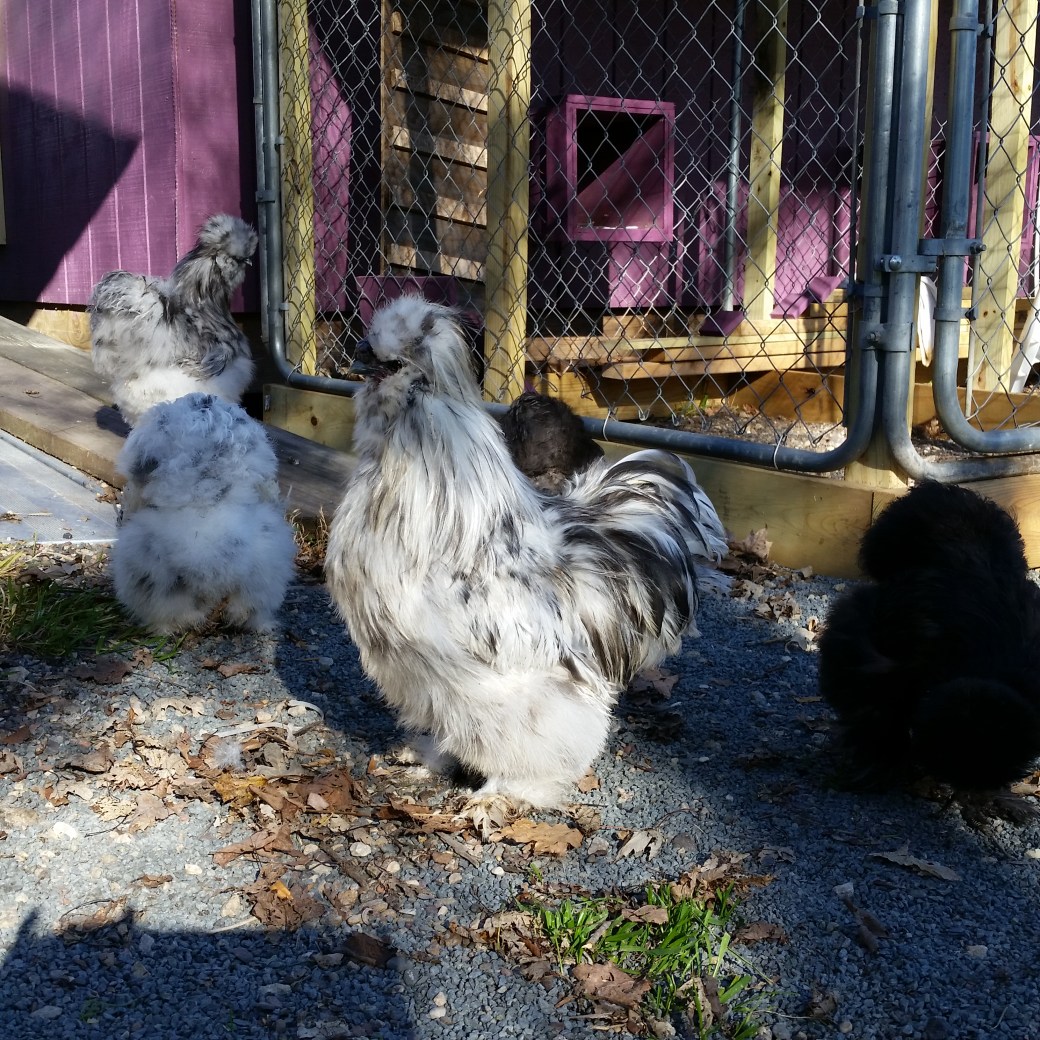
Roosters will try to lure and entice their mates by displaying their beauty as well.  They attempt to attract their mates as they fan their wings in a romantic manner.   This is called a wing drag or wing flicking.  He will begin to make some croaking sounds as he gets closer to the hen.

The rooster performs a dance, circling the hen with his wing dropped stiffly towards the ground and quivering.  As he circles around her making his croaking noise, she will either encourage him or try to come up with an escape plan. In a perfect situation the hen will daintily squat down and raise her shoulders to flatten out, welcoming him in every way.

The rooster then leaps onto her back and balances precariously with one foot on either side of her shoulders.  This is called Threading.  He grabs the female’s neck with his beak and pulls back her head. He then lowers his vent opening (cloaca) by sliding his tail under the hen and she pushes her vent opening to meet with his.  There is no penetration.  The sperm released from the male is taken into the vent by the female.  From there the sperm travels up the oviduct where it awaits the release of an ovum.  The sperm can be actively alive in the hen for more than two weeks. This whole sexual act takes about two seconds.  When mating is done, the hen will rise, shake her feathers and go on with whatever she was doing beforehand.

The female chicken does not have a separate vaginal structure.  The vent or cloaca is used for both defecation and reproduction.  The males also have a vent or cloaca but they do not have a penis to actually penetrate the hen.  The rooster’s sexual organ is called the papilla. It is located inside of the bird, just inside of the vent.  It looks like a small bump.  Semen exits through it.  Ducks have a penis but chickens do not.

A hen lays an egg every day or so regardless if there is a rooster around or not.  In order for it to be a fertile egg, you will need the rooster to do his part.  Each time a yolk ripens, the sperm will fertilize it provided it is in the hen’s oviduct.   The white is created and then lastly the shell will form around the egg.  A fertilized egg will have a dot surrounded by a ring around it which looks like a bullseye on the yolk. In an infertile egg there will only be a white dot.  You can check this out by cracking open an egg and looking at it.

Chickens also engage in a little dance called “tid-bitting.”  If a rooster finds a choice bit of food that looks really tasty, he bobs his head up and down and makes his “tid-bitting” call.  He picks up the food and drops it repeatedly in order to attract the hen.  He may even offer the morsel in his beak.  It all looks very romantic and sweet but he is also establishing his role among the hens as a provider and leader.

There are many different recommendations as to how many hens per rooster to give you adequate fertility in your eggs.  Most say eight to twelve hens per rooster. If you have a heavier breed, the ratio would be lower. If you have a smaller breed the ratio would be higher.  If you would like more information on how to improve fertility in roosters check out this article.

You may want to isolate breeders to make sure that you know who the father is. Wait at least two weeks if your hen has been exposed to other roosters to make sure that all of the sperm inside the hen is no longer active.  If you are interested in showing poultry or are just interested in improving your flock you can set up breeding pens where you can isolate certain pairings in order to get certain types of chicks.

As winter ends and spring begins the testosterone in the roosters starts to rise.  Roosters will begin to mount challenges to each other as they fight for the rights to the hens.  You may want to separate the roosters, but remember, once you separate them it will be very hard to put them back together again.

Crowing is both an invitation to hens and a warning to other roosters in the area.  Serious fights can happen between roosters. They can use their sharp spurs as weapons.  Aggression when establishing dominance is normal behavior in the chicken world.  If you give them plenty of space, they will usually work the dominance hierarchy out themselves.  Chickens have strict pecking orders. The alpha rooster is at the top, then the hens and lastly the younger pullets and cockerels.

A rooster can mate up to thirty times a day depending on how many hens are available to him.  Not all roosters are interested in mating or are built for it.  You should have a similar sized rooster matched with a similar sized hen for best chance of fertilization. If you want to try and improve the virility of your rooster, you may want to add some vitamins and electrolytes to his water or some Rooster Booster Poultry Cell. A little B-12 would perk him up a little too.

Most roosters are very interested in mating with the hens. They will chase hens causing them to lose feathers. Constant harassment on the part of the rooster can cause bald spots on the hen’s back. The roosters do have favorite hens which they will mate repeatedly.  You may want to invest in hen saddles.  They protect the hen’s back and sides.  They can also be worn to prevent self-picking or feather picking from other hens.  Pick no more and Blu-Kote are also products that can help prevent the picking and aid in treatment . Vetericyn Spray will help to treat wounded birds as well.

If you want to aid in feather grow back, Feather Fixer feed can help increase protein in their diet. You may also want to trim the spurs and toenails on your rooster using a diagonal wire cutter.   Information on how to do this is Here.  This can help to prevent any wounds occurring on your hens.

A well mannered rooster who dances for his ladies and waits for them to accept him is a joy to behold. Your pens will be much calmer if you keep and breed roosters with this special ability.

For tips and tricks for raising outstanding silkies check out our Chicken Learning Center at VJPPoultry.com .  VJP Poultry is an NPIP and state inspected hatchery located 30 miles north of St. Paul.  We hatch out silkies all year long so we always have stock available.  Like us on Facebook to get weekly updates on what we currently have for sale.

Victoria J. Peterson

20161105_140436