Tag: bantam chicken coops
Tips For Winterizing Your Chicken Run
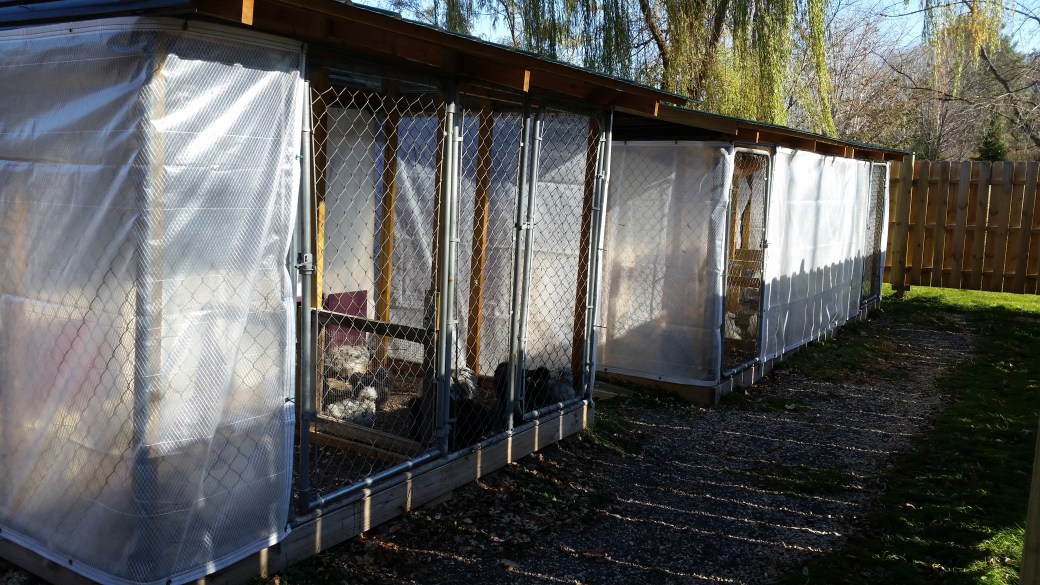 Now that it is colder outside, you may find that your chickens are spending more of their time inside the coop. If you do not have a chicken run that is set up for colder temperatures, they may be choosing to snuggle up where it is warmer. The problem with that is that chickens need fresh air and exercise. They will be hardier and healthier if they spend part of their day outside in the run.
Here in Minnesota it can get quite cold in the winter. Always start with a hardy breed of chicken. It should be one that has small combs and wattles. Silkies are ideal for cold areas. Not only do they have small walnut combs and almost nonexistent wattles, they also have feathering on their feet to help keep their legs warmer.
Silkies are tolerant of the cold but they must be protected from wet and wind. Enclosing your run with plastic wrap or a tarp can help to block wind and prevent snow and rain from entering the run. Most chickens do not like walking in snow. The plastic will keep the snow from entering the run. Then you will not need to spend time shoveling out the run every time it snows.
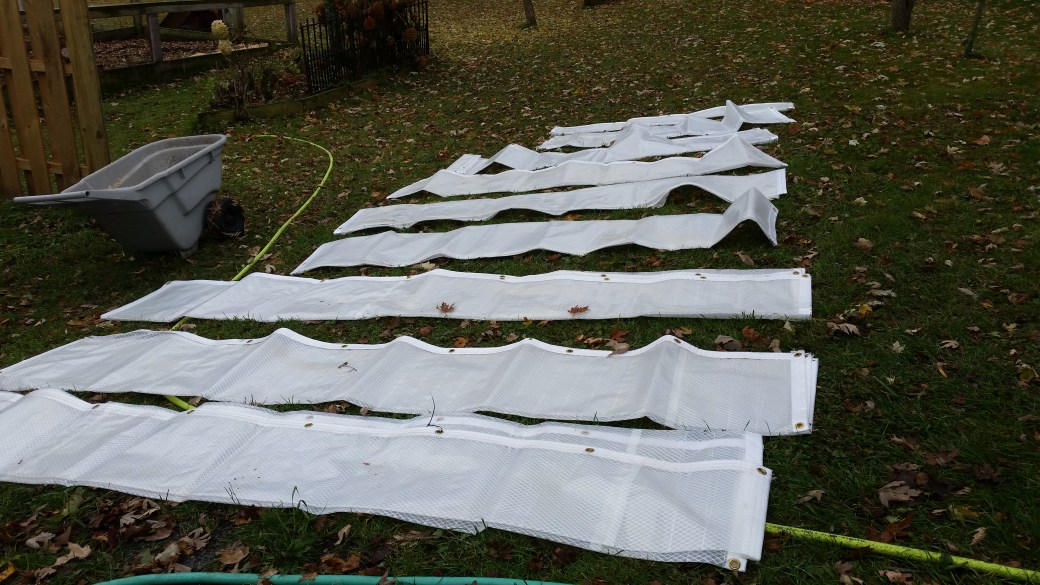
We are trying a new kind of plastic this year Instead of using plastic that comes on a roll, we ordered clear tarps that have built in grommet holes. The tarp also has lines running through it to keep the tarp stronger and to keep it from ripping in the wind.
We placed eye hooks in the wood along the bottom of the run. The grommet holes fit into the hooks and secure the tarp. We then use ball bungee cords at the top to fasten the tarp down. Hopefully this clear tarp can be easily taken down and put up for many years to come. We also use zip ties where needed to keep the tarps secure.
You do not need to cover the entire run. The North and West sides are the most important to cover as this will provide the best wind and snow block. You need some holes for ventilation. I leave the doors uncovered so that air can move in and out.
A spacious run gives chickens personal space and exercise opportunities. Boredom can be a problem in the wintertime. This can lead to behavior problems such as feather picking and egg eating.
You can use plywood, tarps or even bales of hay or straw to block the wind, but clear plastic is best. This lets the sun shine through and keeps the run bright. It will warm the inside of it just like a greenhouse would. In the Spring, just take it down, fold it up and store it out of the way until next year.
You could provide an outside shelter in your run such as a small dog house. Use straw inside of it to keep your chickens warm. Straw hold more warmth because it traps warm air in its shaft. Use some of that straw to create paths for chickens to walk on. Laying down straw is often easier than trying to shovel the snow out of the run. The straw will make it warmer on their feet.
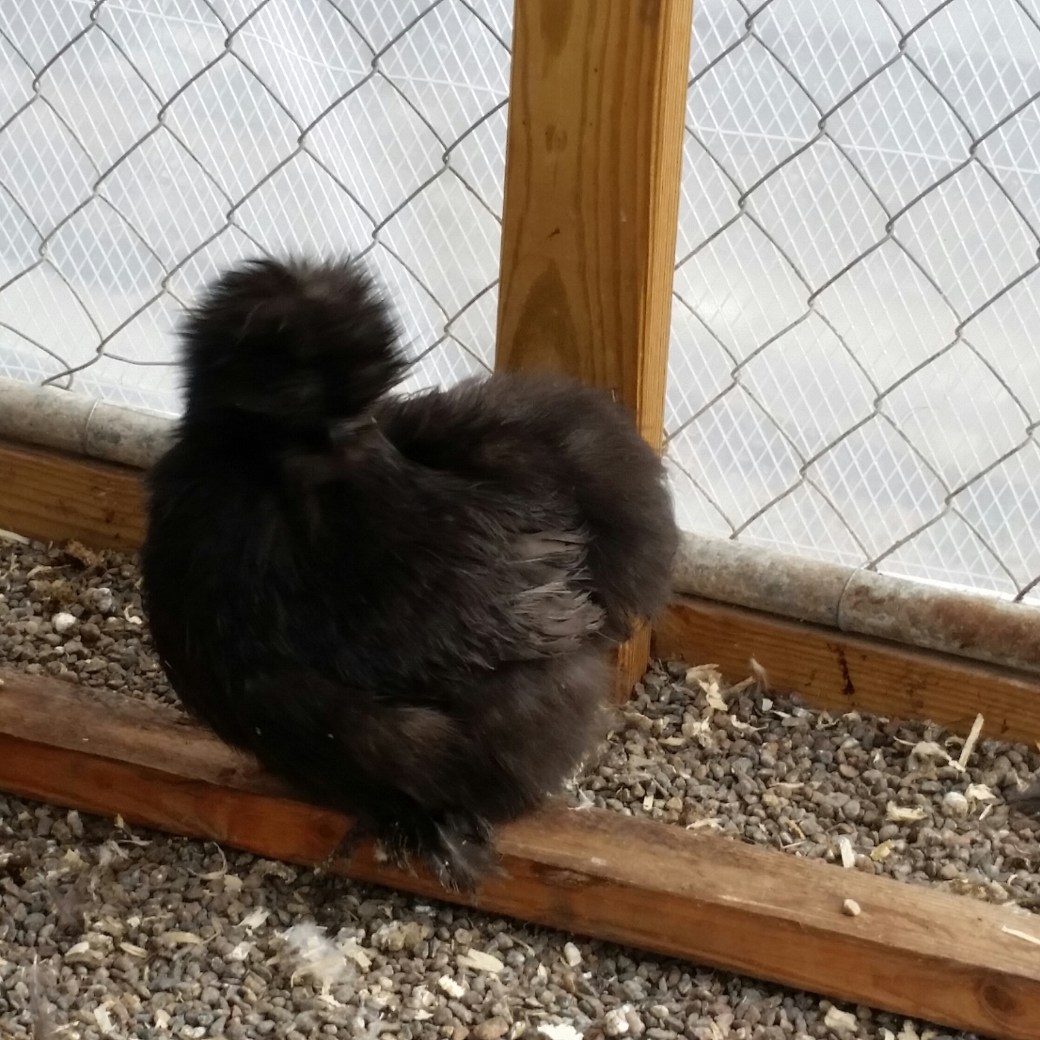
I like to provide something for them to perch on inside the run. We have pea rock in our run which can become cold on their feet in the winter. Silkies do not need very high perches. We just lay a few 2 X 4 boards down for them. They love to perch on these boards when it is cold. You could also use logs or stumps for them to stand on.
Set up a dust bathing area for them in the wintertime. Since most of their regular dusting areas are now under snow, you could make a new spot by purchasing some dust bathing materials and putting them in a kitty litter box.
Provide energy treats for your birds that they can only get if they venture outside in the run. These could be BOSS sunflower seeds or cracked corn. The more time that they spend outside, the less messy the inside of your coop will be.
It is important to remember that birds are not mammals. They can tolerate much colder temperatures than humans. You just need to keep them dry and out of drafts or wind. Do not overheat your chickens based on how you feel. I keep the windows and doors to the coops open all winter long. If your coop is one temperature and your run another, this can lead to sickness as birds go back and forth from hot to cold temperatures.
For tips and tricks for raising outstanding silkies check out our Chicken Learning Center at VJPPoultry.com . VJP Poultry is an NPIP and state inspected hatchery located 30 miles north of St. Paul. We hatch out silkies all year long so we always have stock available. Like us on Facebook to get weekly updates on what we currently have for sale.
Victoria J. Peterson
What To Expect at a Poultry Show
 A poultry show is usually a three day event. The first day is spent “cooping-in”. This is when you arrive and place your birds in their show cages. The second day is when the judging takes place and other events. The third day is very short and it is known as “cooping-out” or cleaning up and taking your birds back home.
Leading up to this event you will have sent in your entry form to the organization that is hosting the show. You will need to declare how many birds you are entering in each breed and whether they are pullets, hens, cockerels or cocks. Pullets are females up to one year of age. Cockerels are males that are up to one year of age. Cocks are male roosters over one year old. There is a small fee for each bird that you enter. You will also need to have each bird pullorum tested and have that paperwork sent in along with your entry form. There will be a cut off date for getting your entry forms completed and mailed in.
Leading up to the show, you will need to keep your bird in condition with high protein food. Practice handling and cage training your bird. A week before the show you will need to clip toenails, beaks and bathe your bird. You may also want to do some reading on primping your bird for the show.
Friday evening is coop-in time. You will need to to load your birds into your car or trailer. Use poultry carriers or cat carriers to transport your birds. One bird per carrier space is preferred so that they do not poo on each other’s feathers.
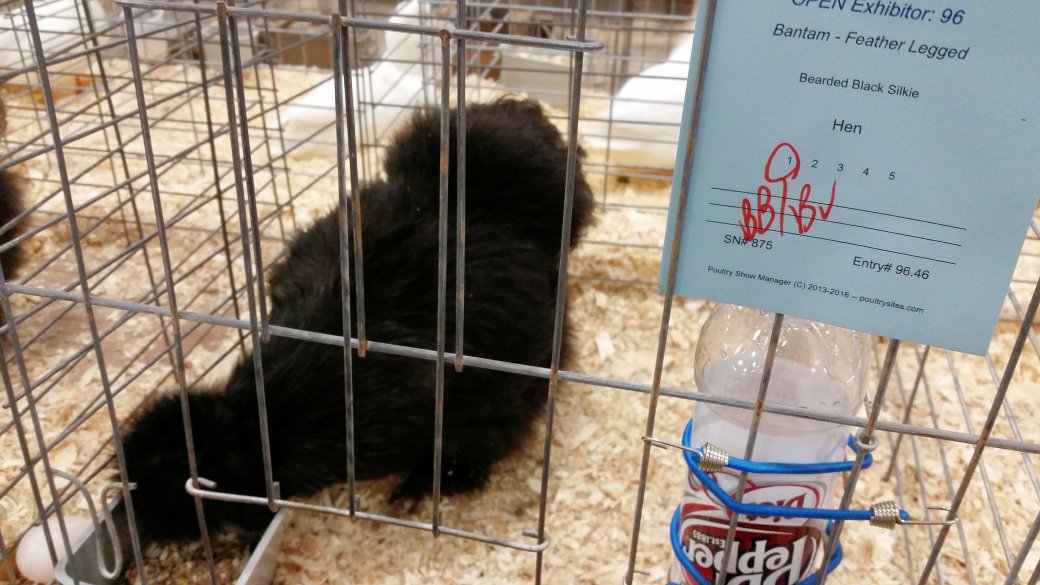
When you arrive you will check in and locate where your show cages are. They will not all be together, especially if you are bringing more than one breed of poultry. These show cages are very small. There will be some pine shavings already in the cage, but you can bring your own from home to add to it. Set up your feeders and waterers. If you are showing silkies, you will want the pop bottle waterer. I use mini bungee cords to secure the waterers instead of the springs that come with them. I bring jugs of water from my own home that has electrolytes added to it.
In my cage cups I put a wild bird seed mixture. This will help to keep their poo firmer and not make such as mess in their cages. Each cage has a card attached to it. Read the card carefully. It will say the breed, color (variety) and sex of the bird that should go into that cage. If the information is not correct then you need to find someone in charge and get it corrected.
You can then start to unload your birds from their carriers and into their show cages. As I do this, I carefully wipe clean their feet with baby wipes or citrus hand cleaner. Look around to see where the outlets are located in the building. You will need to be able plug in your hair dryer in the morning. I also put a little Vet Rx on the comb to help their immune system since they are in a new environment.
You can zip tie or lock your cage before you leave, but understand that the zip ties and locks must be off before the judge can inspect your bird. Then it’s off for a good night’s sleep and an early start the next day.
On Saturday morning you will want to arrive as soon as the doors are open. Check your birds for water and then remove the food from their cage until judging is over. You do not want your bird to have a full crop when it is being judges. Then get out your showbox supplies and plug in your hair dryer. Carefully check each bird for messy feet or feathers and try to clean it with a baby wipe. If it is a larger mess, use Cowboy Magic or Citrus hand cleaner.
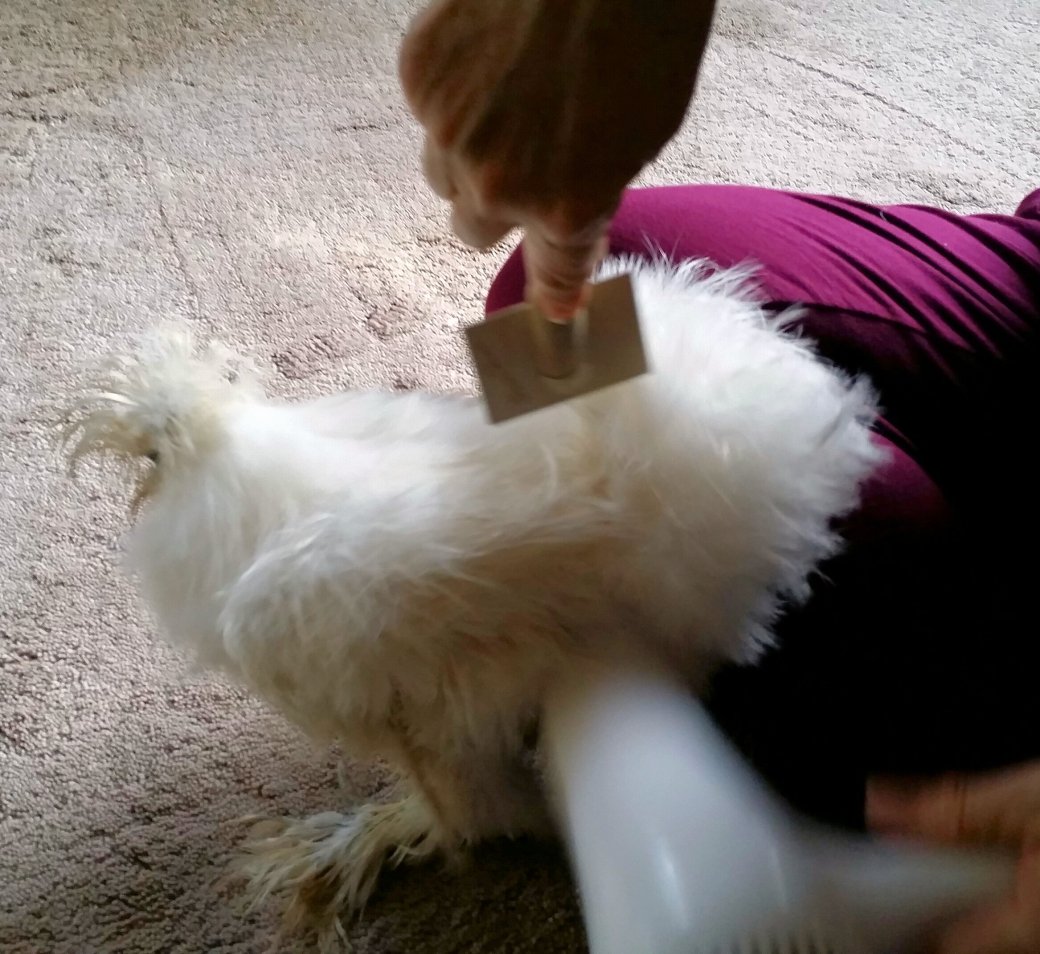
After they are cleaned up, I spray a cloth with Show Sheen and rub it all over the bird. I use the hair dryer to dry the show sheen and fluff up the silkie feathers. Use a slicker brush or a fine tooth comb to tease and back comb the fail feathers to make it look as fluffy as possible. When satisfied with the look of the bird, put it back in the cage and await judging.
Keep your cage as clean as possible and remove any poo or eggs as they come. You are not allowed in the judging aisle while the judge is there. I do like to observe from several aisles over white the judge is going over my birds. It helps me to understand my scoring card later.
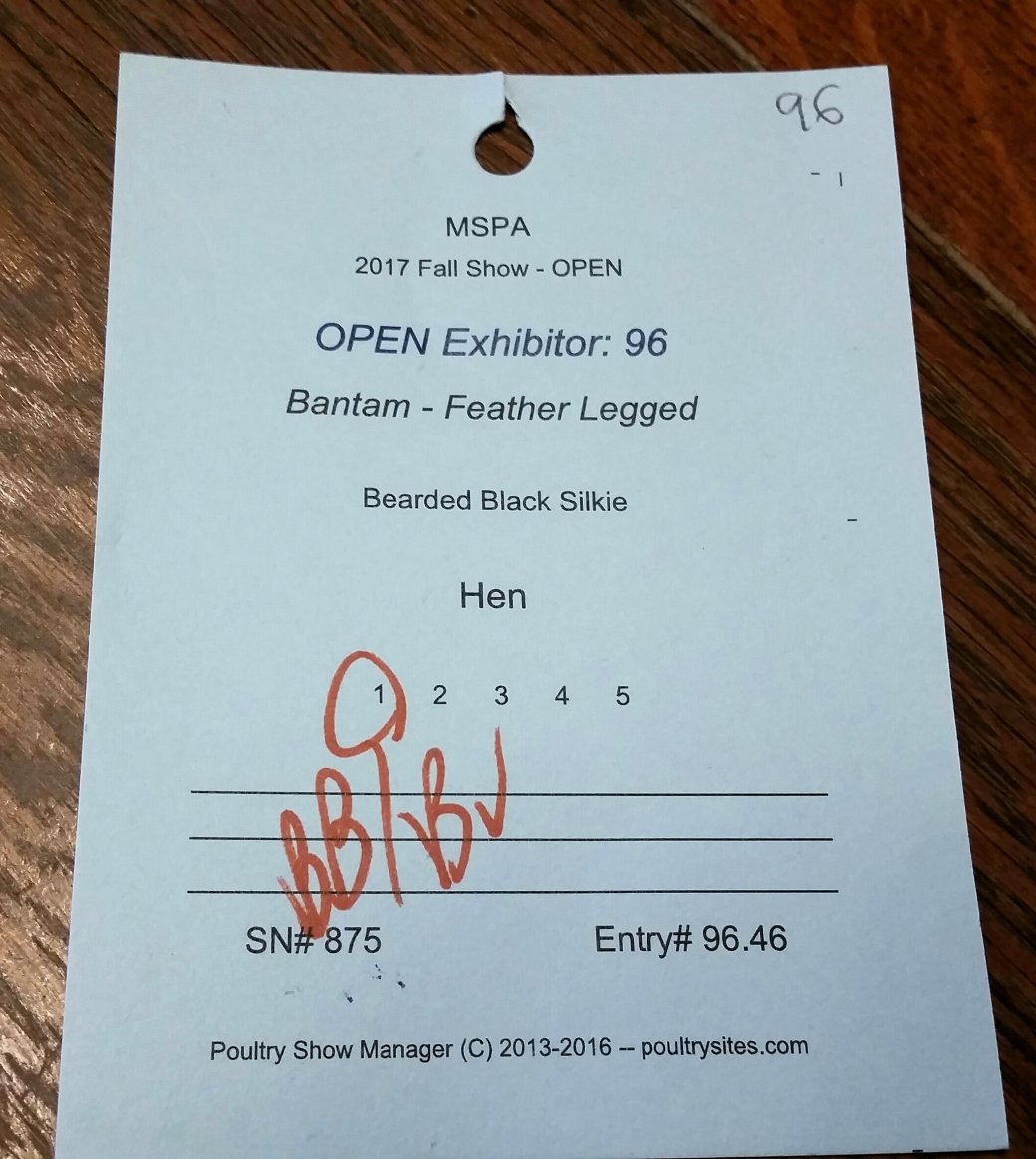
Learn to read a cage tag and interpret the judges markings prior to your arrival. The birds are first judged against others that are the same color, sex and age. For example, all the white silkie pullets are judged against each other. They will be given a ranking or 1, 2, 3, 4, 5 for the top five birds in this group. This is written or circled on the card. Then they will judge all the white hens, then all the white cockerels etc. until all of the white have been ranked. Then the judge will award BV (Best Variety) and RV (Reserve Variety). This is like first and second place. All of the other colors (varieties) in the breed are judged this way. When that is completed the judge will then decide BB (Best of Breed) and RB (Reserve best of Breed). This is based on all the colors (varieties) that are represented by the breed. The Best of Breed silkie is then judged against other winners that are in the Feather Legged category. Again, that winner will go to Champion Row and then compete for Best Bantam and Reserve. The winner of Best Bantam goes on to compete for Super Grand Champion of the show against the Grand Champion Large Fowl and Grand Champion waterfowl.
The judge will often write comments on the cards such as “nice” or “wing?”. What you don’t want to see is a DQ (disqualification) or a blank card with nothing written on it. You will need to find the judge later when they are finished to ask them questions about what was written or why they judged the way they did.
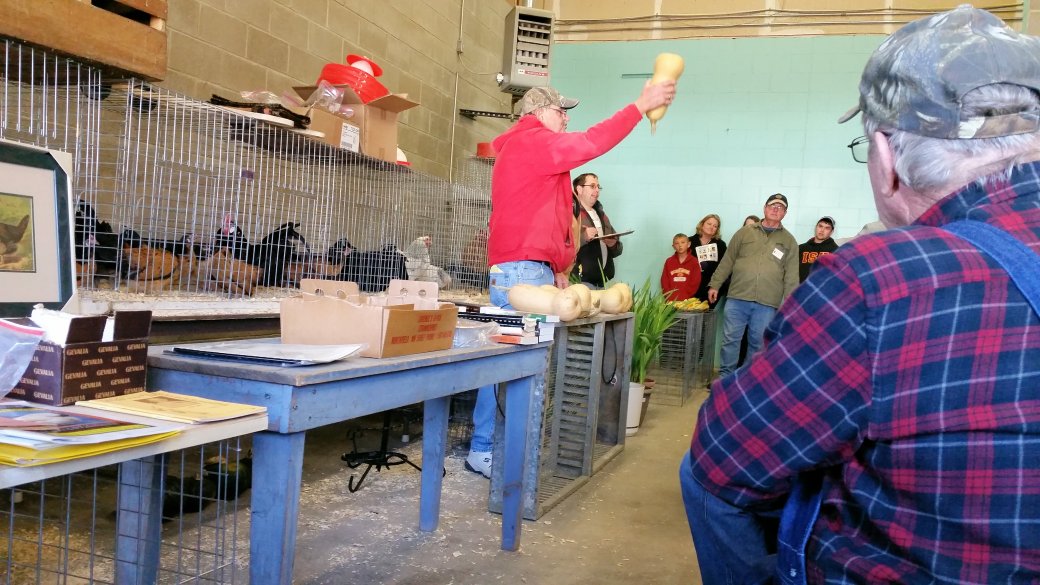
There are other things to do besides watching the judging. Jr. Showmanship will be taking place. It is always fun to watch the kids answer questions about their birds. There will be auctions and raffles to participate in. Vendors are often there so you can look at all the new chicken supplies.
Outside you will find many people selling birds from their cars or from specially marked areas. Food will be for sale as well as a special banquet at night where awards are often given out.
Sunday morning is coop-out time. Awards will be given at that time as well. Make sure that you do not remove your birds until the coop out announcement is made. Then it is a mad dash to quickly take down your food and waterers and load your birds back up in their carriers for the trip home. Before the bird goes in the carrier make sure that you give it a quick spray of Adams Flea and Tick in case they picked anything up at the show.
The best thing about any poultry show is the time that you get to spend with other chicken people. You will see old friends and make some new ones. You will get the chance to talk chicken to your hearts content with other like minded people. Plans will be made to meet next year again at the show.
For tips and tricks for raising outstanding silkies check out our Chicken Learning Center at VJPPoultry.com . VJP Poultry is an NPIP and state inspected hatchery located 30 miles north of St. Paul. We hatch out silkies all year long so we always have stock available. Like us on Facebook to get weekly updates on what we currently have for sale.
Victoria J. Peterson
The Grooming Process – Primping your Silkie for the Show
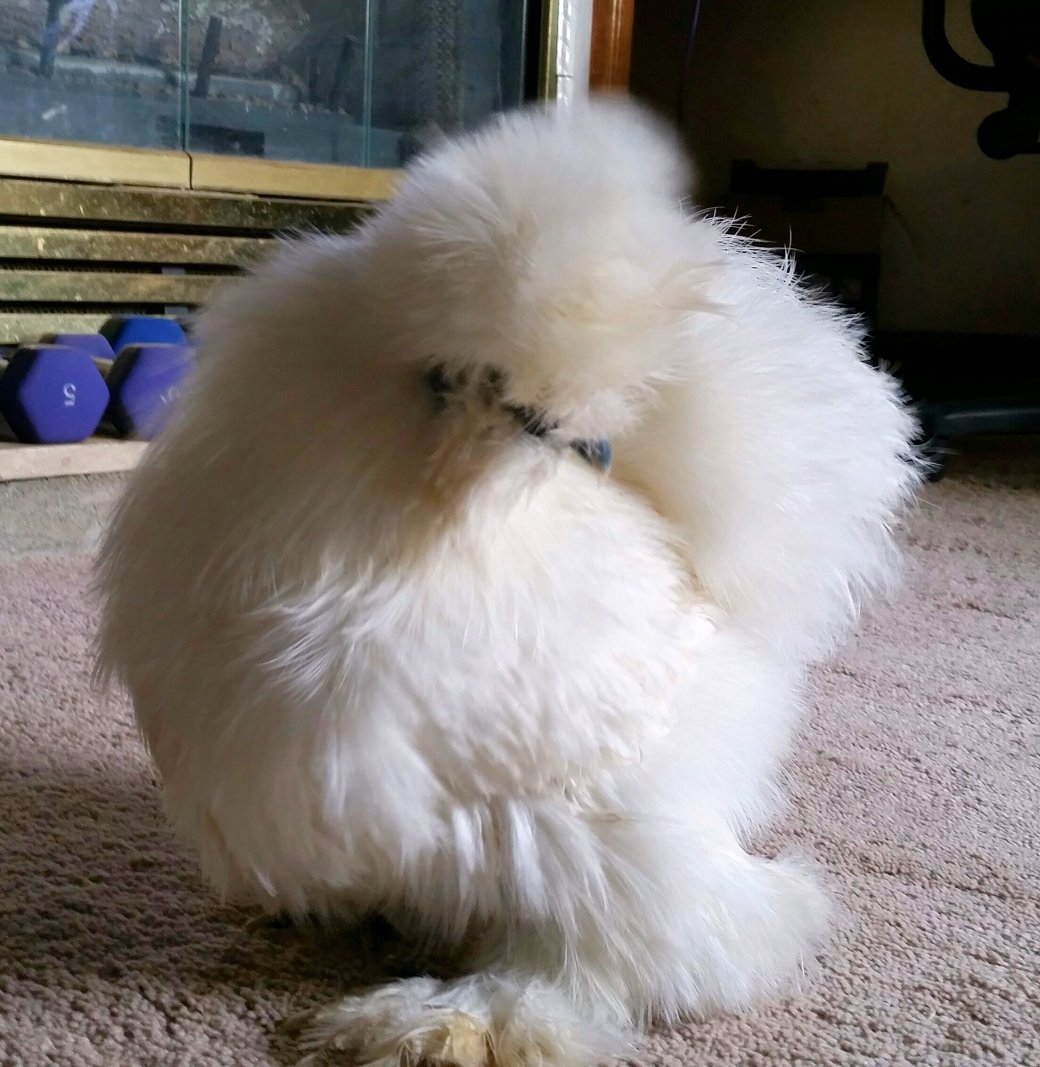 It’s a week until the poultry show and it’s time to think about primping, prepping and grooming your birds so that they all look their best. All of them will need to be bathed, toenails trimmed and beaks clipped and filed.
I find that I can bath around three birds a day successfully. On the Monday before the show I will trim toenails and beaks. I always do those two jobs before I start baths. If there is any bleeding the blood will not get into your bath water.
I use a diagonal wire cutter on the toenails. Do not trim too short or you will cut the quick and your bird will begin to bleed. Use an emery board to file down the sharp edges. There should be no sharp points which can scratch and hurt a judge. Remove any dirt or poo from the foot prior to the up coming bath. Hydrogen Peroxide and a cotton ball is good for loosening up all of that dirt especially in the scaly part of the leg. Hydrogen Peroxide is good for about one month after opening the lid. Exposure to air will lesson its abilities.
You will need to clip your bird’s beak if the top beak creates an overbite to the bottom beak. A toenail clipper works best for this job. The beak should come together with no overhang. File it with an emery board to sand away any rough edges.
I will start bathing the silkies on Tuesday starting with with the darkest birds The lighter ones will be done later in the week. I only do three a day because it takes a while to do a thorough job. I also want to make sure that they are dry enough to be placed back outside. Always bath your silkies in the morning so that they will be thoroughly dry by the time they go to sleep at night. It is very important that they do not go to bed damp.
Before starting the bath, I take the hydrogen peroxide and pour it into a small dish. I then take cotton balls and carefully clean around the eyes, beak and crest. Its like a good face washing. The hydrogen peroxide will help to break down the organic dirt and poo that sticks to the feathers. I also use an old tooth brush to clean the scales and toes with the peroxide. You could put some Spray ‘n Wash on the foot feathers if the are very stained.
I bathe my birds in the laundry room sink. It has a spray attachment which I really find handy. I start by gathering all of my supplies. You don’t want to be hunting for things when the bird is already wet and starting to get chilled. I will even have the hair dryer and combs all set and ready to go.
I first fill two large buckets with warm water. I fill them about waist high to the bird. Into one bucket I put about 1/2 cup white vinegar. The other is just plain water for the final rinse but you could add glycerin to it.
I put the bird in the sink and begin soaking the feathers in warm water. If you think that your bird might have mites, I would start with a flea and tick shampoo. I use blue Dawn or Ivory for the first wash. The Dawn dish foam pump is nice because it is easy to use while holding a bird in one hand.
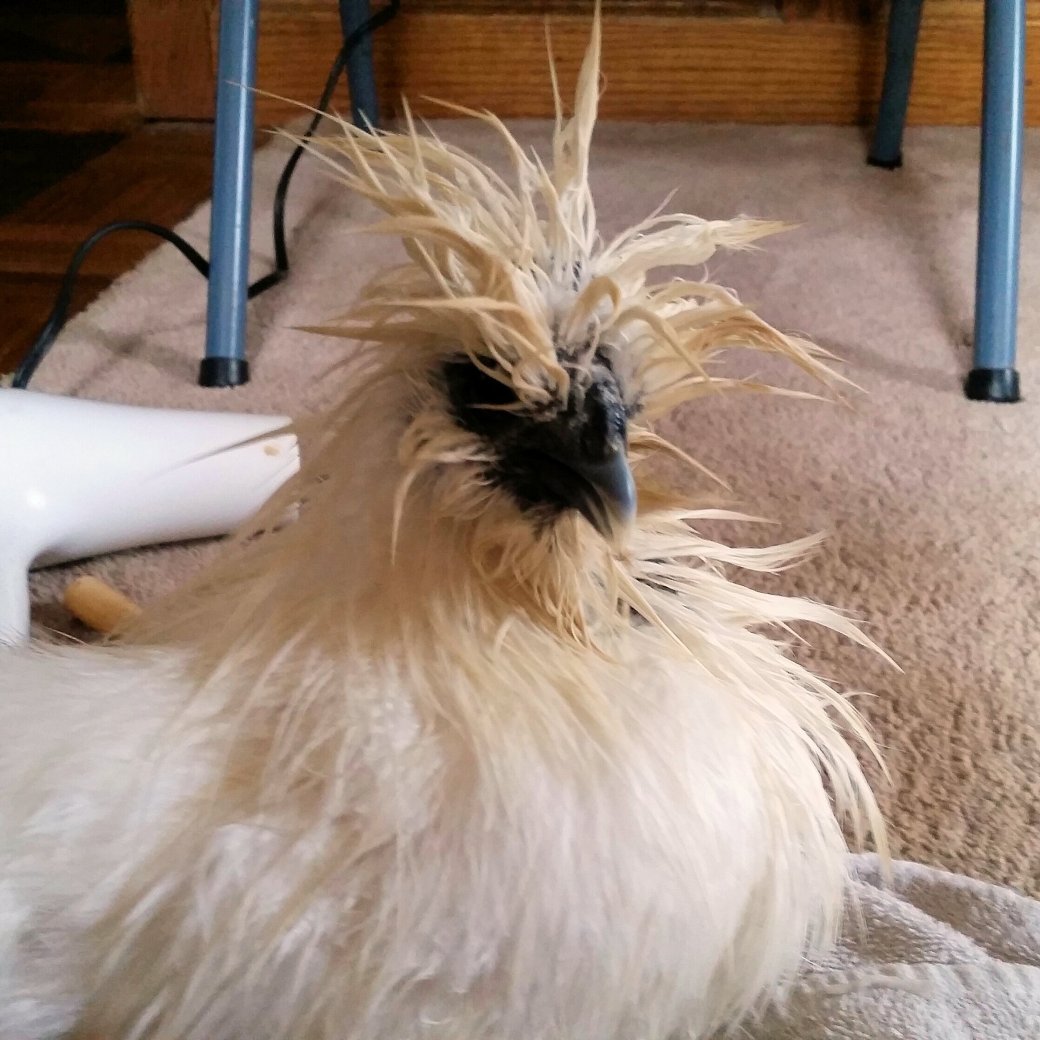 I start with the crest and then work my way down. Dirty areas include the crest, beard, vent and foot feathers. I use the sprayer to carefully rinse the Dawn soap out. To remove the soap from the crest, I tip the bird upside down and then rinse with the sprayer. This way the soap does not drip into its eyes.
White birds can become dingy in color turning a grey or yellow. This can happen from being out in the sunlight too often or being fed corn which discolors white feathers. Adding bluing to your dingy whites will make your whites appear whiter. The effect is not permanent and bluing will wear off.
The second shampoo is either a bluing shampoo if it is a white bird or a color enhancing shampoo if it is a dark colored bird. Horse shampoos offer a variety of colors. I use the Gallop brand but you could also use a human bluing shampoo or just add laundry bluing to the water. Be careful with the bluing shampoo that the bird is soaking wet before applying or you may end up with a dyed blue or purple chicken.
Rinse as much soap off as you can with the sprayer and then place the bird in the bucket with the vinegar rinse. The vinegar will cut the soap so that it does not stick to the feathers.
Place the bird in the final rinse water. Always hang on tightly to your bird. Do not let its beak go under the water line. You can add some glycerin to the final rinse for extra shine. Remove the bird and squeeze as much water out as possible. Then wrap it tightly in a towel to absorb water and help it stay warm. It should look like a silkie mummy.
I leave the bird tucked up in the towel but begin to use the hair dryer on the crest. Use the low setting on the hair dryer so as not to burn the skin of the silkie. I gradually undo more of the towel as I do drying the bird and fluffing the feathers with my fingers. You can also use a comb or slicker brush. It will take a while to get it dry enough that she can finish the job herself. If it is cold out have her stay somewhere warm like a bathtub until she is dry enough. She will finish preening and applying oil from her oil gland. Baths should be at least one full day before leaving for the show to get the natural oils back on the feathers. Add some Vet Rx to shine up the toes and comb.
Place your bird in a separate small holding coop that has fresh shavings or back in her old coop which would also have new shavings put down. Keep her locked up and out of the muddy run. Remove any poo you see so that she is not stepping in it.
Some people put booties on their feathered feet to keep their foot feathers from staining.
Hopefully your bird will stay clean until it is time to pack up and head for the poultry show.
For tips and tricks for raising outstanding silkies check out our Chicken Learning Center at VJPPoultry.com . VJP Poultry is an NPIP and state inspected hatchery located 30 miles north of St. Paul. We hatch out silkies all year long so we always have stock available. Like us on Facebook to get weekly updates on what we currently have for sale.
Victoria J. Peterson
Does a Silkie Need a Christmas Gift? 12/05/16
I have always loved this video – VJP Poultry’s- Ballet of the Unhatched Chick- because it shows chicken’s somewhat playful side. Some people refer to this as “Chicken Football” because they are all chasing after the one meal worm that someone has in its beak. Do chickens play? Do they get bored? Do they require a gift at Christmas? These are all questions people have asked about their birds.
Well, Cyber Monday is over, but there is still time to order your chickens a few treats online before December 25th. Most of the customers at VJP Poultry consider their chickens to be family pets. They lavish love and attention on their silkies and I would bet that some of them are planning a few Christmas surprises in their chicken’s stockings.
Most gifts are the kind that silkies can eat or the kind that silkies can play with. Let’s start with the chicken toys. Most of the chicken playthings are balls that can be filled with treats. The chicken pushes the ball around and treats fall out. Some of the balls are more complicated and the chicken needs to work at it to get the treats out. An example would be Lixit Chicken Toy
The toy that I liked the best was the Chicken Veggie Ball .It is described as “an entertaining way to provide nutritious treats to a backyard flock”. You can put a head of lettuce or cabbage inside it and watch your flock kick it around like a soccer ball. This idea has been around for a long time. Oldsters used to tie a rope around a head of cabbage and hang it on a hook inside of the coop for the same effect. All of these toys are good boredom busters for your birds in the wintertime.
The most unusual toy was the Chicken Swing. The chicken hops on and is able to pump the swing back and forth. Probably not the best gift for a silkie as they may have a hard time jumping on , but other breeds seem to swing just fine on it.
Silkies always like special food treats. There is the Flock Block which lets them peck away and find treats of corn and seed. They are manufactured by many different companies and you should find it at your local feed store.
The treat my flock loves the best are meal worms. Real or freeze dried, they go crazy for them. I have, in the past, kept a meal worm farm going in my house. The live worms are a great source of protein and a wonderful way for you to bond with your bird. They will come running every time they see you if they think that you have worms for them in your apron pockets. You can also purchase freeze dried worms from Happy Hen Treats .
There has been a craze of late for putting chickens in sweaters and other kinds of outfits. You are not doing your chickens any favors by doing this. It will compromise their ability to self – regulate their body temperature. Best to leave the clothes off the birds unless it is Chicken Diapers for inside of the house. You can give them a little jewelry by giving them leg bands that have charms on them. If you are looking for a gift for a guy, check out Gifts For Guys Who Like Chickens. We also have Gifts For Silkie Chicken Lovers for anyone who likes silkies.
If you are interested in gifts for the Chicken Lady or for chicken loving kids or gifts for the home for chicken lovers check out our weekly silkie blog at VJPPoultry.com. We also have silkie basics at Silkie Supplies.
So, do chickens play? I think so. All animals play. I know that the chest bumping I see among juvenile silkies seems to have a very playful nature to it. Do Chickens get bored? Yes, often this will result in pecking to the extreme. Do they need Christmas gifts? That’s up to you. I know that my little silkies will be getting some nice meal worms come Christmas Eve.
For tips and tricks for raising outstanding silkies check out our Chicken Learning Center at VJPPoultry.com . VJP Poultry is an NPIP and state inspected hatchery located 30 miles north of St. Paul. We hatch out silkies all year long so we always have stock available. Like us on Facebook to get weekly updates on what we currently have for sale.
Victoria J. Peterson
 VJP Poultry