Heat Lamp Use at VJP Poultry – 12/20/16

20161123_120428    Now that the weather is getting colder, I have a lot of VJP Poultry customers asking me about using heat lamps in their coops. People are concerned that their silkies will not be able to stand the cold of a Minnesota winter.

My use of heat lamps has changed dramatically since I started raising silkies seven years ago.  I used to worry that my silkies would die from exposure. I had 250 Watt heat lamp bulbs hanging in every color pen the entire winter. Some even had two hanging in them.  My electric bill was crazy. I kept the windows open only a crack and tried to raise the temps as high as I could inside.

After seven years of experience , I now rarely turn on the heat lamps in my outside coops. The silkies are fine. They actually are very winter hardy. They have a small comb so you don’t need to deal with frostbite issues. They aren’t fond of snow but they do love to go out into their runs no matter what the temperature. What is cold for a human is not cold for them. Think about all of the woodland birds. They do just fine in the cold Minnesota winter.

I have one 250 Watt heat lamp above each waterer just in case it gets really cold. I did have them all on during the spell of -40 windchill. They shouldn’t be thought of as a way to heat an entire room. They only heat what is directly below them. If it gets to be around -10 I will flip the heat lamps on. My waterers are heated a different way (from below) so I don’t need the heat lamps unless it is super cold and the water is staying frozen.

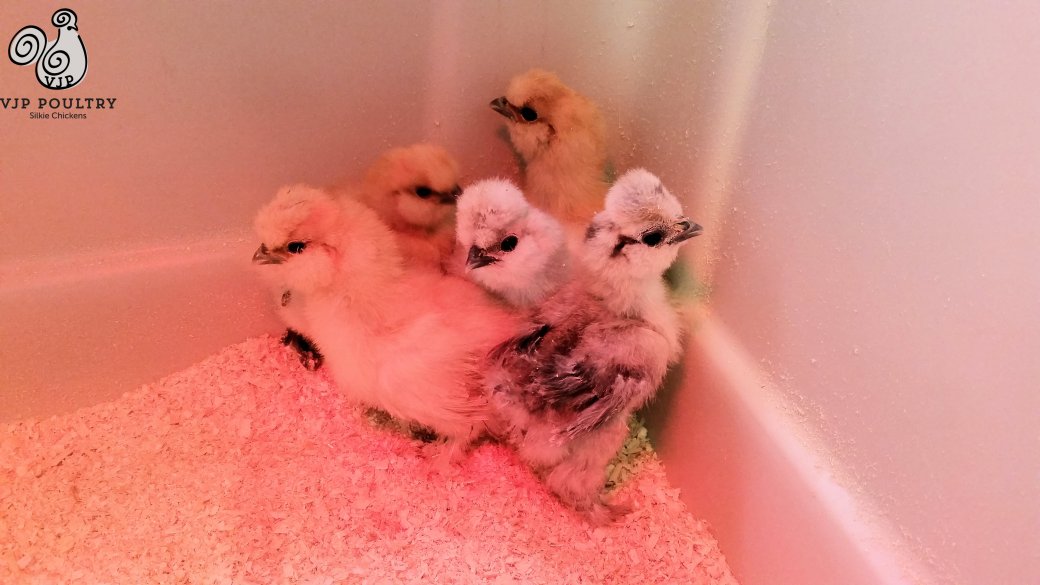
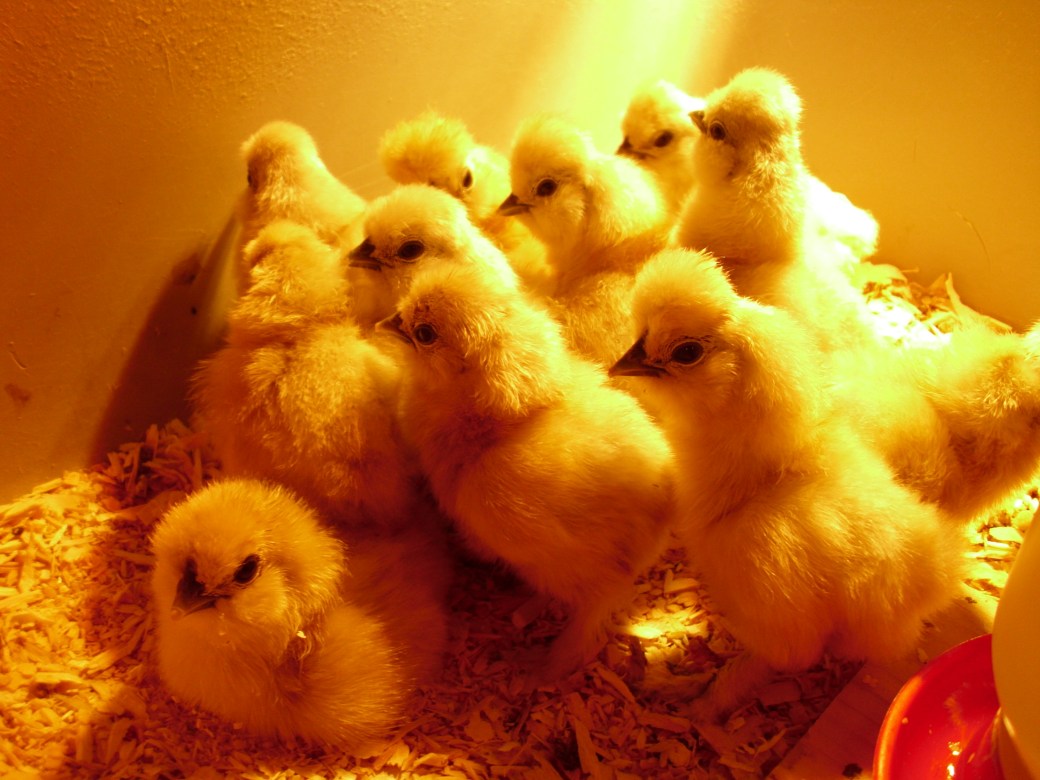
I do use heat lamps in my baby chick room. I like to use the lower 125 watt bulbs. They are not as hot and not as expensive to run. I will use a heat lamp over the newborns and the one week olds  I don’t always use it over the two week old, but I could if I needed to. The chicks are in a small room off of my garage. The room is not heated with central air, so I also use a standing space heater to keep the entire room warm during January.

I am very aware that heat lamps must be hung securely. I use chains and wire so I can adjust the distance down to the brooder. I do not rely on the clamps that come with them. Heat lamps that are not secure and fall can easily start a fire. Make sure that the hoods are wiped clean of dust and that you also blow out the outlets with an air hose.

Heat lamp bulbs gradually become less strong the longer you have used them.  You are still paying for the same amount of electricity from the 250 Watt  bulb, but you are not receiving the same amount of heat the longer you continue to use it. When I feel that its not as strong anymore, I generally switch it out for a new bulb.  I don’t want the surprise of it burning out when I really need it over newborn chicks. The 125 Watt bulbs are harder to find so we order ours online.

Remember, it is not the lack of heat that can cause issues with silkies in the winter. It is the moisture present in the coop. If you are seeing frost on your doors or walls, it is a sign that there is too much moisture and not enough ventilation.  Open the windows, but keep the drafts off of the sleeping birds. I use pillow cases stuffed with old T-shirts and place them in front of the pop holes to block the drafts on the floor.

Electricity from heat lamps can be costly. One 250 Watt heat lamp costs about 90 cents a day to run. Add a space heater and that would be an additional $1.80 a day to run.

At VJP Poultry, we use heat lamps as sparingly as possible. They are necessary for young chicks in the first few weeks of life. Make sure they are hanging securely and change out the bulbs when they start losing their heat. They can be a useful part of your breeding program.

An alternative to heat lamps brooder heat plates. There is less of a chance of fire with these.  You can also use the sweeter heaters that are hung from a chain above the chicks. This would be a more secure way of doing it.

For tips and tricks for raising outstanding silkies check out our Chicken Learning Center at VJPPoultry.com .  VJP Poultry is an NPIP and state inspected hatchery located 30 miles north of St. Paul.  We hatch out silkies all year long so we always have stock available.  Like us on Facebook to get weekly updates on what we currently have for sale.

Victoria J. Peterson
VJP Poultry newborns 4

Does a Silkie Need a Christmas Gift? 12/05/16

I have always loved this video – VJP Poultry’s- Ballet of the Unhatched Chick- because it shows chicken’s somewhat playful side. Some people refer to this as “Chicken Football” because they are all chasing after the one meal worm that someone has in its beak.   Do chickens play? Do they get bored? Do they require a gift at Christmas? These are all questions people have asked about their birds.

Well, Cyber Monday is over, but there is still time to order your chickens a few treats online before December 25th.  Most of the customers at VJP Poultry consider their chickens to be family pets. They lavish love and attention on their silkies and I would bet      that some of them are planning a few Christmas surprises in their chicken’s stockings.

Most gifts are the kind that silkies can eat or the kind that silkies can play with. Let’s start with the chicken toys. Most of the chicken playthings are balls that can be filled with treats. The chicken pushes the ball around and treats fall out. Some of the balls are more complicated and the chicken needs to work at it to get the treats out. An example would be Lixit Chicken Toy  or Peck and Play Ball .

The toy that I liked the best was the Chicken Veggie Ball .It is described as “an entertaining way to provide nutritious treats to a backyard flock”. You can put a head of lettuce or  cabbage inside it and watch your flock kick it around like a soccer ball. This idea has been around for a long time. Oldsters used to tie a rope around a head of cabbage and hang it on a hook inside of the coop for the same effect. All of these toys are good boredom busters for your birds in the wintertime.

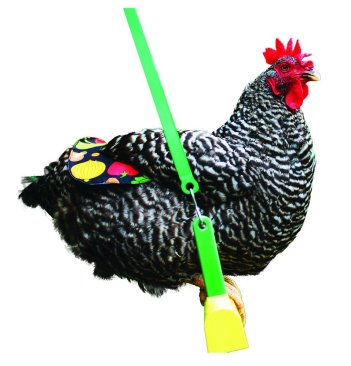
The most unusual toy was the Chicken Swing. The chicken hops on and is able to pump the swing back and forth. Probably not the best gift for a silkie as they may have a hard time jumping on , but other breeds seem to swing just fine on it.

Silkies always like special food treats. There is the Flock Block which lets them peck away and find treats of corn and seed. They are manufactured by many different companies and you should find it at your local feed store.

The treat my flock loves the best are meal worms.  Real or freeze dried, they go crazy for them. I have, in the past, kept a meal worm farm going in my house. The live worms are a great source of protein and a wonderful way for you to bond with your bird. They will come running every time they see you if they think that you have worms for them in your apron pockets.  You can also purchase freeze dried worms from Happy Hen Treats .

There has been a craze of late for putting chickens in sweaters and other kinds of outfits. You are not doing your chickens any favors by doing this. It will compromise their ability to self – regulate their body temperature. Best to leave the clothes off the birds unless it is Chicken Diapers for inside of the house. You can give them a little jewelry by giving them leg bands that have charms on them.  If you are looking for a gift for a guy, check out Gifts For Guys Who Like Chickens.  We also have Gifts For Silkie Chicken Lovers for anyone who likes silkies.

If you are interested in gifts for the Chicken Lady or for chicken loving kids or gifts for the home for chicken lovers check out our weekly silkie blog at VJPPoultry.com. We also have silkie basics at Silkie Supplies.

So, do chickens play? I think so. All animals play. I know that the chest bumping I see among juvenile silkies seems to have a very playful nature to it. Do Chickens get bored? Yes, often this will result in pecking to the extreme. Do they need Christmas gifts? That’s up to you. I know that my little silkies will be getting some nice meal worms come Christmas Eve.

For tips and tricks for raising outstanding silkies check out our Chicken Learning Center at VJPPoultry.com .  VJP Poultry is an NPIP and state inspected hatchery located 30 miles north of St. Paul.  We hatch out silkies all year long so we always have stock available.  Like us on Facebook to get weekly updates on what we currently have for sale.

Victoria J. Peterson

chicken-swing

Silkies For Sale – 10/26/16

Silkies For Sale – 10/19/16


Adult Black Pen


When I began my silkie journey seven years ago, the first colors I started with were Black and Blue. I was told by my breeder that they were the two easiest colors to start with. You can pen Blue, Black and Splash together. They breed true according to certain percentages. Eventually, I separated my Black pen and my Blue pen because it was getting too difficult to tell the difference between the Black chicks and the very dark Blue chicks. I wanted to keep my blacks undiluted and as coal black as possible. The very Black roosters will have a beetle green sheen in their tails which the diluted blacks will not always have. True Black is very desirable for people working with breeding Paint silkies. In order to breed them you need that very dark black color. Black Silkies combs should be a walnut shaped circle with a horizontal line running across it. The comb should be very dark.
I currently have 12 Black hens and 2 Black roosters. I try to always keep two roosters in each color pen. Usually a young one (one year) and an older one (two years or more). I do switch out and bring in new roosters about every year. Sometimes I grow out my own chicks to use and sometimes I purchase from another breeder. I always stick with the same breeder (thanks always, Amy Piehl) because she has excellent stock and because if I jump around and buy from other people, I am opening up a whole can of genetic worms. Bringing in new genetics can make your chicks more healthy, but it can also cause headaches and genetic faults that can be introduced to your flock.
The APA and ABA recognize silkies in eight different color varieties: Black, Blue, Buff, Gray, Partridge, Self Blue (lavender), Splash and White. The standard of Perfection is used in judging. It states that “Black birds should be even although a small amount of color is permissible in the hackle but not desirable.”
Black silkies are very difficult to photograph. They either end up looking like they have a brownish tint to them or they look like black blobs with no features. I am sure there are some tricks that can make them really stand out. Let me know if you know them.
Black has always been one of my favorite colors of silkies. They are so beautiful wandering on the green grass on a sunny day. They always look clean. I have seen some gorgeous Black silkies in the show ring. Hopefully, you will choose to add some of these stunning birds to your flock.

For tips and tricks for raising outstanding silkies check out our Chicken Learning Center at VJPPoultry.com .  VJP Poultry is an NPIP and state inspected hatchery located 30 miles north of St. Paul.  We hatch out silkies all year long so we always have stock available.  Like us on Facebook to get weekly updates on what we currently have for sale.

Victoria J. Peterson

VJP Poultry Logoban