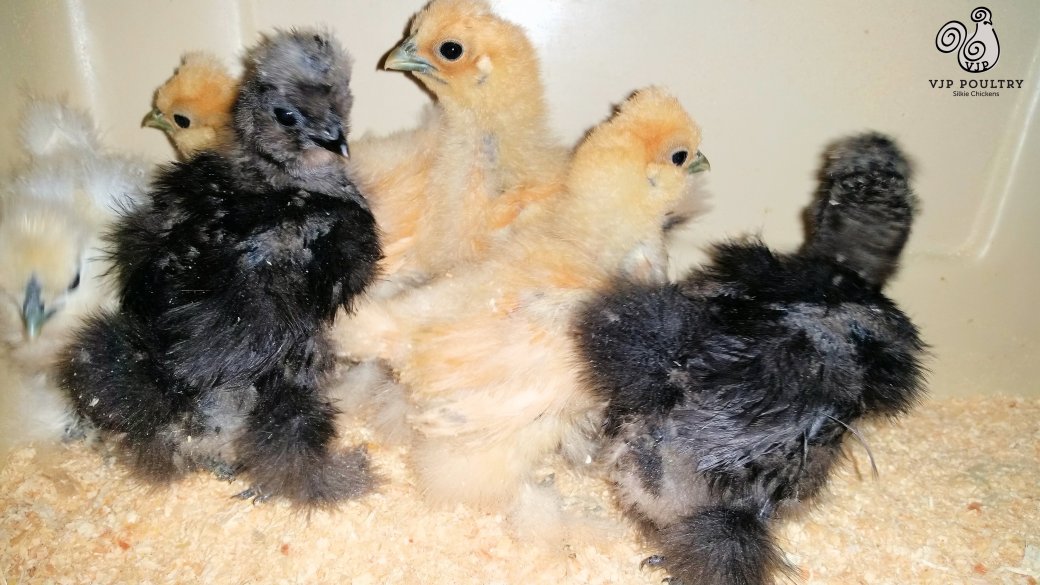
Vitamins, Silkies, and Wry Neck

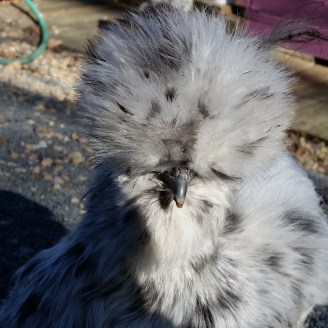
20161122_152047    Silkies are sometimes described as a more high maintenance breed of chicken.  Owners are known to give them baths and pedicures and to trim around their eyes when they are so fluffy that they can no longer see.  Many live a pampered existence.

Silkies are often thought to need a higher protein chicken food than most other breeds.  We feed all of our adult silkies a Gamebird Conditioner feed which is 20% protein.  But, does the feed contain all of the vitamins needed for outstanding birds?

Most commercial feed companies will make sure that there is the proper amount of vitamins and minerals for the type and age of the bird. For example, layer feed will have the higher amount of calcium that the hen needs to create egg shells.

However, with any product, the age of the feed is critical to its nutritional content. Vitamins are sensitive to changes due to light, heat and moisture and can lose potency over time.

Some people try to create their own feed mixtures and this can leave the birds with incorrect amounts of certain vitamins and minerals.  Corn and scratch are enjoyed by chickens but are empty calories.

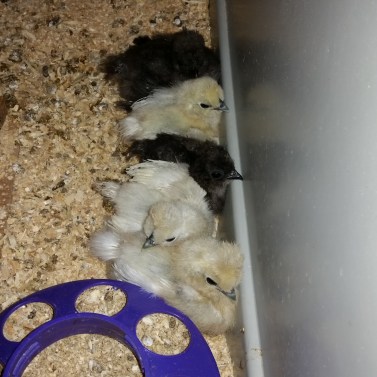
Silkies need extra vitamins during times of stress, very cold weather, when they are breeding , when they are chicks and growers and when they are ill.

There are two kinds of vitamins.  Fat soluble and water soluble.  Water soluble vitamins are not affected by the fats in the chickens diet. These would be the B and C vitamins.  If too much is ingested, it is excreted through the urine.  Fat soluble vitamins are A, D, E and K.  More care needs to be taken not to over supplement these particular vitamins.
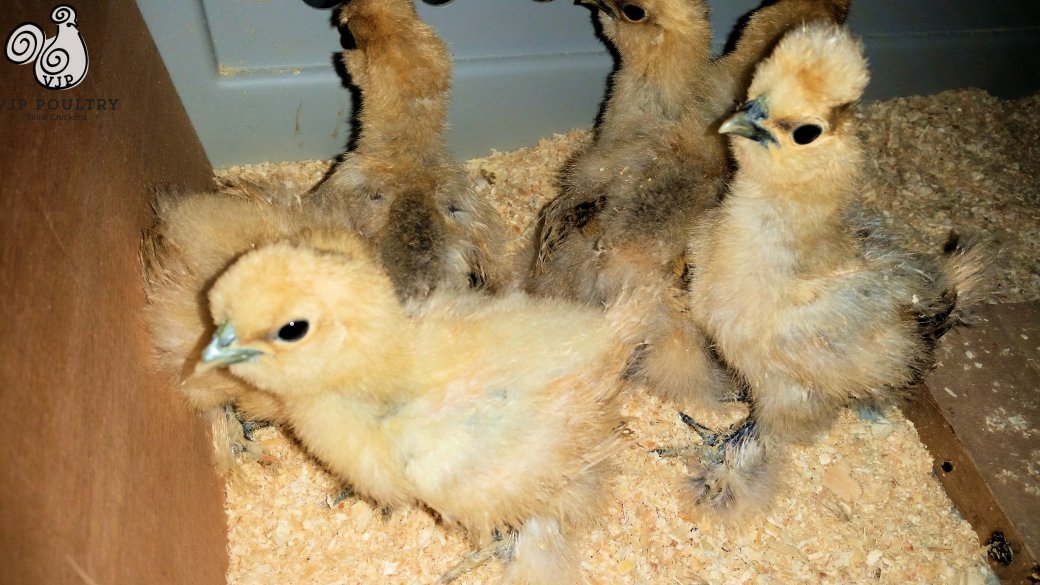
20161123_114322

Cluck N Sea Kelp is a nice mixture of Kelp meal that can be added to the regular feed with many benefits. Poultry Power can be added to their food and is a good source of vitamin E.  Life Lytes Mega tabs is another product that can be added to the water. It is a good souce for vitamins A, B12, D and E. Durvet Vitamins and Electrolytes   is what I use to add to both my chick’s and adult’s water.   Rooster Booster is a product I would use with adults for show conditioning or if I was having problems with roosters not performing.  Nutri Drench can be used if you have a sick chick and need something fast acting.

Now a word about Wry Neck…. Wry Neck is evident when you see a bird tucking her head between her legs.  It usually hits young chicks but can happen in older birds.  This can be caused by a vitamin E deficiency .  Vitamin E and vitamin B complex are both known to be good for neurological disorders.

Wry Neck is different from a peck on the head, which silkies are very susceptible to. Their vaulted look when chicks is caused by an opening in their skull like a baby’s soft spot. Pecks can lead to head injuries that look very similar to what you see with Wry Neck.  Vitamin E and Selenium (helps animals absorb vitamin E) can be helpful with these injuries.

If you think that your silkie has wry neck or a head injury, the first thing to do is separate  it from the rest of the flock.  Stress will make it worse, so it needs a quiet environment.  Take a vitamin E capsule and squirt it onto its feed or into its mouth.  Take  25 micrograms of a selenium tablet (or break a 50 mcg tablet in half ) and crush that up and add it to the feed.  Give this to the chick two or three times a day.  You may have to hand feed it if it is not eating by itself.  It may take as long as a month before the condition disappears.  Keep giving it the vitamins for two additional weeks beyond where they appear to be recovered. Wry neck affects 8% of chicks across all breeds.  It is not contagious.

Since silkies are more prone to head injuries, you may want to take care  not to place them in a pen along with more aggressive chickens.  Keep them away from bully birds and do not place them in crowded situations.

As a preventative and just for general good health, I place 1/16 tsp of vitamins and electrolytes per 2 quarts of water.  This is at the feed supplementation level.  More could be used if the bird was showing illness.  I also add 1/2 tsp of apple cider vinegar to the 2 quarts of water.  The chicks are given vitamins every day but the adults are given it every other day.  With the adults  I alternate with Red Cell ( one half capful per gallon of water ) and regular vitamins as well as days where they just get plain water.  Use less vitamins on hot days as they will drink more water than usual.

For tips and tricks for raising outstanding silkies check out our Chicken Learning Center at VJPPoultry.com .  VJP Poultry is an NPIP and state inspected hatchery located 30 miles north of St. Paul.  We hatch out silkies all year long so we always have stock available.  Like us on Facebook to get weekly updates on what we currently have for sale.

Victoria J. Peterson
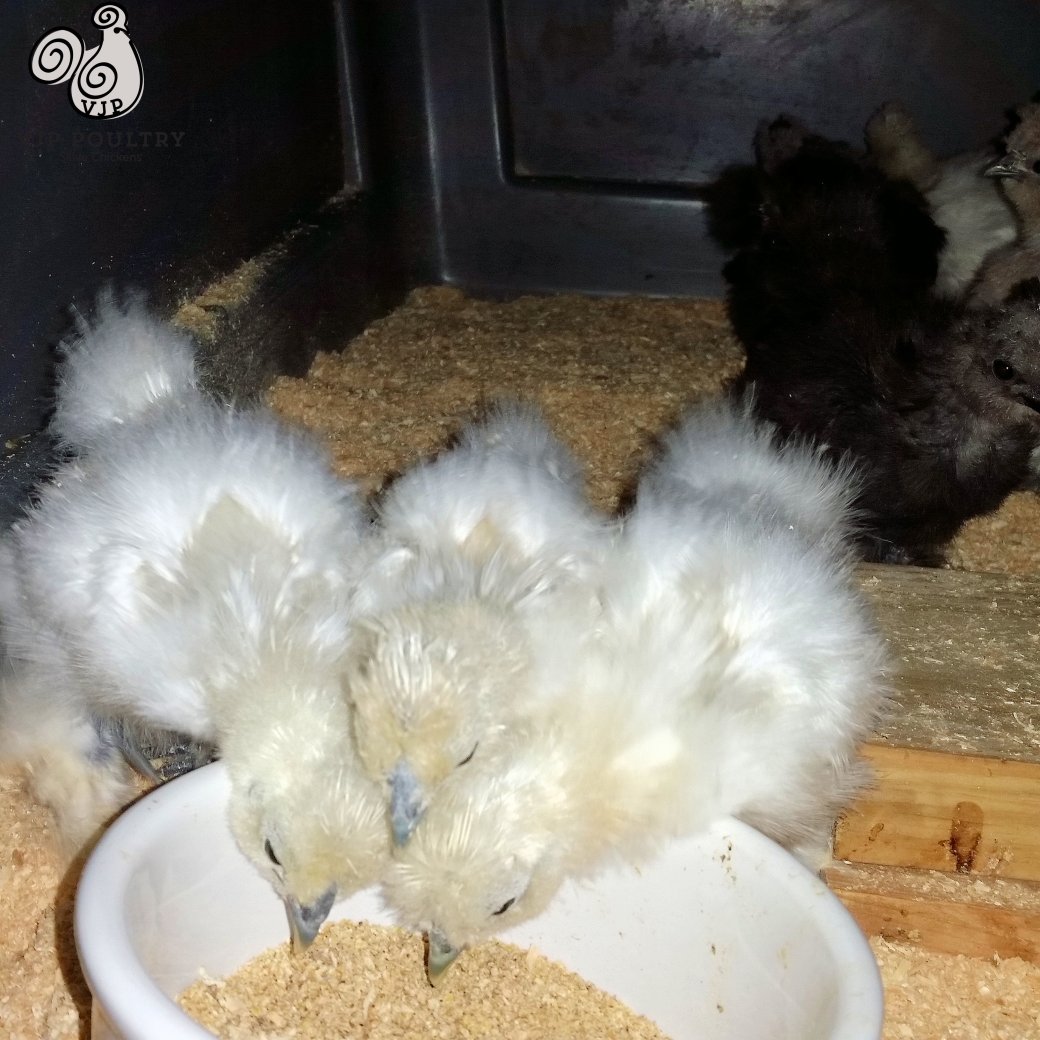
20161122_115801


Gardening With Chickens – Lando, the Gardening Silkie Rooster

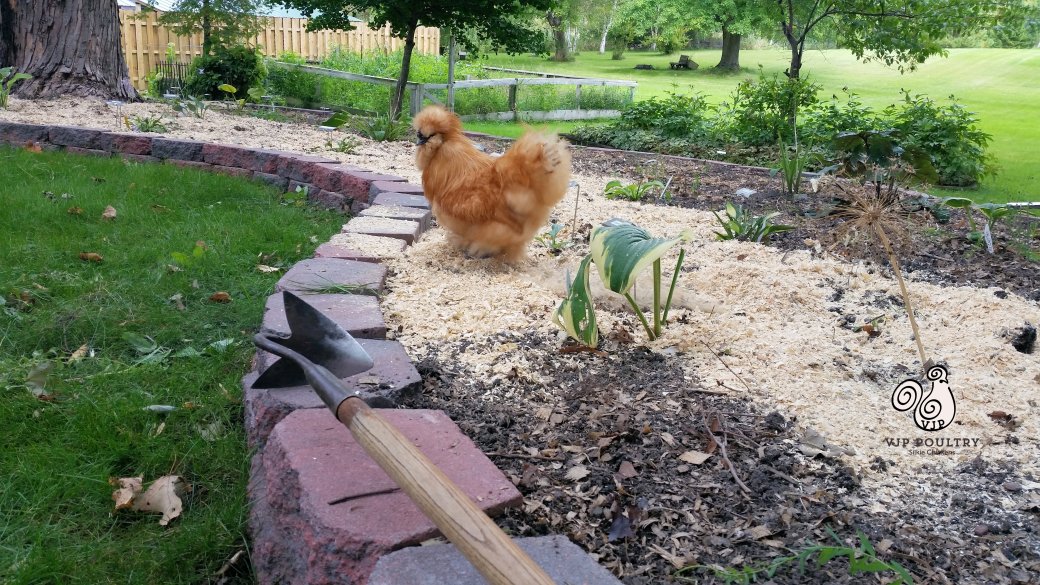
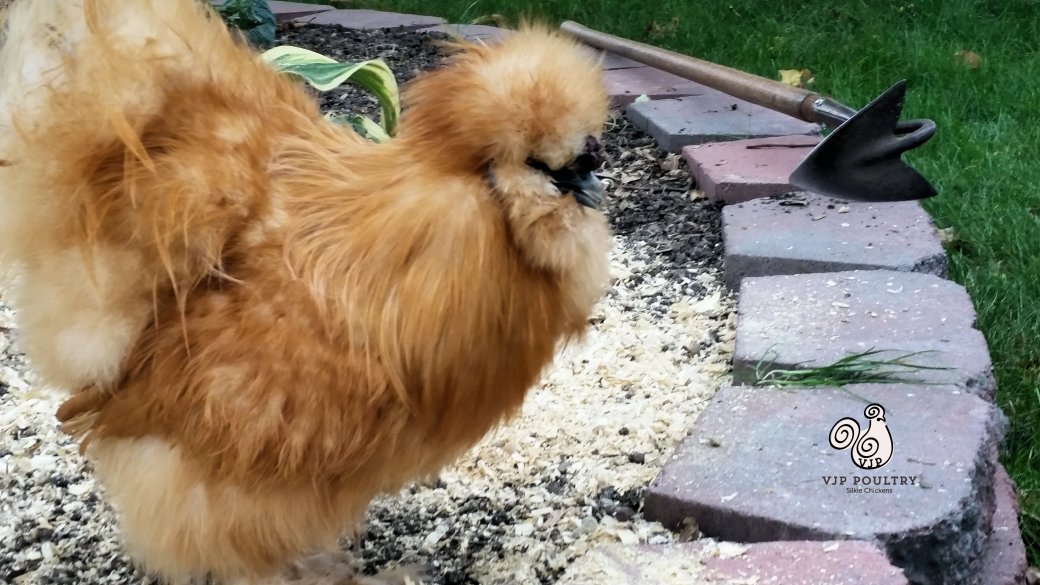
20170907_151637      Every time I head out to the garden to work, I have one, very excited companion.  He is Lando – the gardening rooster.  Lando is a free ranger and most of the day is content to follow me around as I do my daily chores.  He especially loves the gardening ones.  He will flap his wings and crow with excitement when ever he sees the gardening hoe.   He will then race over to the garden and begin to scratch and till the soil.  By scratching and pulling out vegetation, he is preparing the ground for new planting.

You can do the same with your flock by moving them around wherever you need some soil broken up or tilled.  They will be happy to do the job for you.  A chicken tractor is a great tool for this.  Just leave them in one spot for a week and they will have it cleared for planting.  At the same time they will be fertilizing the soil with their chicken droppings.

20170907_151622

Chicken poo is a great source of nitrogen for your compost pile.  To make great compost you need nitrogen and chicken manure is very rich in nitrogen.  You can use a tumbler compost container or a box compost style. I use a box style at my house.  Simply add droppings daily to the compost.  Keep a compost container in your kitchen to collect food scraps and coffee grounds.

You will need something to turn the compost suck as a aerator crank.  A compost  thermometer is nice so that you can know whether the compost is heating up to the right temperature in order to kill the wrong bacteria.

Chicken manure is like gold for your garden.  I scrape off every bit of it with a stiff putty knife from the area where they sleep and the ramp they walk down. I will pick up large chunks and toss it into the compost heap.

I use the used bedding from the coop to mulch around the garden beds.  Fresh dropping that have not been composted can be too hot and may burn the plants, so keep the mulch some distance from the plant’s base and leaves.

I even save the liquid from the waterers each day and use it to water my plants. There is often chicken poo that has made its way into the waterer and that helps to fertilize the plants as well.

In the garden I like to wear my chicken Slogger gardening boots with the cute pictures of chickens on them.  Lando likes them too as he is always pecking at the pictures.

I plant herbs in my garden which will benefit my flock.  Oregano is a natural antibiotic. Just dry it and add it to your chicken’s water supply.  Sage is an antibiotic that can be used to combat salmonella in chickens.  Bee balm aids in respiratory problems and digestive tract health.  Thyme aids in respiratory health and has an antibiotic and antibacterial properties.  Parsley is a laying stimulant.  These herbs can be dried and added to both feed and water.

A good read is “Gardening With Chickens” by Lisa Steele.  It contains ideas for planning a garden with chickens in mind.  It has some gorgeous photos.

Nothing is more relaxing than spending time in the garden.  Lando is my gardening buddy and he makes sure that all the plants needs are taken care of.

For tips and tricks for raising outstanding silkies check out our Chicken Learning Center at VJPPoultry.com .  VJP Poultry is an NPIP and state inspected hatchery located 30 miles north of St. Paul.  We hatch out silkies all year long so we always have stock available.  Like us on Facebook to get weekly updates on what we currently have for sale.

Victoria J. Peterson
20170907_151605

Silkies For Sale – 9/10/17

Does a Silkie Need a Christmas Gift? 12/05/16

I have always loved this video – VJP Poultry’s- Ballet of the Unhatched Chick- because it shows chicken’s somewhat playful side. Some people refer to this as “Chicken Football” because they are all chasing after the one meal worm that someone has in its beak.   Do chickens play? Do they get bored? Do they require a gift at Christmas? These are all questions people have asked about their birds.

Well, Cyber Monday is over, but there is still time to order your chickens a few treats online before December 25th.  Most of the customers at VJP Poultry consider their chickens to be family pets. They lavish love and attention on their silkies and I would bet      that some of them are planning a few Christmas surprises in their chicken’s stockings.

Most gifts are the kind that silkies can eat or the kind that silkies can play with. Let’s start with the chicken toys. Most of the chicken playthings are balls that can be filled with treats. The chicken pushes the ball around and treats fall out. Some of the balls are more complicated and the chicken needs to work at it to get the treats out. An example would be Lixit Chicken Toy  or Peck and Play Ball .

The toy that I liked the best was the Chicken Veggie Ball .It is described as “an entertaining way to provide nutritious treats to a backyard flock”. You can put a head of lettuce or  cabbage inside it and watch your flock kick it around like a soccer ball. This idea has been around for a long time. Oldsters used to tie a rope around a head of cabbage and hang it on a hook inside of the coop for the same effect. All of these toys are good boredom busters for your birds in the wintertime.

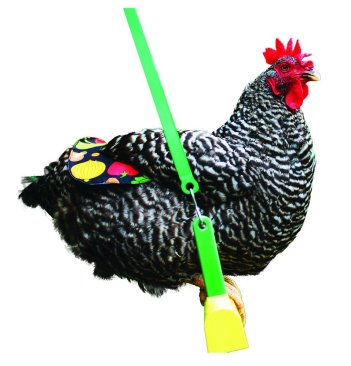
The most unusual toy was the Chicken Swing. The chicken hops on and is able to pump the swing back and forth. Probably not the best gift for a silkie as they may have a hard time jumping on , but other breeds seem to swing just fine on it.

Silkies always like special food treats. There is the Flock Block which lets them peck away and find treats of corn and seed. They are manufactured by many different companies and you should find it at your local feed store.

The treat my flock loves the best are meal worms.  Real or freeze dried, they go crazy for them. I have, in the past, kept a meal worm farm going in my house. The live worms are a great source of protein and a wonderful way for you to bond with your bird. They will come running every time they see you if they think that you have worms for them in your apron pockets.  You can also purchase freeze dried worms from Happy Hen Treats .

There has been a craze of late for putting chickens in sweaters and other kinds of outfits. You are not doing your chickens any favors by doing this. It will compromise their ability to self – regulate their body temperature. Best to leave the clothes off the birds unless it is Chicken Diapers for inside of the house. You can give them a little jewelry by giving them leg bands that have charms on them.  If you are looking for a gift for a guy, check out Gifts For Guys Who Like Chickens.  We also have Gifts For Silkie Chicken Lovers for anyone who likes silkies.

If you are interested in gifts for the Chicken Lady or for chicken loving kids or gifts for the home for chicken lovers check out our weekly silkie blog at VJPPoultry.com. We also have silkie basics at Silkie Supplies.

So, do chickens play? I think so. All animals play. I know that the chest bumping I see among juvenile silkies seems to have a very playful nature to it. Do Chickens get bored? Yes, often this will result in pecking to the extreme. Do they need Christmas gifts? That’s up to you. I know that my little silkies will be getting some nice meal worms come Christmas Eve.

For tips and tricks for raising outstanding silkies check out our Chicken Learning Center at VJPPoultry.com .  VJP Poultry is an NPIP and state inspected hatchery located 30 miles north of St. Paul.  We hatch out silkies all year long so we always have stock available.  Like us on Facebook to get weekly updates on what we currently have for sale.

Victoria J. Peterson

chicken-swing

How to Keep a Flock History 11/07/16

20161031_180456

A flock history is basically a written record or diary of anything and everything pertaining to your flock. I use school notebooks and my computer to keep records of everything I do with my chickens. If you start it right away, you can keep a very accurate account of facts about your flock.

Start by noting the date of hatch, the source – who you got it from, the breed and anything the seller tells you about the bird’s past history, and any medical certificates that came with the birds.

I have a pedigree file on my computer where I list all of the birds I presently have. It is  a Microsoft Excel spreadsheet. I list the breed, what color it is, what band number it has, date of hatch, where I purchased it, and if it is male or female. If I know for sure who the father was I will include that as well. I can then sort according to the information I need. Usually , that would be sorting by age or by color. If I lose or sell a bird, I simply delete it from the list.

I have a different spreadsheet for managing the business end of things. I found a nice spreadsheet on Backyardchickens.com that someone created specifically for chickens. If you search on that site for “chicken spreadsheet”, you should be able to locate it. It keeps track of everything – customers, how much you sell, what your expenses were that month, etc and you have a summary page for the end of the year where you can compare each month. It is nice to know if your chickens are paying for their upkeep.

I keep medical records in a paper notebook. If any birds are sick, I will note symptoms and remedies tried. You could also document your feeding a management practices and any changes you make. Sometimes I need to keep track of a new breeding program. Who was mated with who.

It is important to write things down as you go along. It may seem like extra work at the time, but later it will be easier to look back than just relying on your memory, especially if you are trying to trace a health problem. When you experience a problem, it is hard to remember all the little details you thought you’d never forget.

Each week I keep track in my Chick Notebook how many chicks I have in each pen and what color. I use markers in different colors to make it easy to see what color birds I have at a glance. As chicks are sold, I adjust the numbers so I always have an accurate account of what I have for sale. If I notice any abnormalities in the pens, I will mark those down. Sometimes I will guess on ages. I will record those guesses as well. Then the next week, I will check back and see if I still feel the same way about its gender. I keep track of the ages in the pens so I always know how old the chicks are. Sometimes colors can look very similar. A black and a dark blue can almost look the same. I will keep those colors separate and write down which is in each pen.

One other system I have tried is to keep a notebook with a page for each bird. This is an easy way to keep track of the age, what problems it experienced, when it was sold or died. You can look back over the years and see if there are any patterns developing with your flock.

Keeping an up to date flock history is an important part of my job at VJP Poultry. In the long run it makes for a valuable document that can improve your chick’s health and well-being.

For tips and tricks for raising outstanding silkies check out our Chicken Learning Center at VJPPoultry.com .  VJP Poultry is an NPIP and state inspected hatchery located 30 miles north of St. Paul.  We hatch out silkies all year long so we always have stock available.  Like us on Facebook to get weekly updates on what we currently have for sale.

Victoria J. Peterson

20161105_140206.jpg